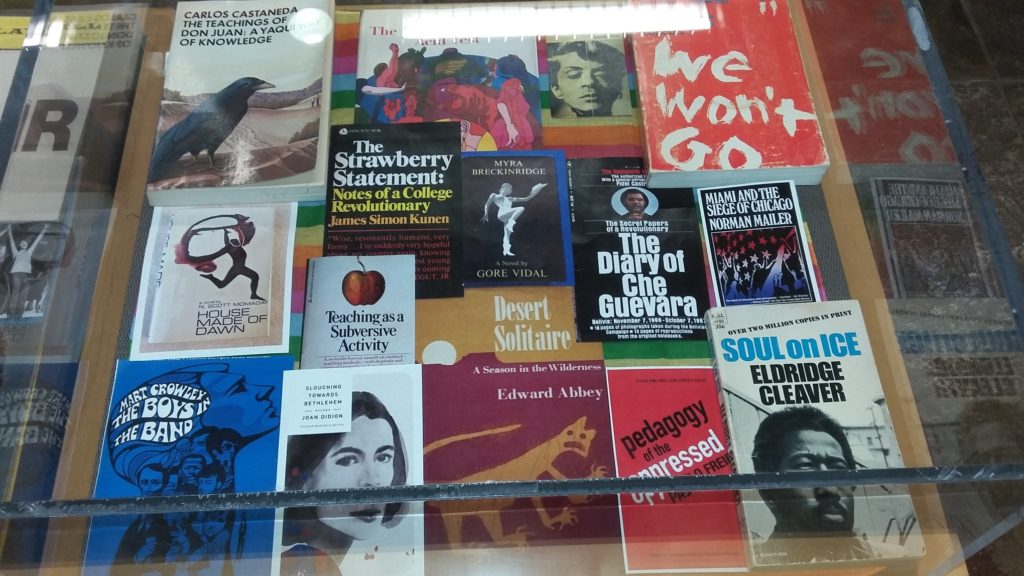
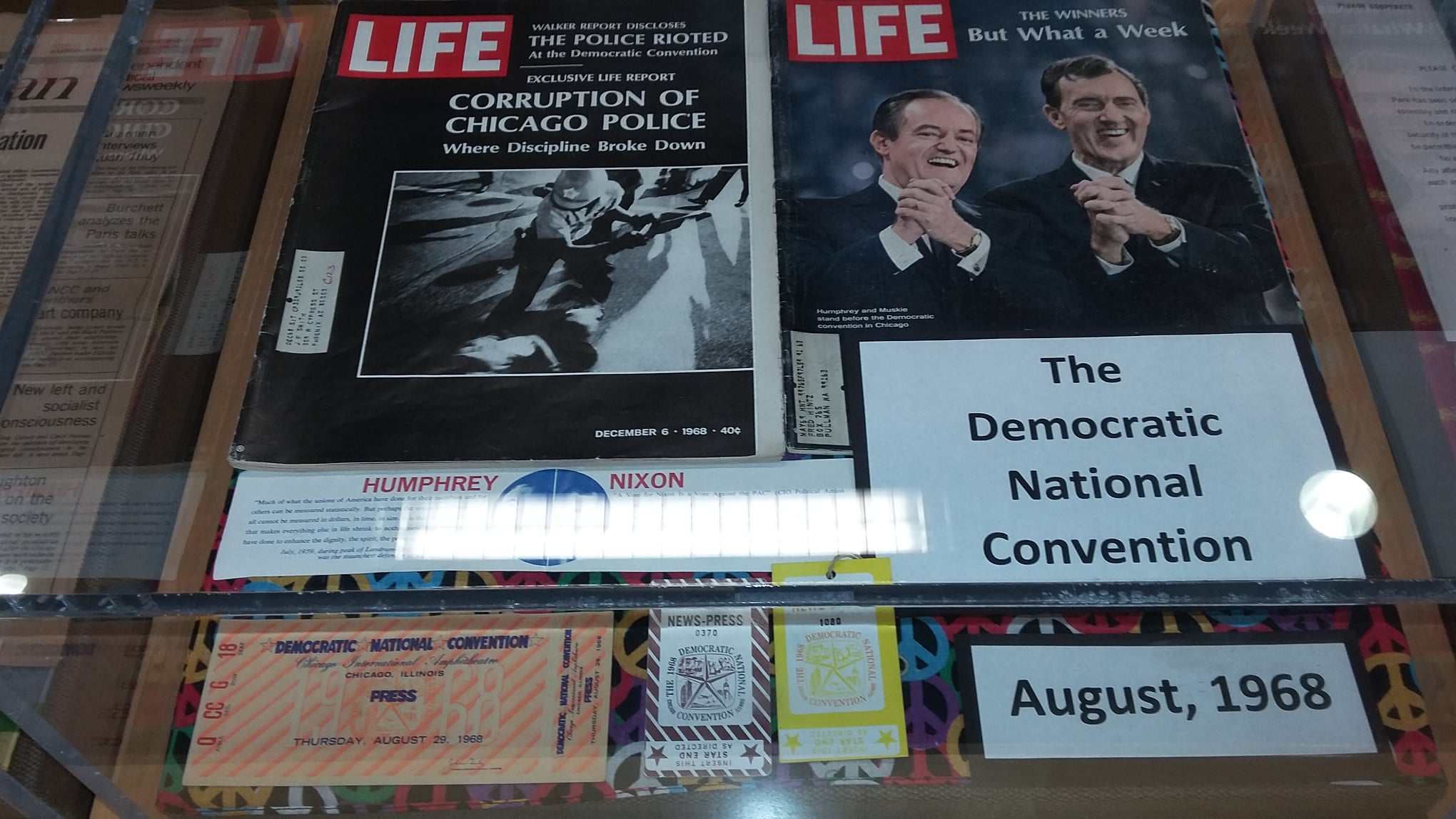
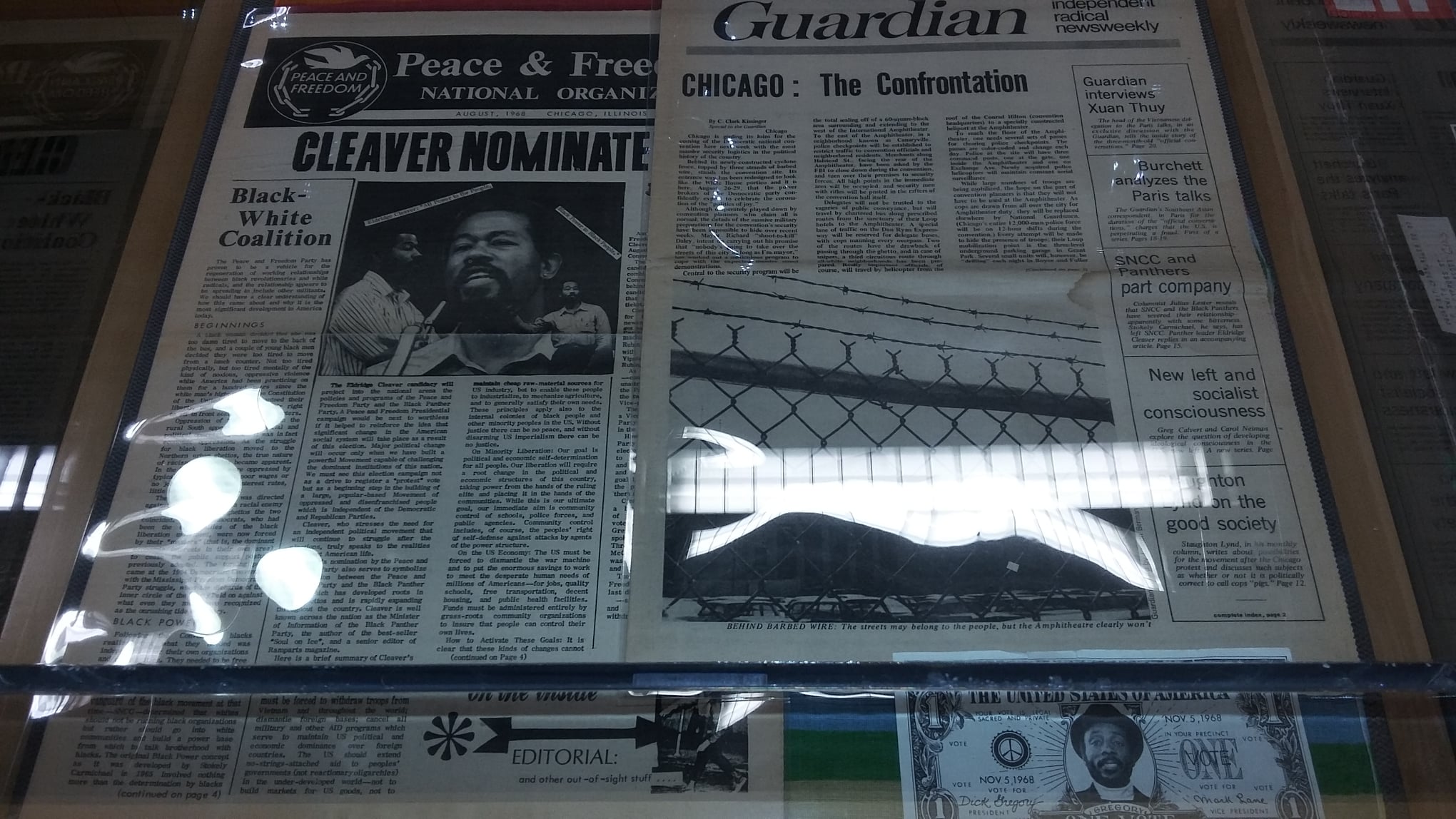
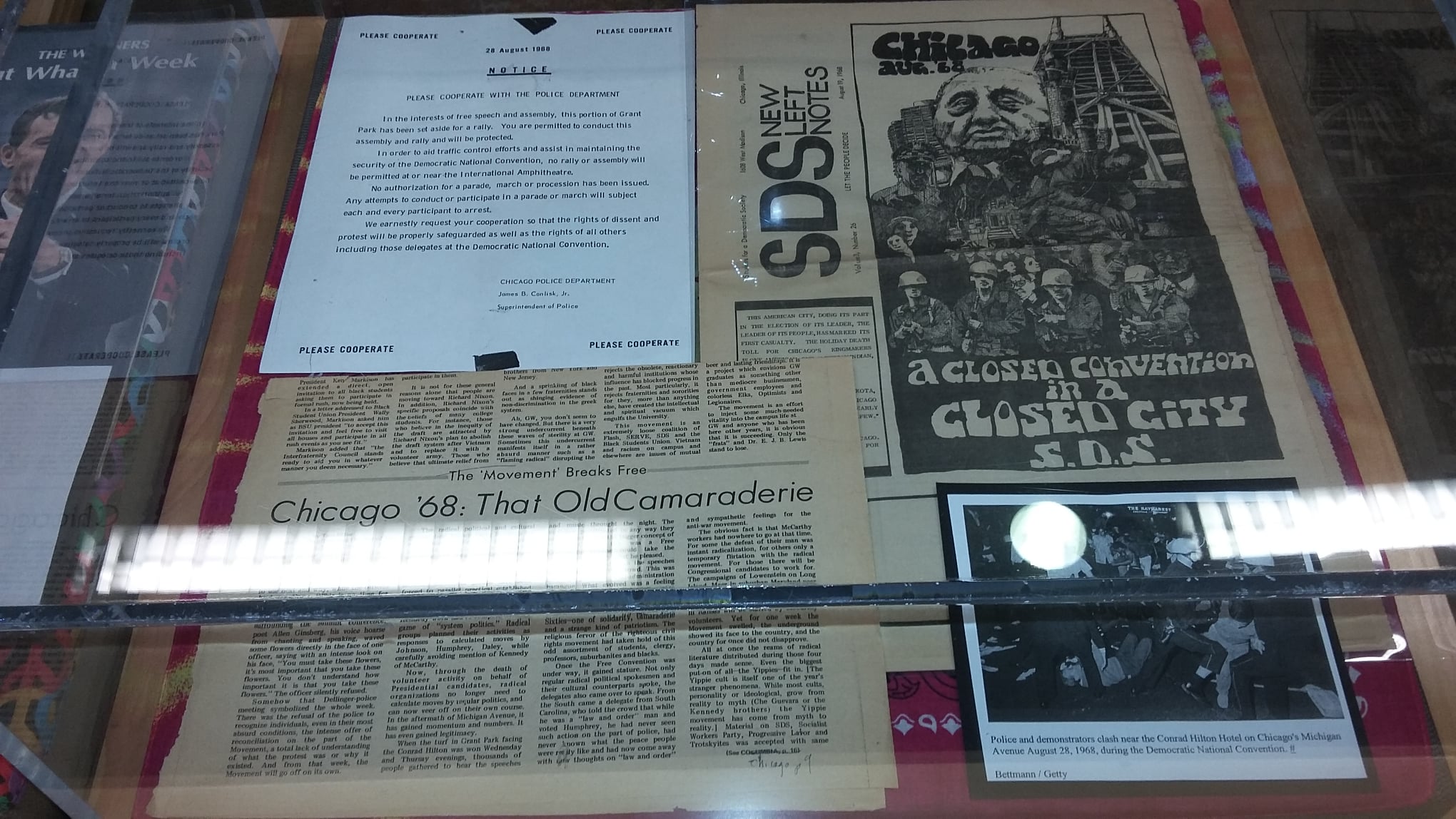
Note: this page is still under construction. Please check back again later to see the complete post. Thanks.
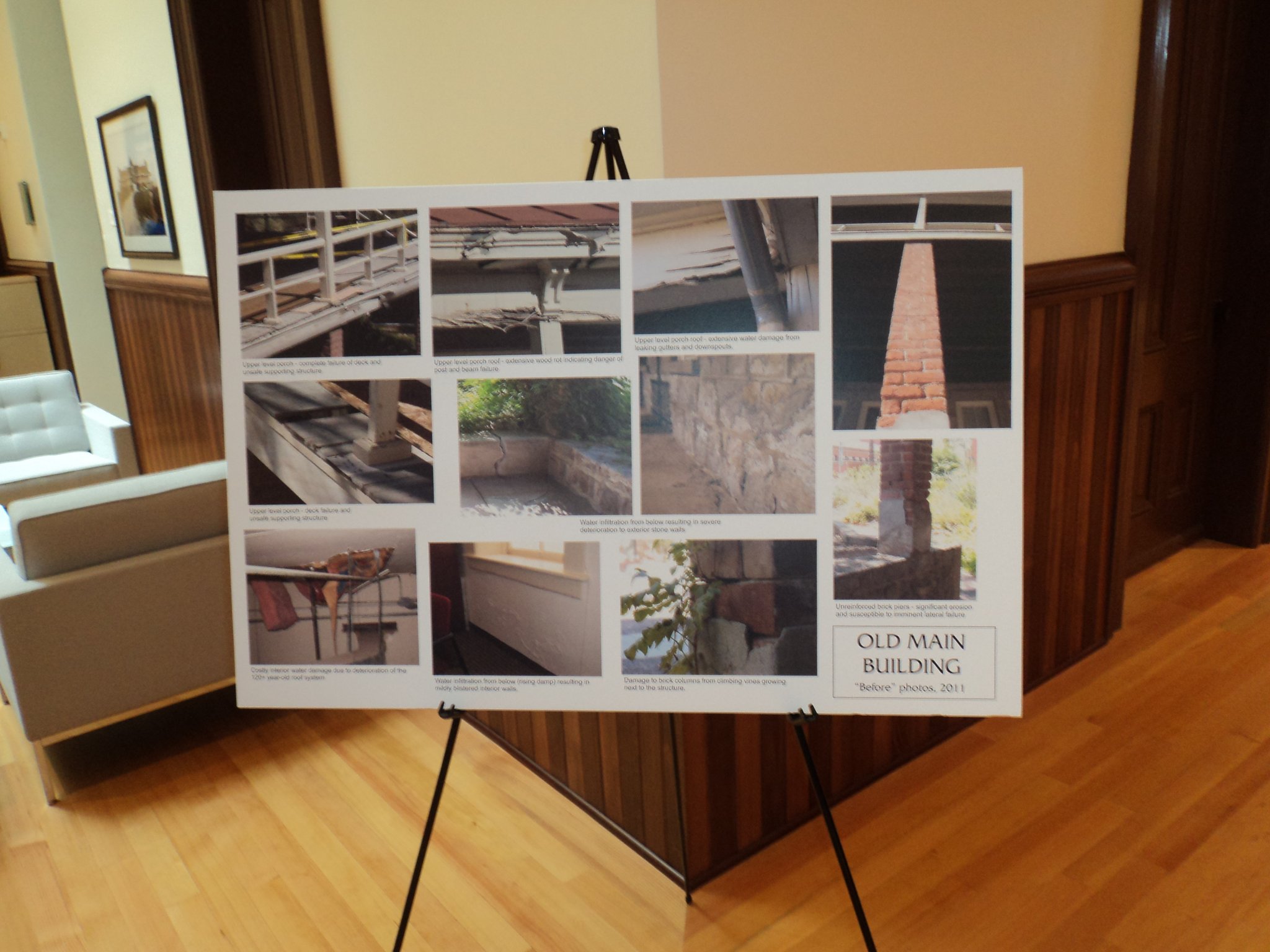
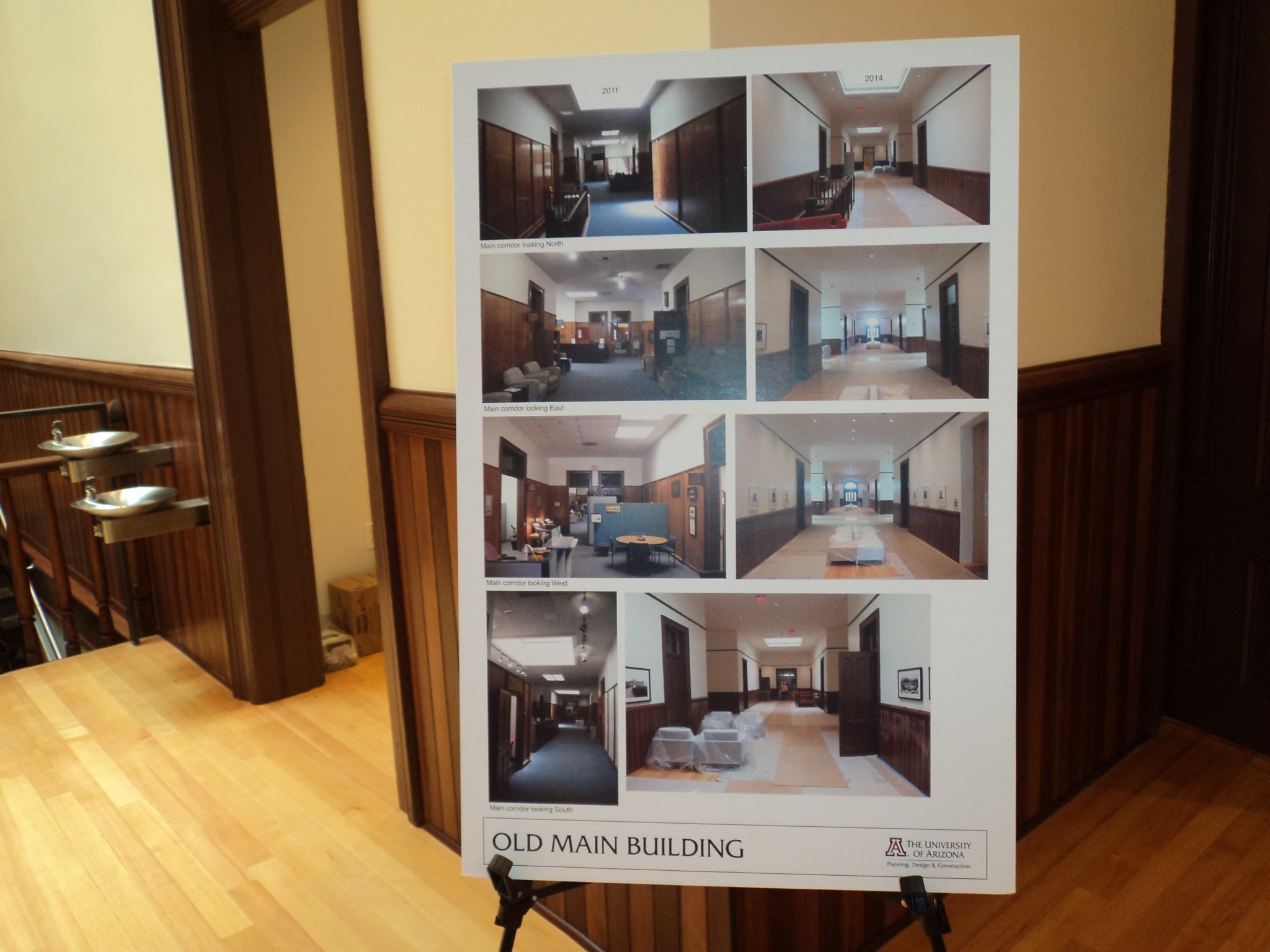
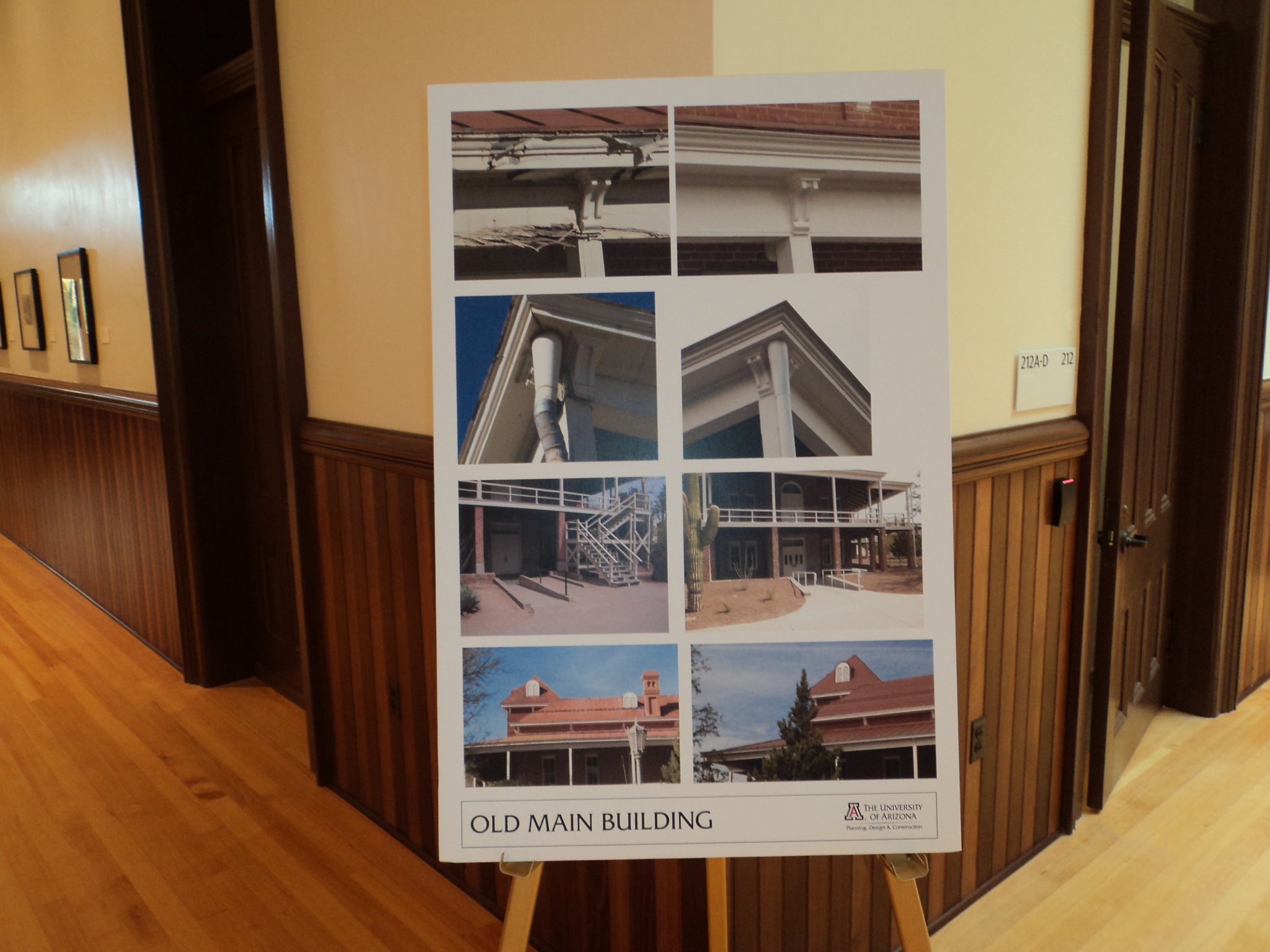
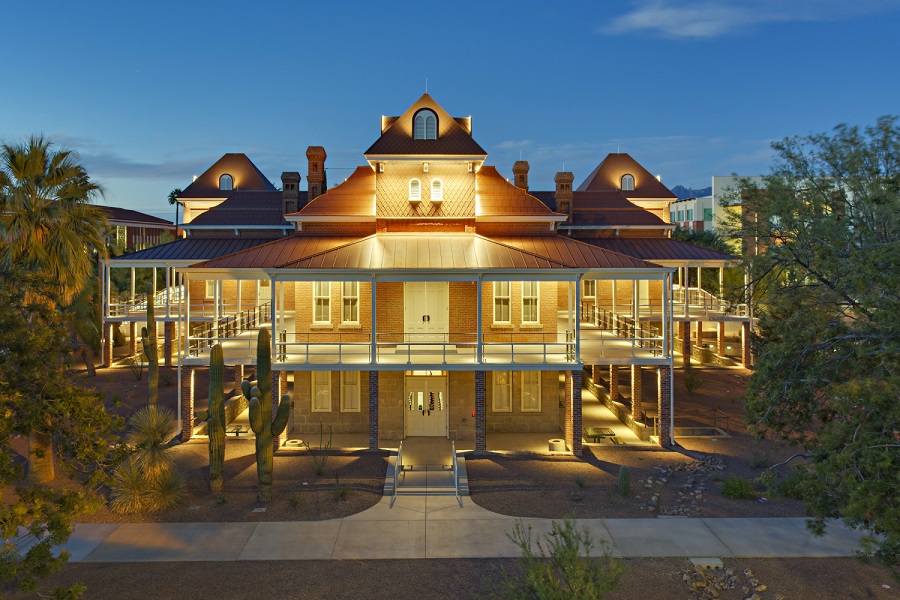
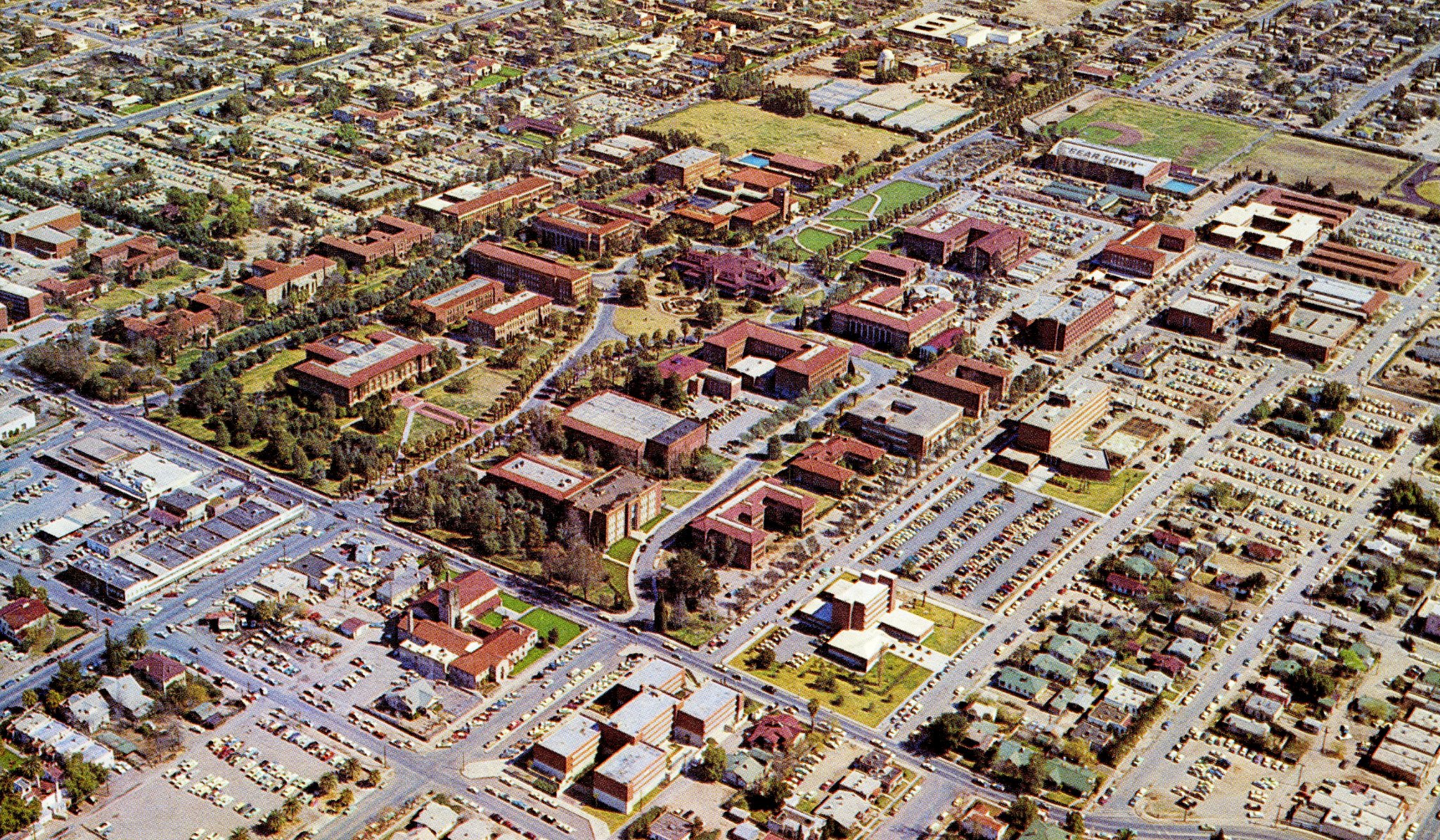
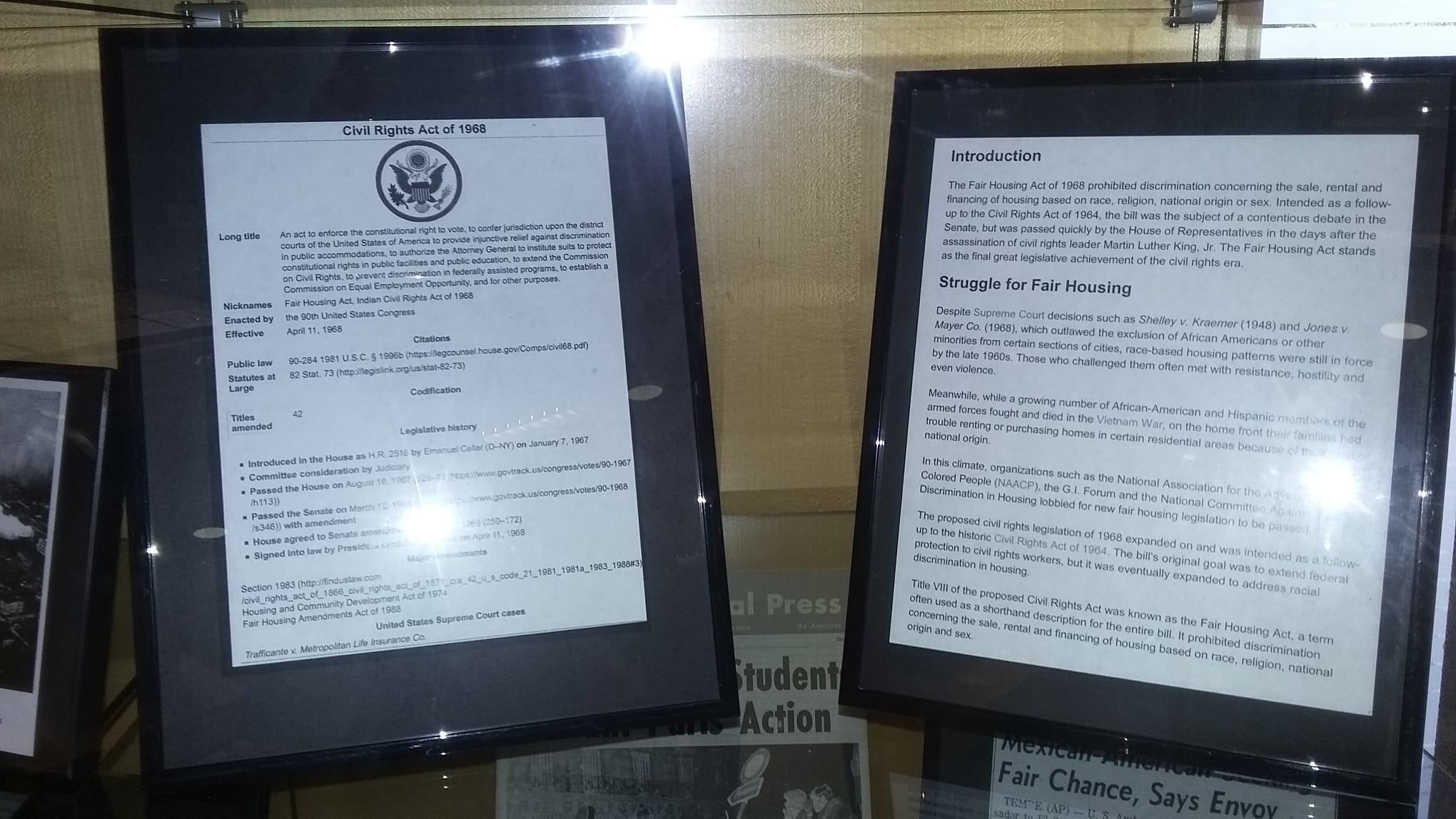
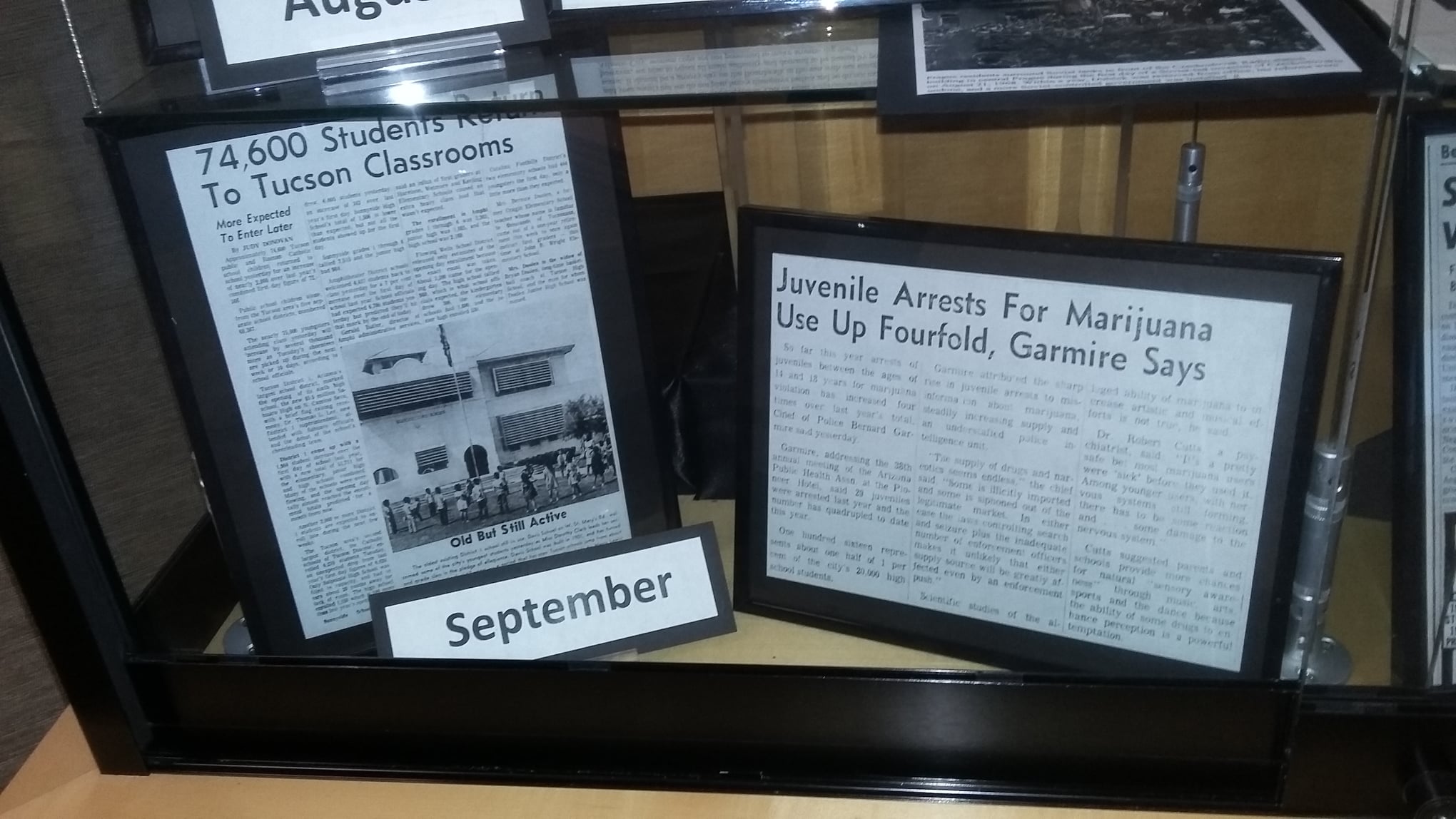
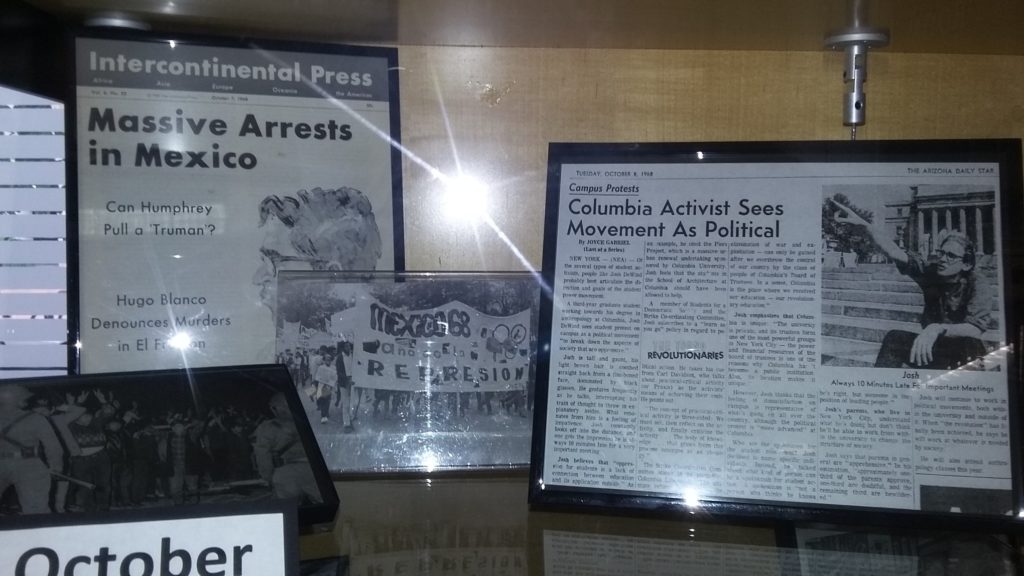
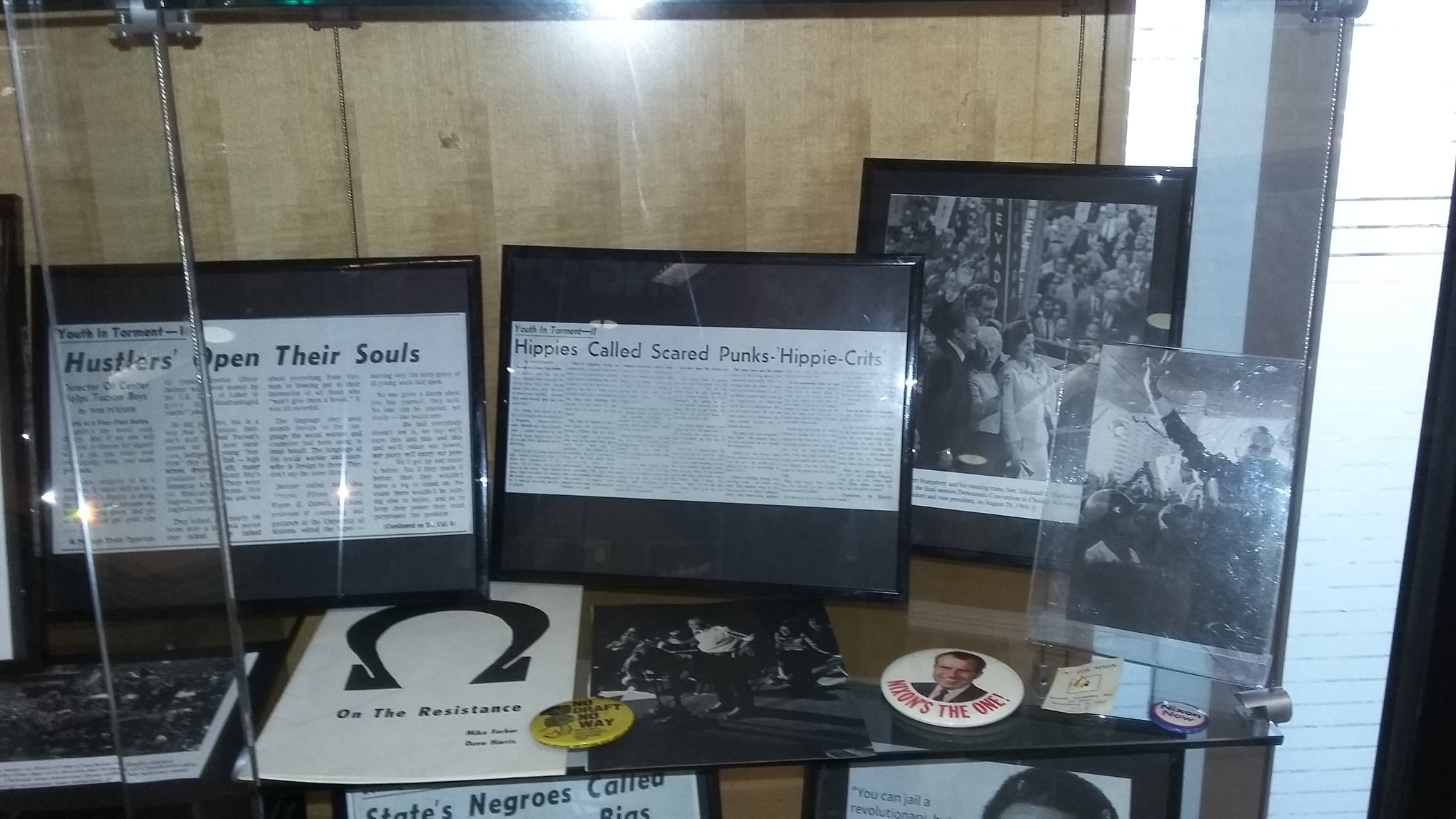
During her tenure as President of the University of Arizona (2012-2017), Ann Weaver Hart decided it was time to renovate Old Main, the University’s oldest and best-known campus building. It was previously renovated in the 1940s and in 1972 was selected for listing on the National Register of Historic places. The latest project, begun in early 2013, was expensive, totaling over 13 million dollars, and not a very popular undertaking (with some donors and administrators), but in the end, the transformation of the second floor of Old Main was a sight to behold. The newly renovated building, replete with new air conditioning units on both floors, now houses, among other things, student services, spacious meeting rooms, and the president’s office, and showcases some of the University’s finest artwork and cultural artifacts. The architectural firm, Poster, Frost, Mirto took the lead in designing the recent project. Sundt Construction completed the work.
In 2013, the director of Special Collections assigned me and another colleague the task of assisting the coordinator of the Old Main interior design project in identifying historic photographs and other materials for display in Old Main. My colleague took the lead in identifying and providing photographs and I worked on identifying materials for a small exhibit case and wrote annotations for many of the photos.
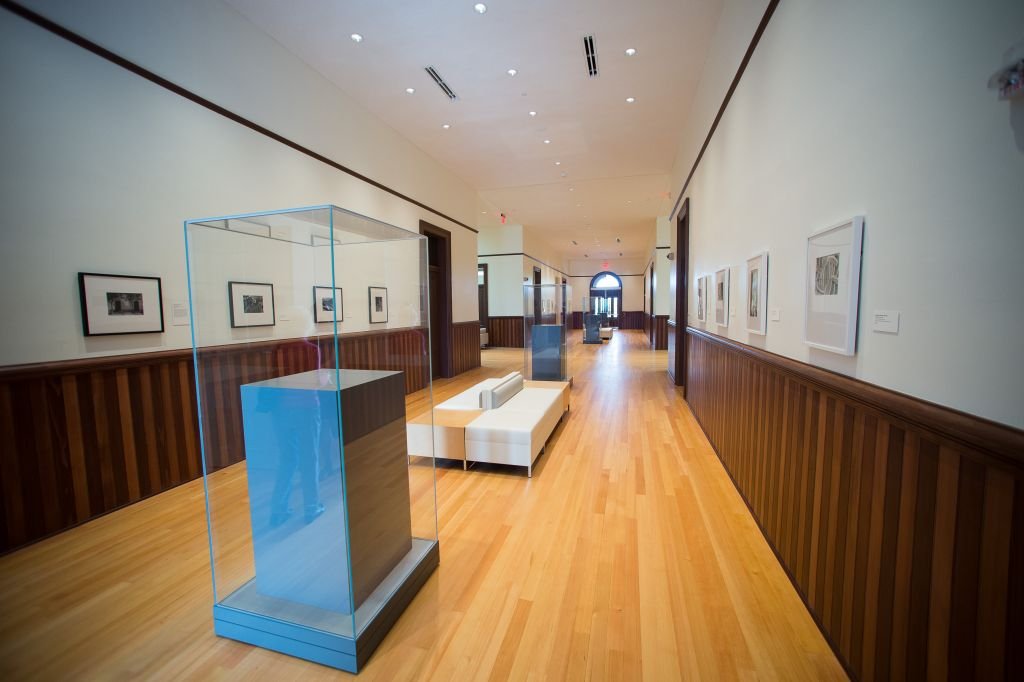
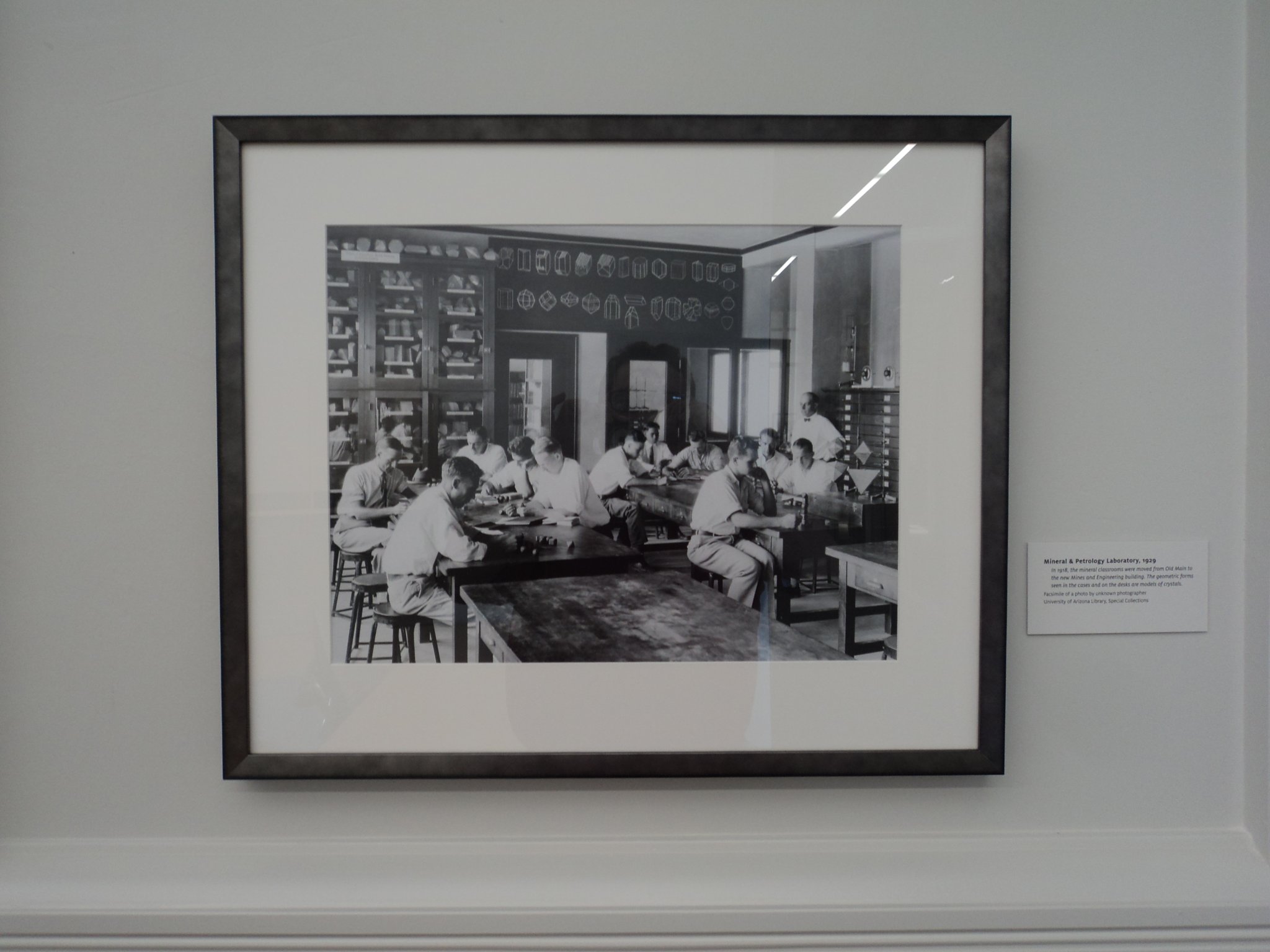
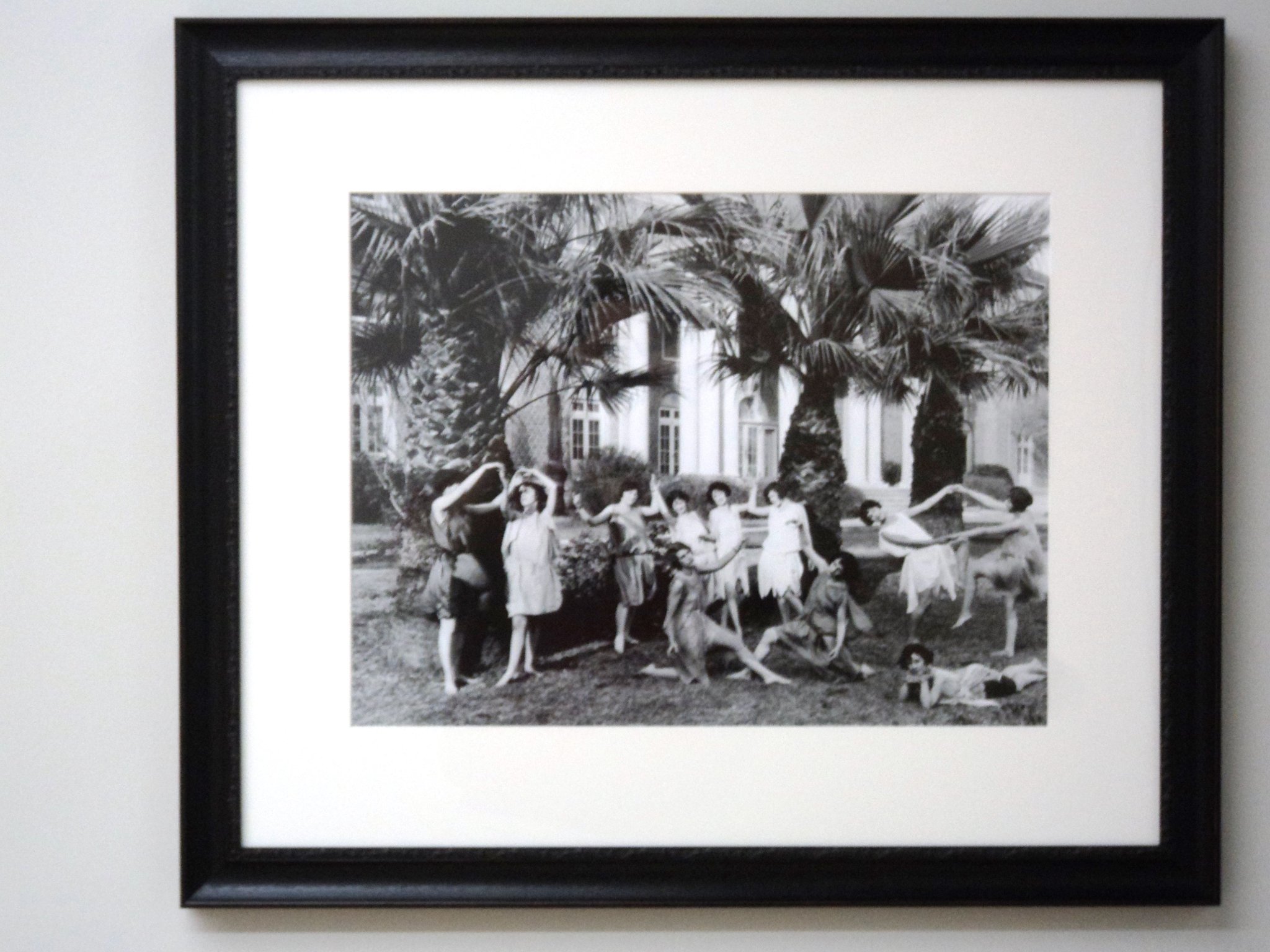
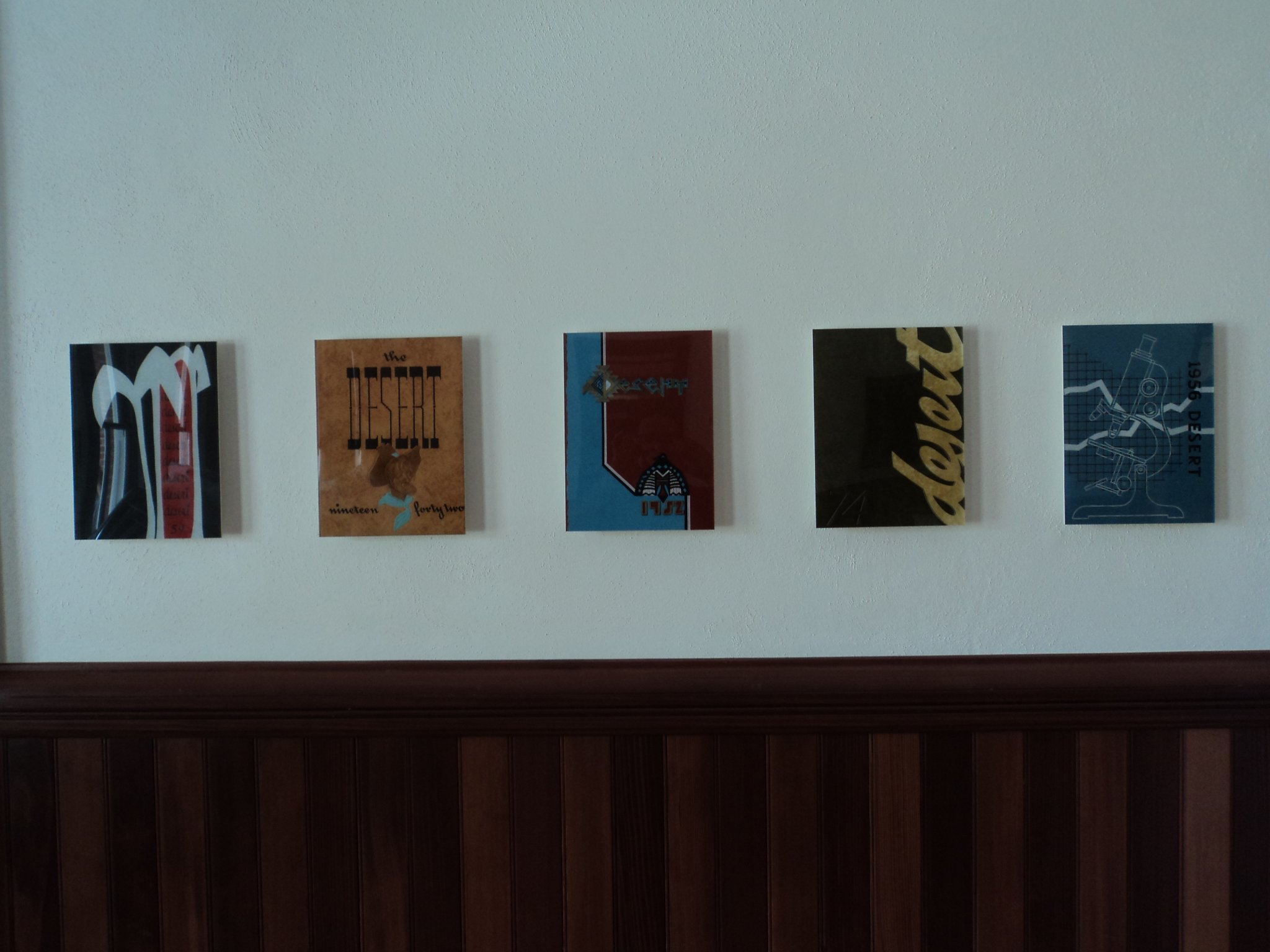
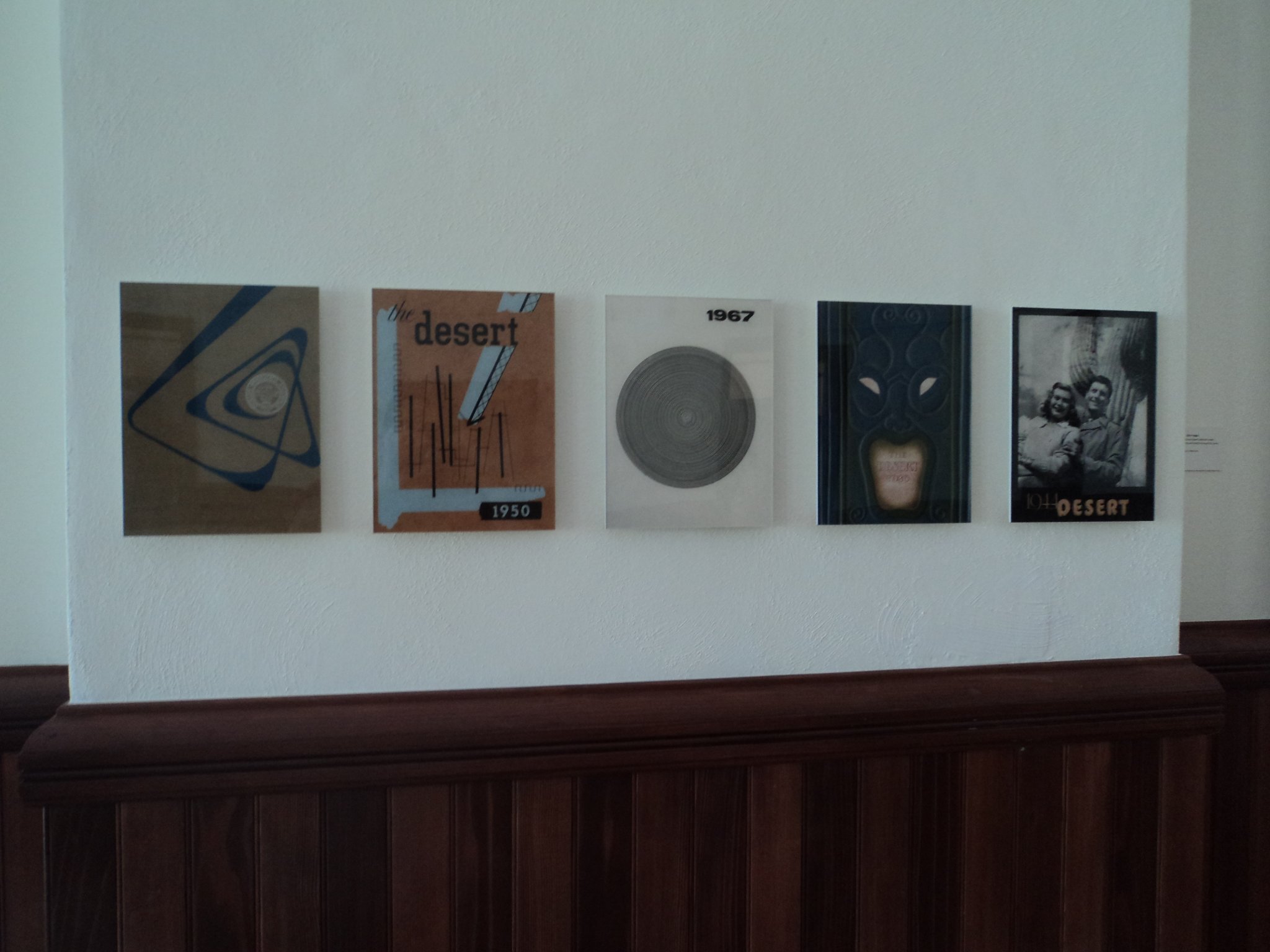
Historic photographs of the campus and photographs of covers of UA Yearbooks now fill the hallways and meeting rooms of the 2nd floor the Old Main building.
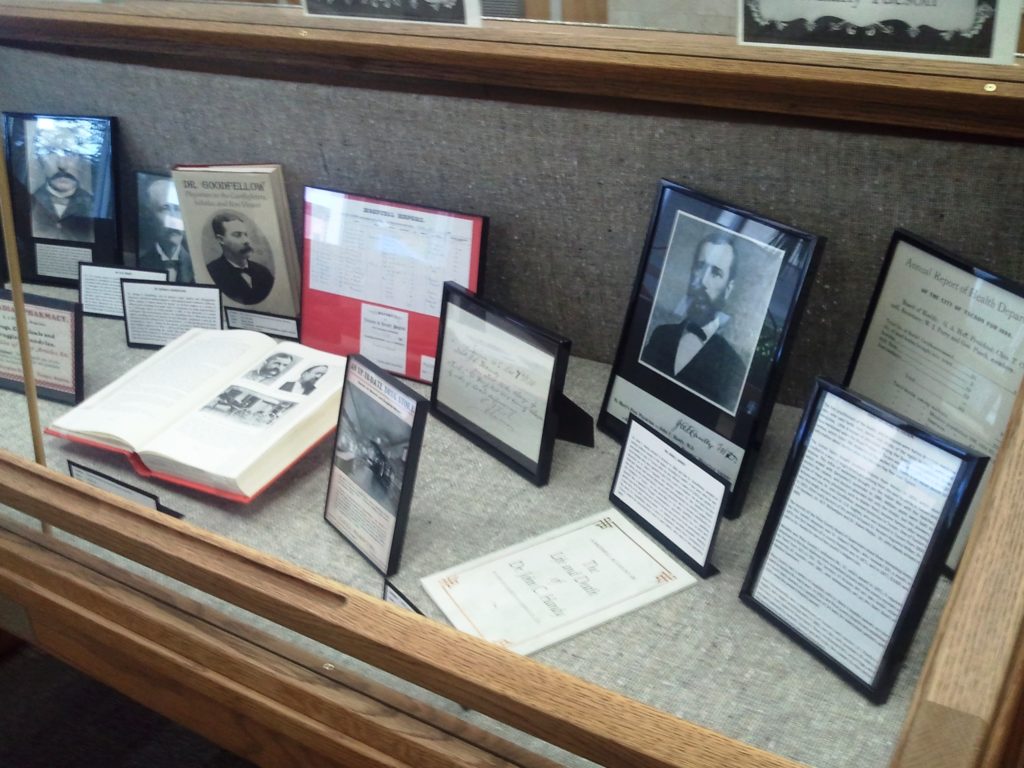
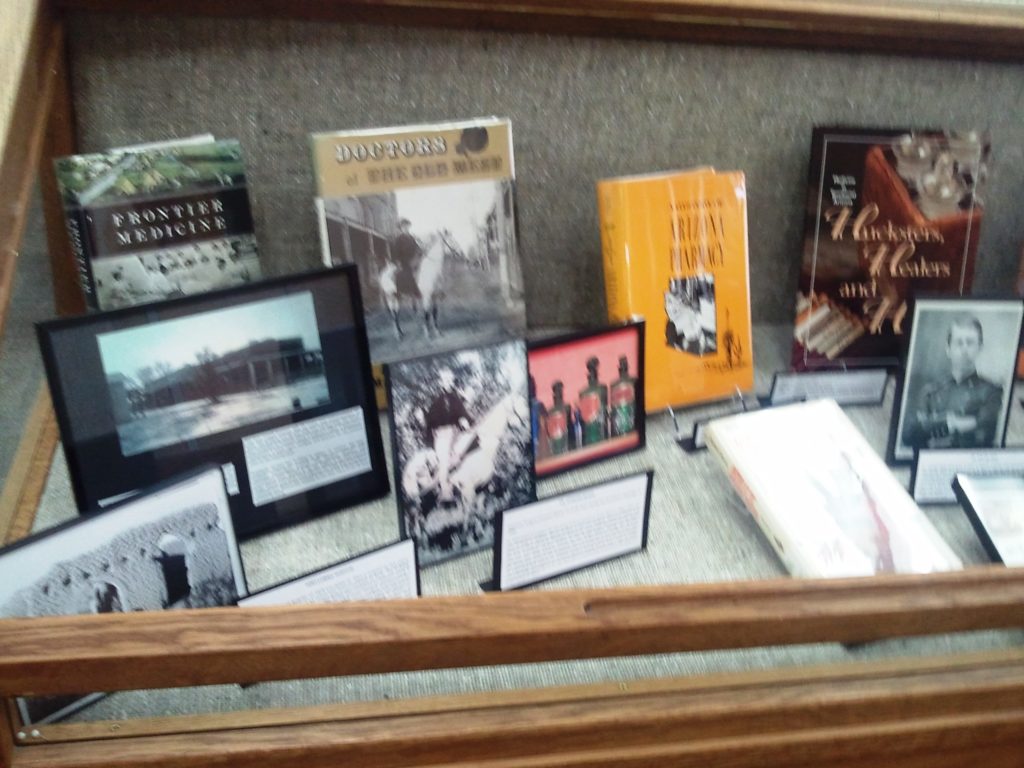
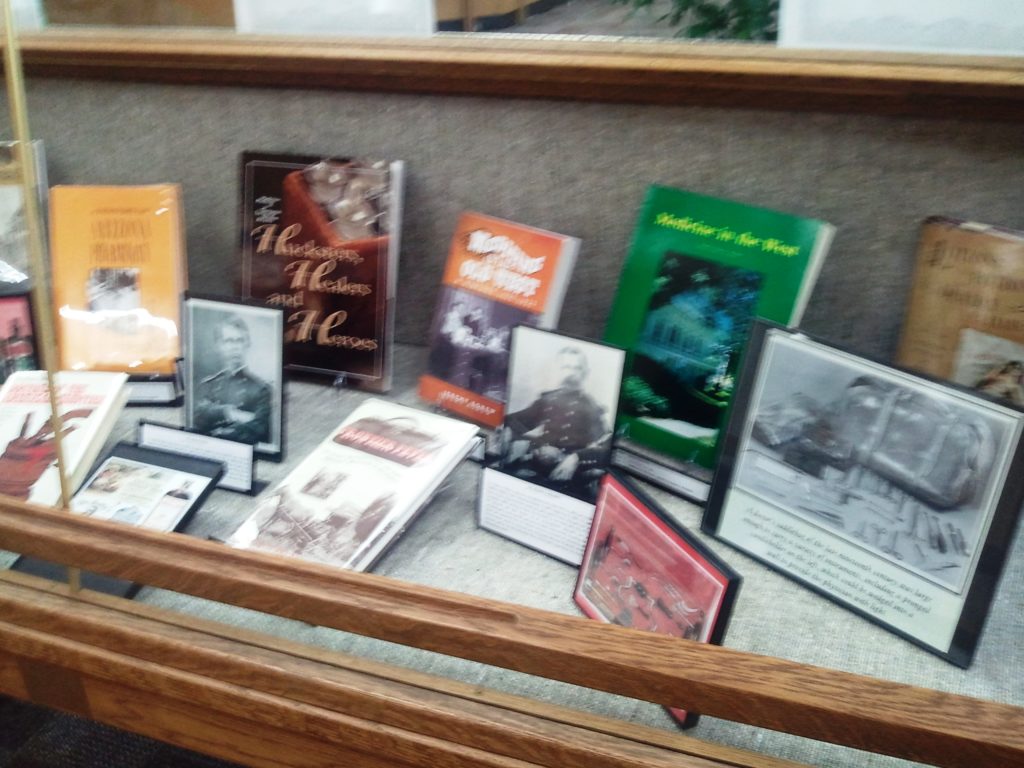
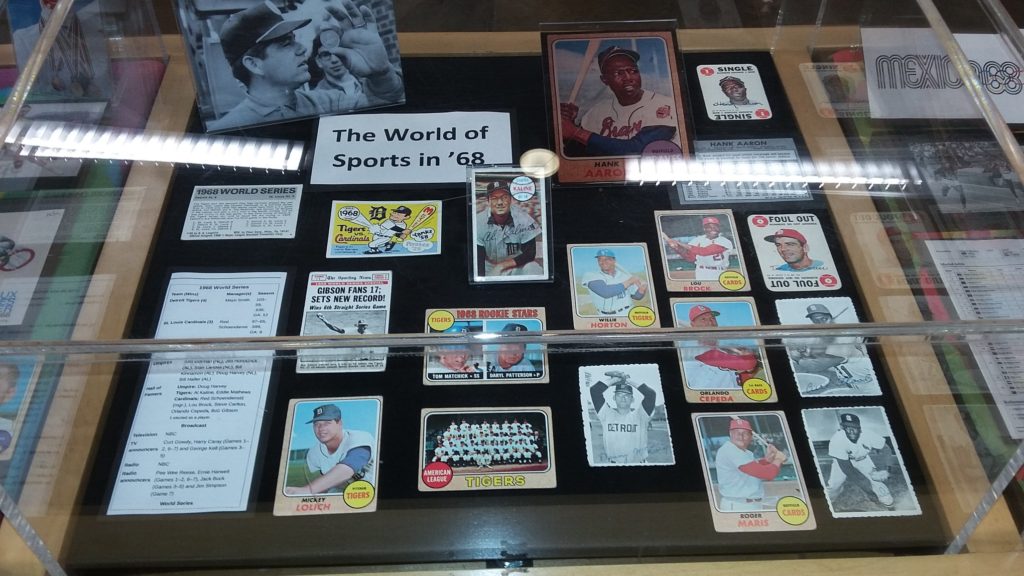
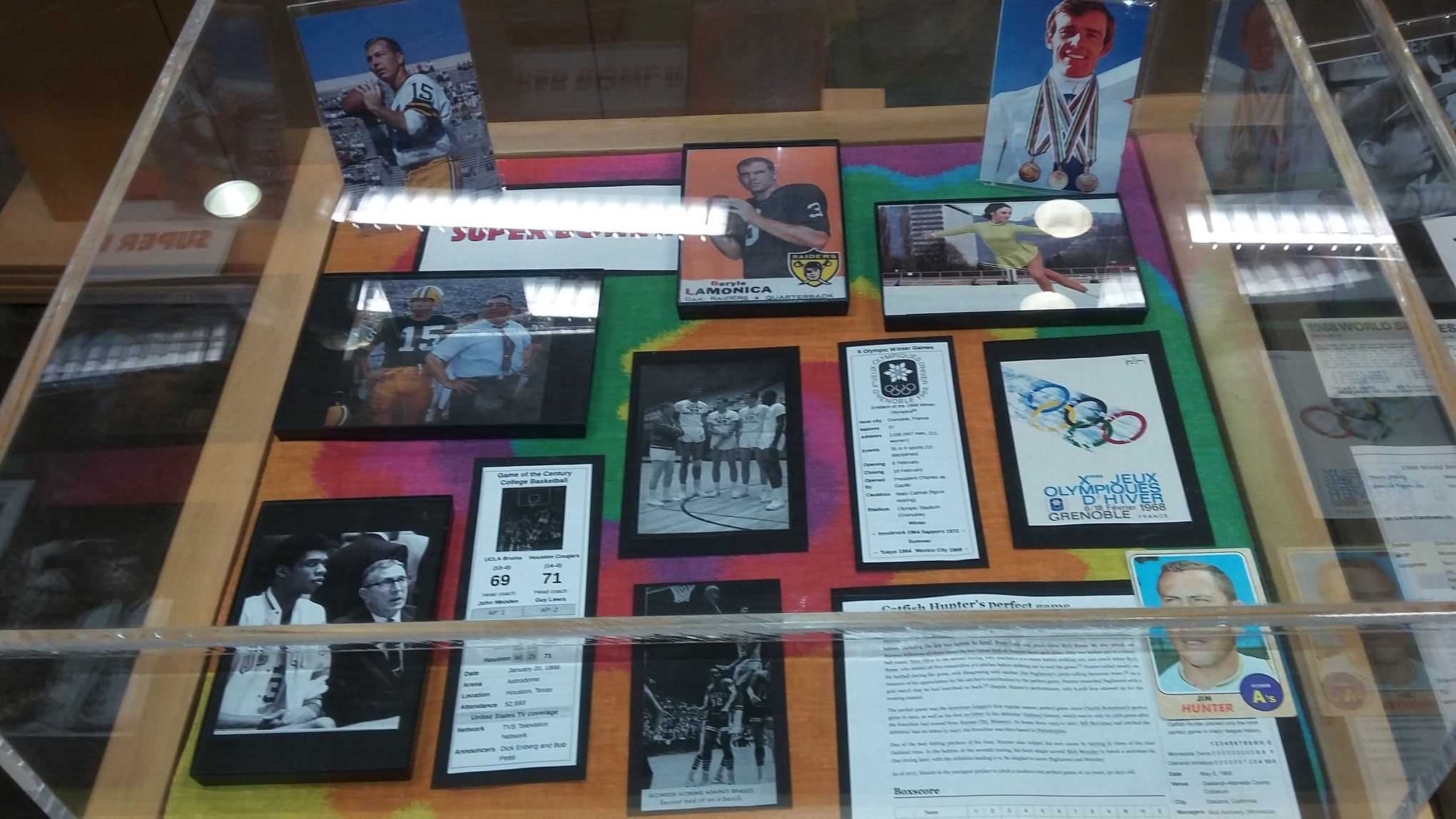
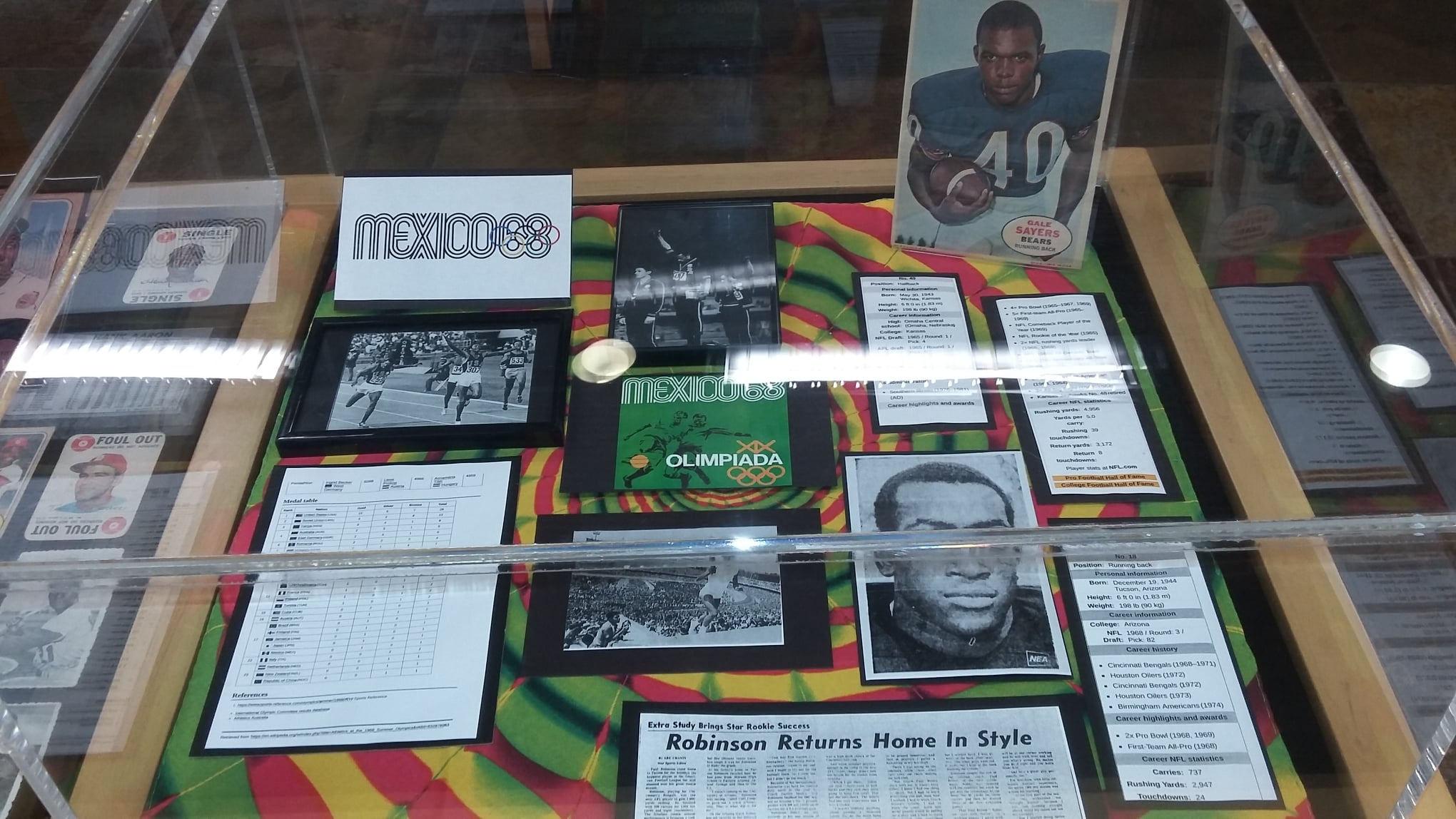
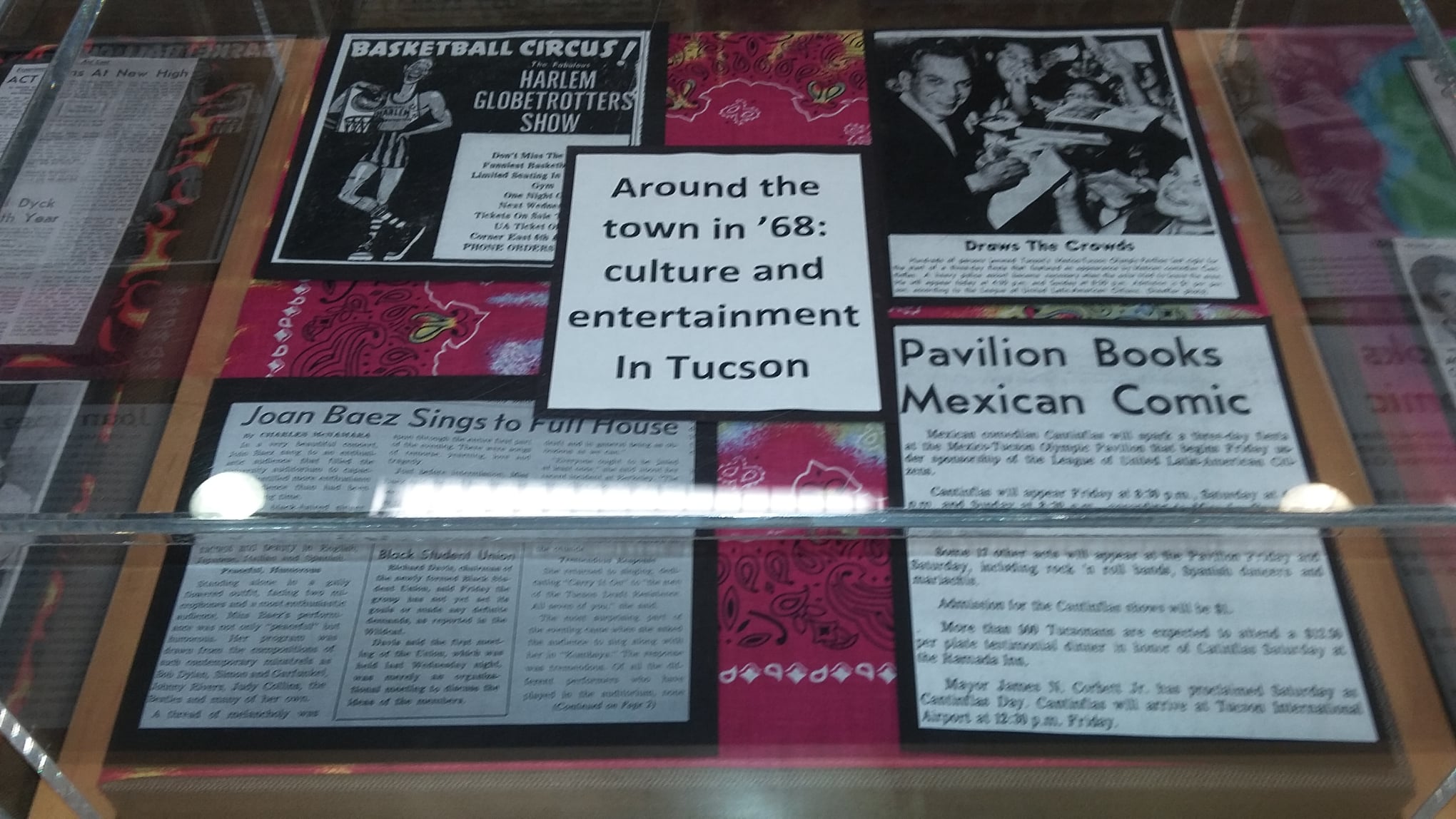
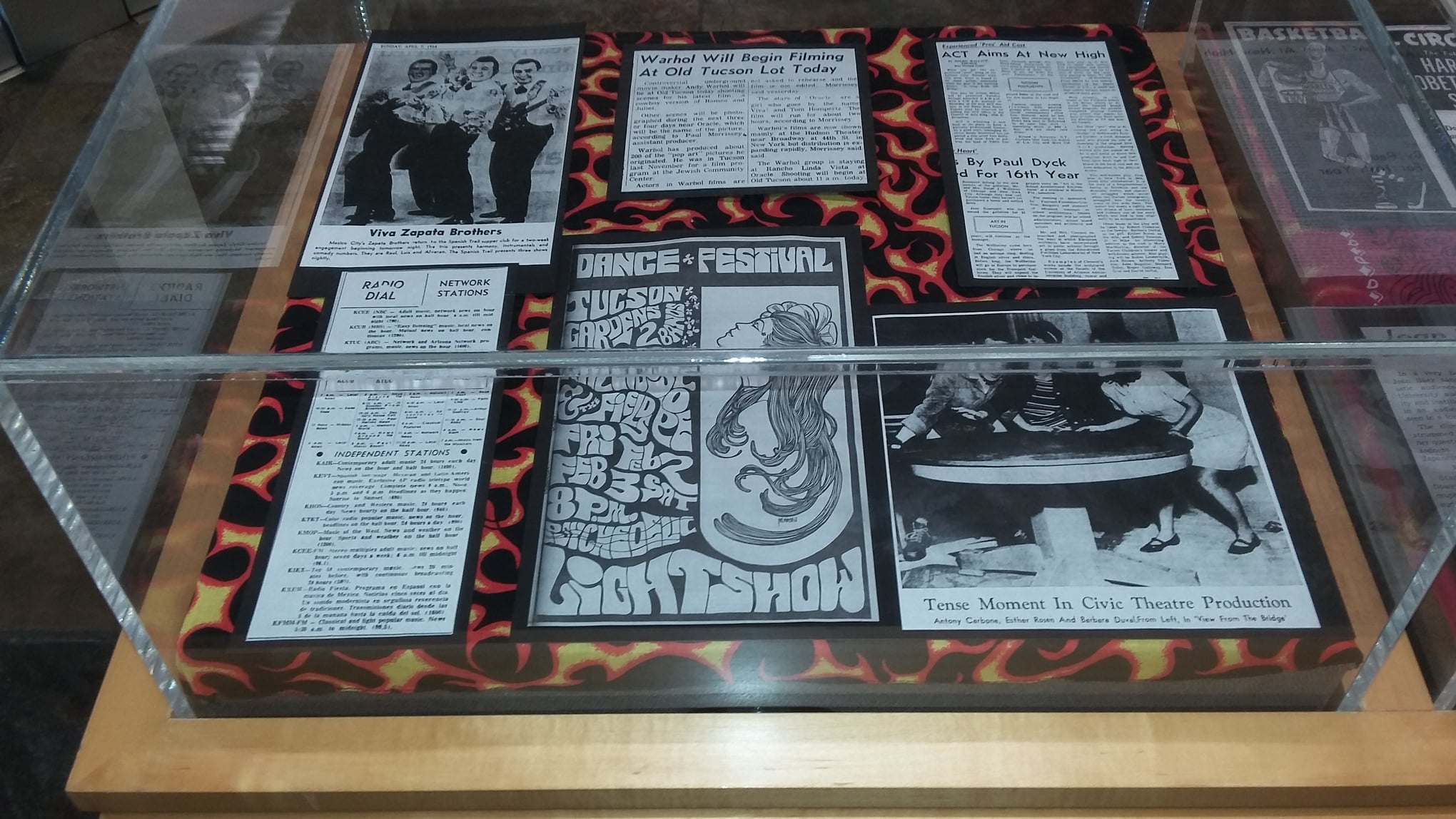
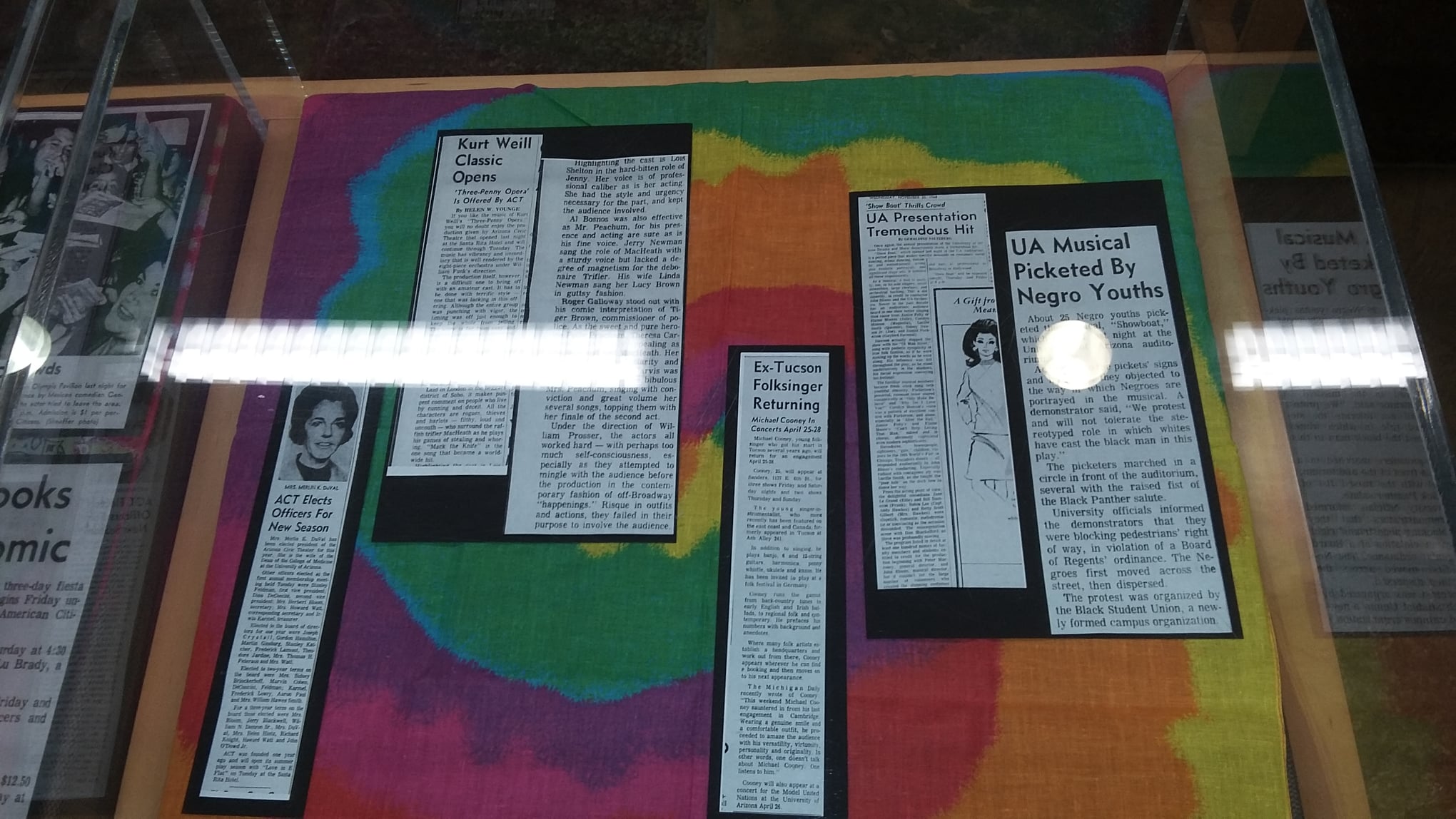
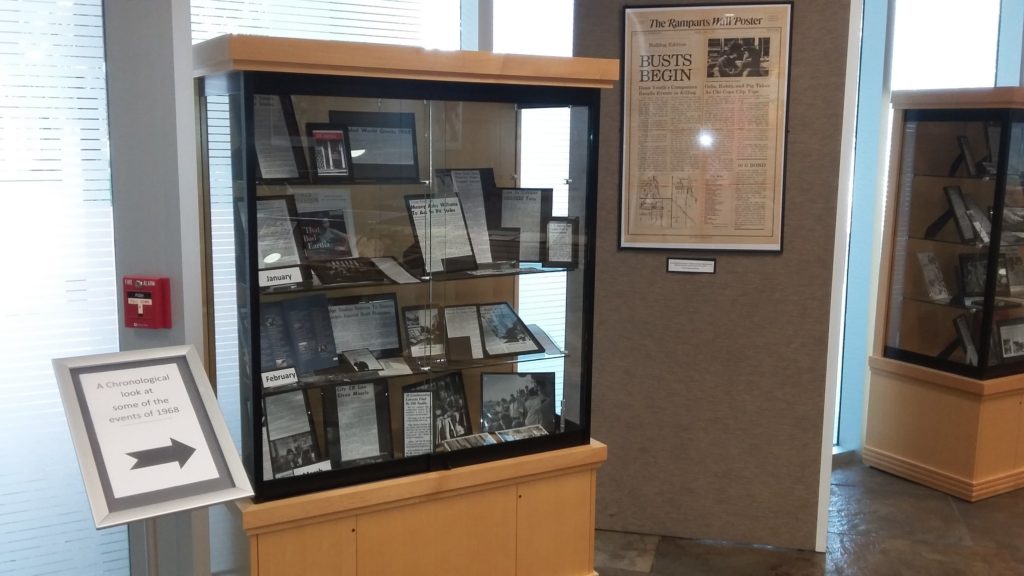
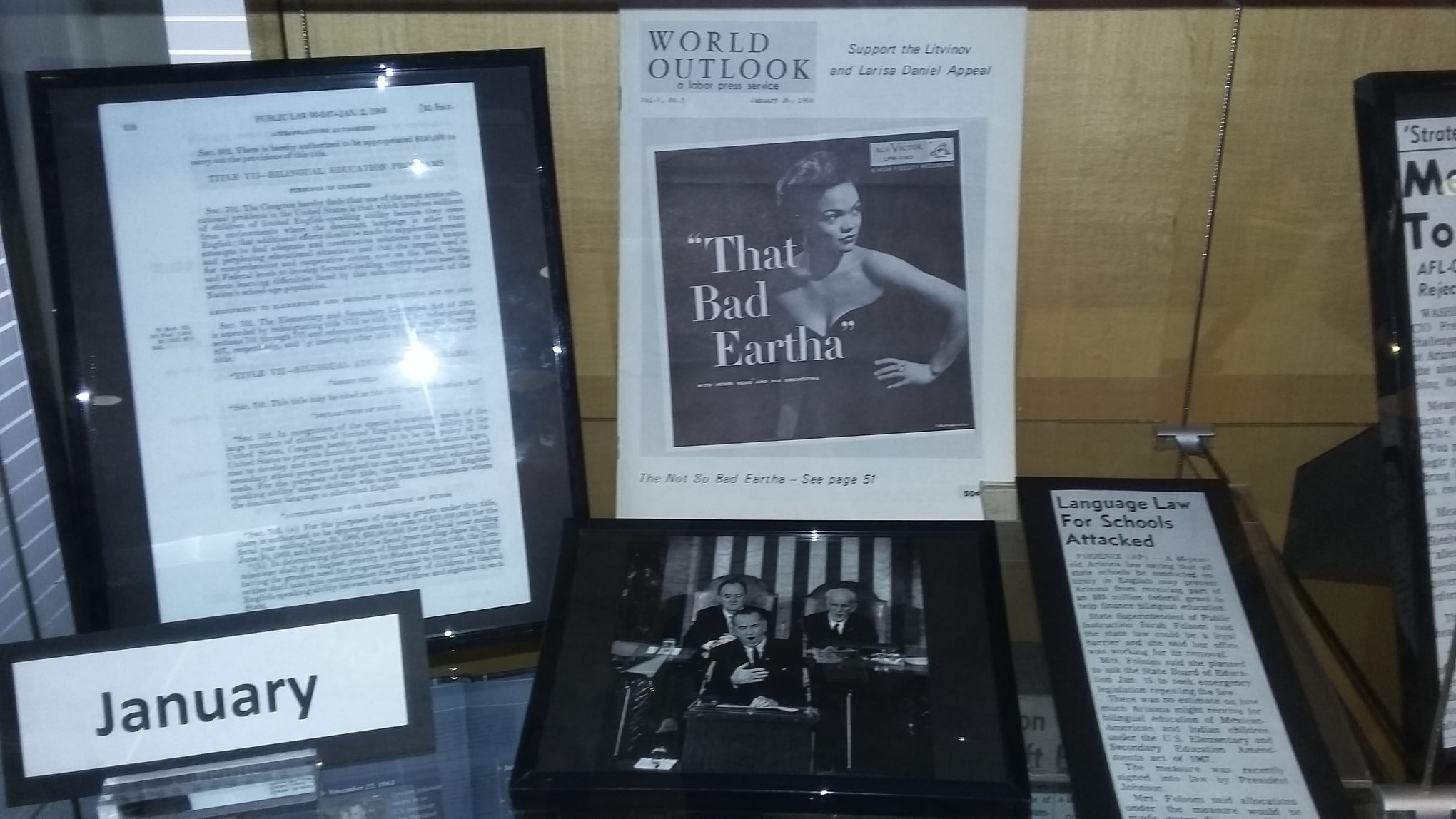
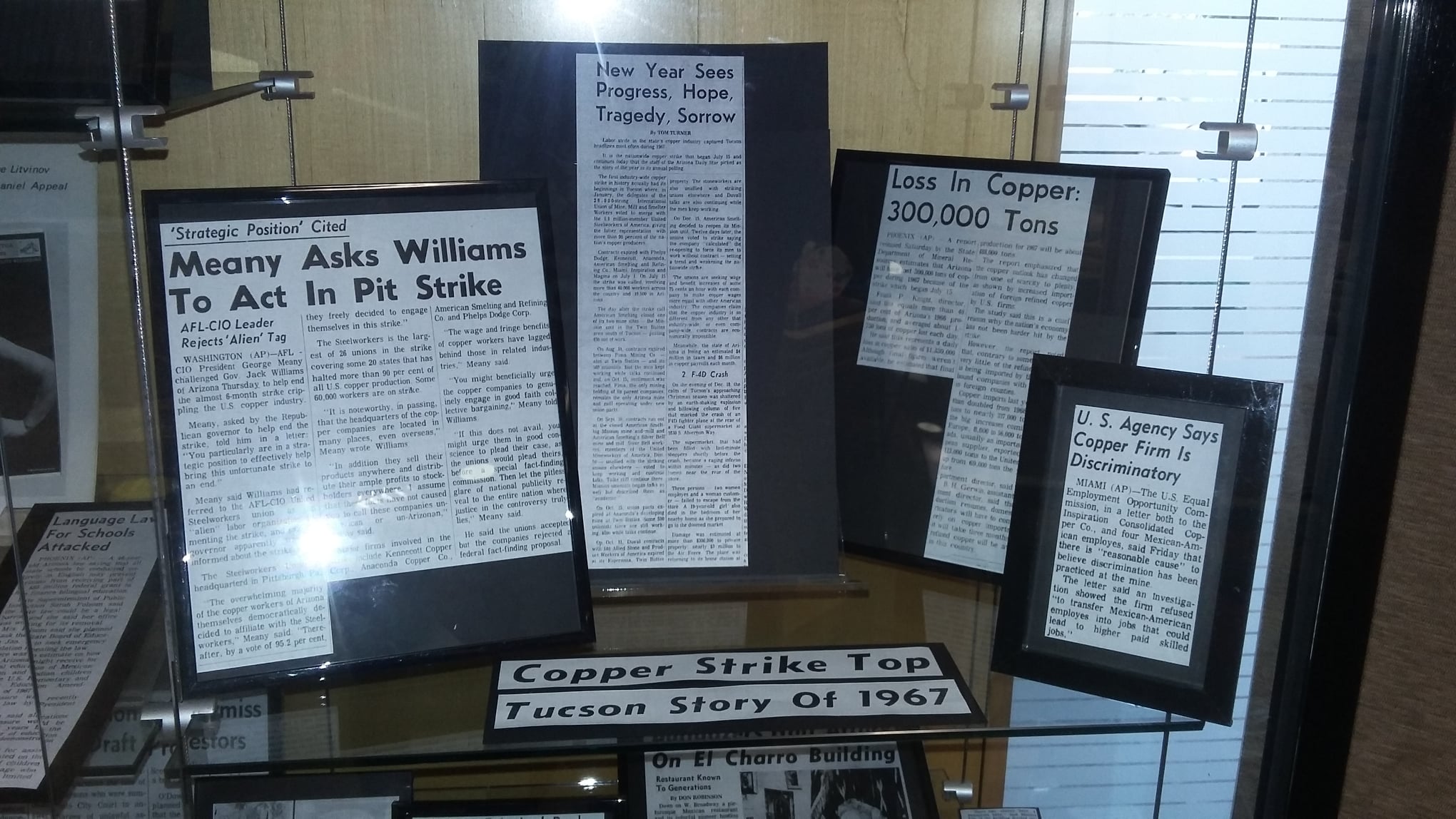
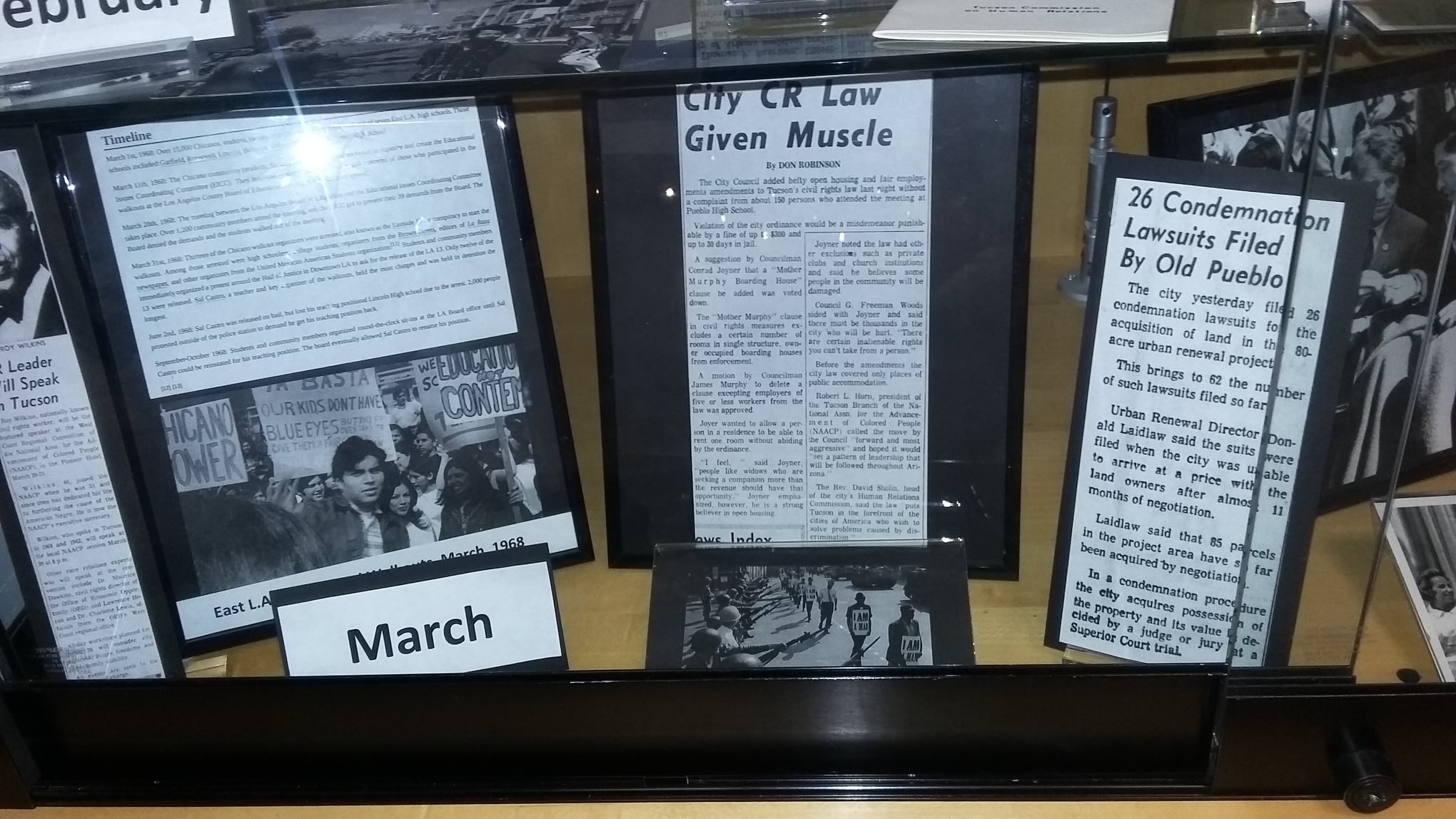
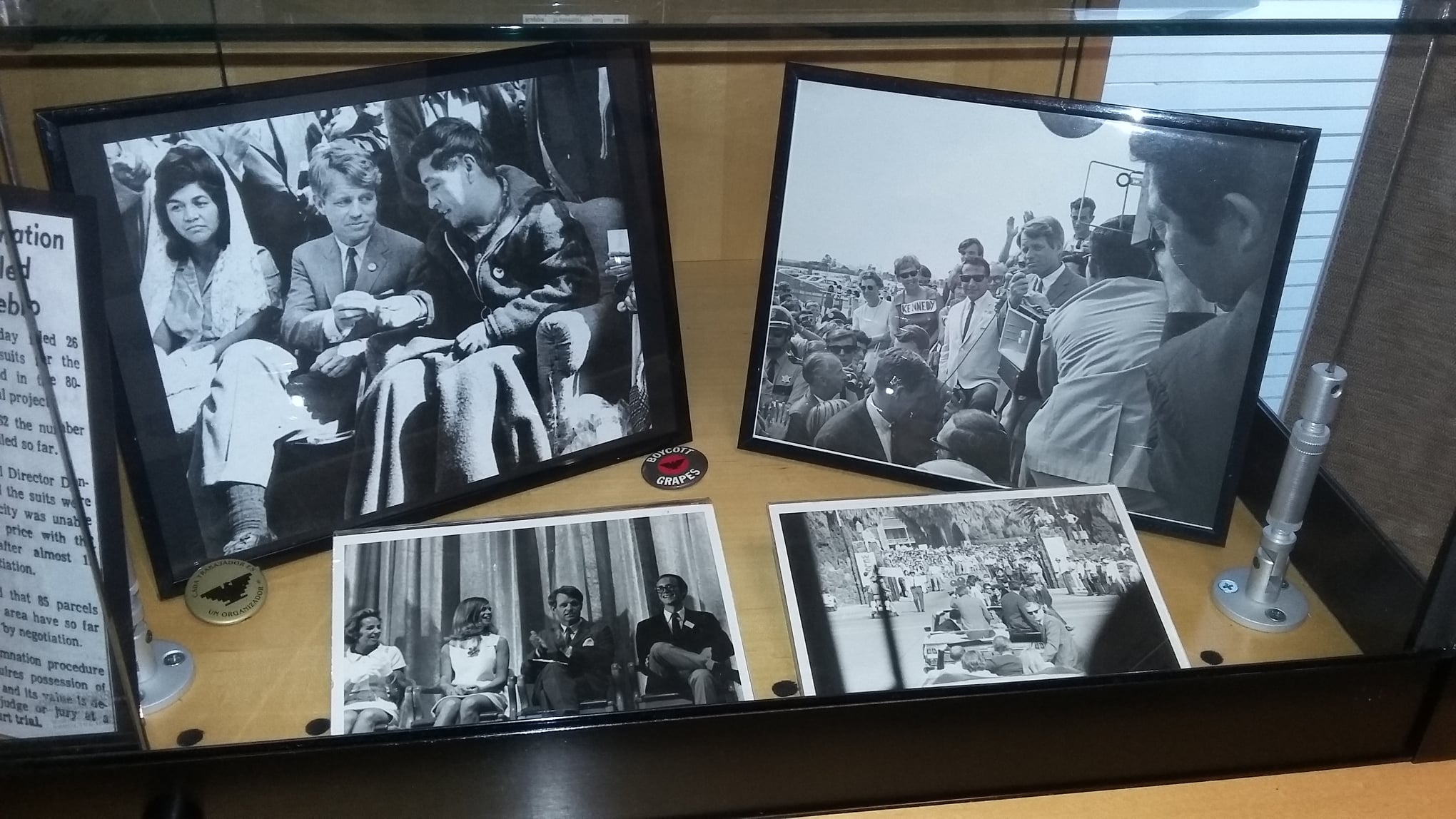
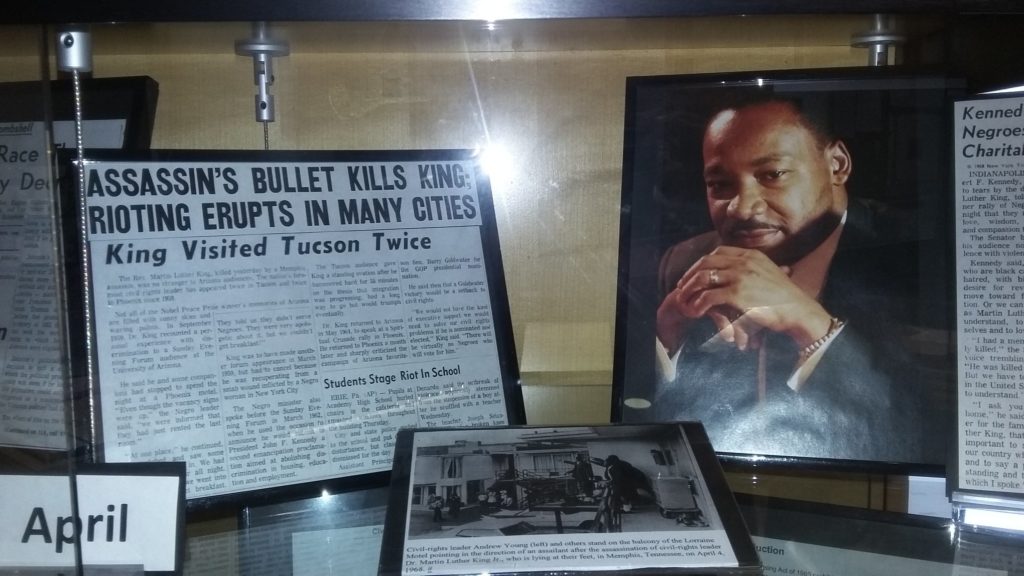
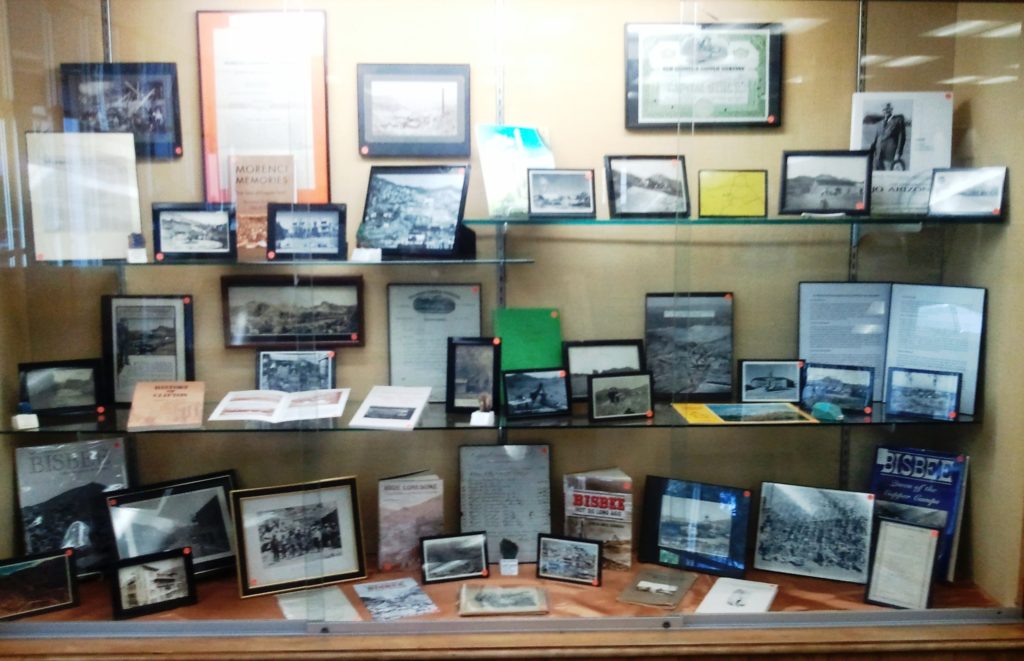
I chose materials for the exhibit case below. An inventory follows.
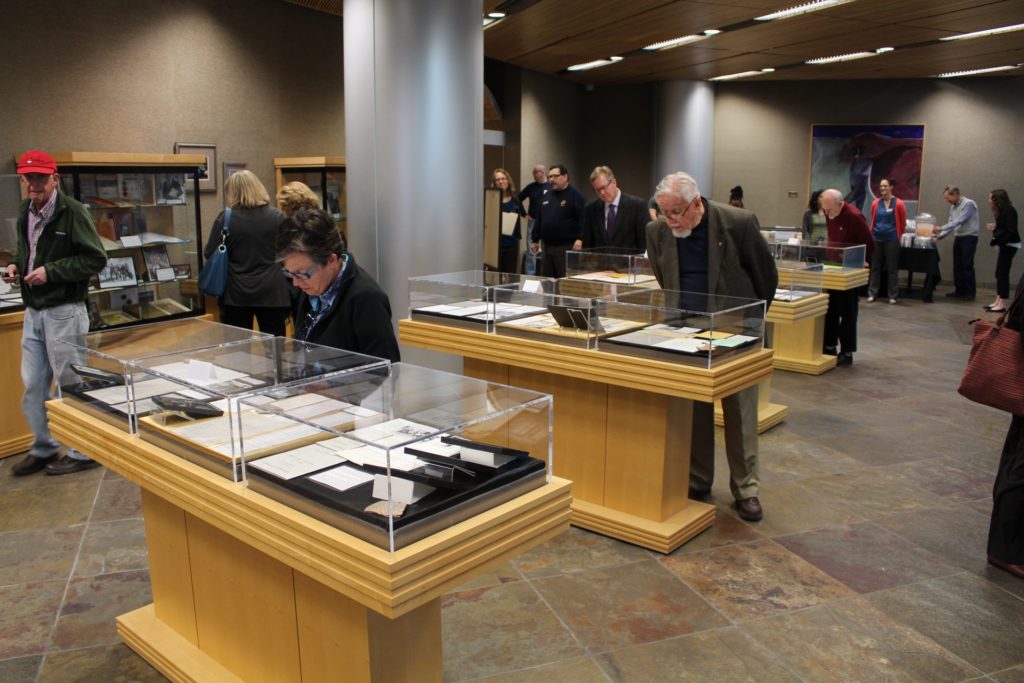
This is the exhibit case that I filled with memorabilia and documents from Special Collections. Below is the inventory of material included.
Most of the following photographs are from Special Collections. My colleague and the interior designer assigned to the renovation project worked with a professional photographer to restore and frame the historic photos included here.
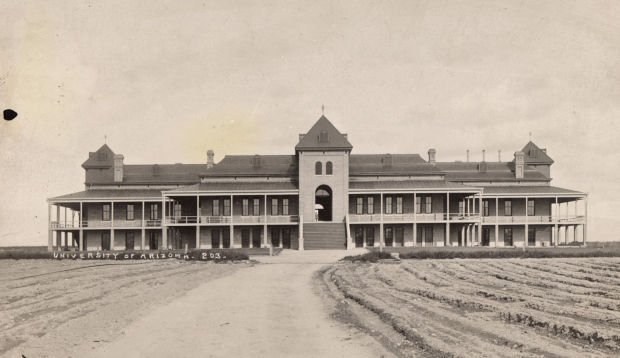
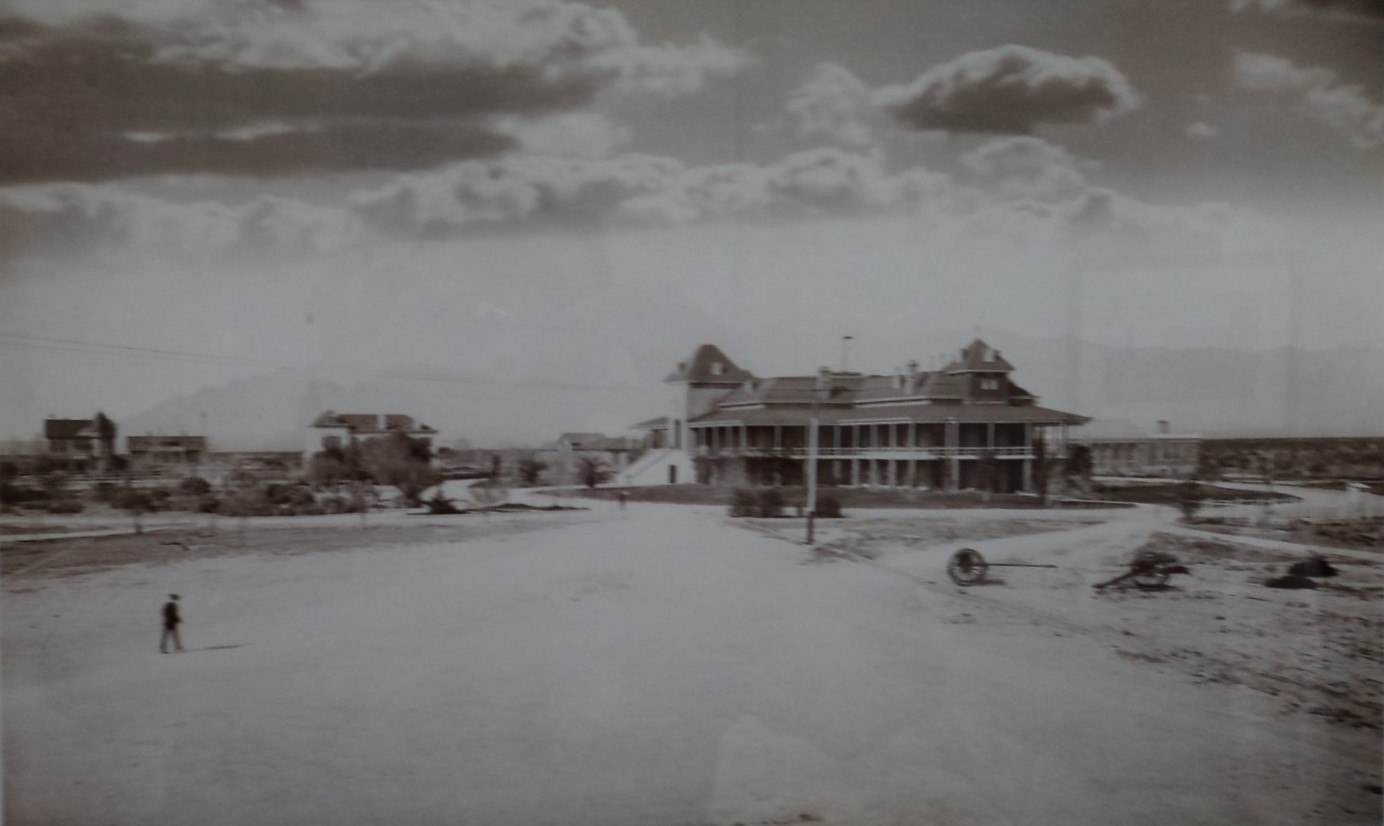
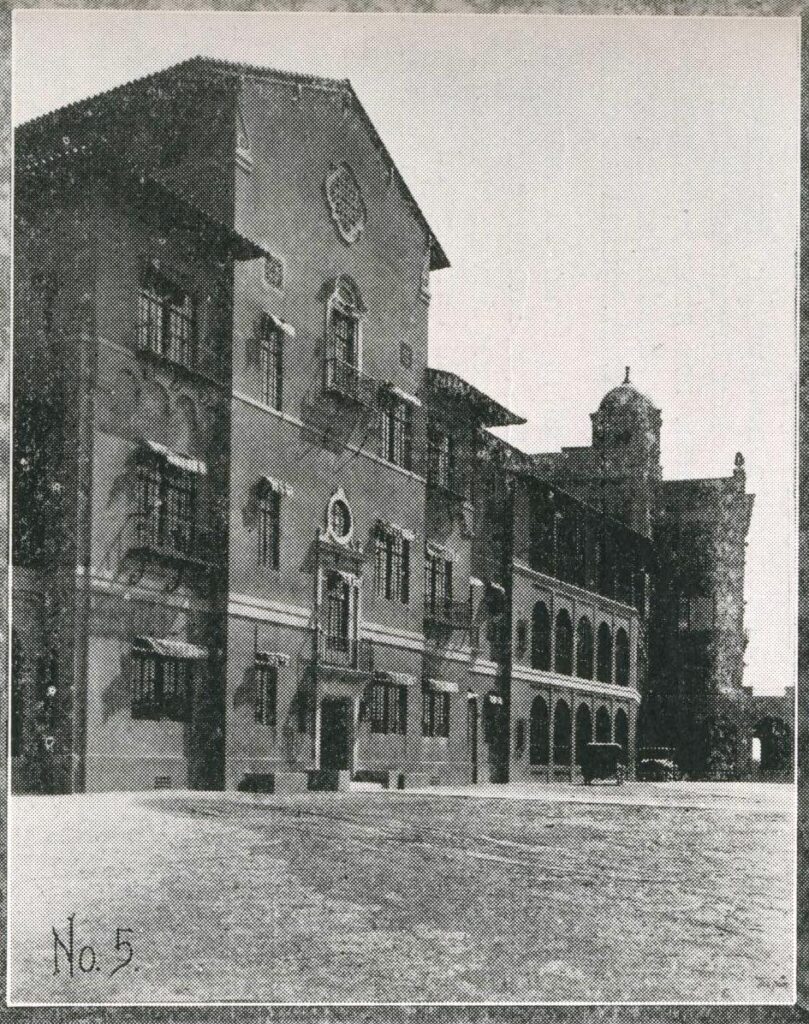
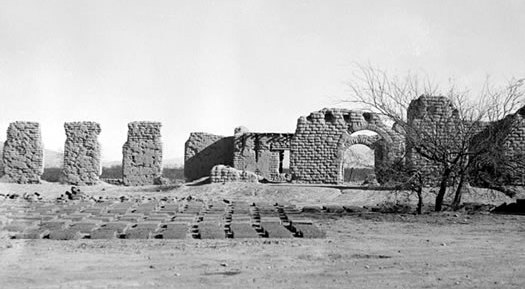
Old Main at the beginning…
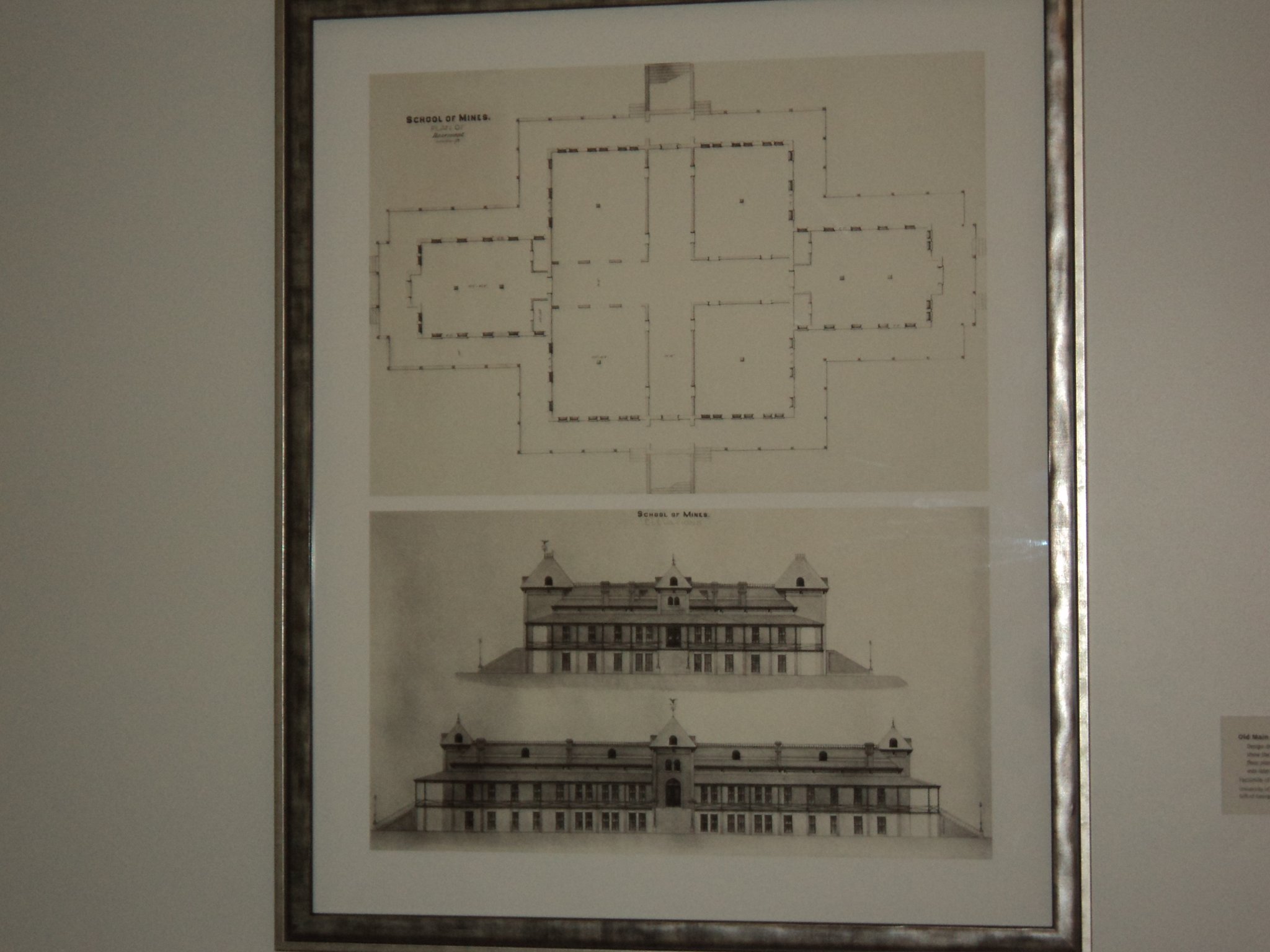
The original floor plan, courtesy of Special Collections.
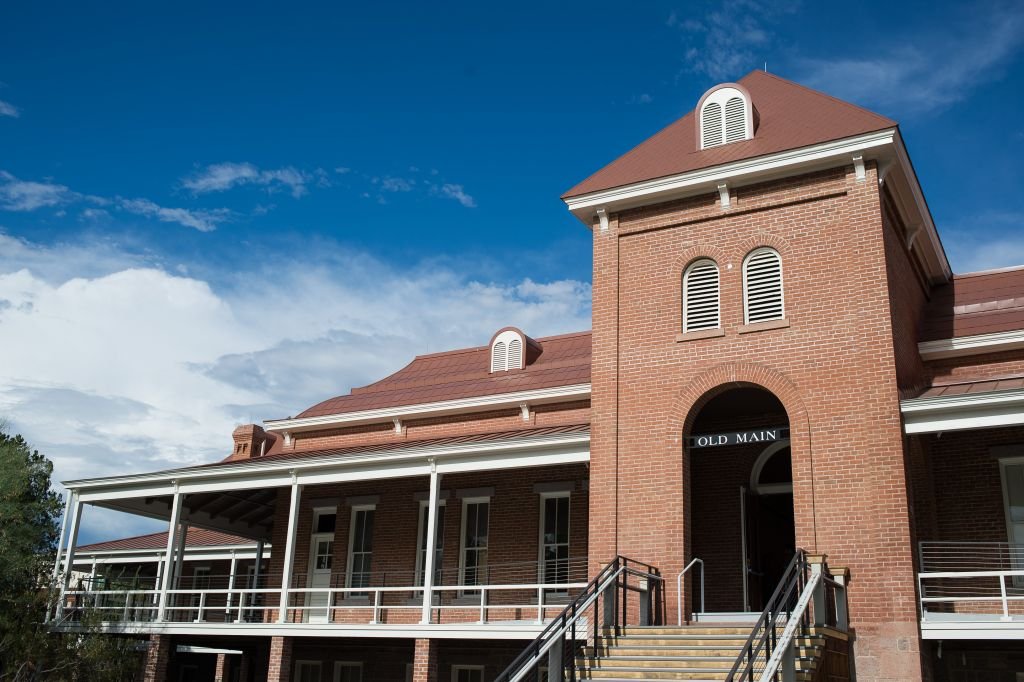
Old Main now.
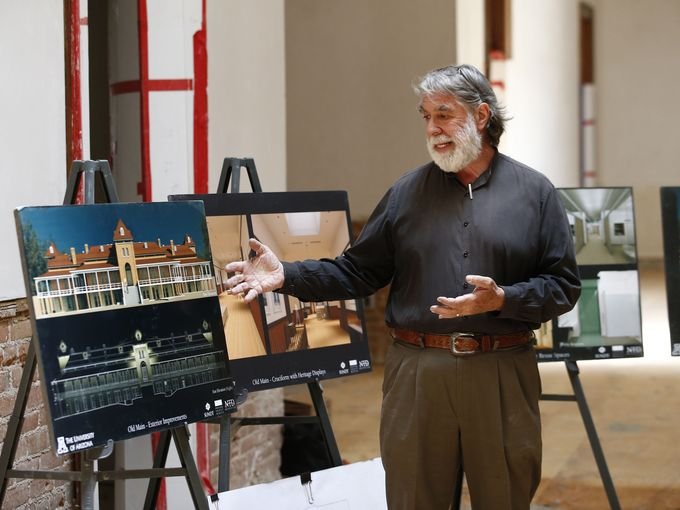
Corky Poster, one of the architects involved in the renovation project.
Photos from Special Collections above the exhibit case that I contributed material to.
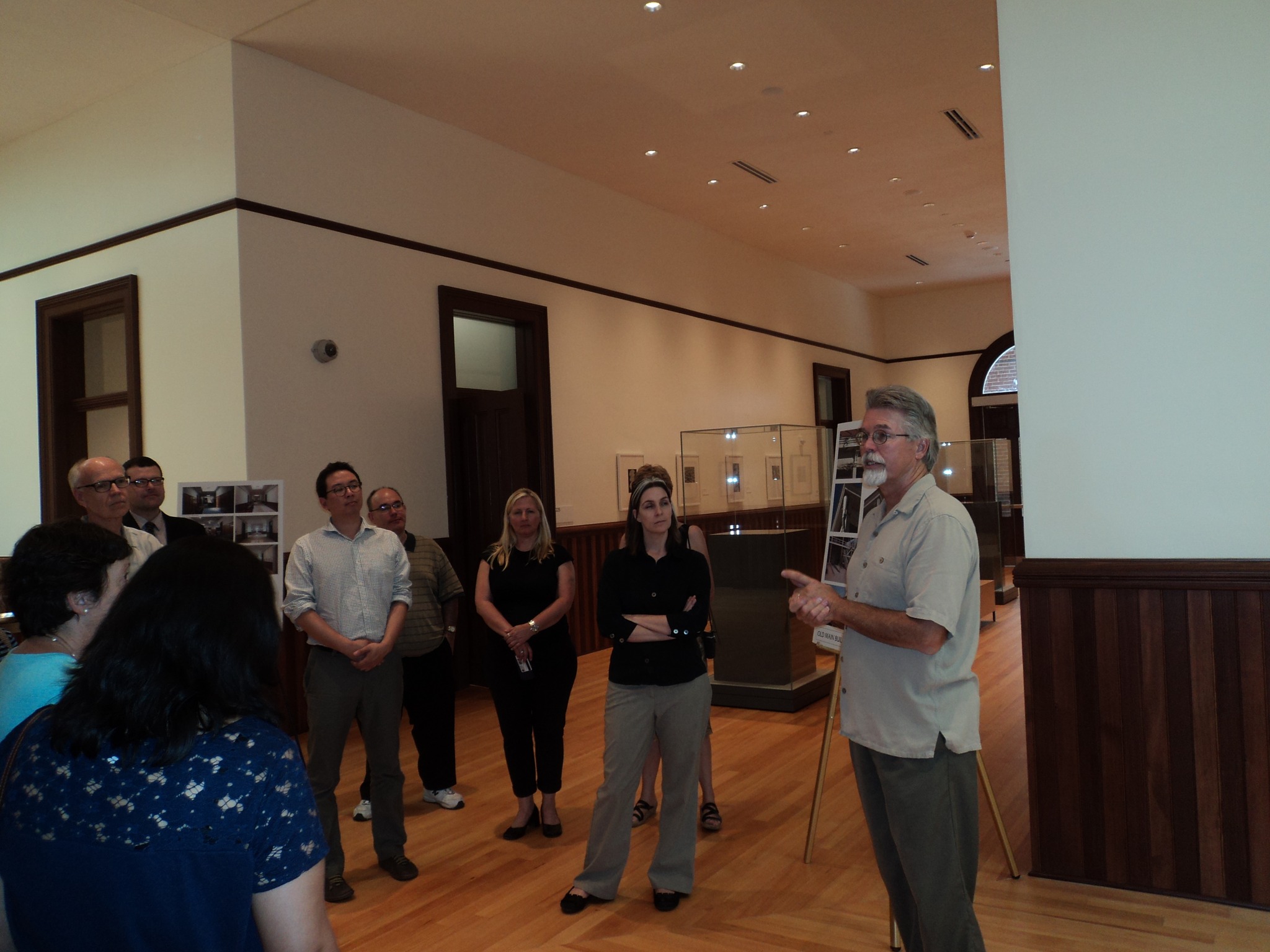
Rodney Mackey, a staff member of the UA’s Planning Design and Construction department, gave a tour to the UA staff who contributed artwork and artifacts to the project.
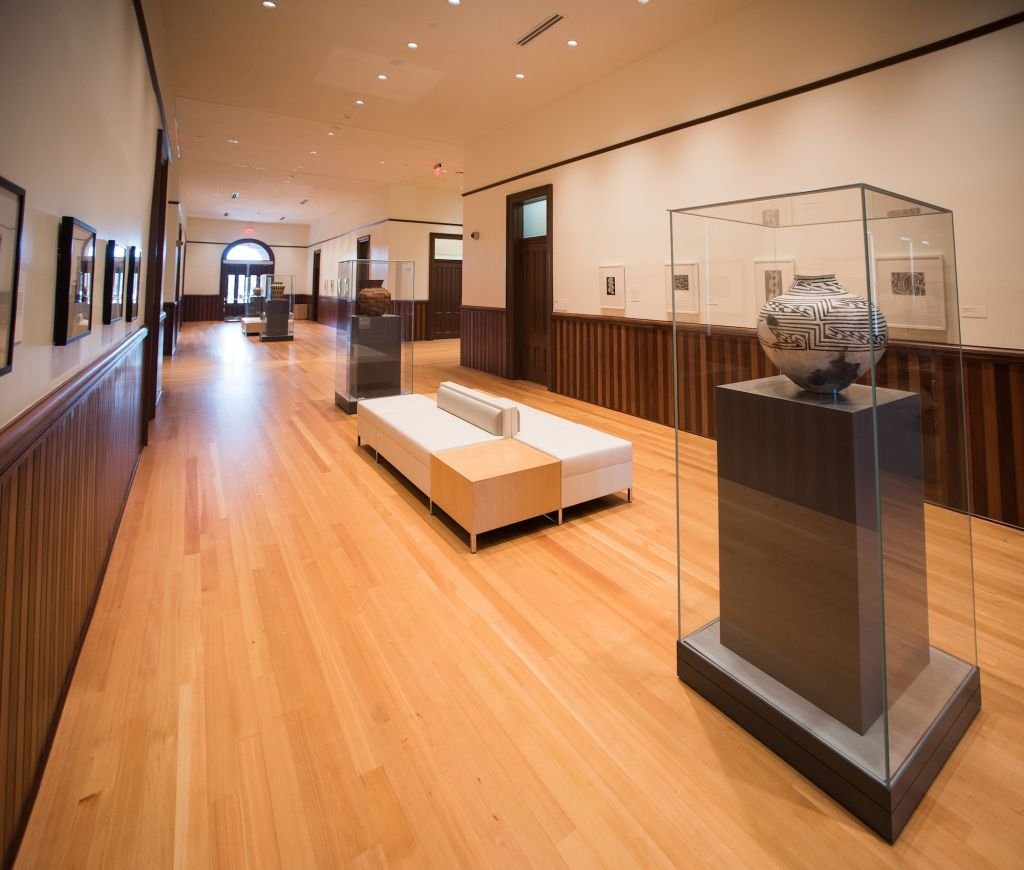
The Arizona State Museum contributed some beautiful American Indian pottery to the project.
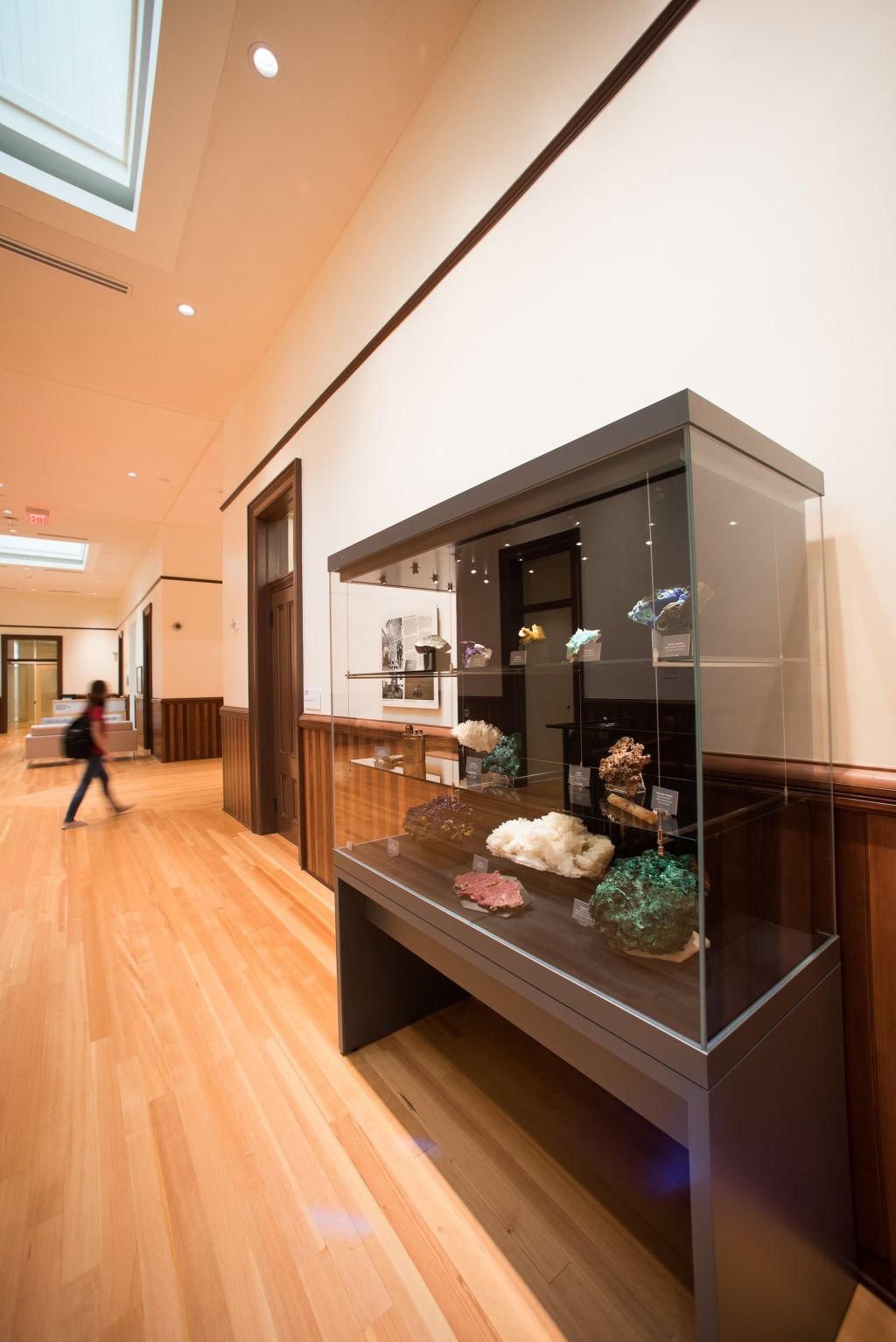
Minerals from the UA minerals collection.
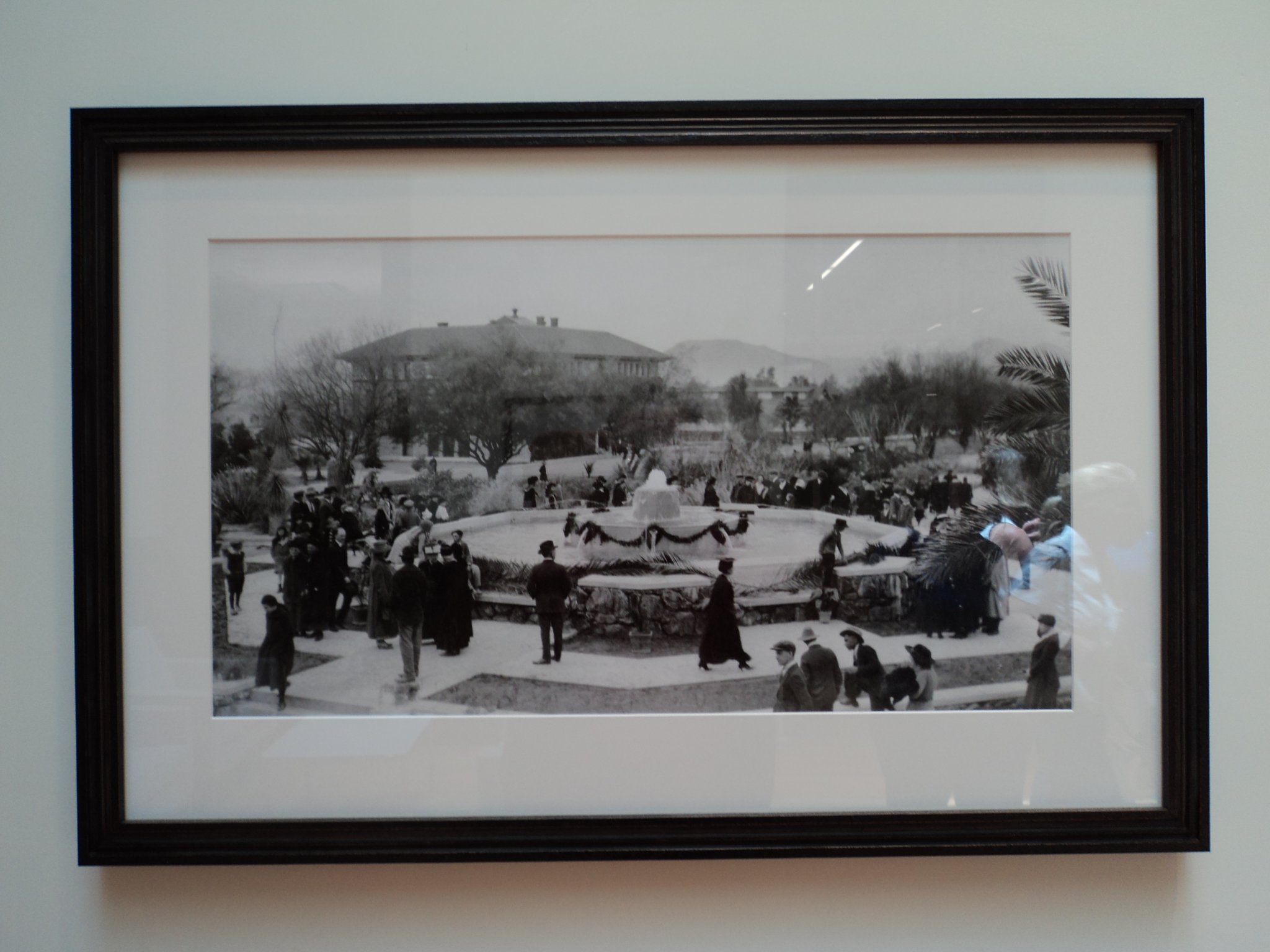
From Special Collections, a photo of an early 20th century celebration at the Old Main fountain.
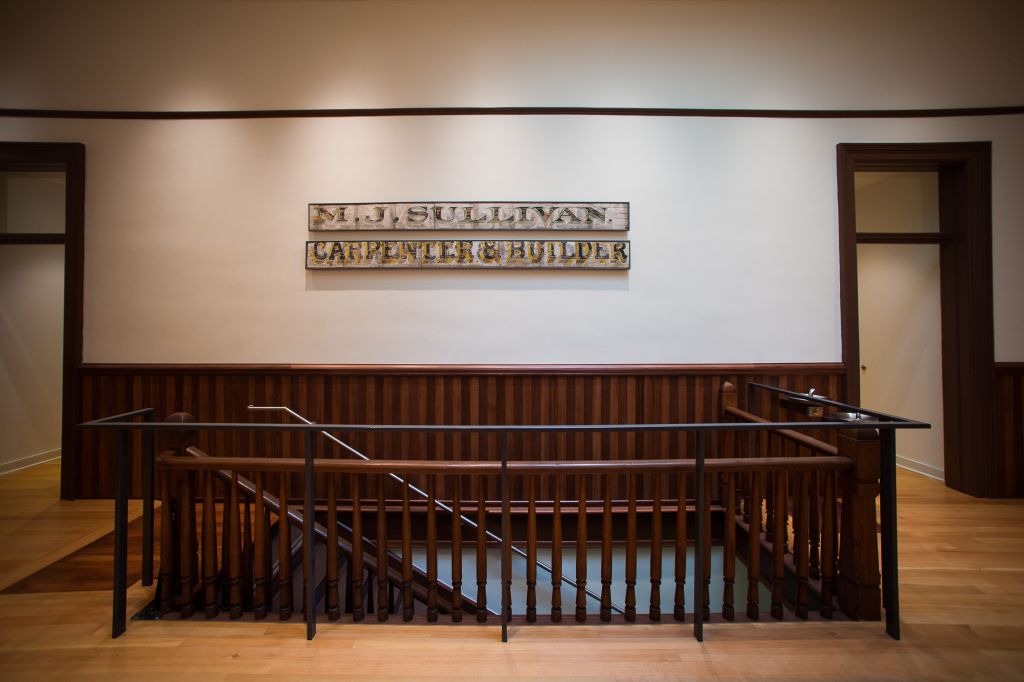
This sign, belonging to the original contractor, was found in the attic during the renovation.
The walls are also filled with photos from the Center for Creative Photography.
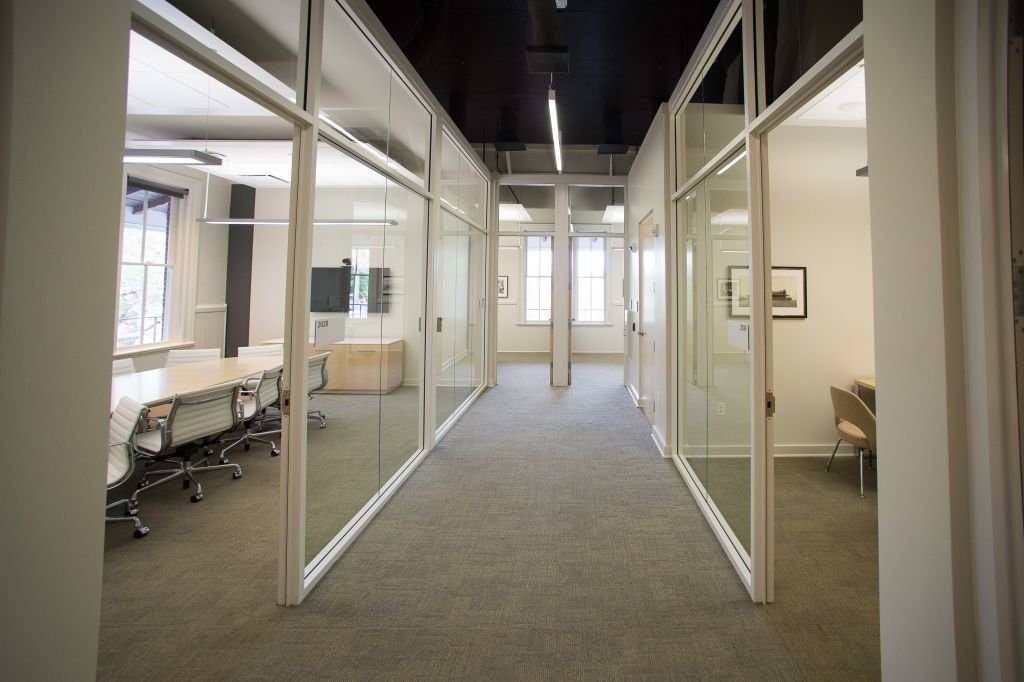
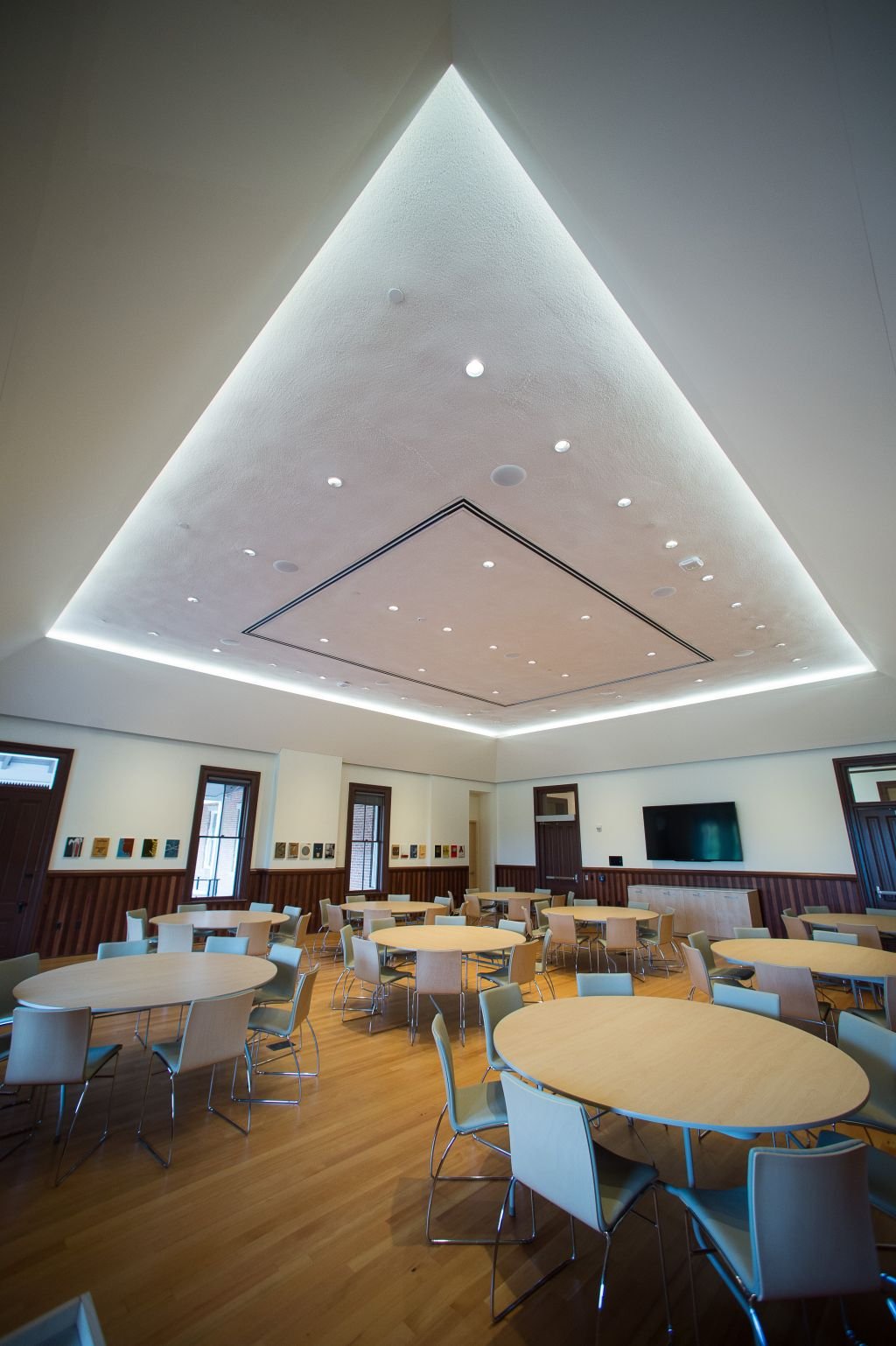
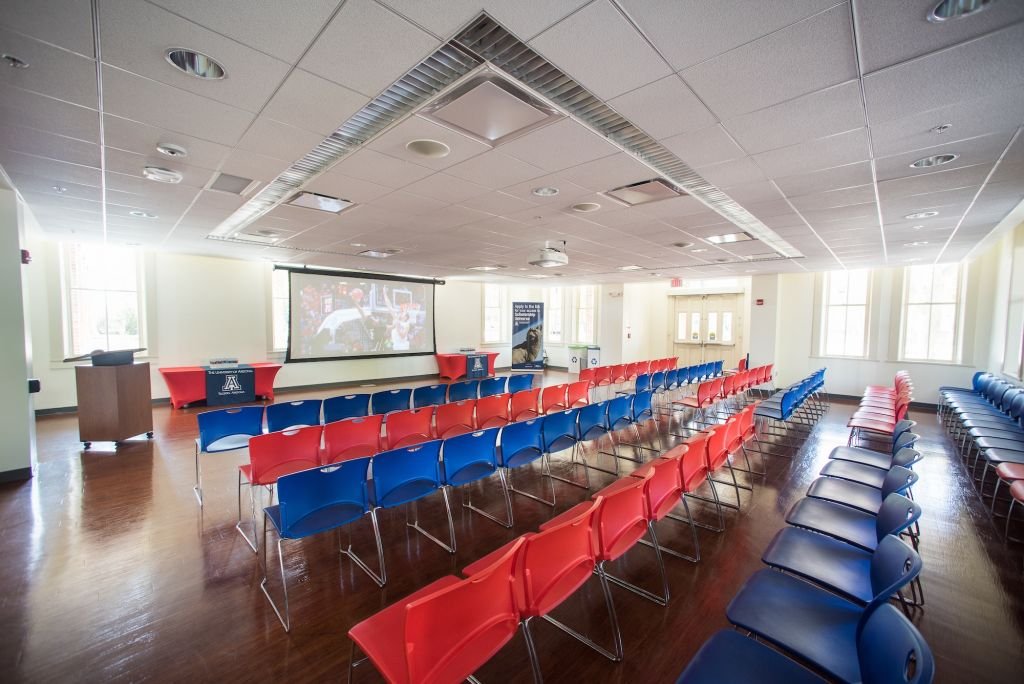
Meeting rooms on the 2nd floor.
Another shot of Old Main, courtesy of Special Collections.
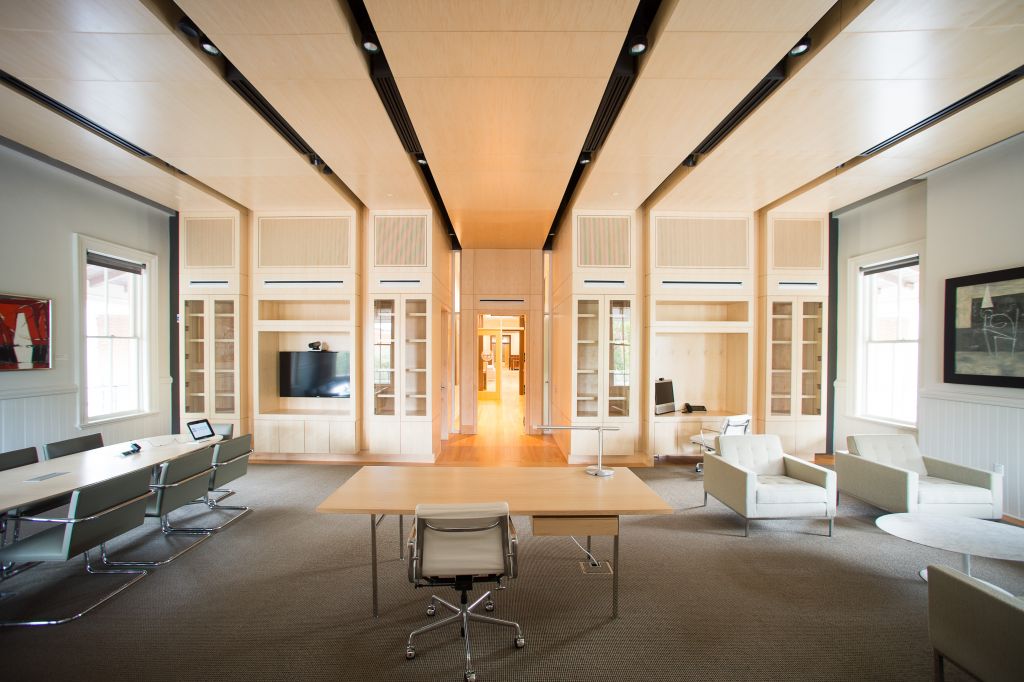
One of the larger meeting rooms on the 2nd floor.
Another large meeting room.
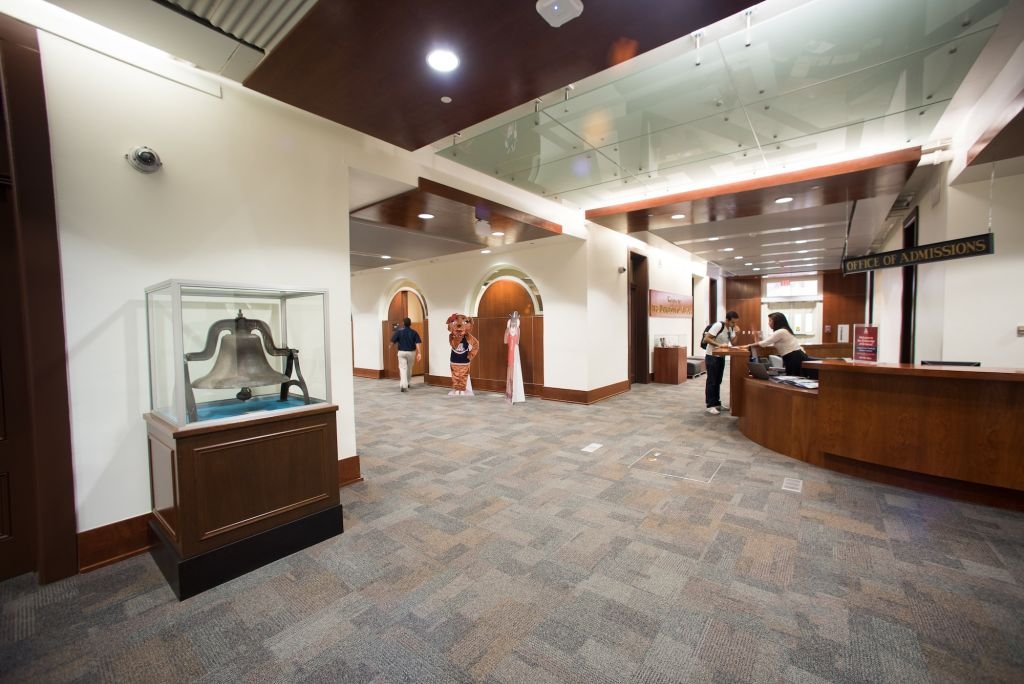
The reception area leading to the President’s office.
Students at work in a science classroom, early 1900’s.
UA co-eds outside one of the women’s dorms.
Yearbook covers lined the walls of the various meeting rooms on the renovated second floor.
The architects held an open house for contributors to the project in advance of the grand opening. Below are some of the photos of the renovation.
From a presentation given by the architect, Corky Poster.
Note: this page is still under construction. Please check back again later to see the complete post. Thanks.
2015 UA Alumni Association 50 Year reunion
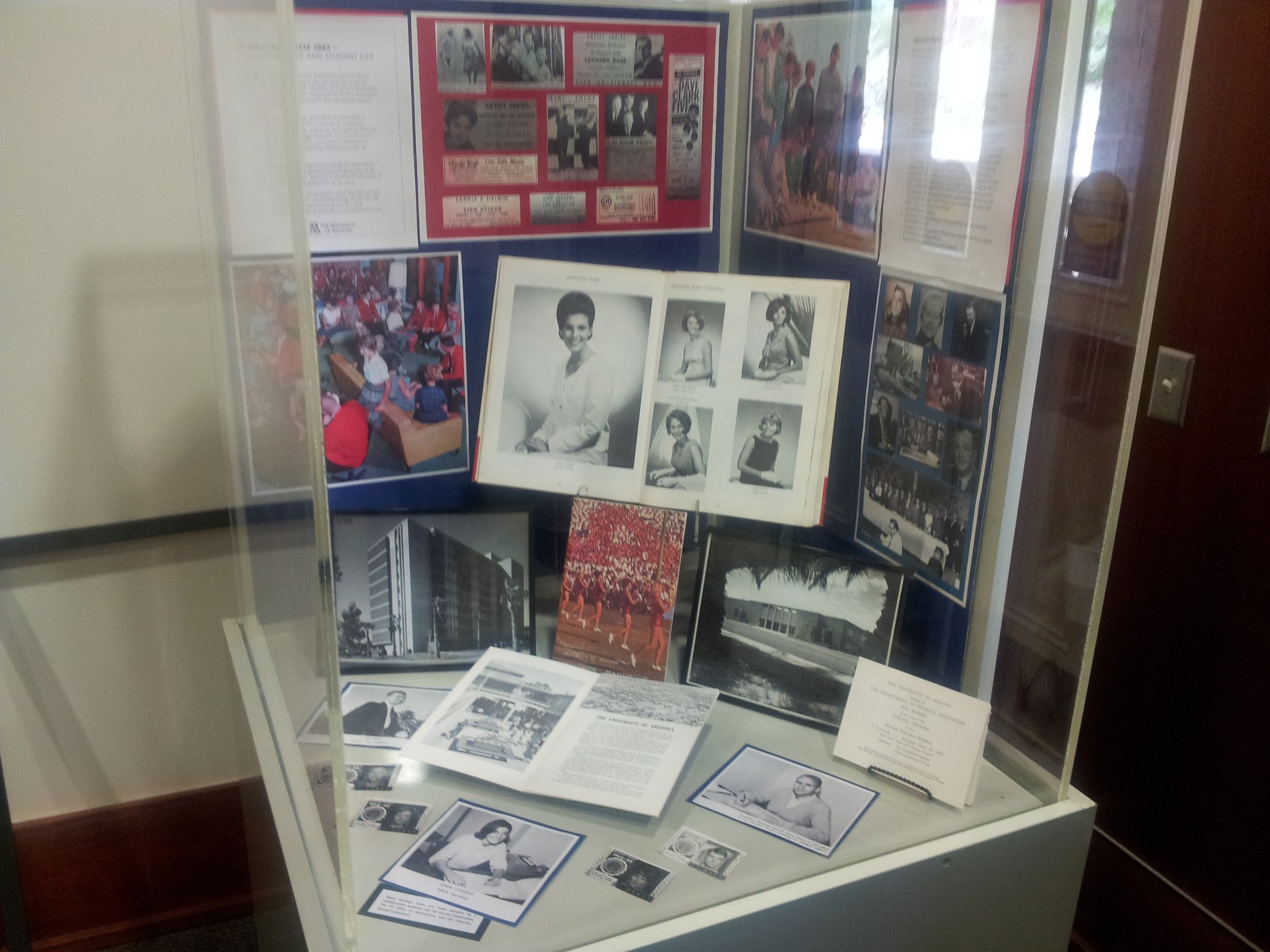
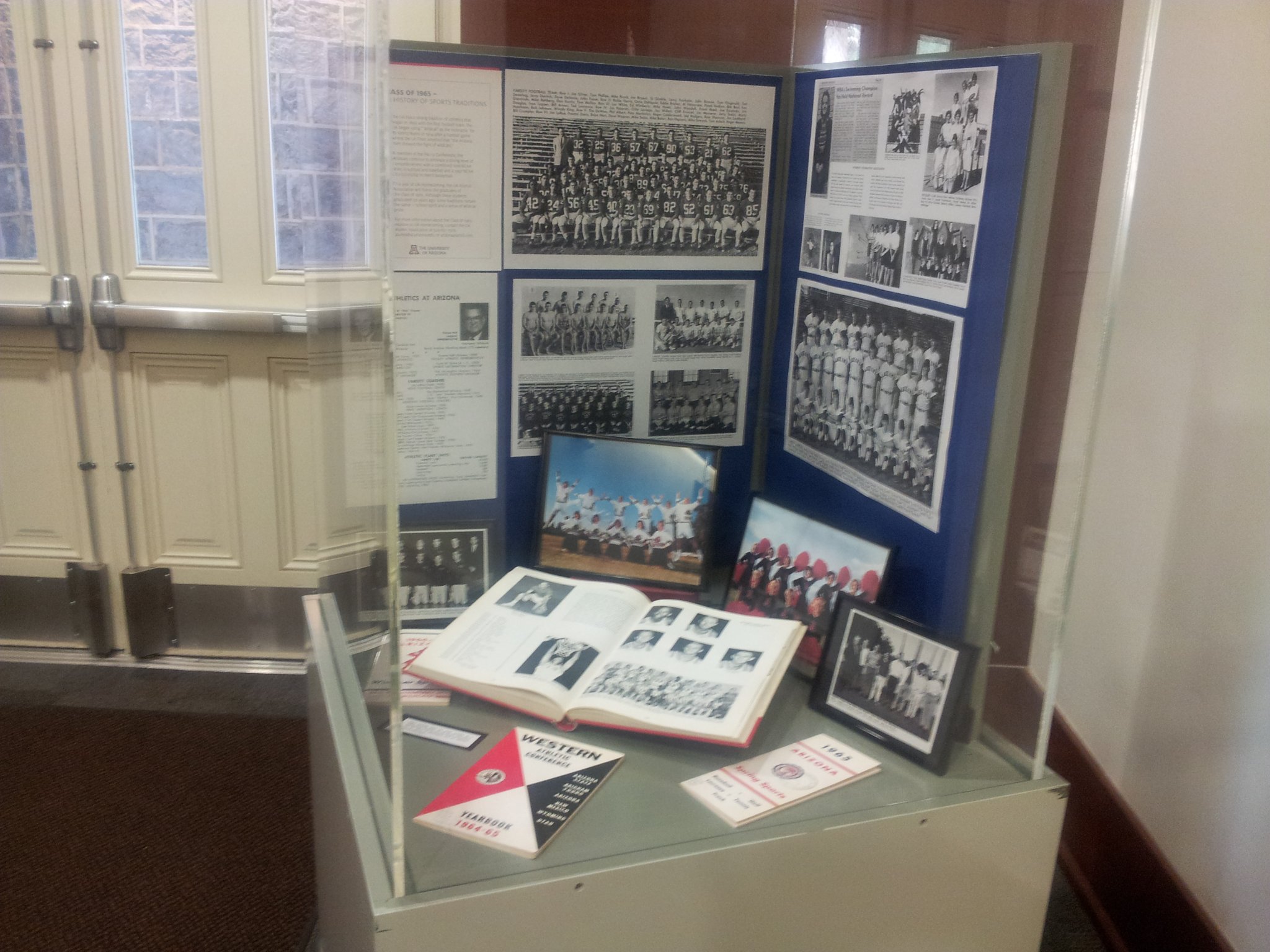
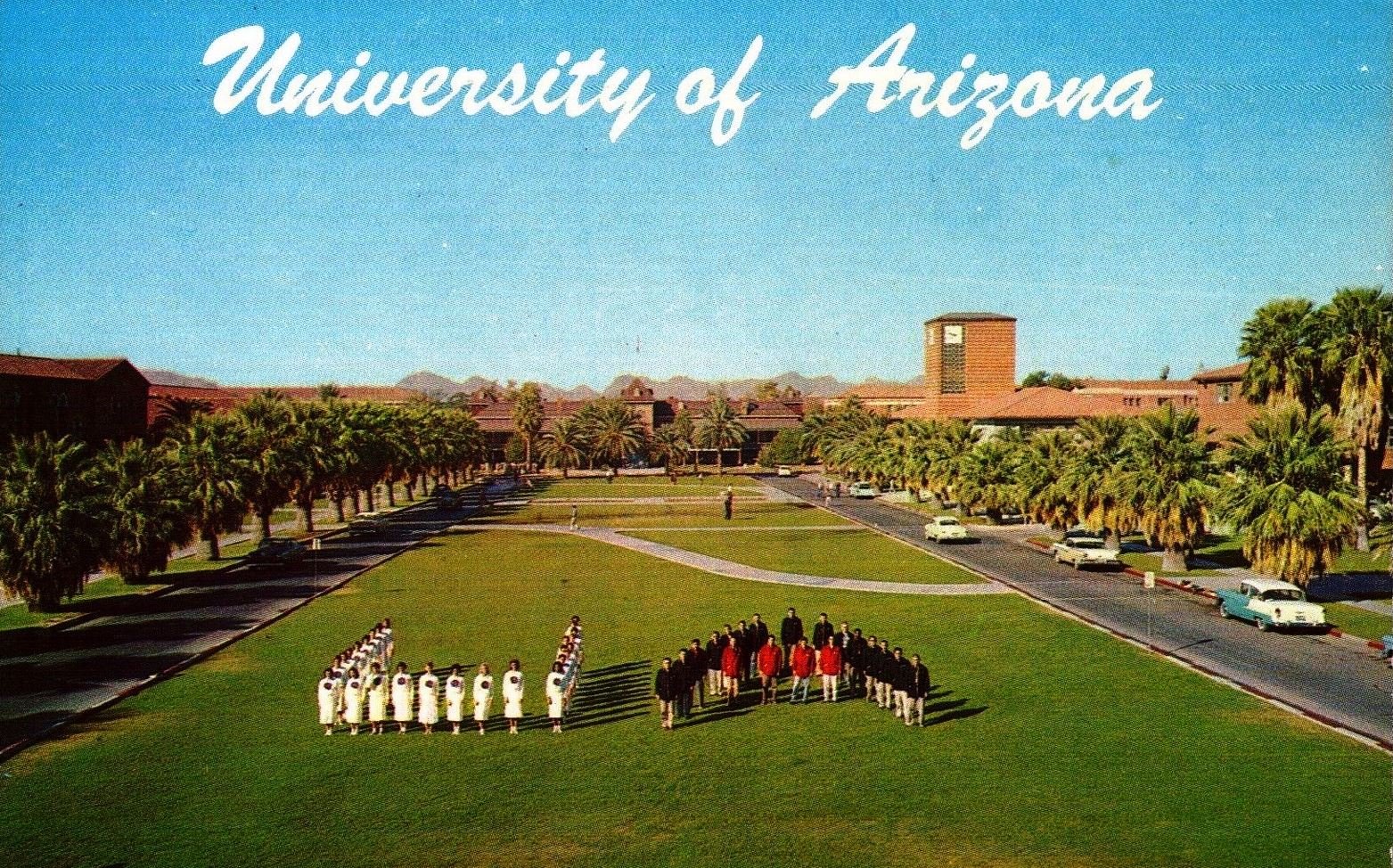
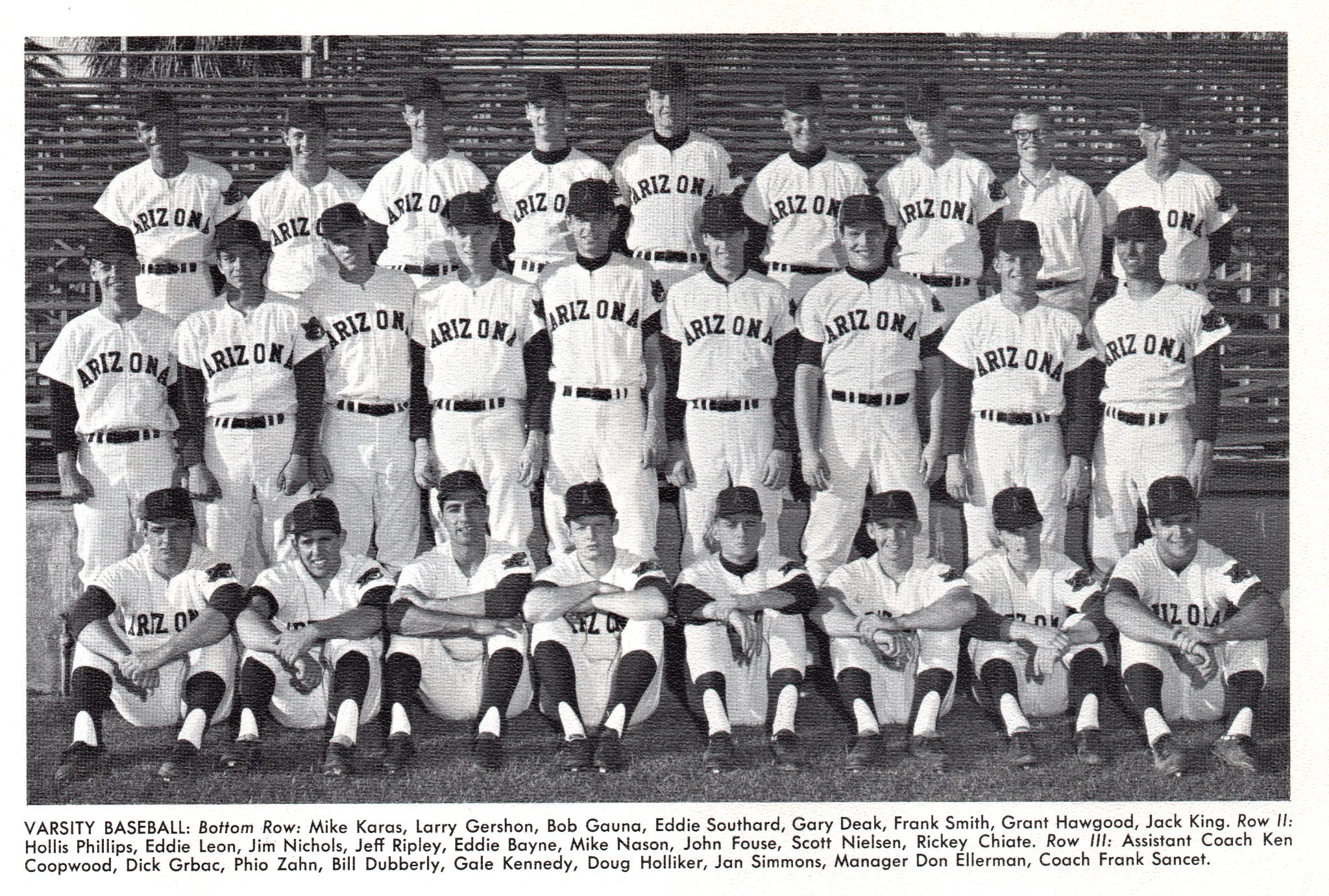
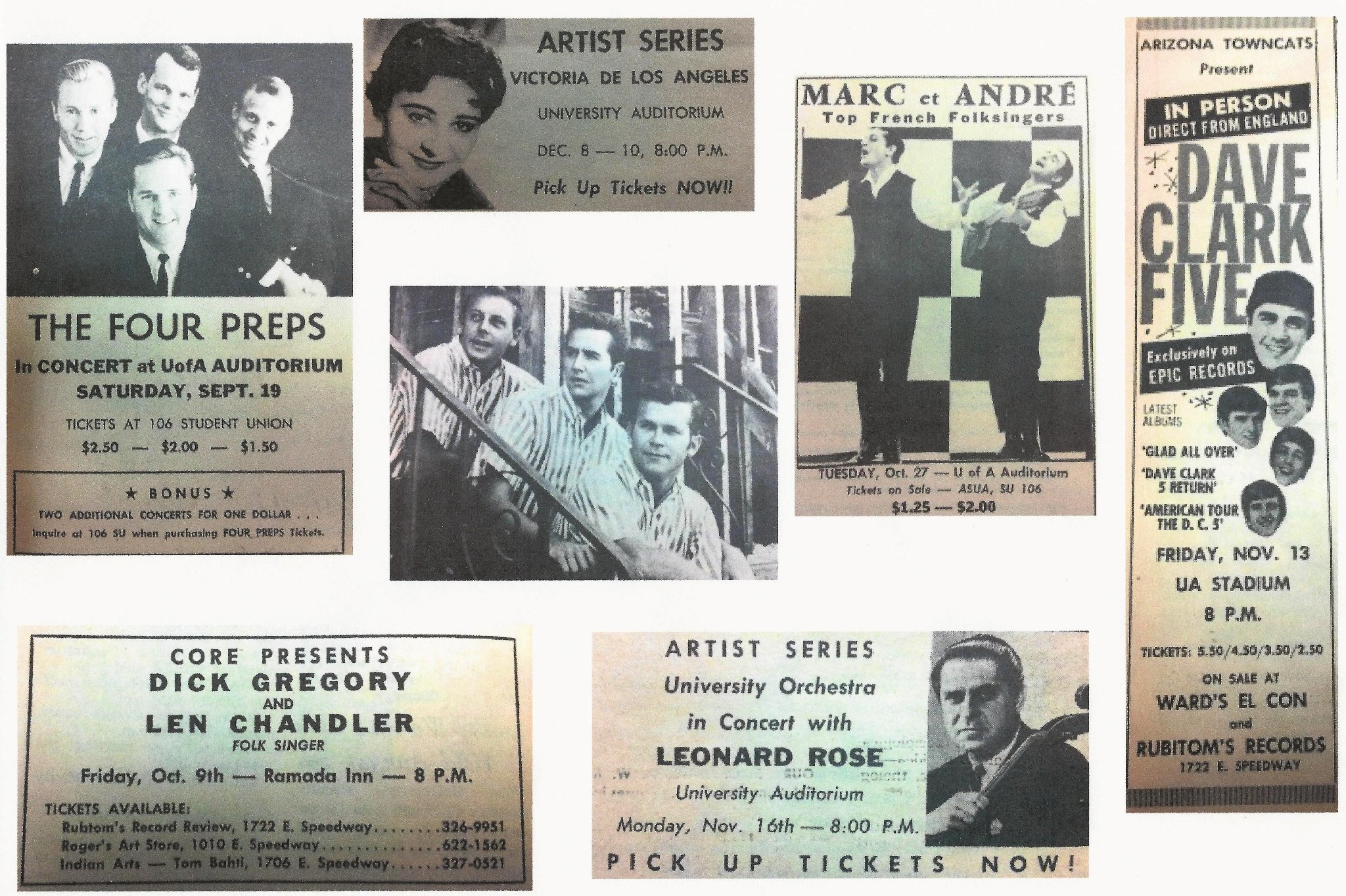
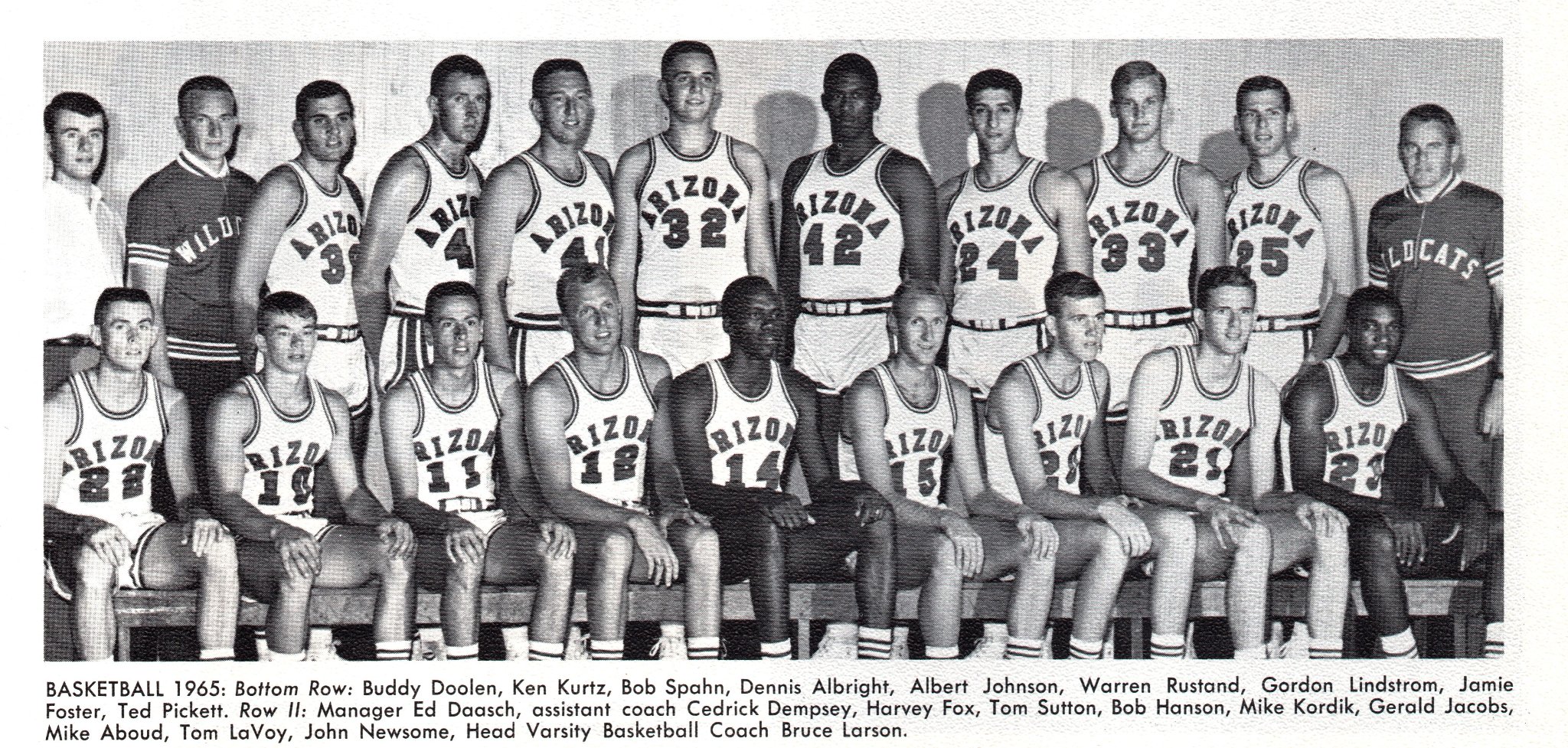
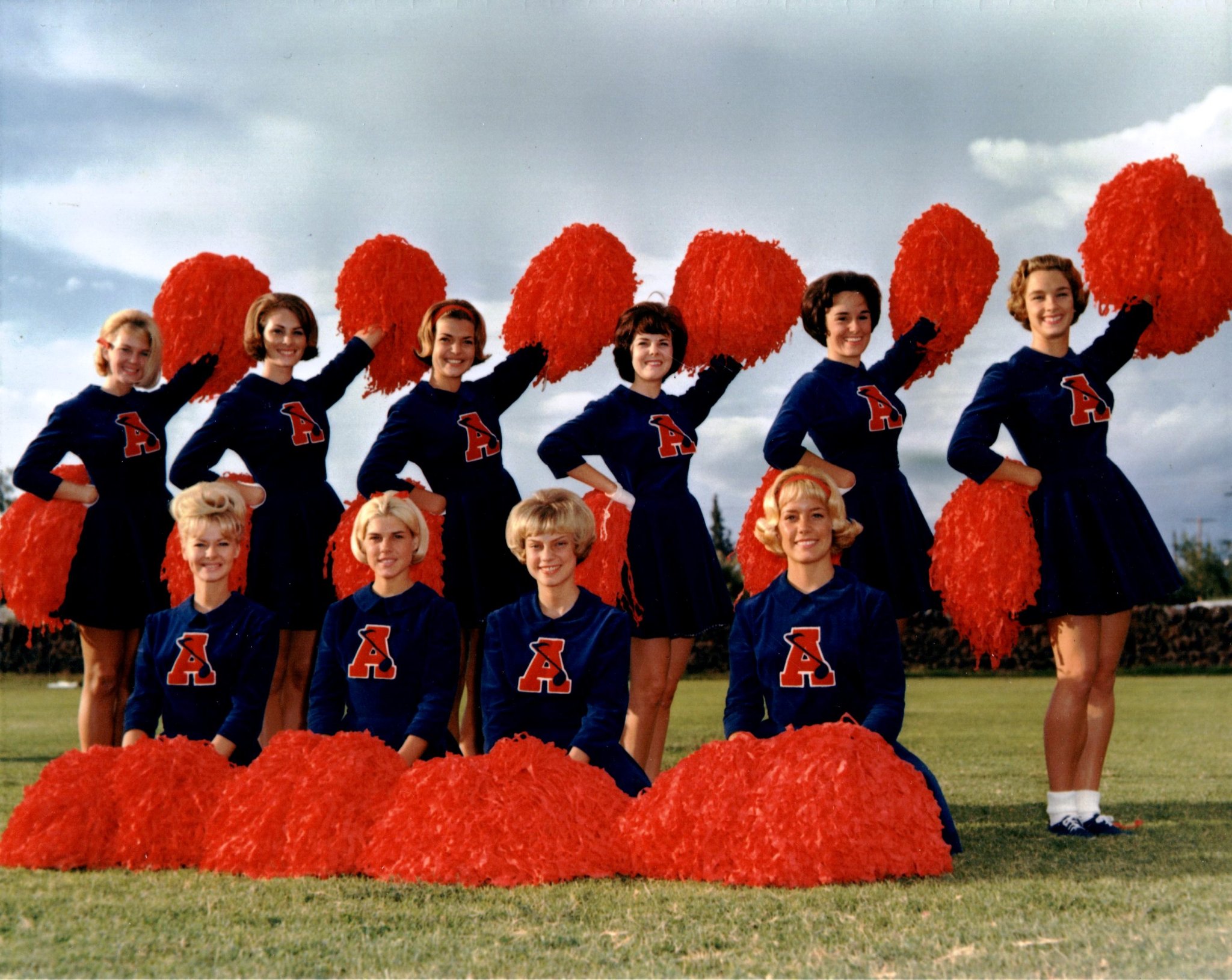
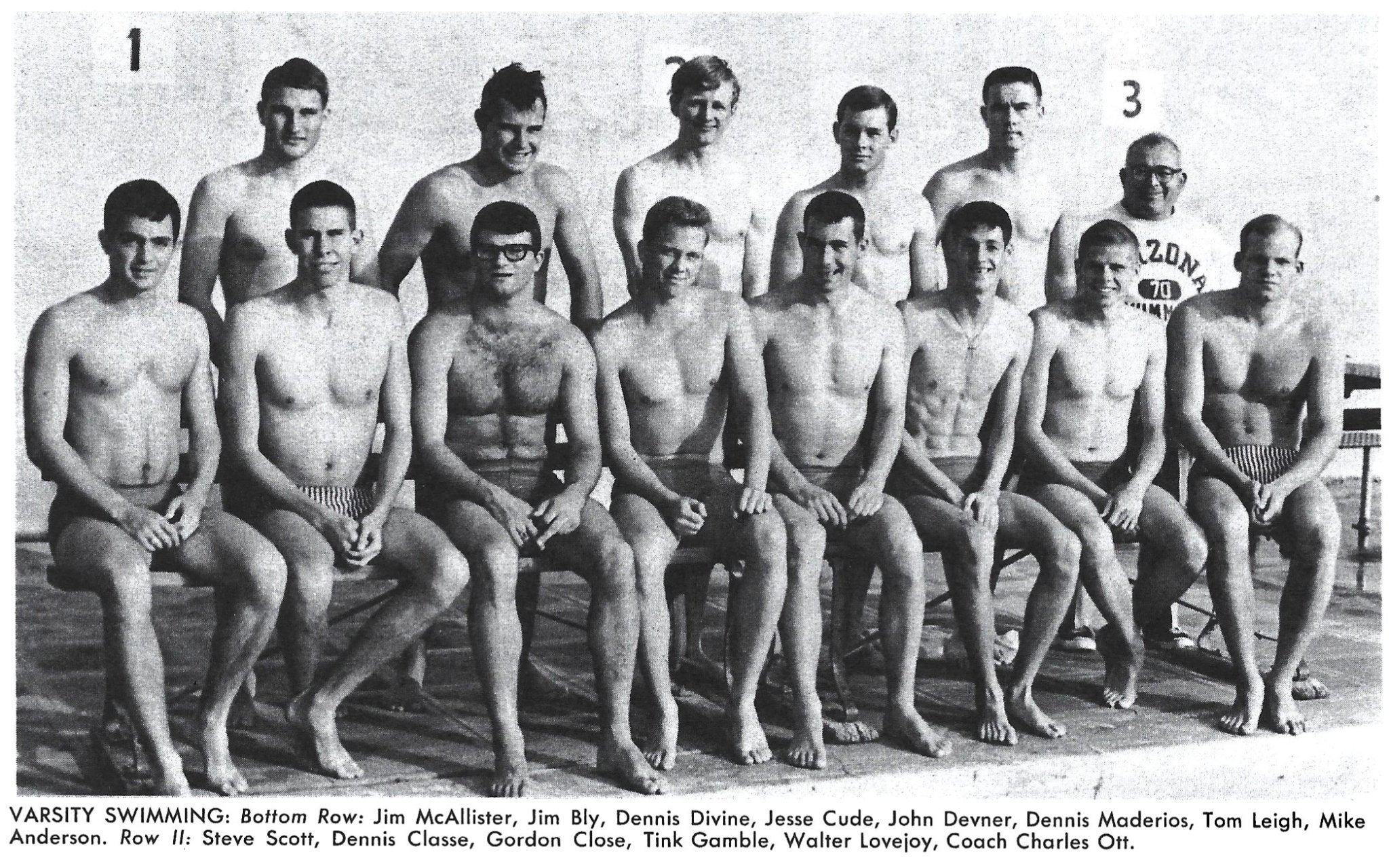
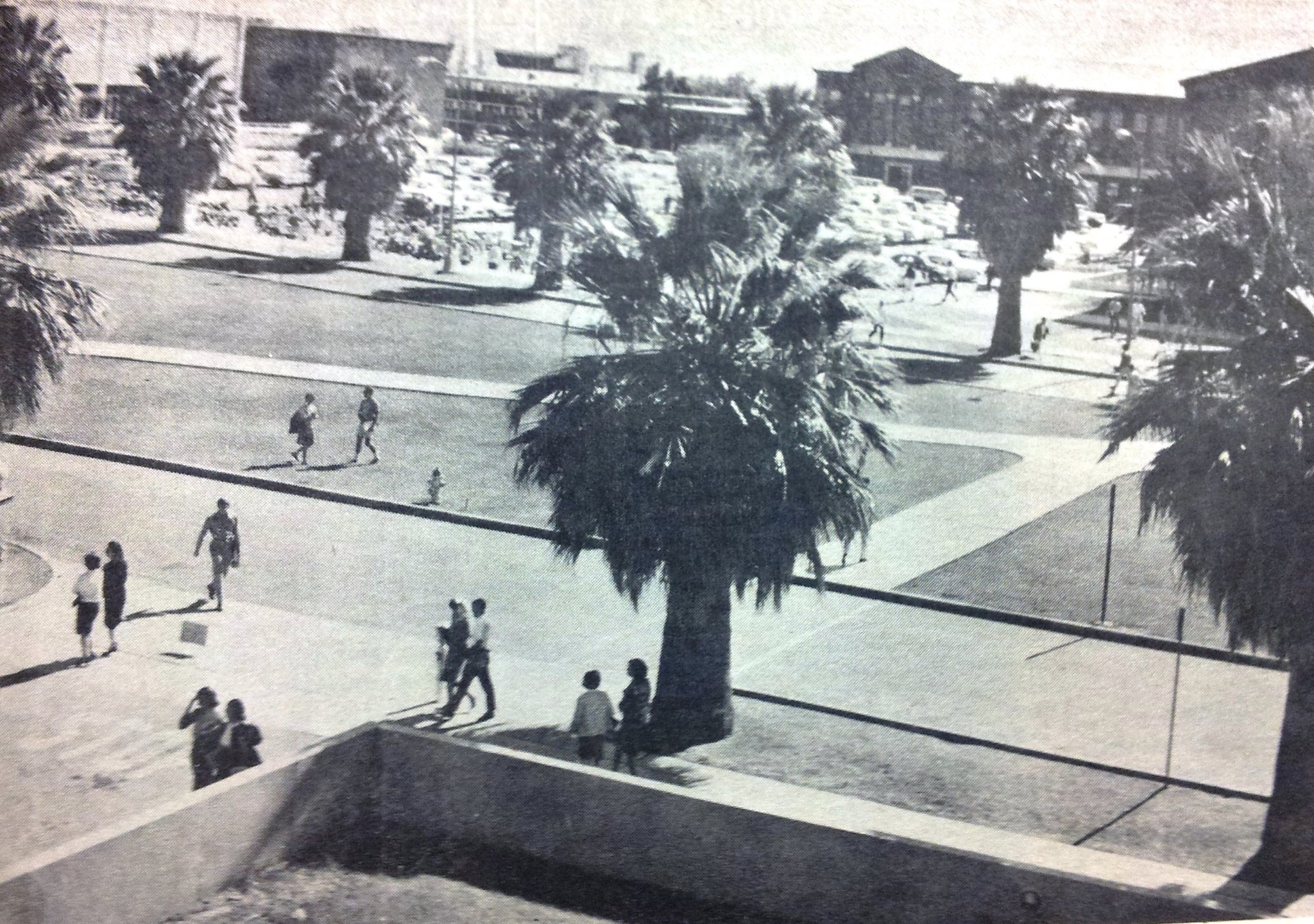
In early 2015, I was asked to work with representatives of the UA Alumni Association to create a small exhibit of materials from the UA Class of 1965. The exhibit cubes shown below are housed on the 1st floor of Old Main. The exhibit remained in place for several years.
I did a lot of research for this particular exhibit, and could not possibly fit everthing I wanted to into three cases. I still have all the material I gathered and will be adding more to this blog post, as there is no limit here. I can add as much stuff as I want, so I will! What I have gathered together so far does not provide much context for what happened in 1965, so I’ll be working to add more factual information and additional photos etc. Stay tuned. It may take me a while, but I’ll get there soon enough!
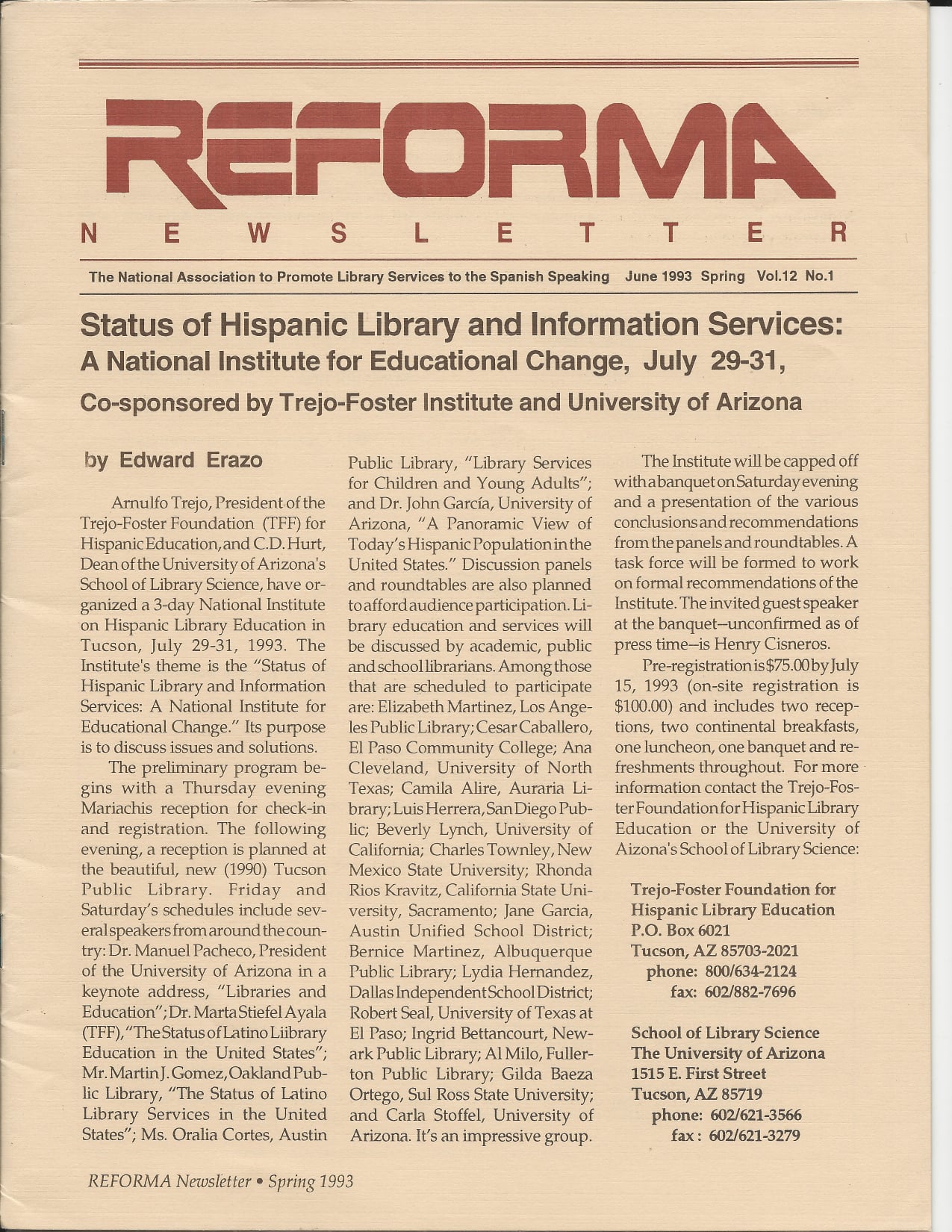
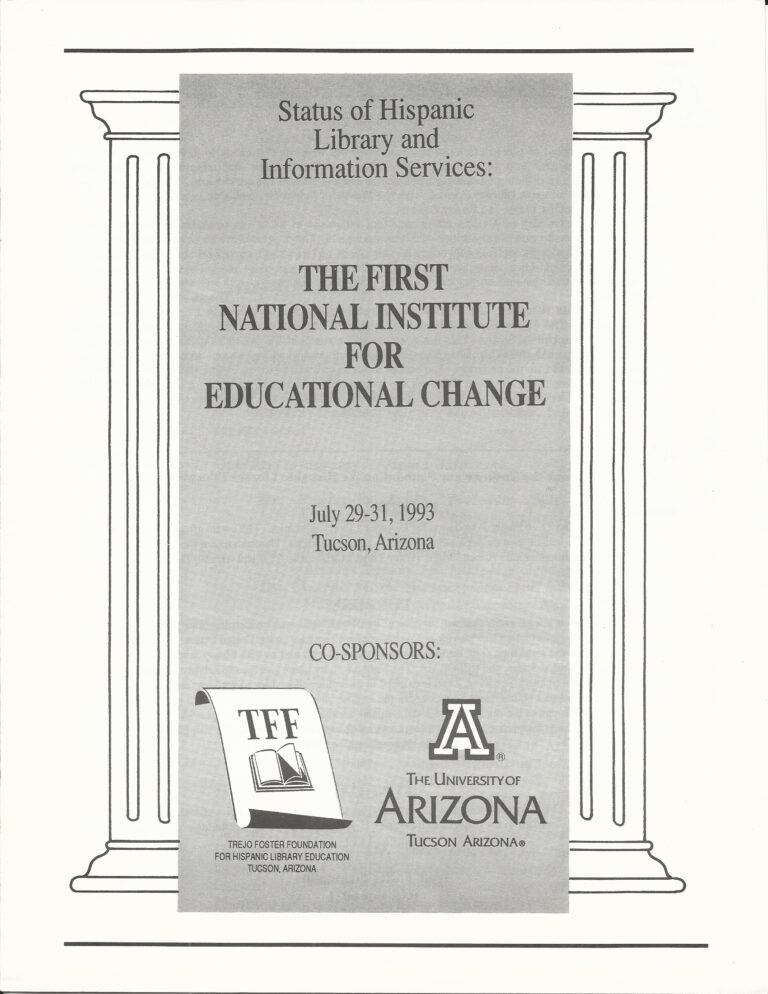
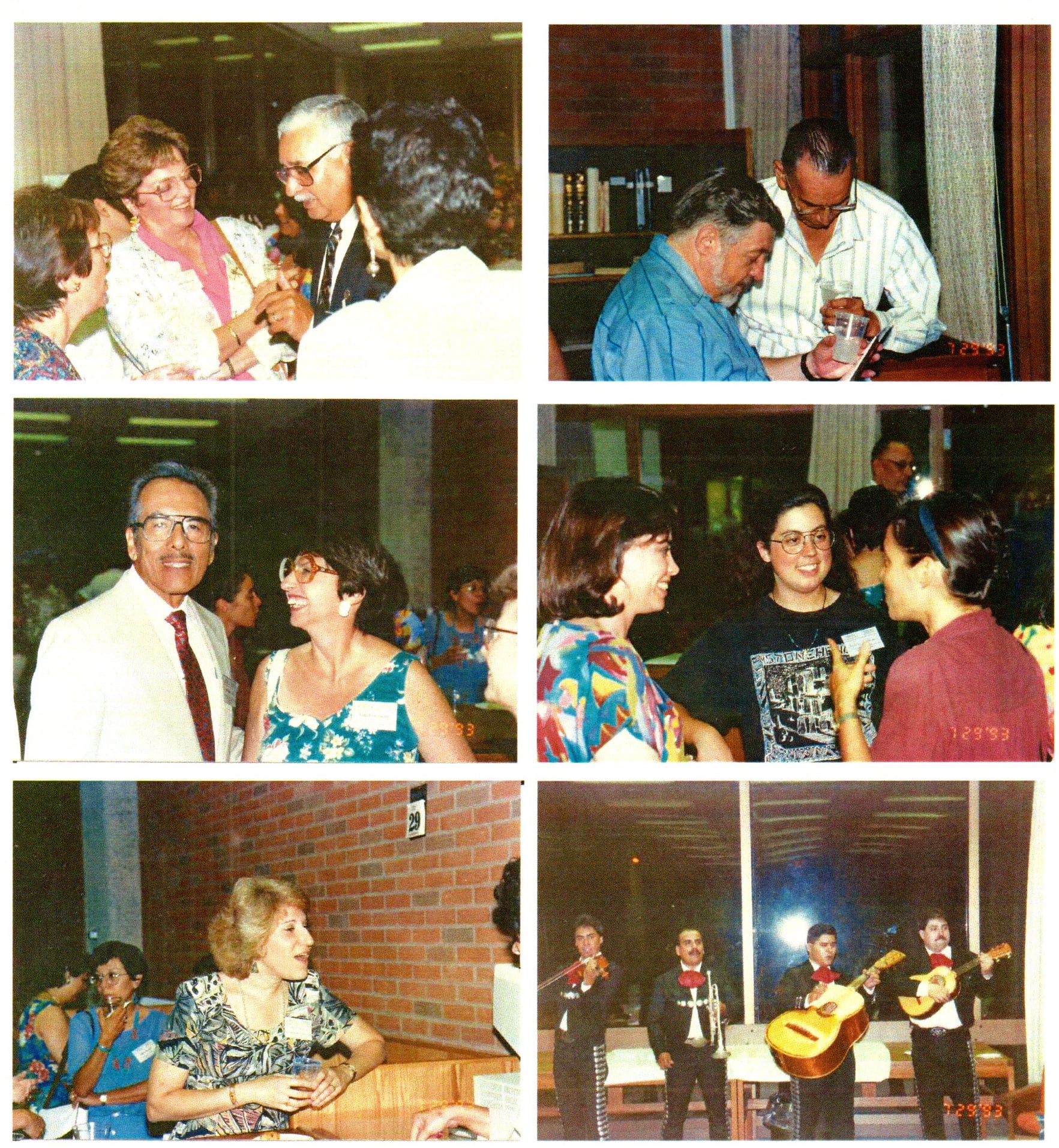
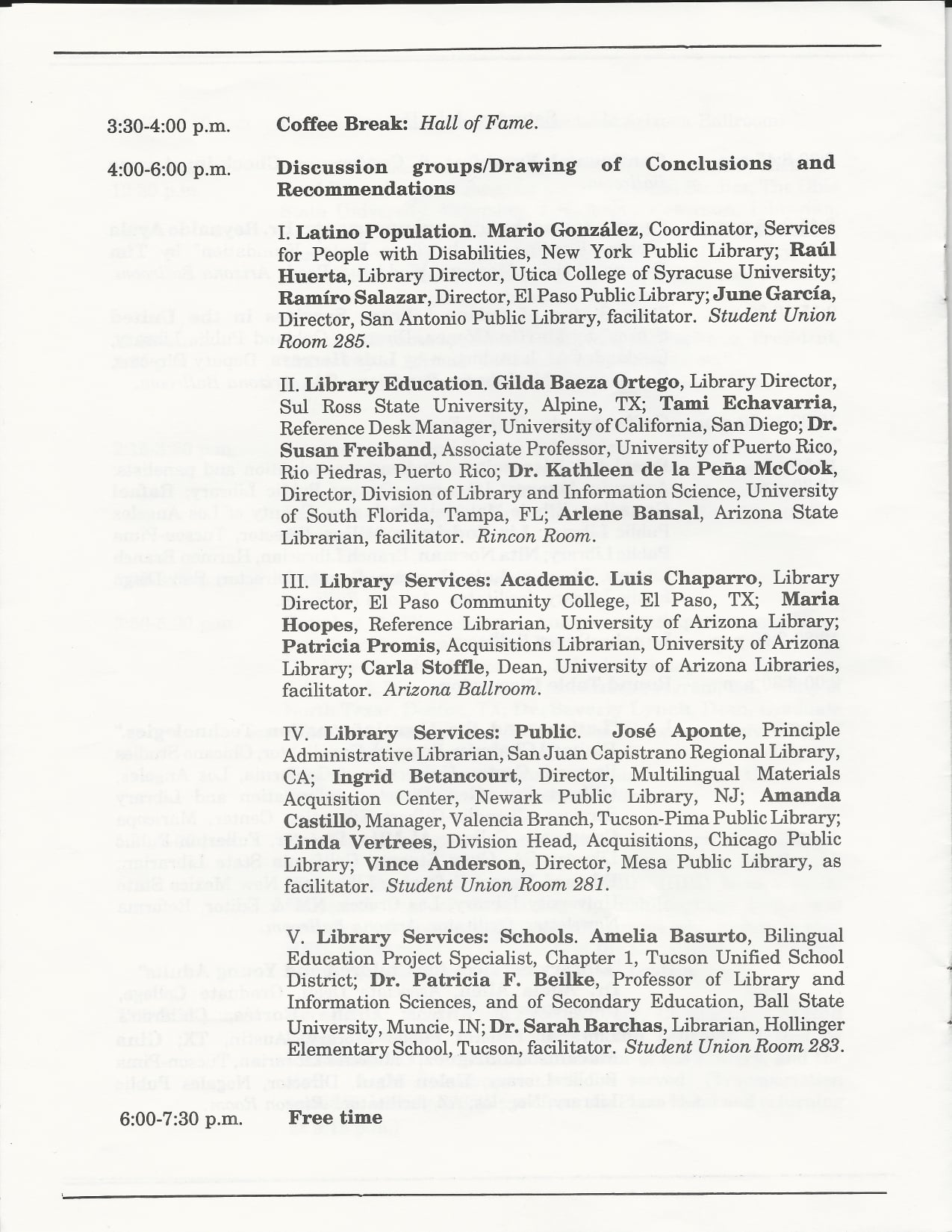
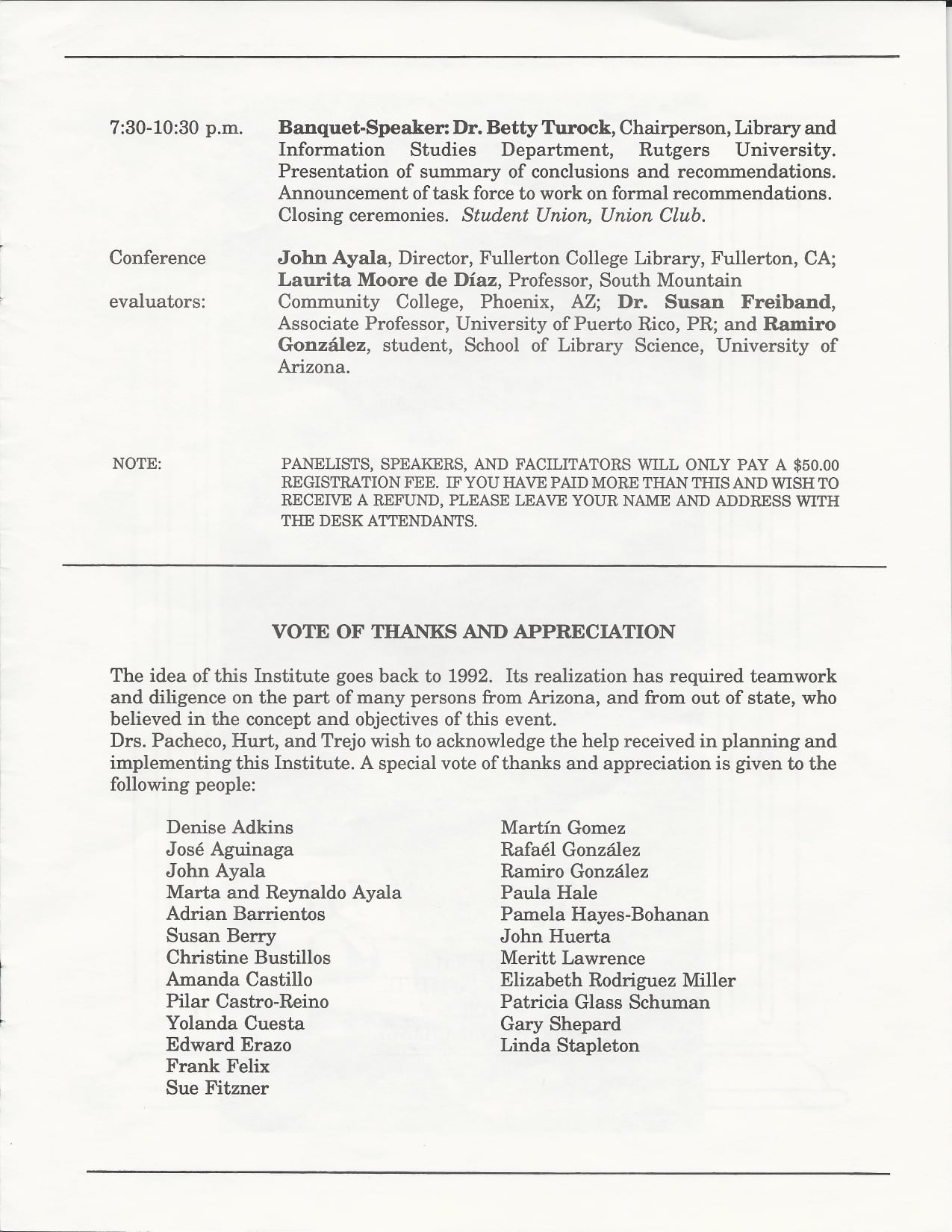
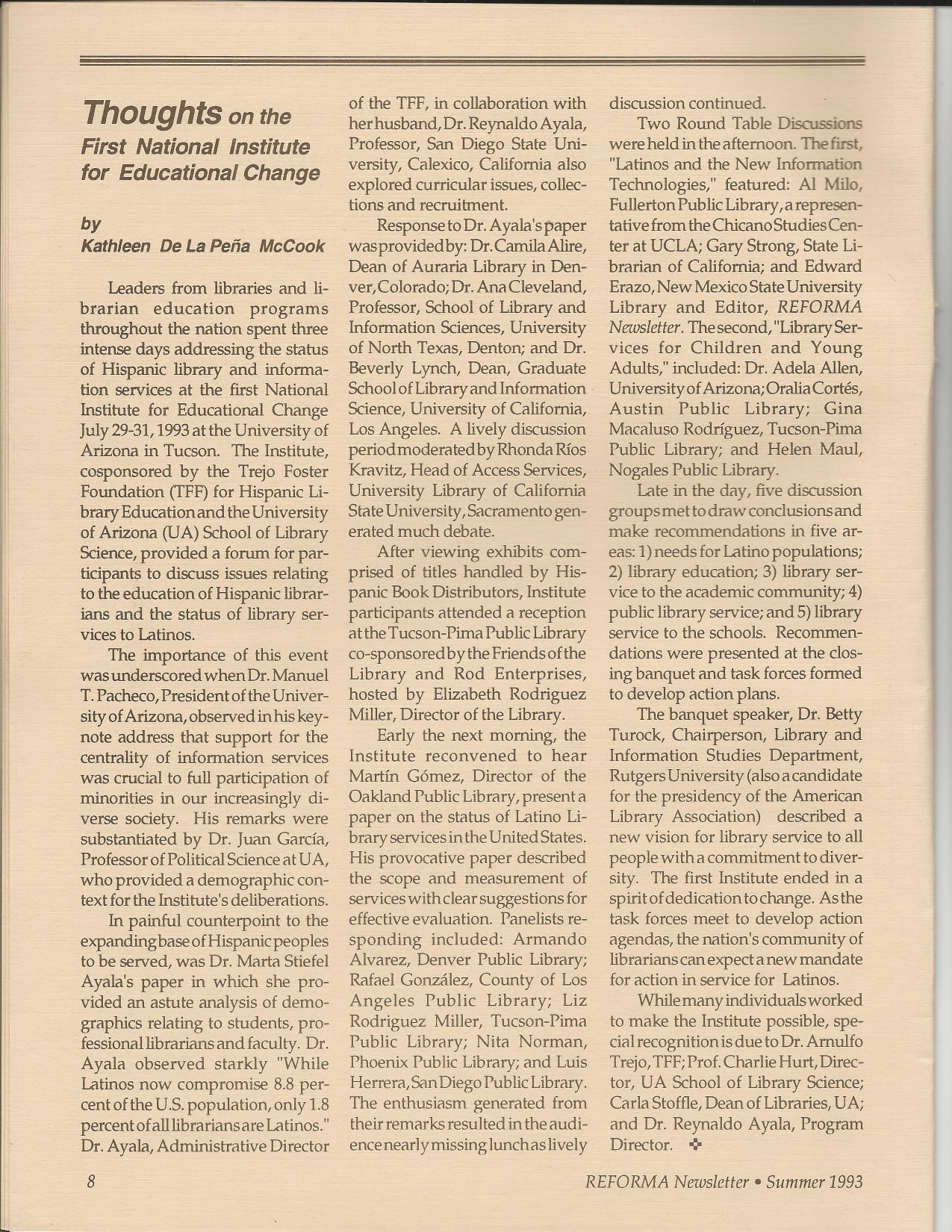
I was a member of the planning committee for this event. My main role was to organize the opening night reception. I worked with colleagues from the Library and student members of the local chapter of REFORMA, of which I was president, to plan the logistics and serve as hosts. It was a very successful and fun evening, with live music and plenty of food and drink.
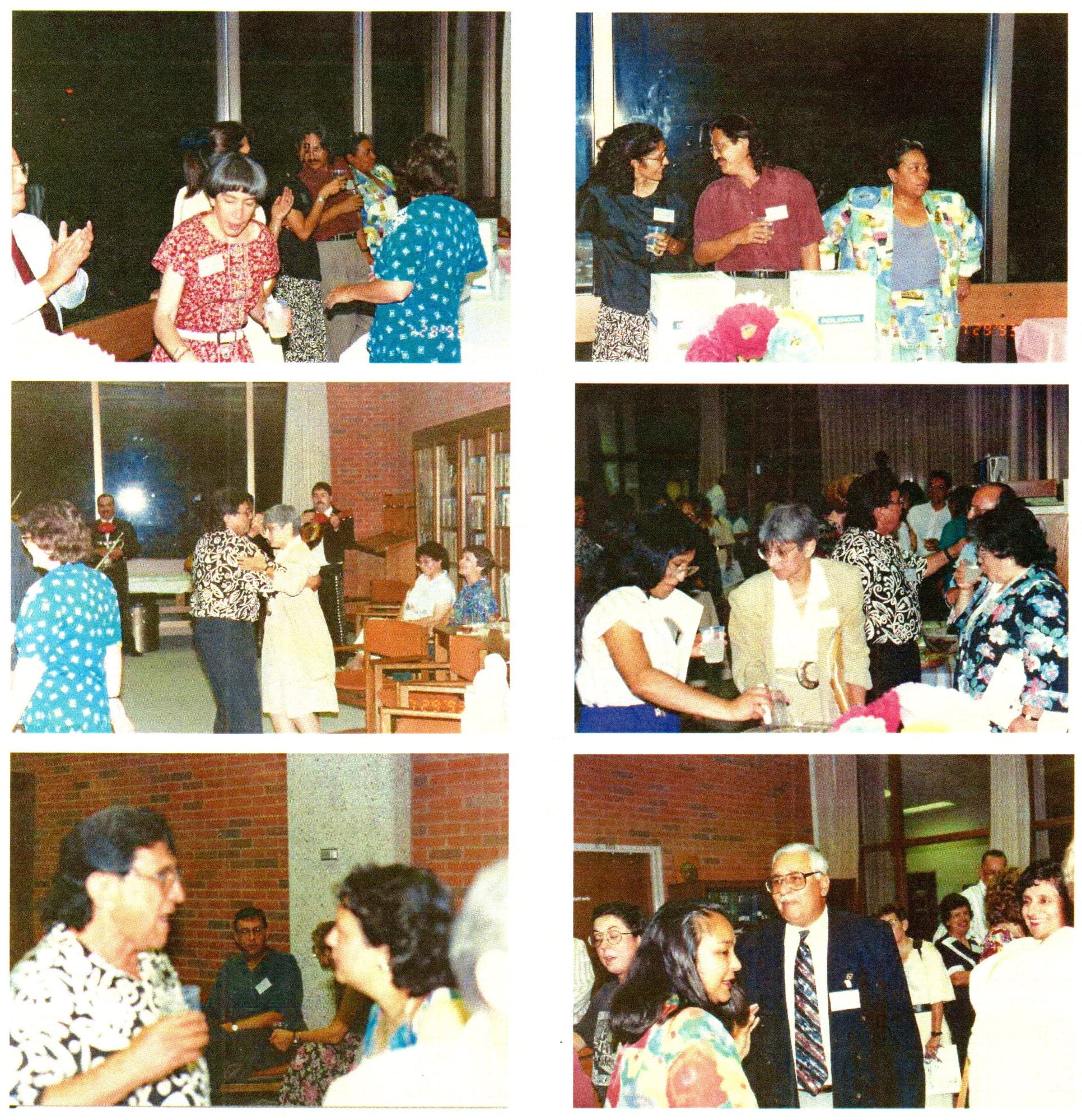
The following photos were taken during the opening reception of the Institute. I worked with members of the Library staff to host this event in Special Collections.
Promotional material by Marty Taylor, University of Arizona Libraries
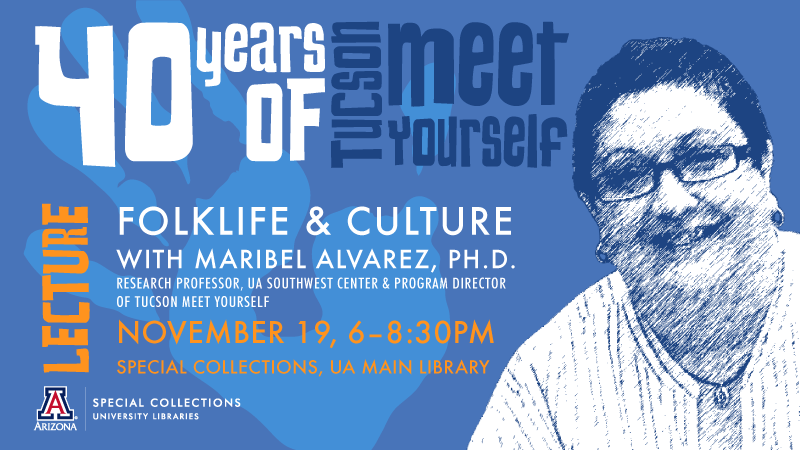
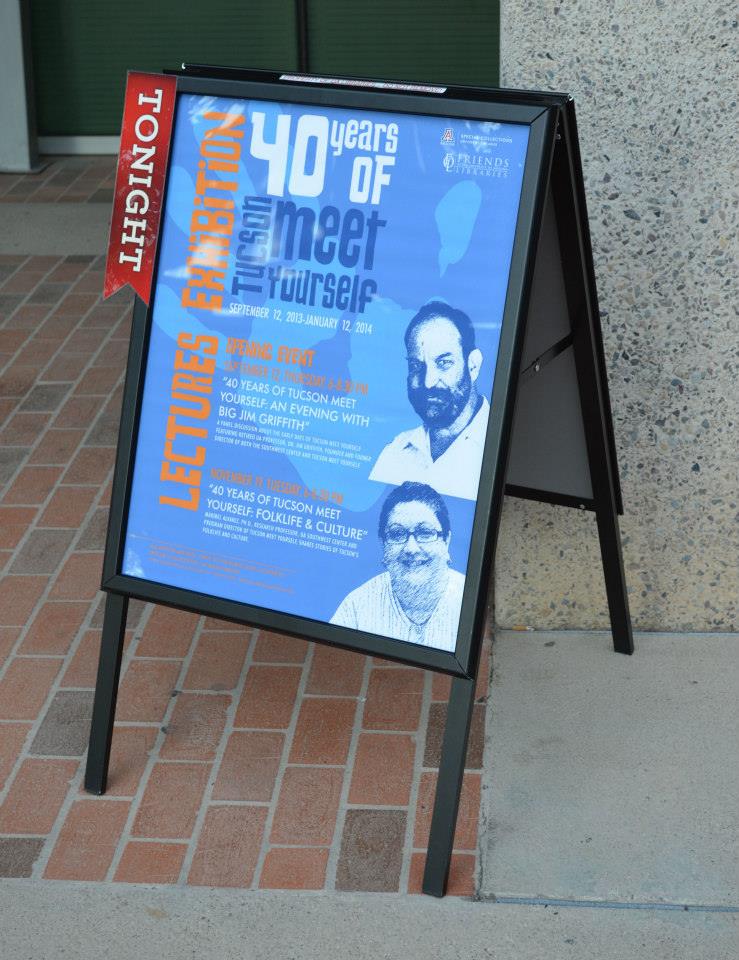
The second program associated with this exhibition featured Dr. Maribel Alvarez, professor of Anthropology and executive director of the Southwest Folklife Alliance.
Here is the news release for the event:
“40 Years of Tucson Meet Yourself: Folklife and Culture”
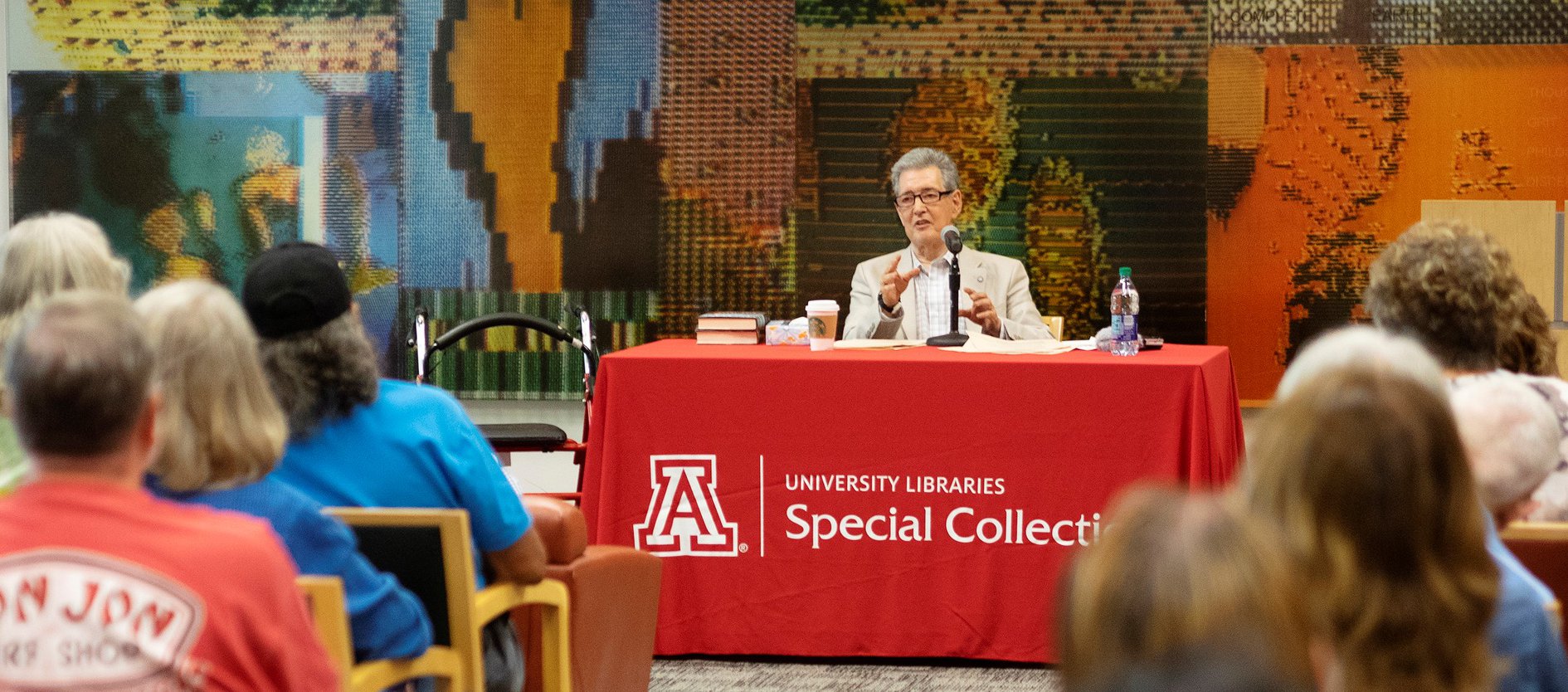
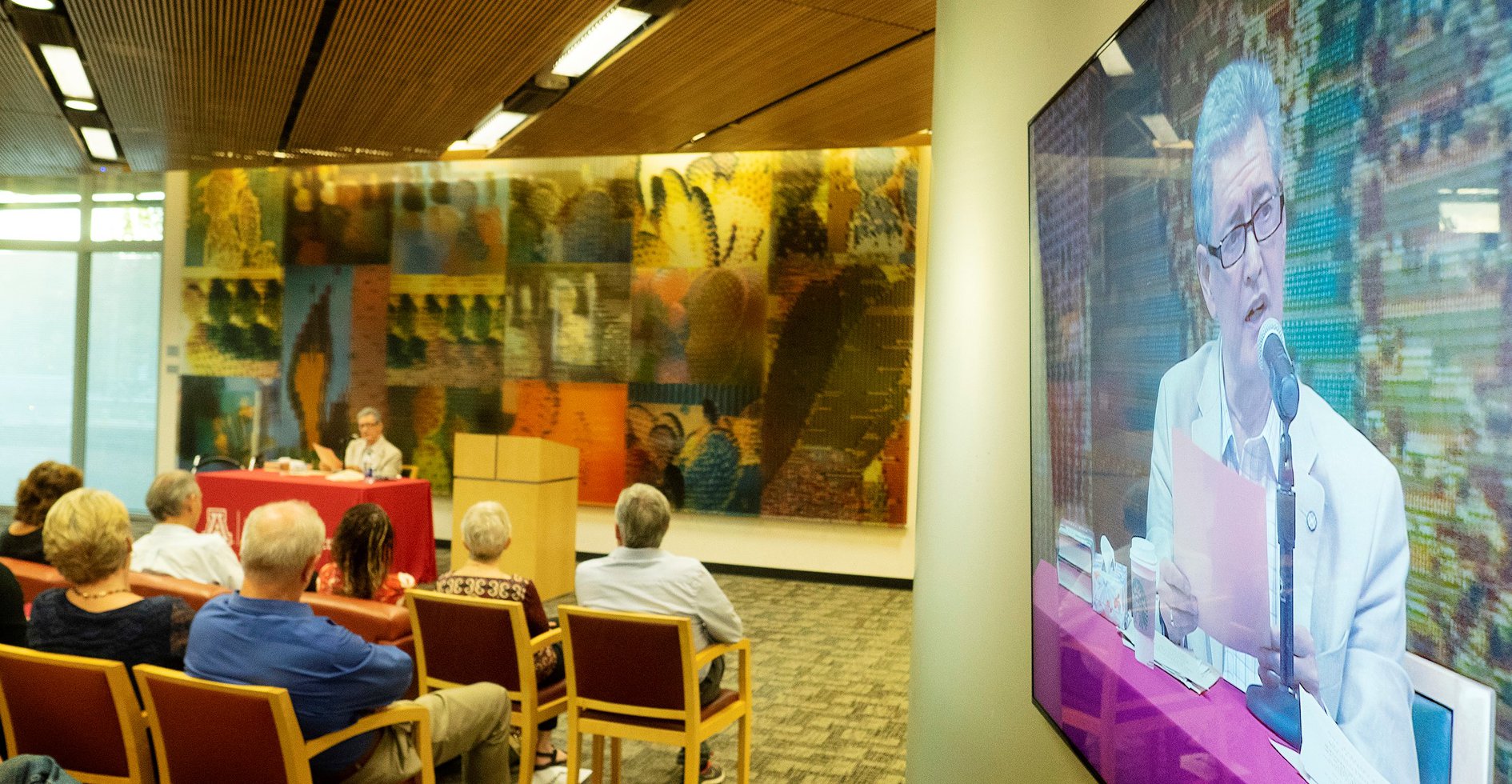
Join us for the final lecture accompanying Special Collections’ current exhibition, “40 Years of Tucson Meet Yourself.” Maribel Alvarez, research professor for the UA Southwest Center and Tucson Meet Yourself program director, will share stories of Tucson’s folklife and culture and how they manifest themselves in every day life.
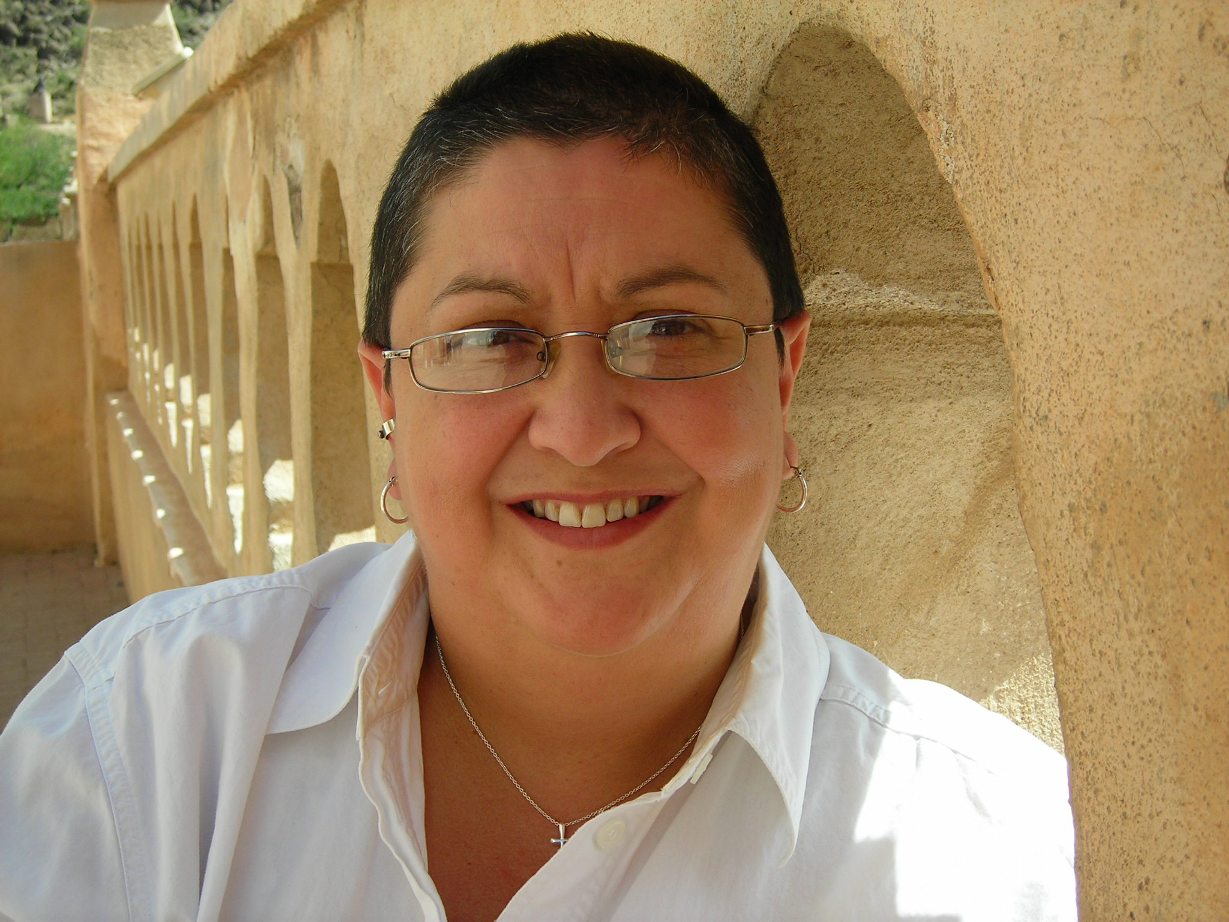
The following biographical snapshot of Dr. Alvarez is borrowed from the University of Arizona Southwest Center’s webpage:
“Maribel Alvarez, Ph.D., is an anthropologist, folklorist, curator, and community arts expert who has documented the practice of more than a dozen of the country’s leading emerging and alternative artistic organizations. She is Associate Dean for Community Engagement for the College of Social and Behavioral Sciences, is the Jim Griffith Chair in Public Folklore and Associate Research Social Scientist in the Southwest Center, and Associate Research Professor in the School of Anthropology. She founded, and until recently served as executive director of the Southwest Folklife Alliance, an independent nonprofit affiliated with the University of Arizona.
She teaches courses on methods of cultural analysis, with particular emphasis on objects, oral narratives, foodways, and visual cultures of the US-Mexico border. In the last few years, Maribel has written and published essays about poetry and food, intangible heritage, nonprofits and cultural policy, the theory of arts participation, artisans and patrimony in Mexico, and popular culture and stereotypes. In 2009 she was a Fulbright Fellow conducting research in rural Mexico. Maribel was the co-founder and executive director for seven years of MACLA–Movimiento de Arte y Cultura Latino Americana, a contemporary, alternative urban arts center in San Jose, once described as a “lab for intelligent cultural interventions.” Maribel is a trustee of the American Folklife Center at the Library of Congress; in addition, she has served as faculty for ten years at the National Association of Latino Arts and Culture’s summer Leadership Institute in San Antonio, TX. Currently, she is completing two book manuscripts for the University of Arizona Press, one on the verbal arts and lore of workers in the Mexican Curios cottage industry at the US-Mexico border, and another on the cultural history of wheat and flour mills in the state of Sonora in northern Mexico. Maribel was born in Cuba and came to the United States at the age of seven; she lived in Puerto Rico for eleven years before moving to California in 1980, where she became active in the Chicano arts community and multicultural arts movement of that decade.”
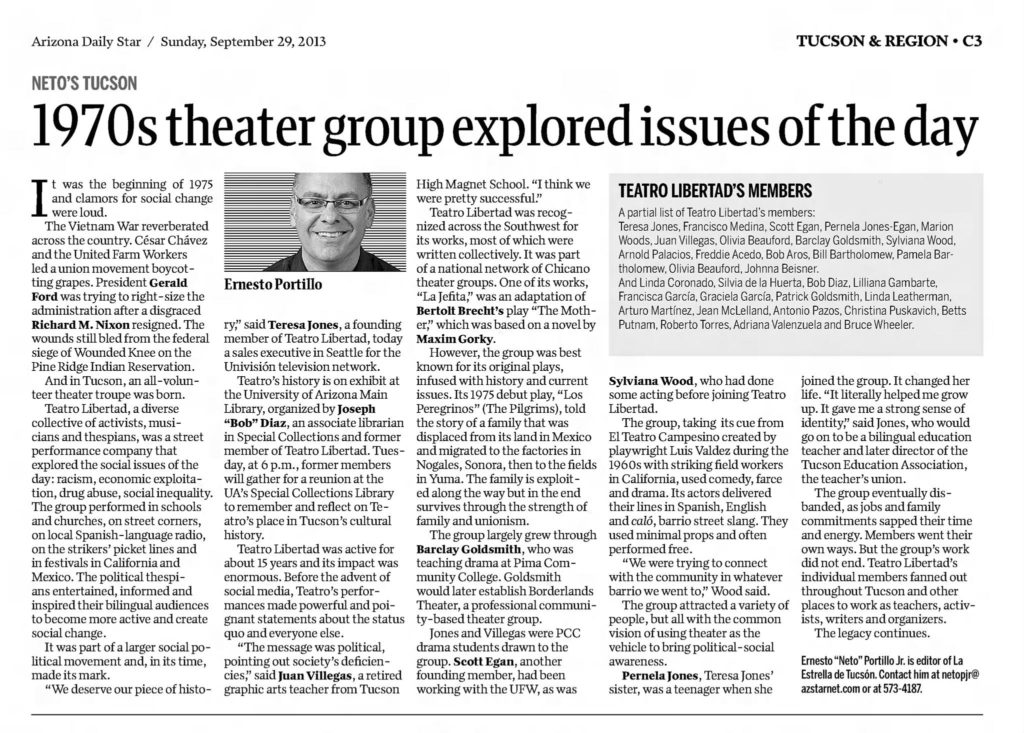
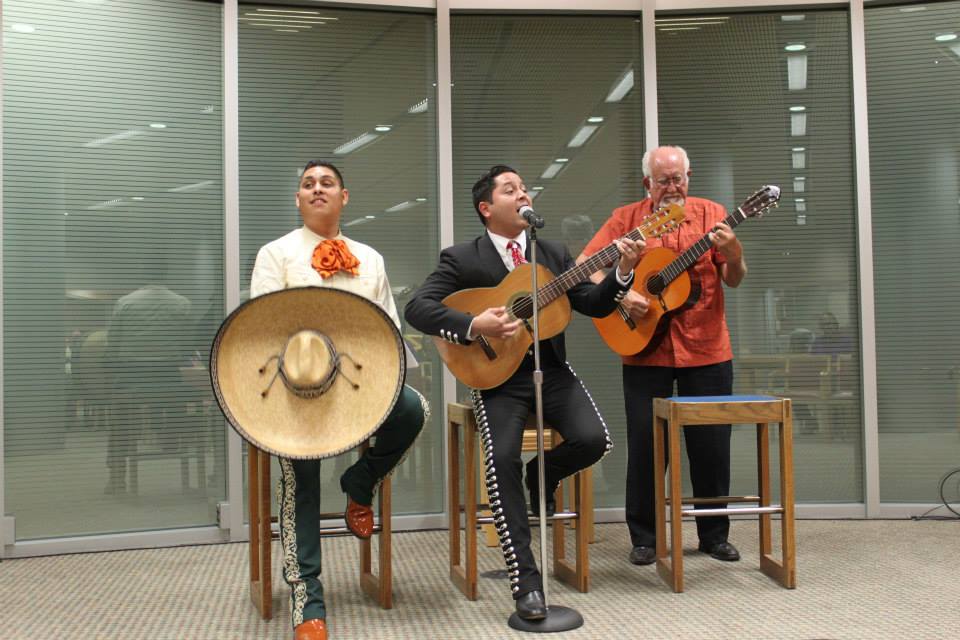
Join us on October 1 from 6:00 p.m. – 8:30 p.m. in Special Collections for an evening of reflection and discussion with members of Teatro Libertad, a local street theatre company from the 1970s. A viewing of select scenes from La Vida Del Cobre (The Life of Copper), one of the group’s plays, accompanies the talk.
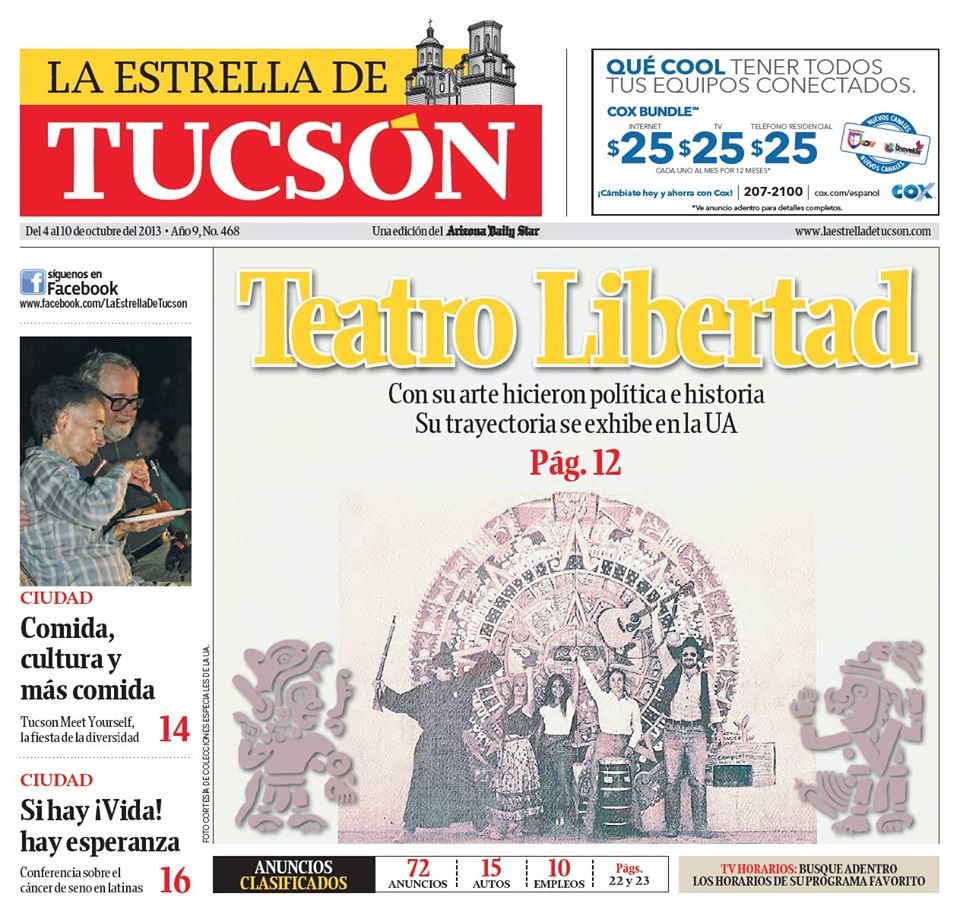
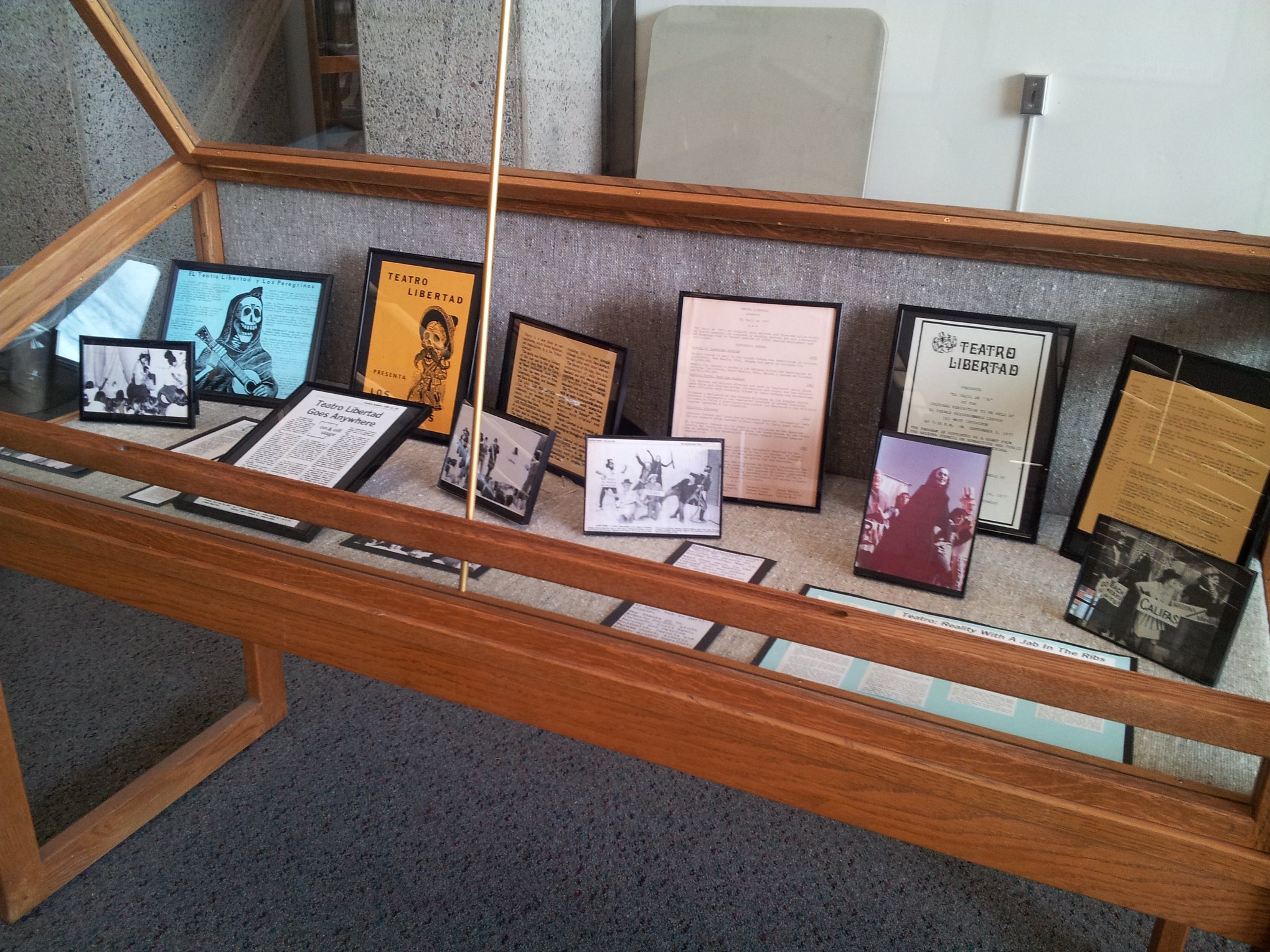
Teatro Libertad is featured in a new exhibit on display from Sept. 3, 2013 – Jan. 12, 2014 at the UA Main Library. Formed in 1975 by seven local actors and musicians – Scott Egan, Barclay Goldsmith, Teresa Jones, Arturo Martinez, Pancho Medina, Arnold Palacios, and Sylviana Wood – the group was influenced by the tradition of teatro Chicano, the Chicano movement of the 60s and 70s, and with inspiration from El Teatro Campesino – a group formed by Luis Valdez in the early 1960s.
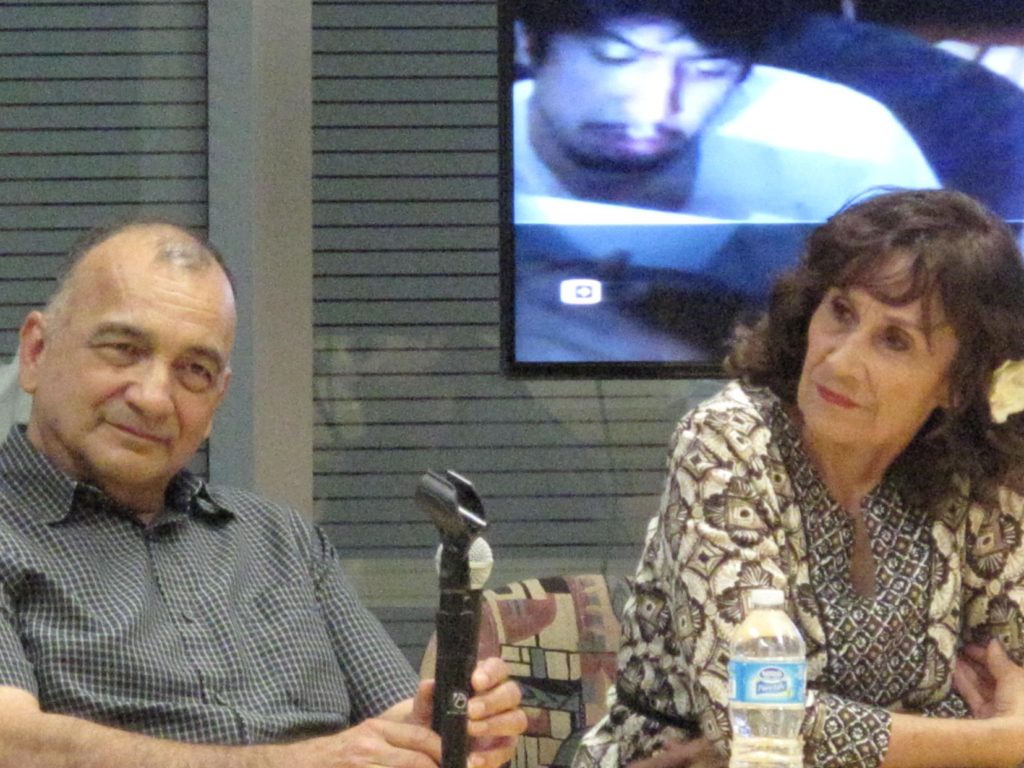
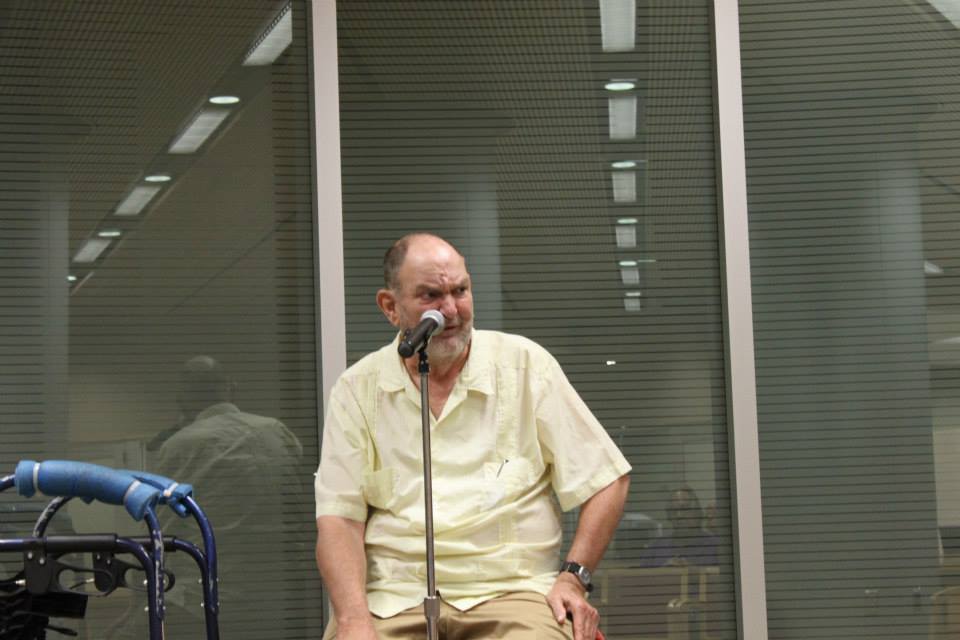
Former Teatro member Scott Egan
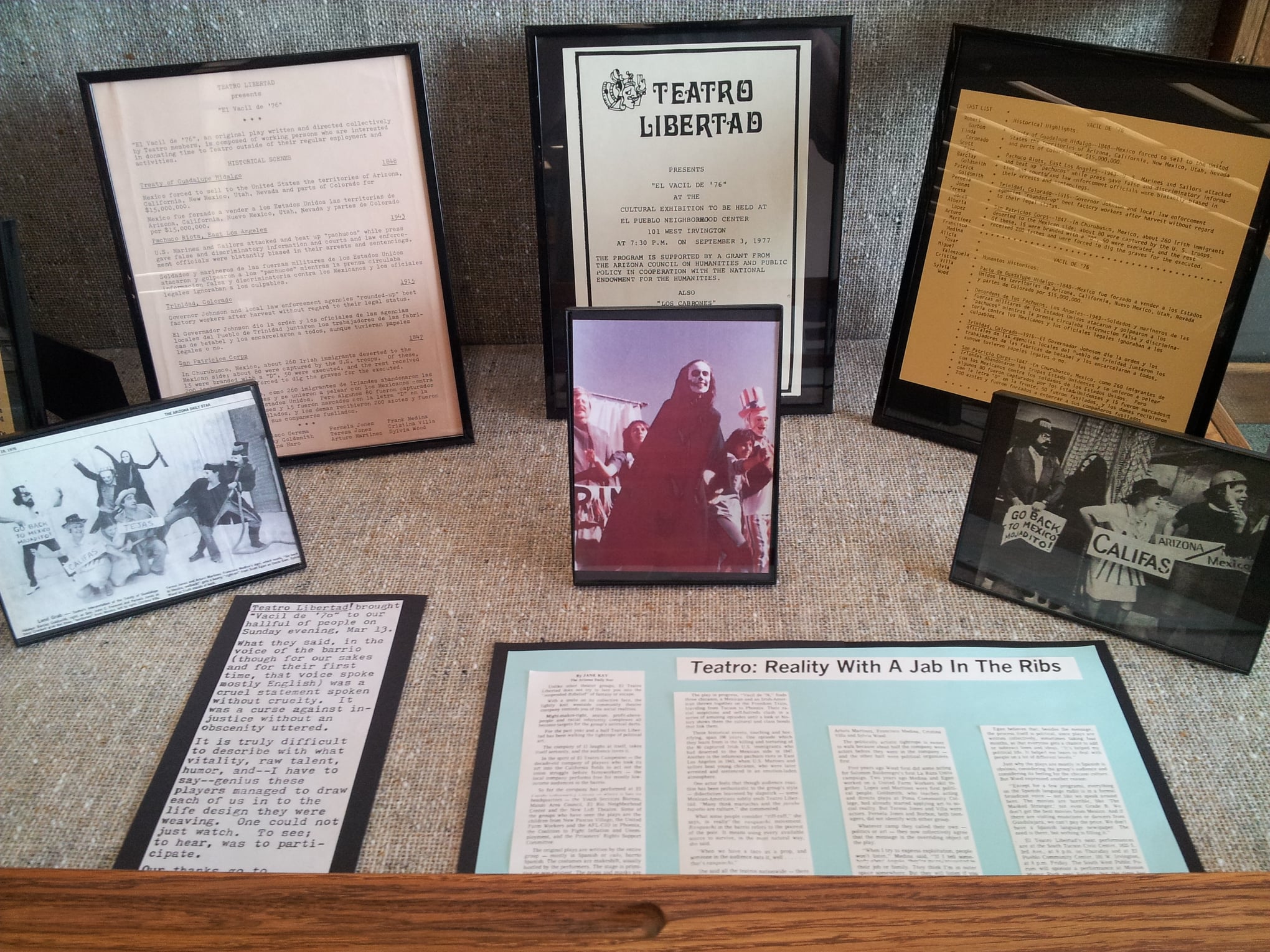
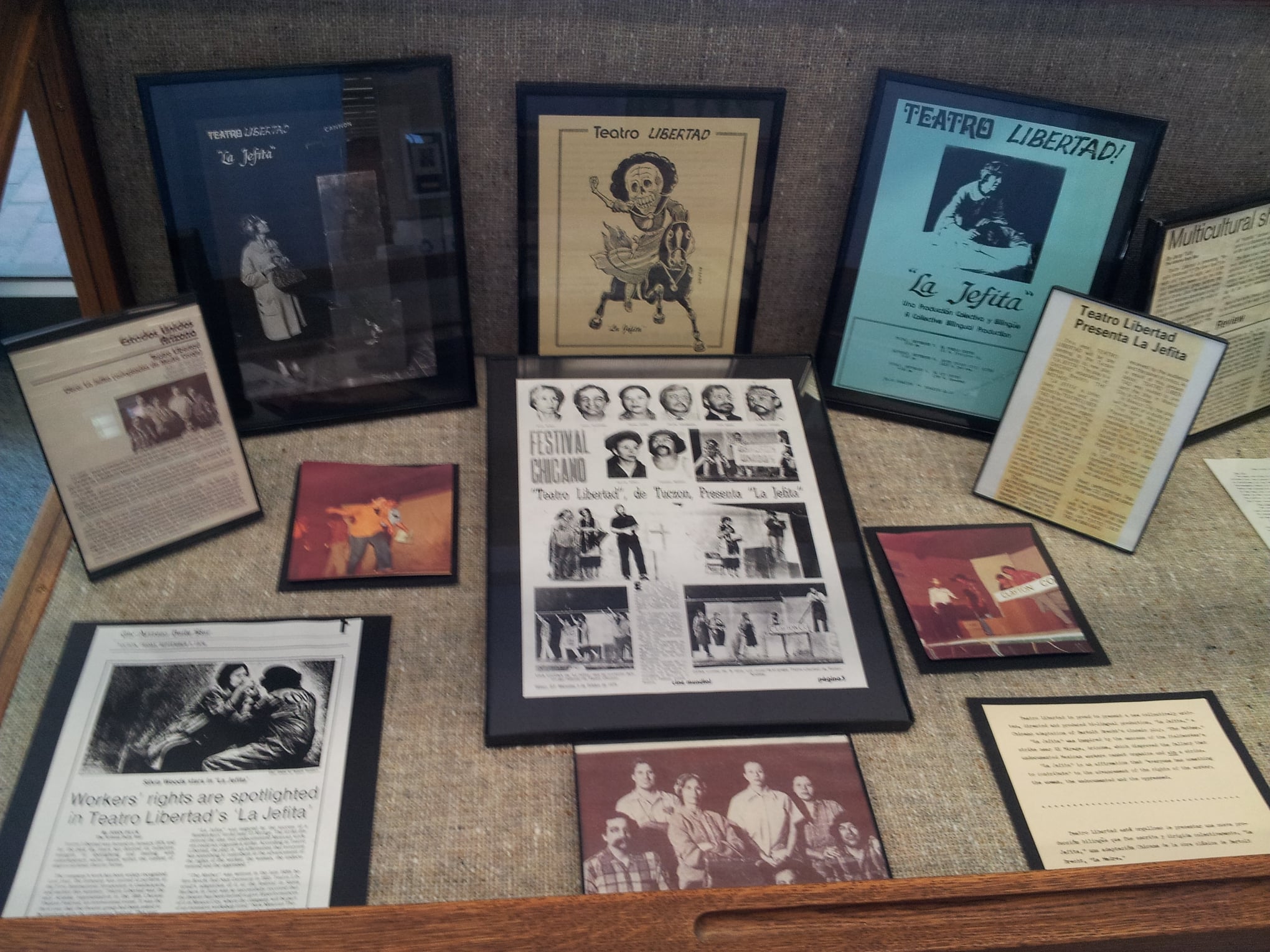
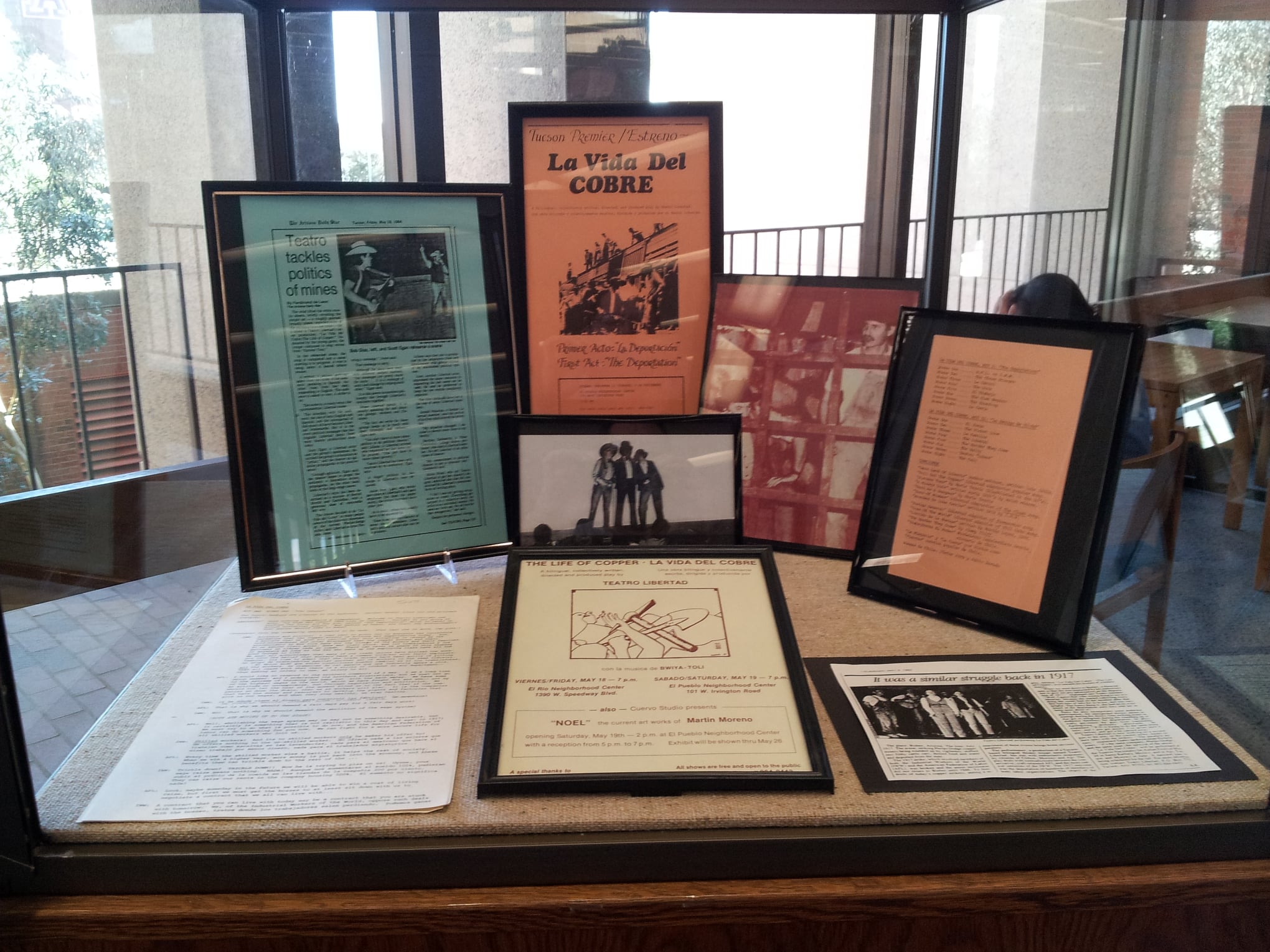
Teatro Libertad tackled real life, everyday issues as experienced by the Chicano community in Tucson and the Southwest. Using satire, comedy, and music, the group wrote and performed their plays with the goal of getting people to think about issues such as unemployment, union organization, race, and cultural identity. Among the plays written and performed by Teatro Libertad were Los Peregrinos, El Vacil de 76, Los Pelados, La Jefita, Semilla Sembrada and La Vida Del Cobre.
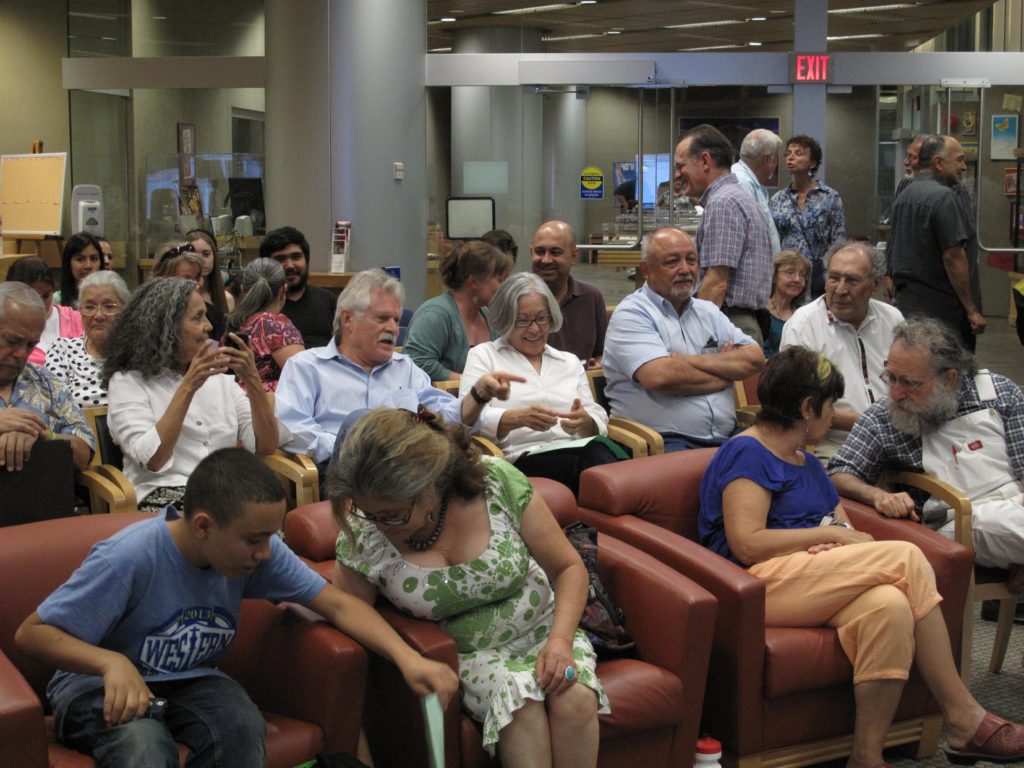
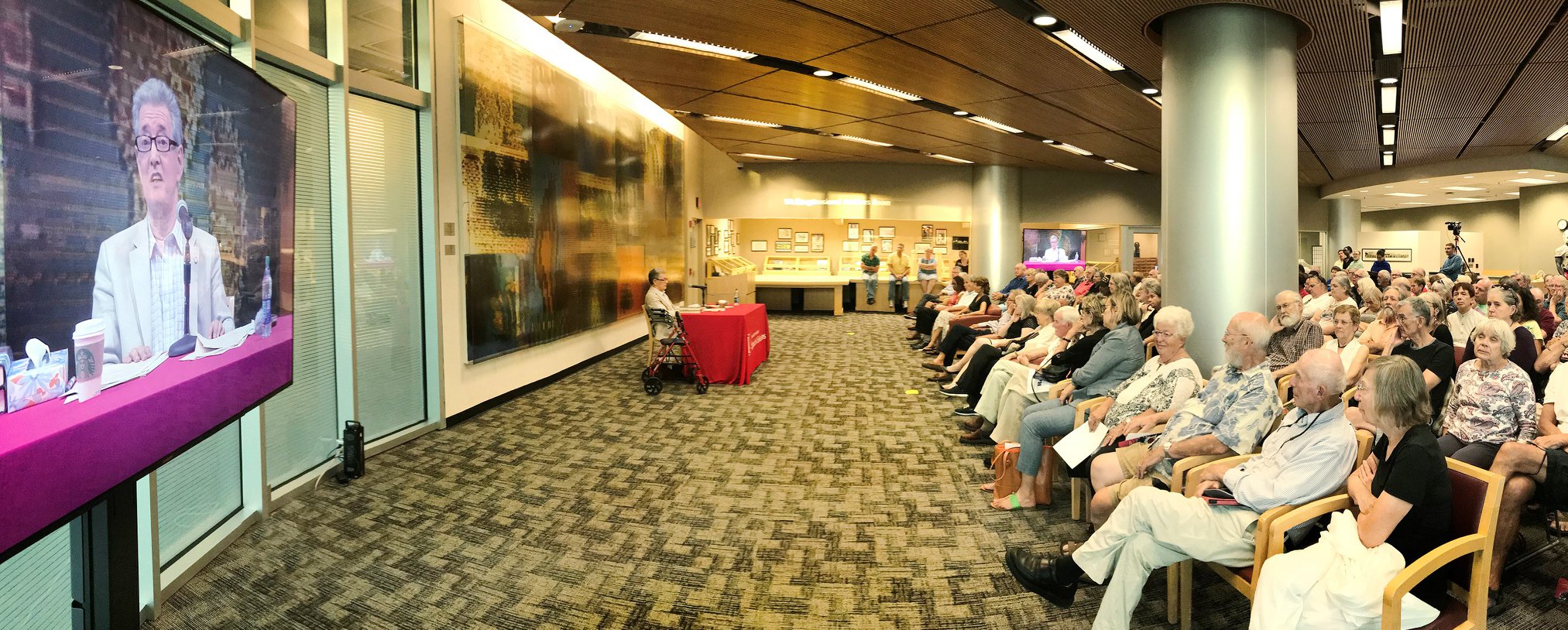
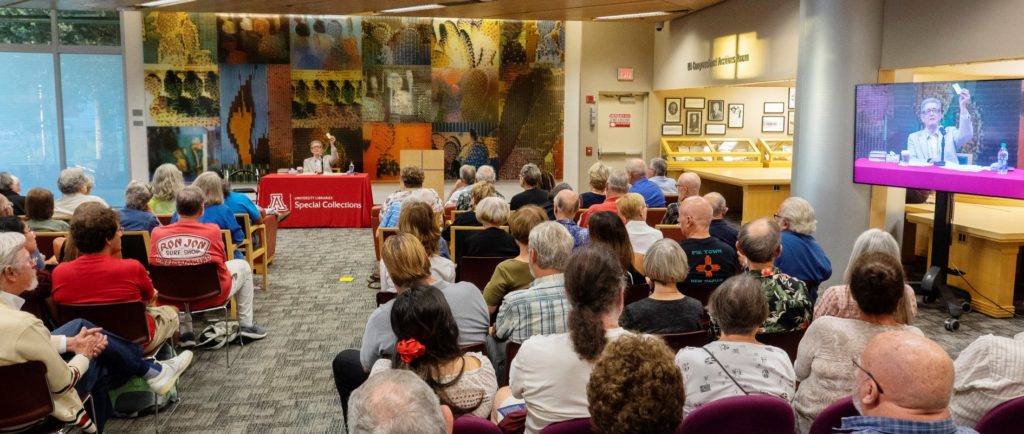
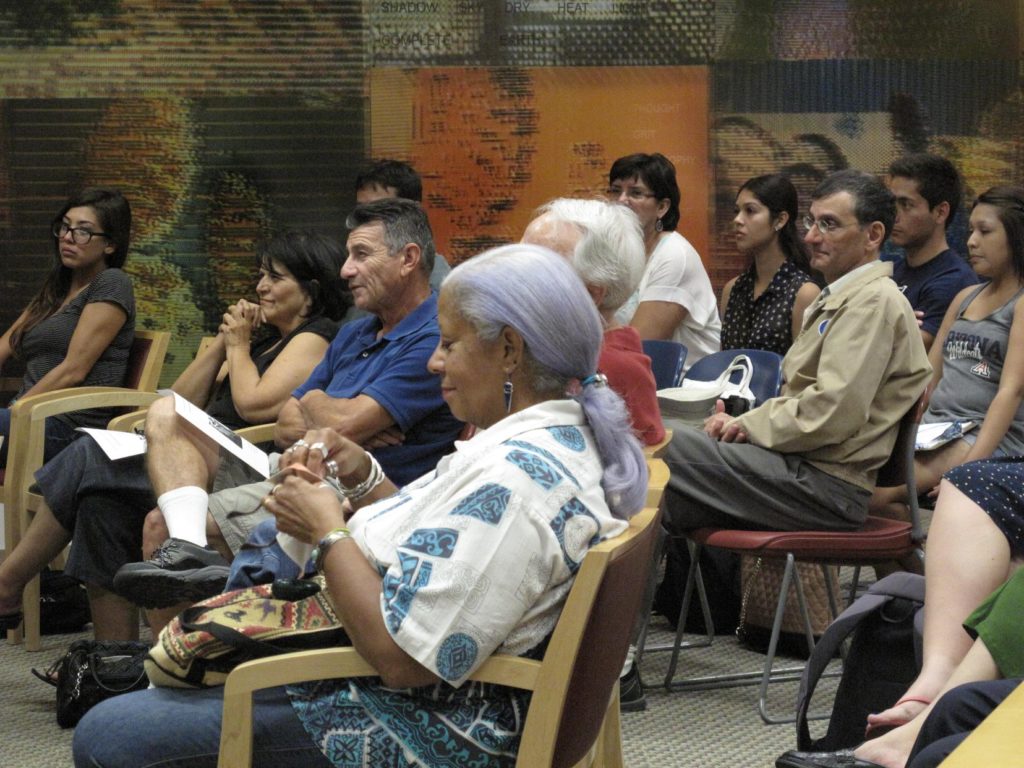
It was a packed house
The bilingual, multicultural group relied on simple stage sets and props – old boxes, masks, and signs – when performing in local neighborhood centers throughout Tucson and in Mexico City, San Diego, Santa Barbara, and New York. The group also performed – sometimes from a flatbed truck – in Arizona’s mining towns for striking miners or farmworkers.
Audience members included a who’s who of the Chicano community
More than 25 performers participated in the all-volunteer Teatro Libertad during the group’s 14-year run. Additional members included Pamela Bartholomew, Olivia Beauford, Bob Diaz, Lilliana Gambarte, Pernela Jones, Jean McClelland, Juan Villegas, and a host of others.
The event is free and open to the public. Light refreshments will be served.
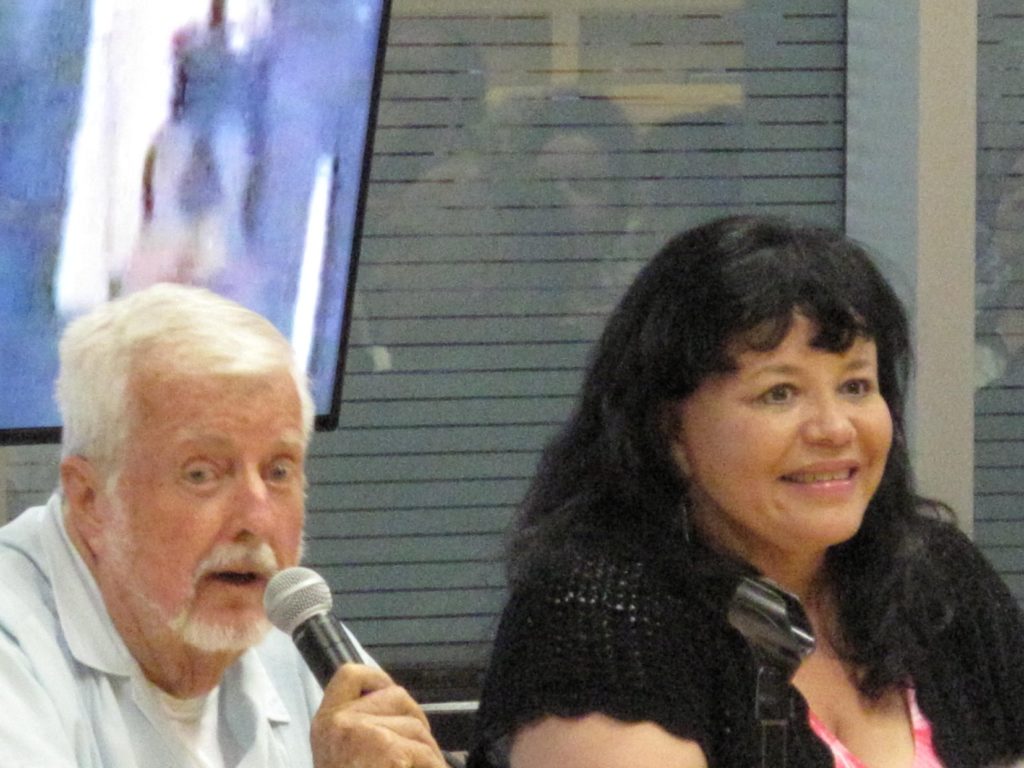
Barclay Goldsmith and Teresa Jones, former Teatro members
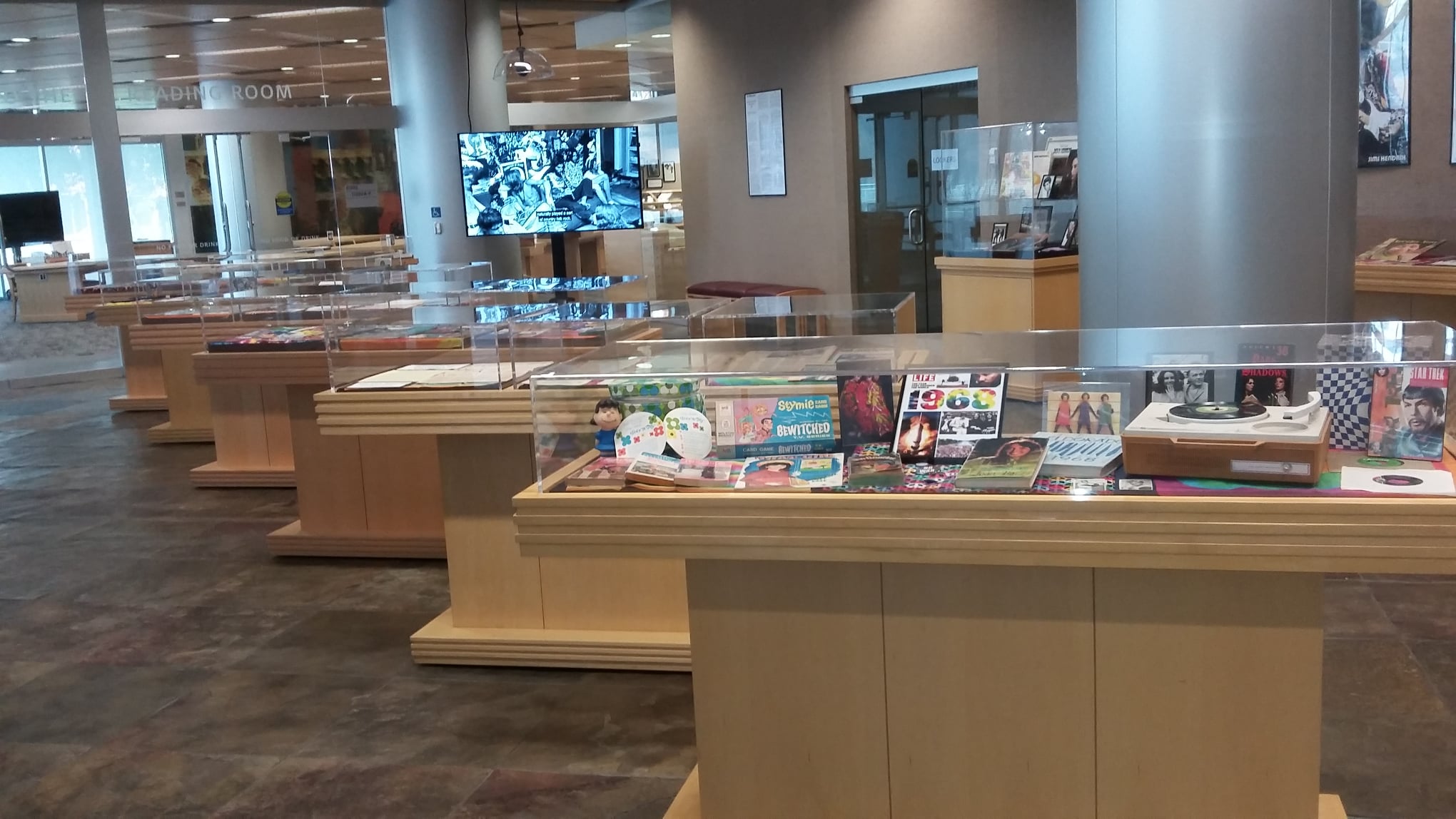
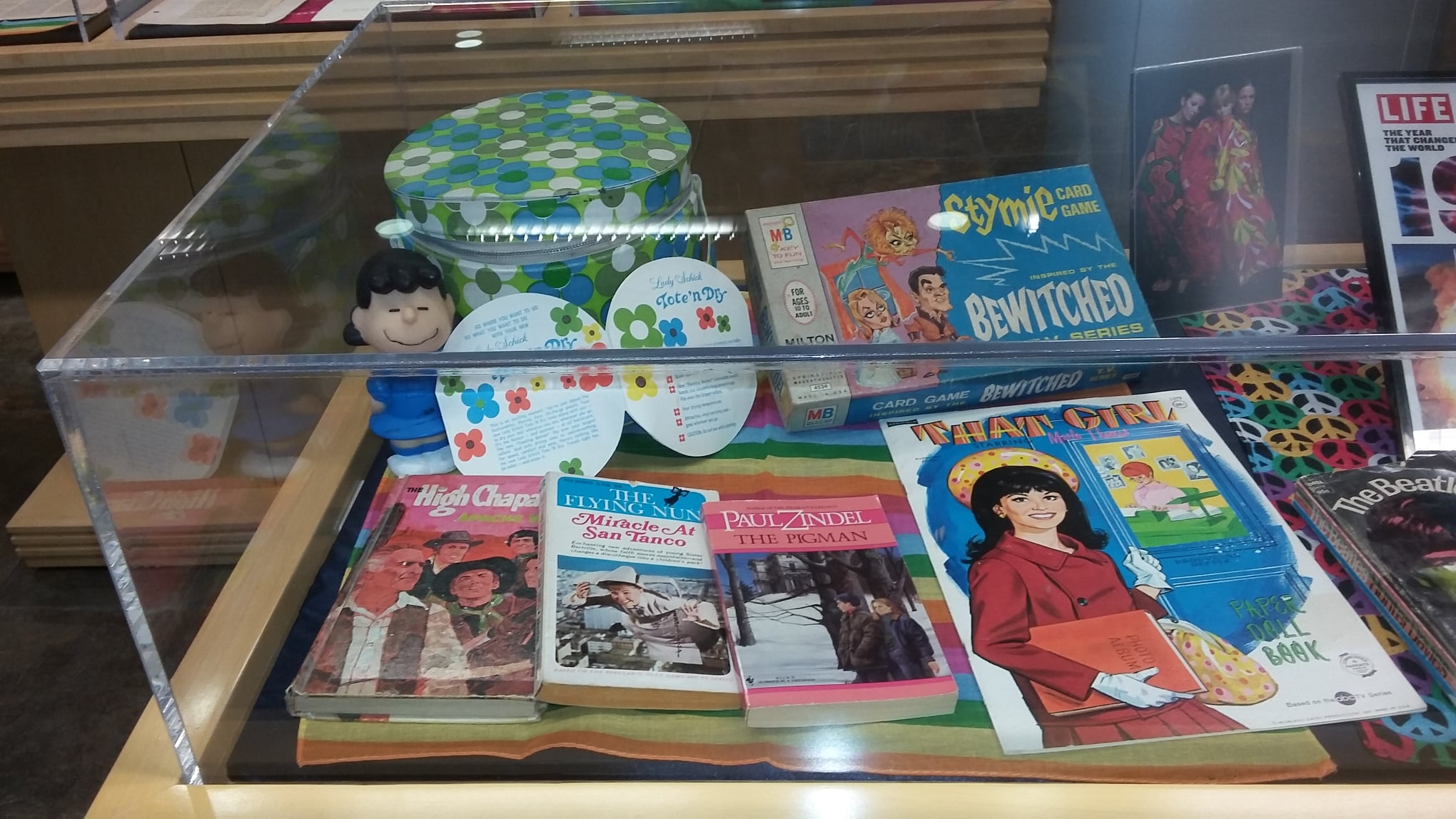
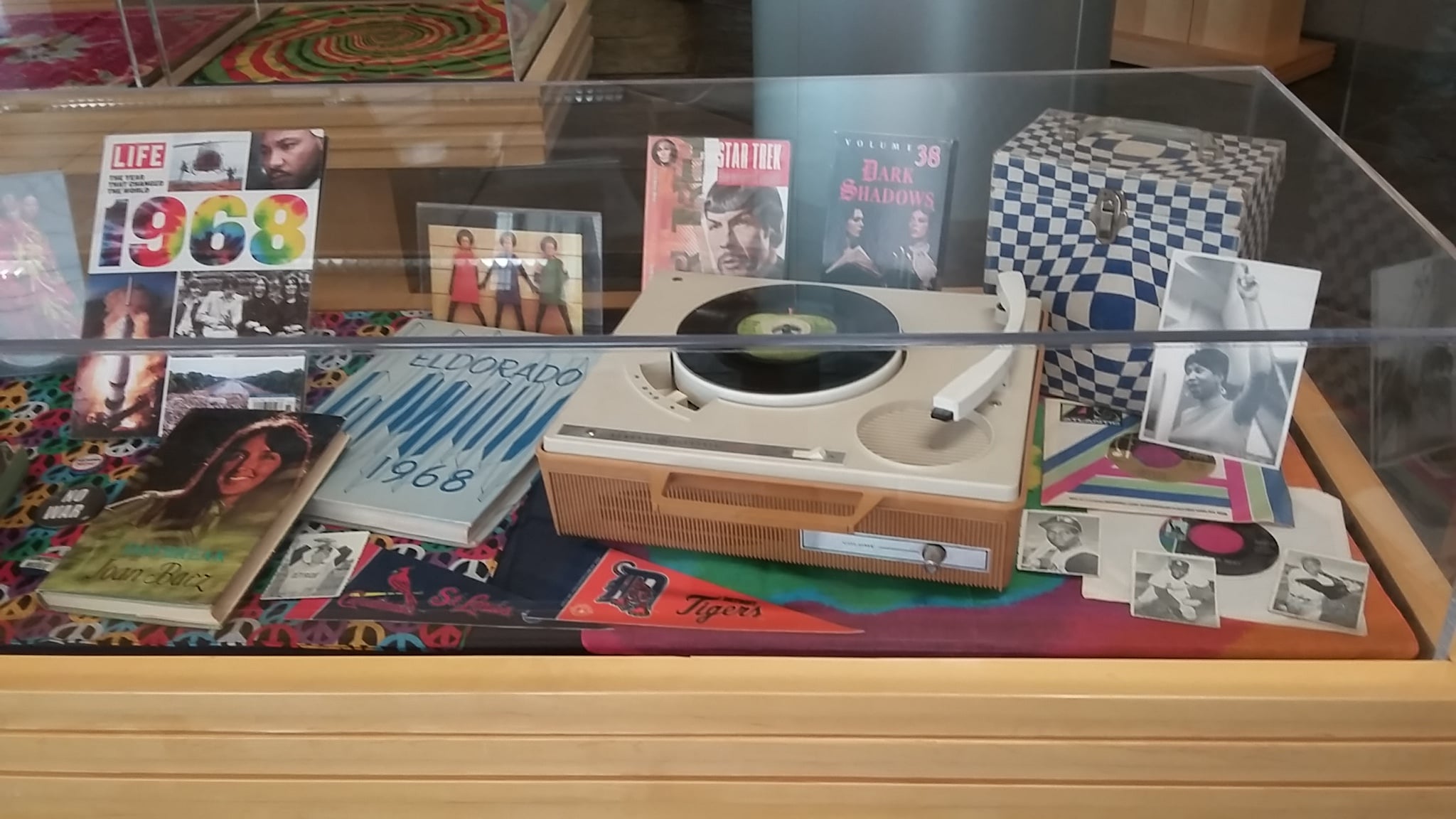
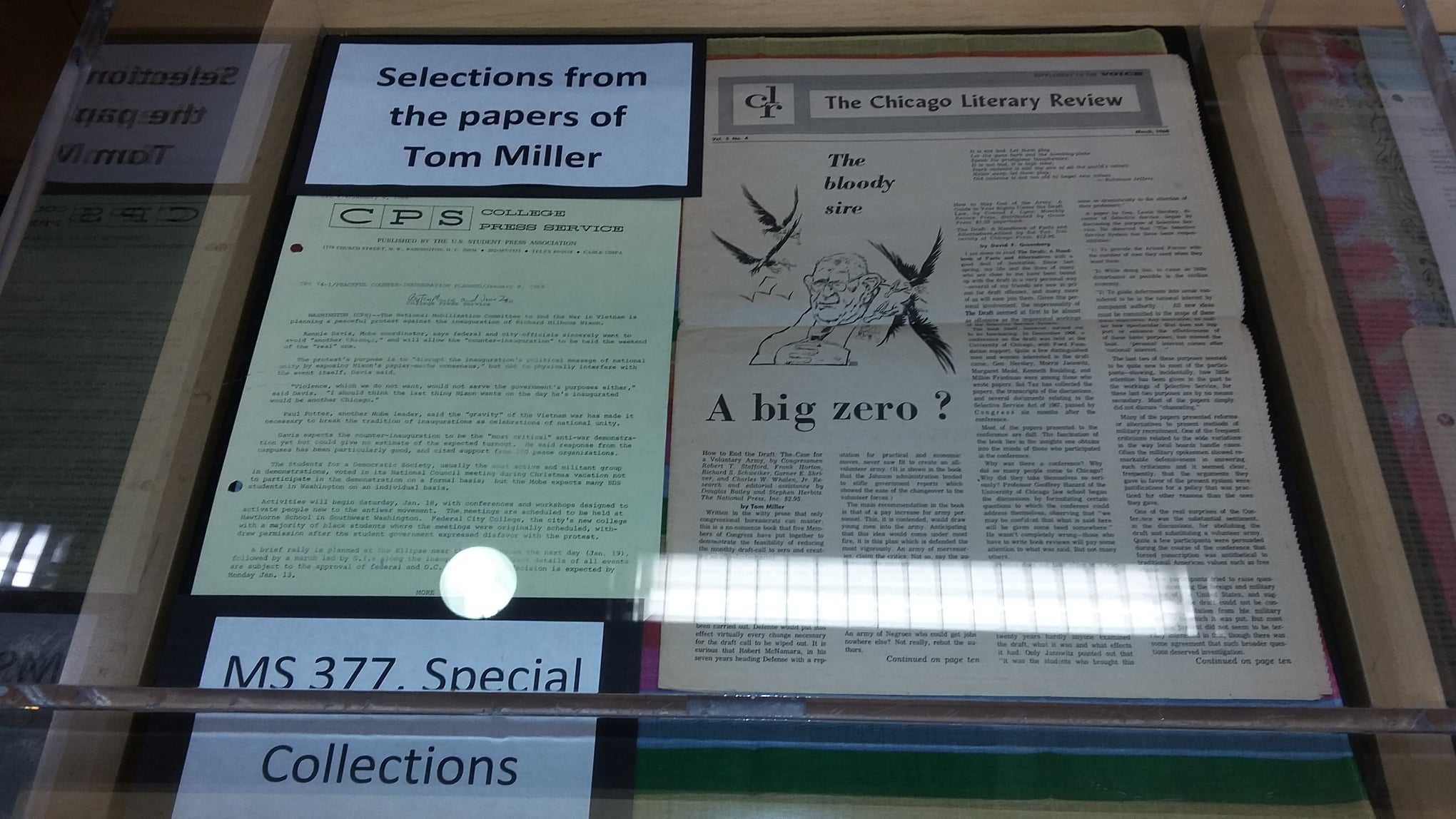
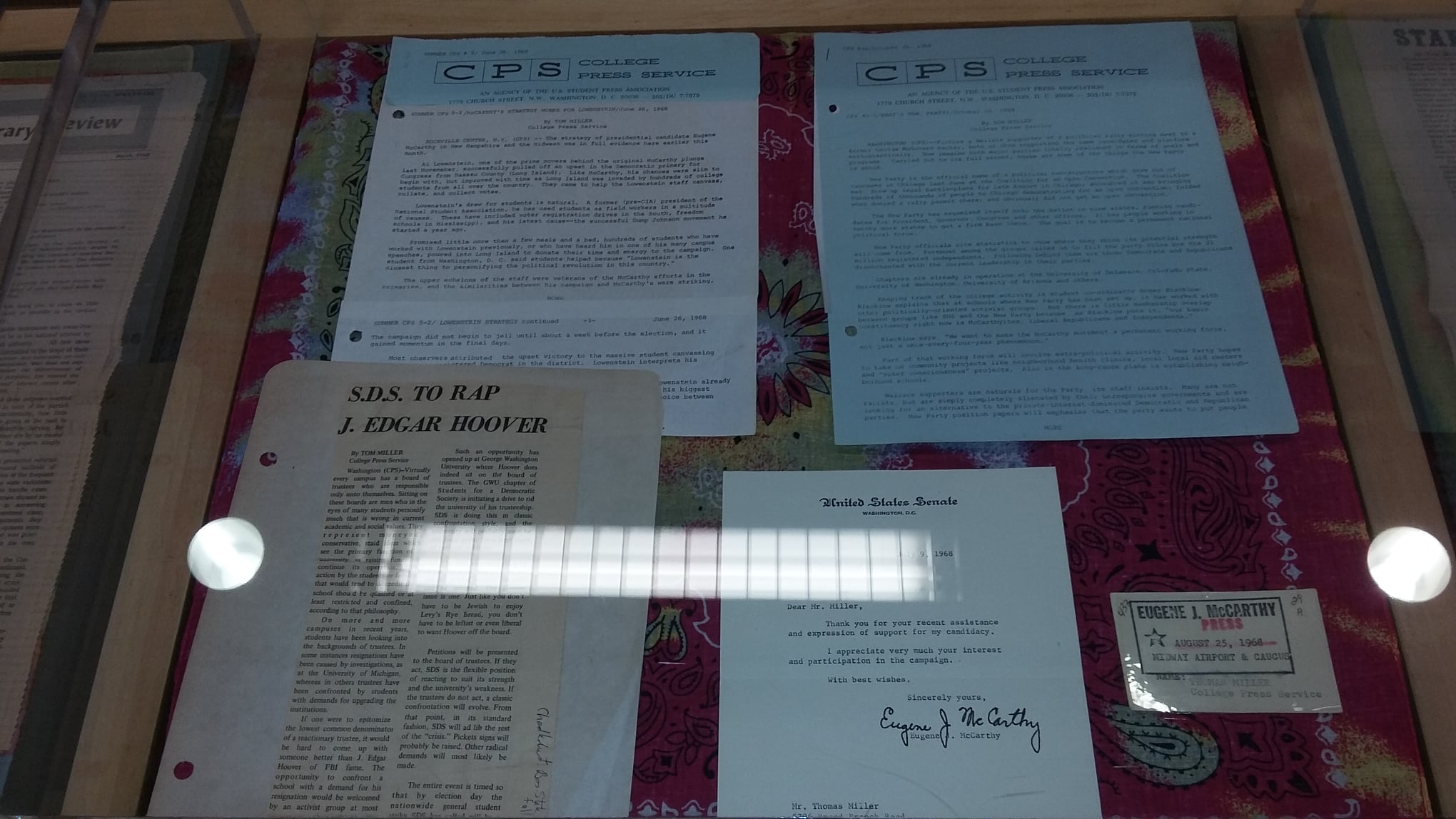
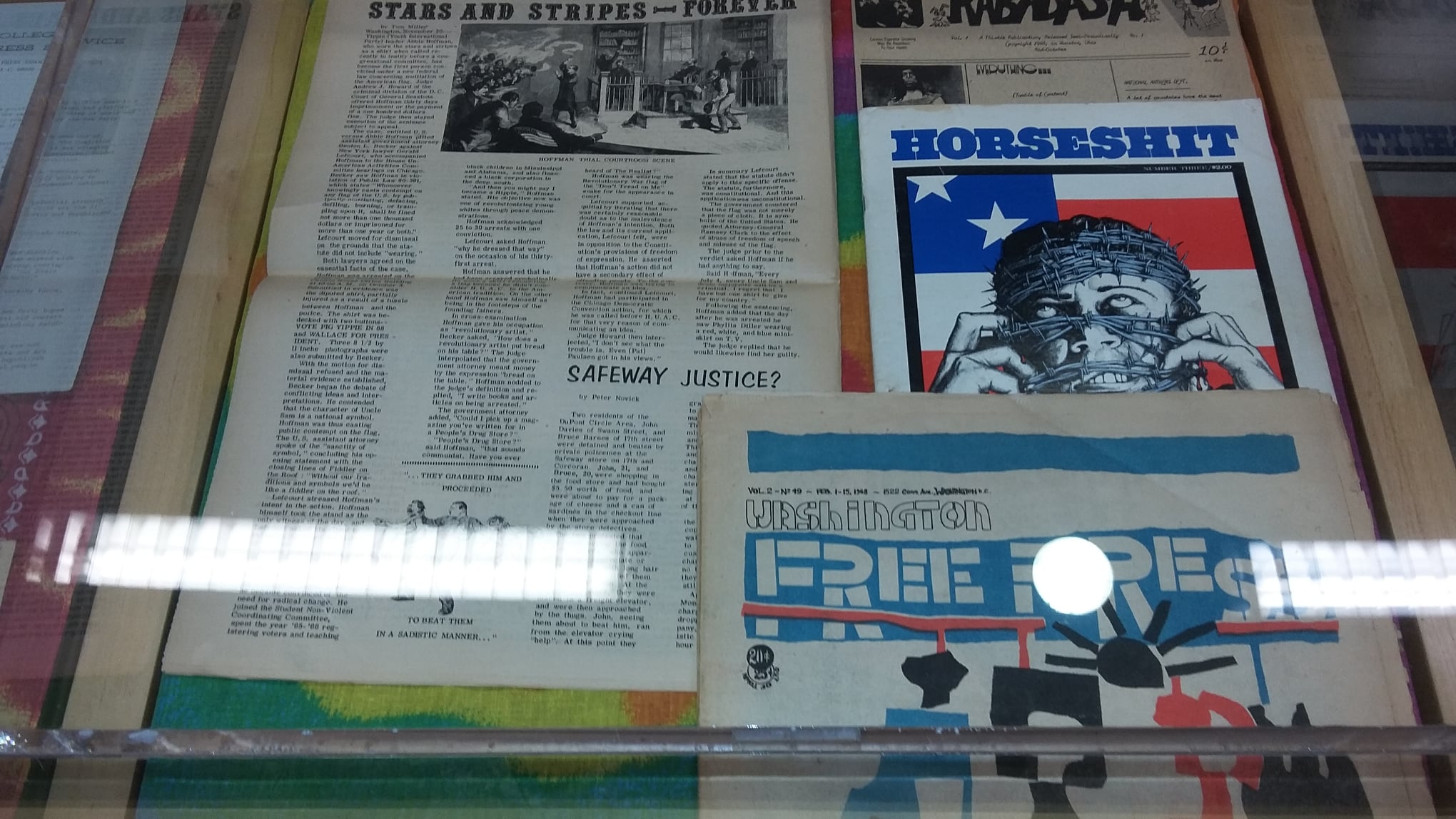
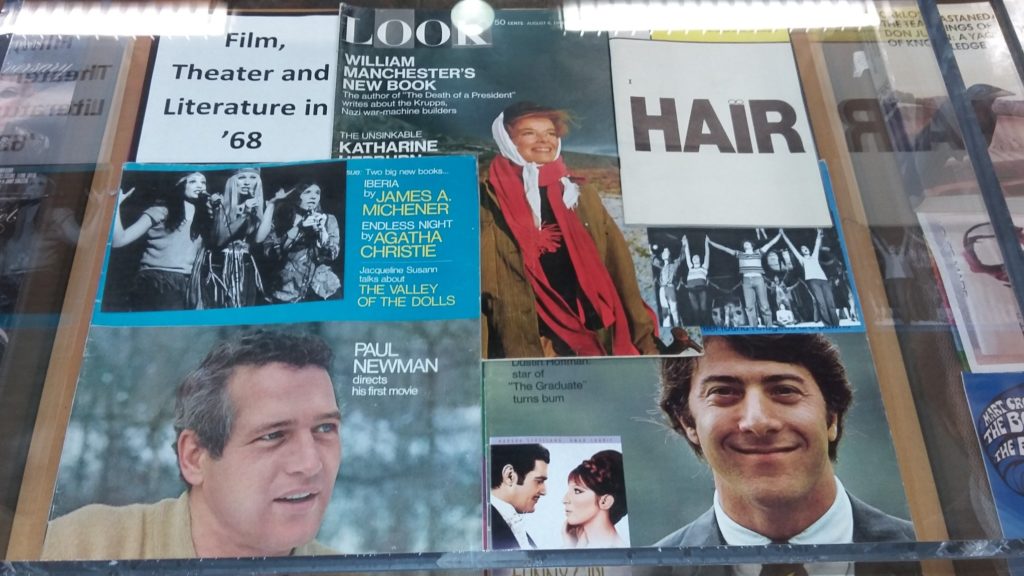
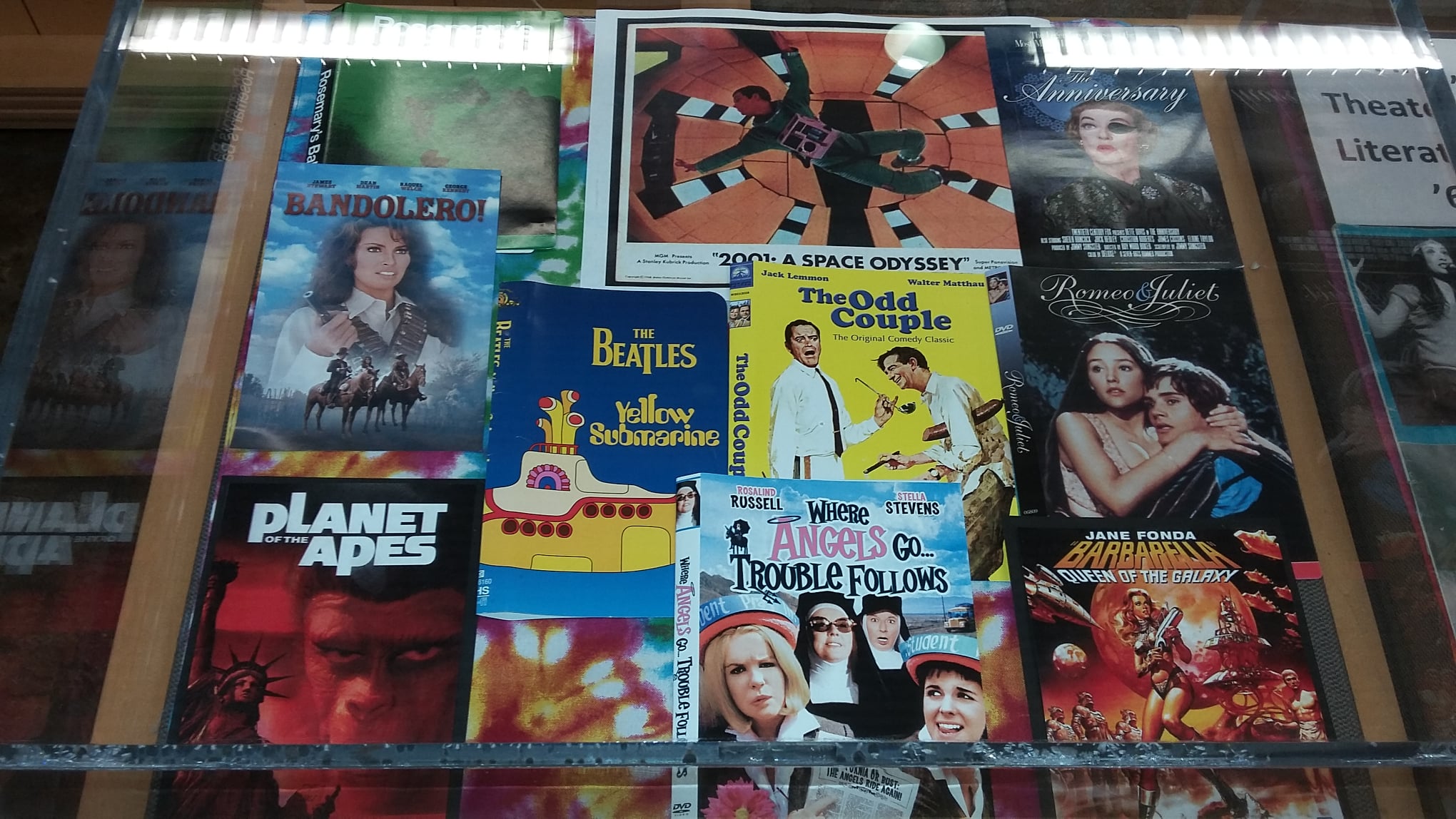
1968: From the My Lai Massacre to Yellow Submarine featuring Tom Miller
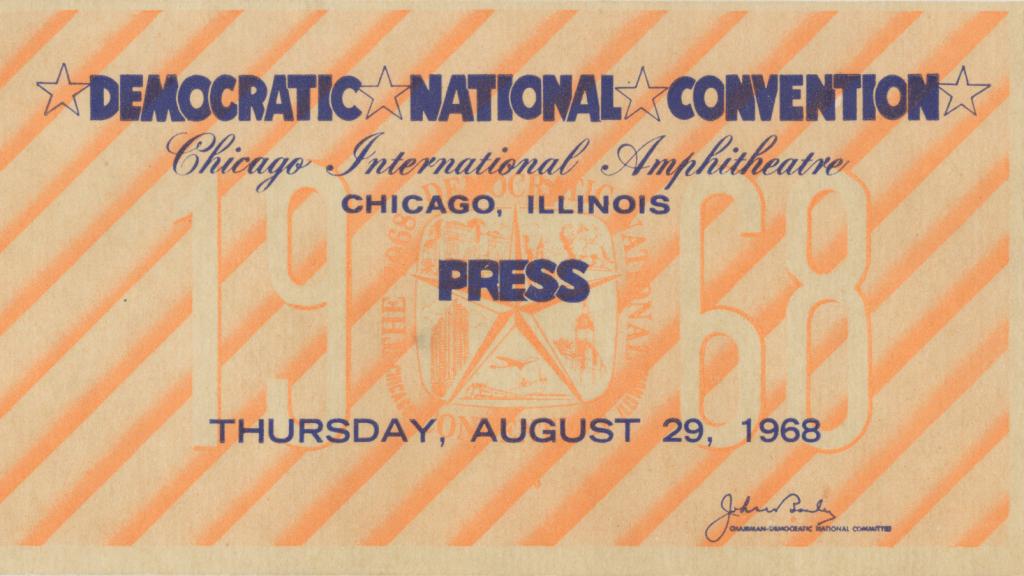
Tom MillerTom Miller’s press pass for the 1968 Democratic Convention, from the Tom Miller Collections, Special Collections.
Special Collections, The University of Arizona Libraries
September 6, 2018
From the UA News Service:
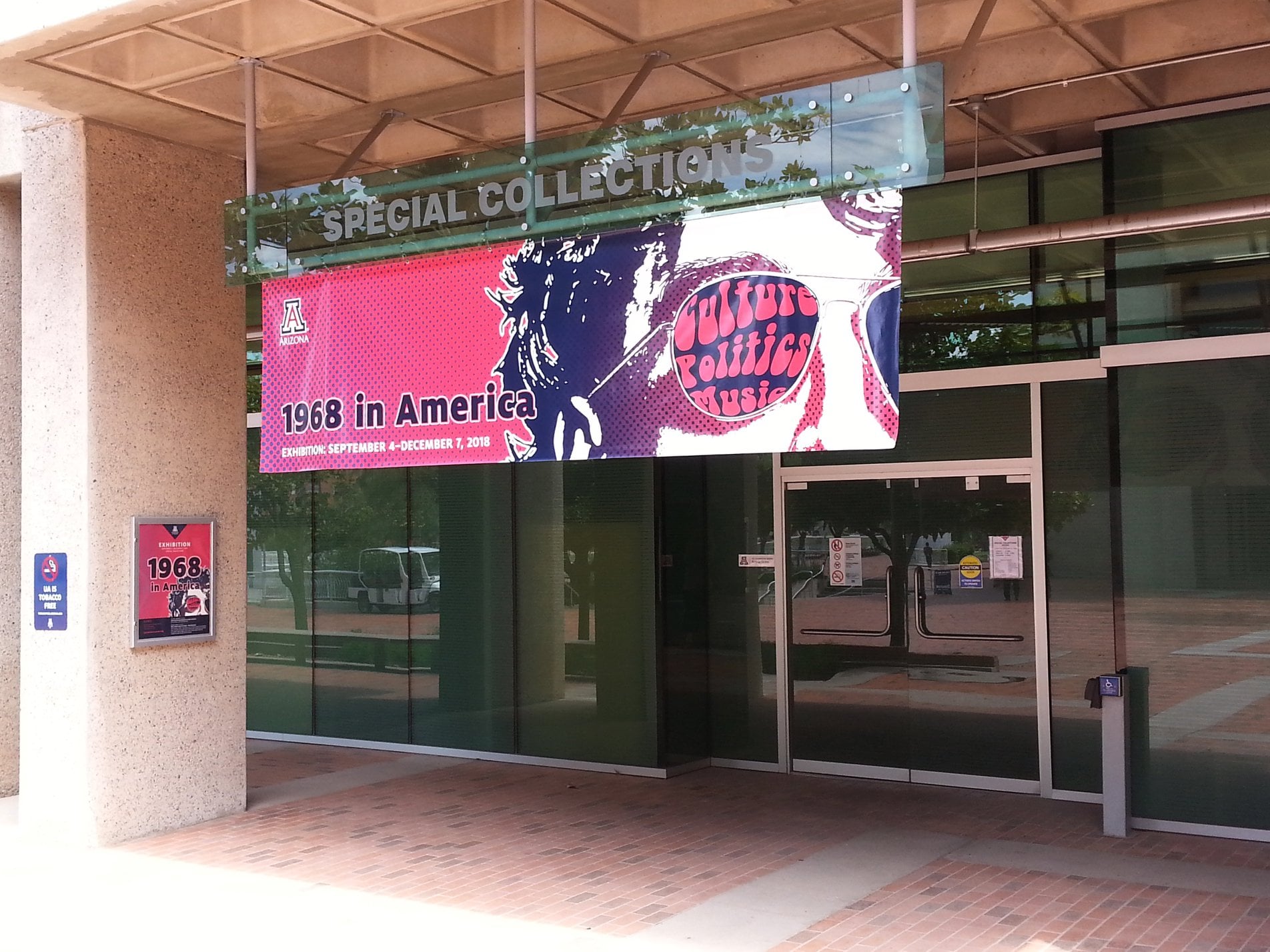
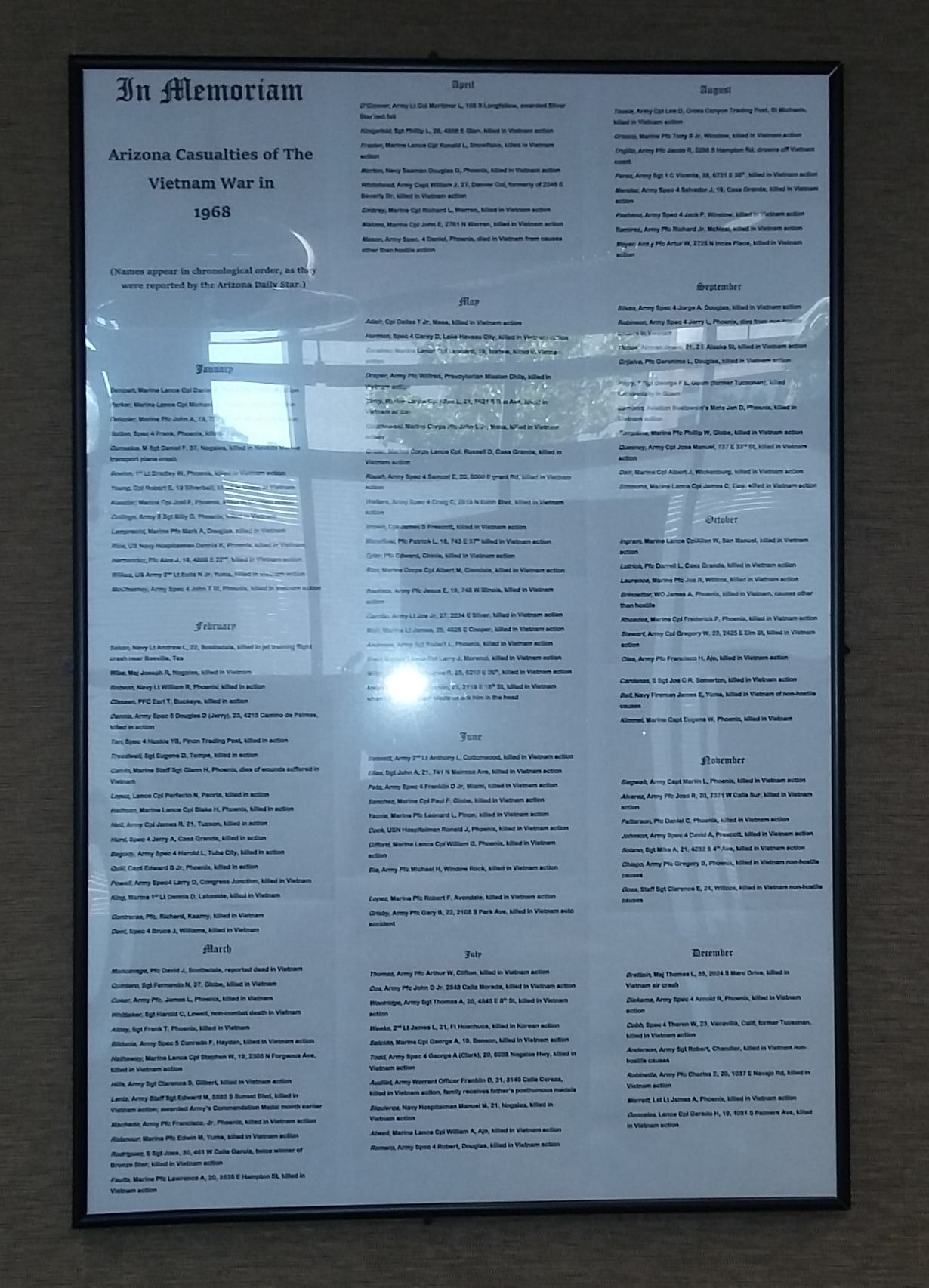
Where were you – or your parents – 50 years ago? Many people took part in the anti-Vietnam war movement, hoping to bring pressure on the government to pull out of Vietnam through underground presses and demonstrations. According to Miller, the critically acclaimed writer and author of “Cuba, Hot and Cold” and “The Panama Hat Trail,” the underground press was a “joyously sloppy endeavor made up of people who knew little about journalism but had strong feelings about the war and the cultural life it spawned.” Miller, who witnessed the violence surrounding the 1968 Chicago Democratic National Convention in the aftermath of the Robert F. Kennedy and Martin Luther King Jr. assassinations, will present a talk about his activities in the underground press and how the rest of the country reacted to the anti-war movement.
In 2002, the University of Arizona Special Collections acquired Miller’s archives, and some materials from this collection will be included in the “1968 in America” exhibit.
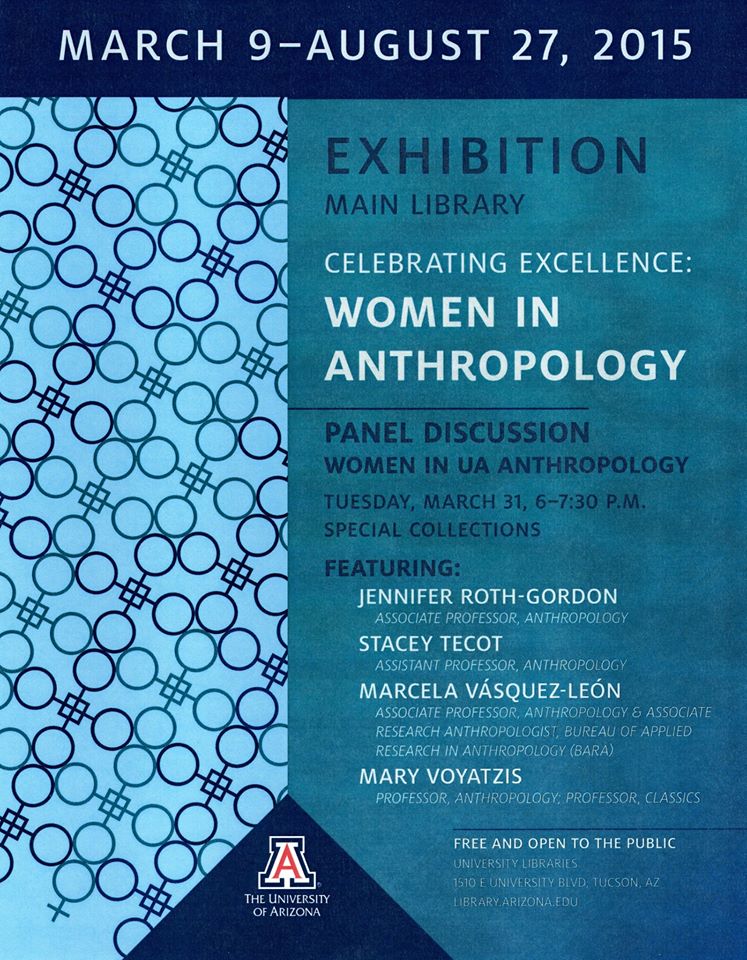
A
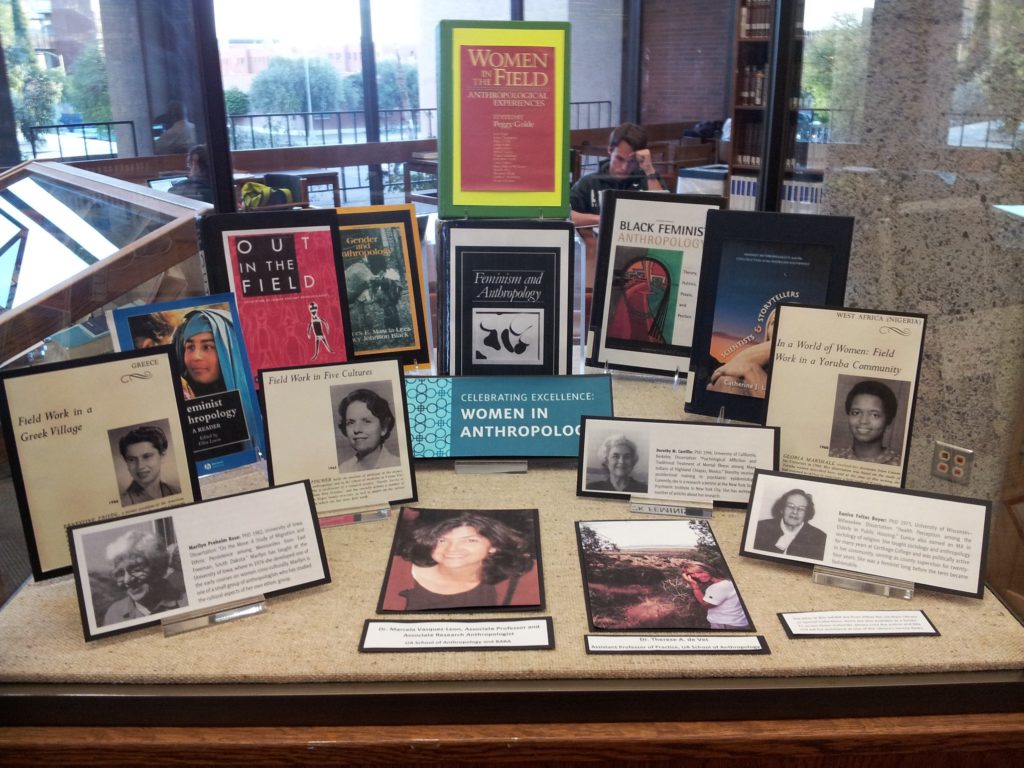
new exhibit at the Main Library celebrates two great occasions – the
centennial anniversary of the UA School of Anthropology and Women’s
History Month – by exploring the seminal work, impact and achievements
of women in the field of anthropology. Through biographical profiles,
photographs, studies and monographs covering gender, race and feminism
in anthropology, “Celebrating Excellence: Women in Anthropology”
highlights the contributions of seven influential American female
anthropologists.
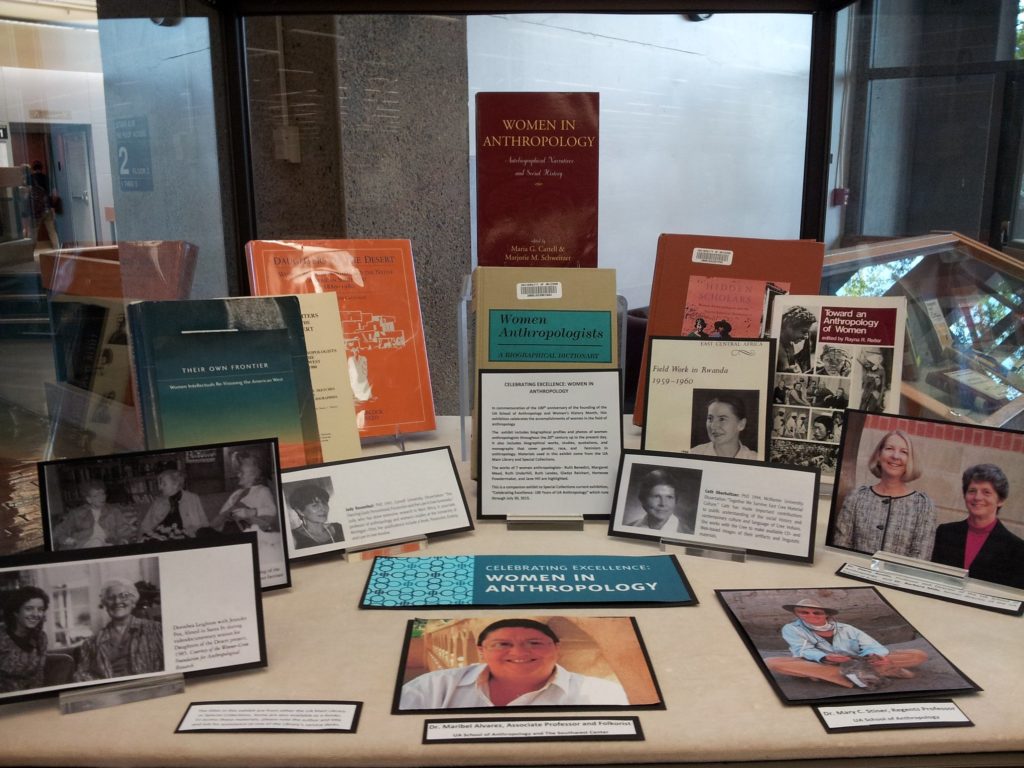
Covering the 20th century to present day, the exhibit features the work of:
-Ruth Underhill (1883-1984), known for her many publications that dispelled myths about Native American culture
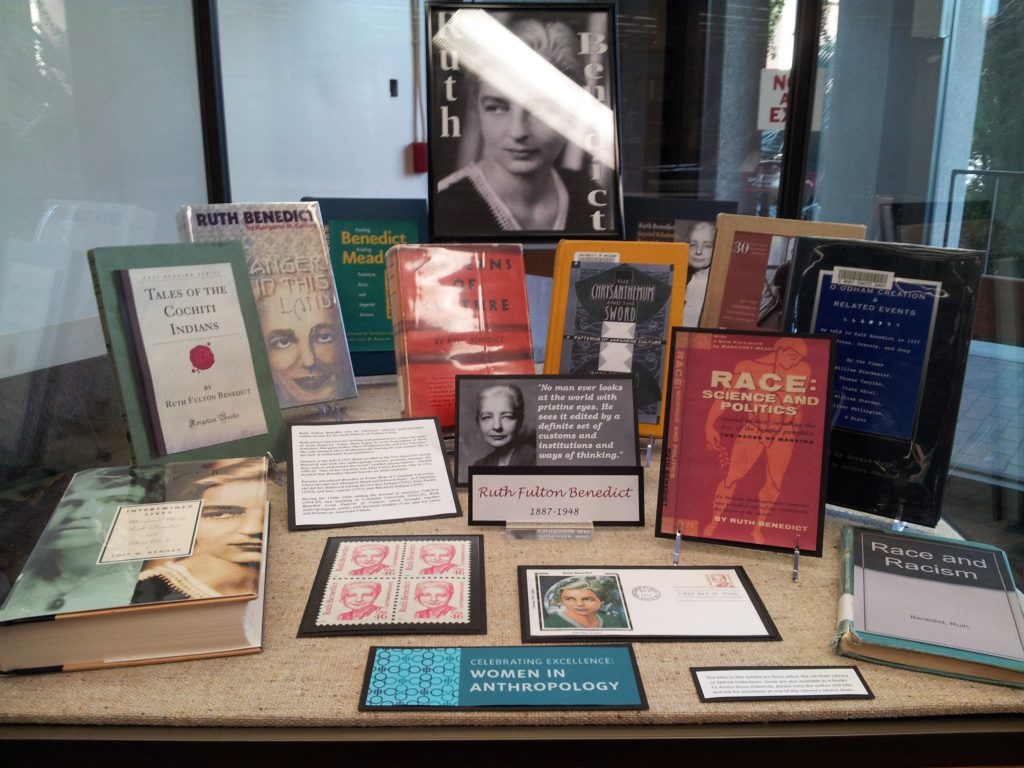
-Ruth Benedict (1887-1948), an anthropologist and folklorist known
for studies of the relationships between personality, art, language and
culture. Benedict was also the second female president of the American
Anthropological Association
-Gladys Reichard (1893-1955), a cultural and linguistic anthropologist best known for her studies of Navajo language and culture
-Hortense Powdermaker (1896-1970), best known for her ethnographic studies of African Americans in rural America
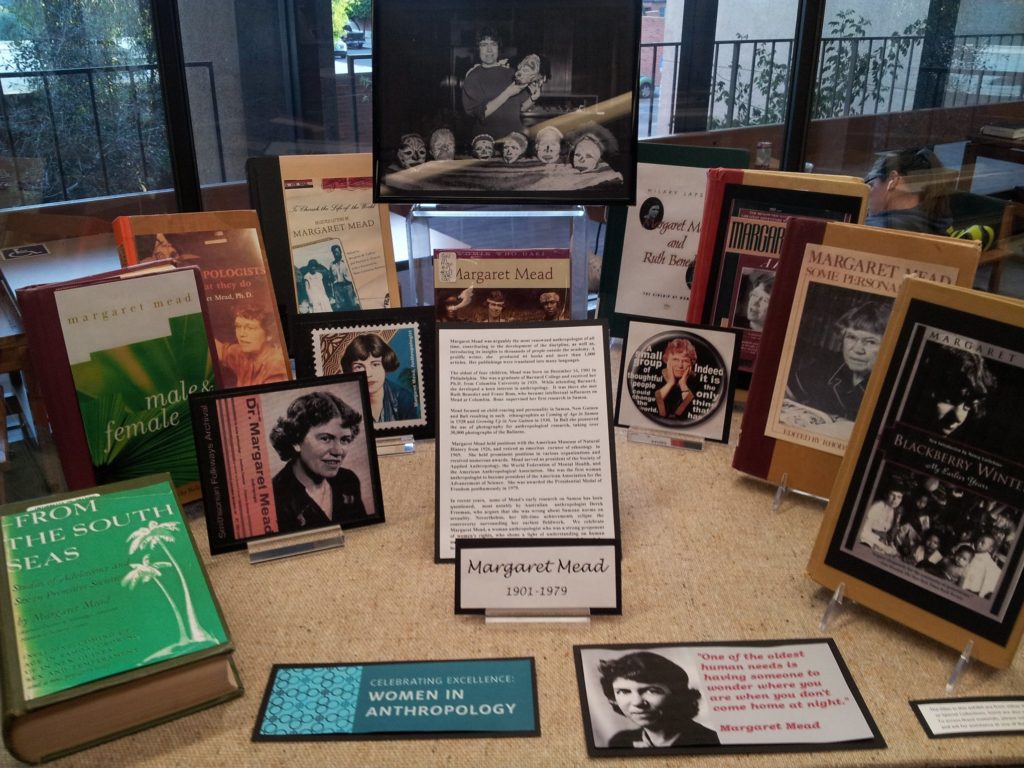
-Margaret Mead (1901-1978), a cultural anthropologist who tackled
controversial social issues and became a frequent speaker and lecturer
in 1960s and 1970s
-Ruth Landes (1908-1991), a cultural anthropologist best known for
studies on Brazilian candomblé cults and her study of race and gender
relations
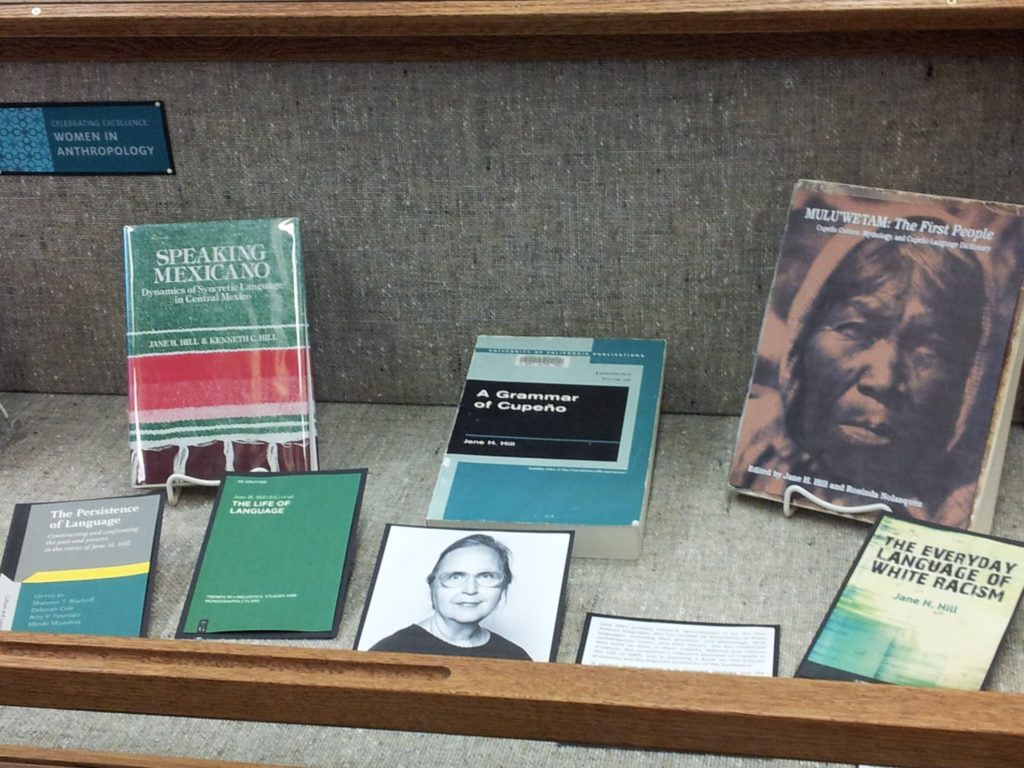
-Jane Hill, Regents’ Professor and Professor of Anthropology and
Linguistics at the University of Arizona known for her research on the
Uto-Aztecan languages and language ideology
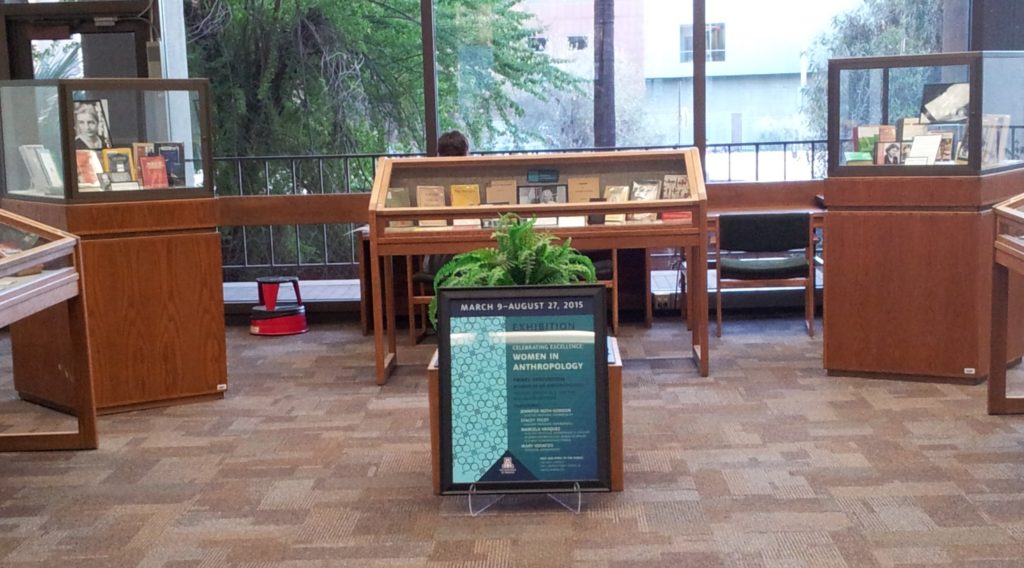
“Celebrating Excellence: Women in Anthropology” is on display in the
UA Main Library from March 9-Aug. 27 and was curated as a companion
display to Special Collections current exhibition, “Celebrating
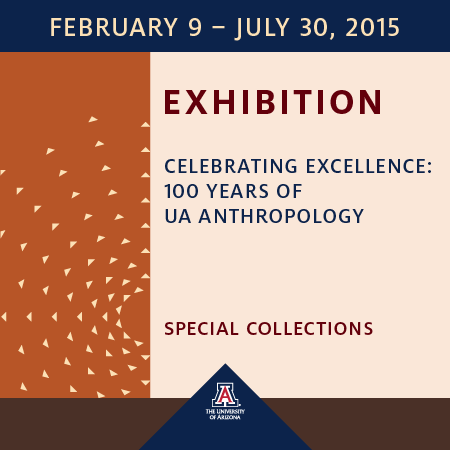
Excellence: 100 Years of UA Anthropology,” which runs through July 30.
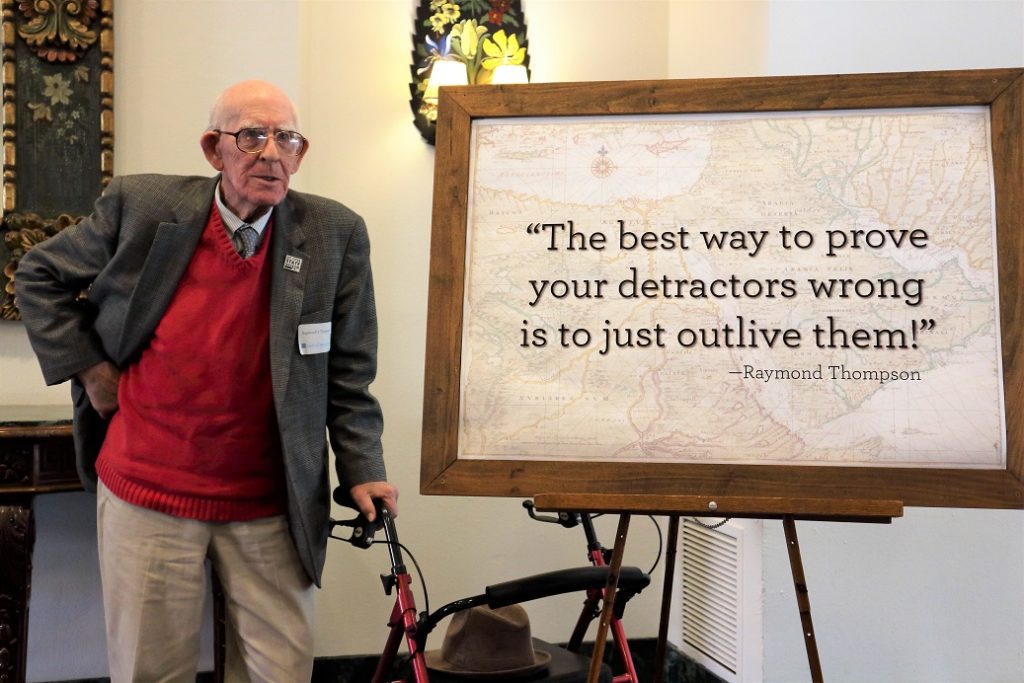
I learned a great deal about the history of the University by doing this exhibit. The Anthropology program, started by the great archaeologist, E.E. Cummings, put the University on the map in the early part of the 20th century. The more I read about Cummings and his successors, Emil Haury, Raymond Thompson, Ed Spicer, Clara Lee Tanner, the more admiration I felt for my home institution. The Anthropology department has a fascinating history. My effort at capturing 100 years of it is shown below. Although I know I didn’t quite cover the entire 100 year period, it was quite gratifying to know that the late Dr. Raymond Thompson liked my work. Meeting him was the highlight of the whole experience for me.
In celebration of the 100th anniversary of the
founding of the School of Anthropology, Special Collections has put together an
exhibition that features a variety of historical material, including photos,
original documents, pamphlets, articles and books related to the school and its
impact on our campus and community.
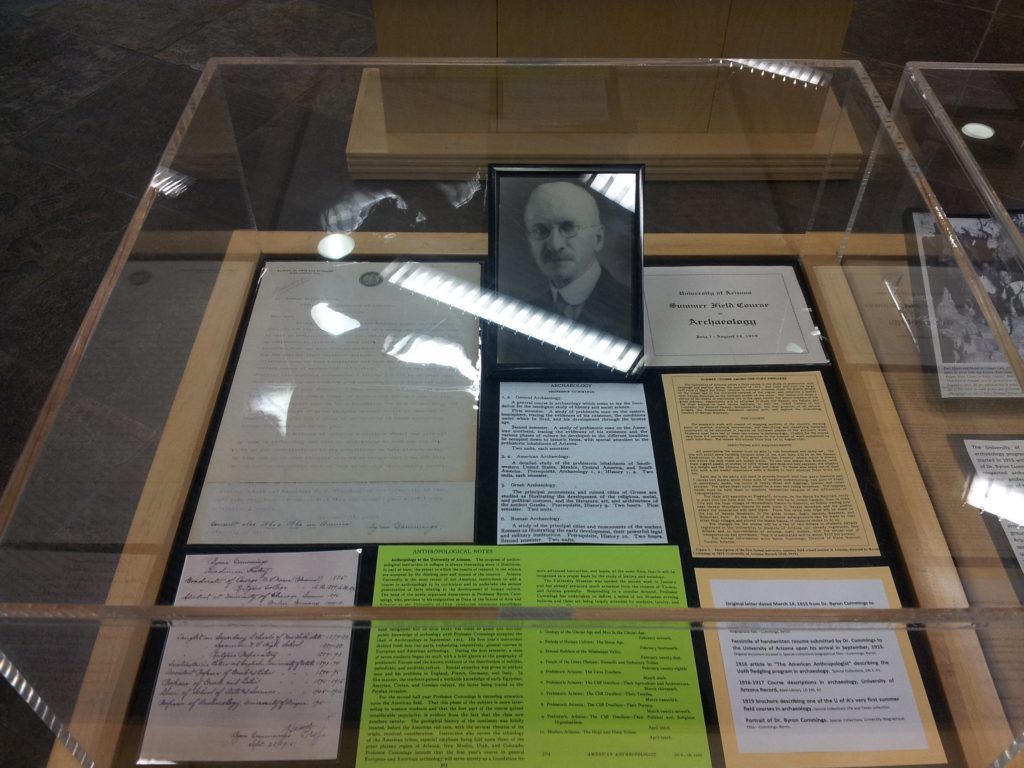
Included will be archival materials on Byron Cummings,
founder of the program, and his successors Emil Haury, and Raymond Thompson.
These photos, documents and articles come from a variety of places, but most
notably from the University of Arizona Biographical files, housed in Special
Collections.
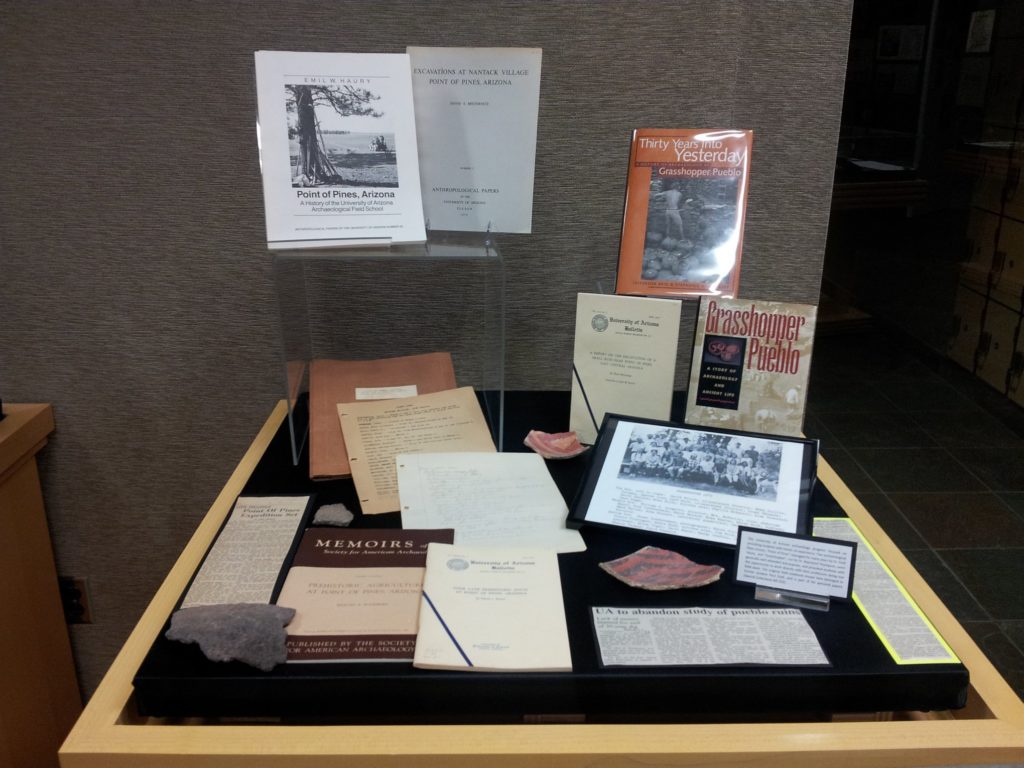
Also on display will be information about various
archaeological field schools, such as Point of Pines and Grasshopper, as will information
about the Bureau of Ethnic Research (now called the Bureau of Applied Research
in Anthropology) and the “Garbage project”.
Historic photos and information about the Arizona State
Museum, which was for many, many years, managed by the directors of the
anthropology program is also included.
Documents from various manuscript collections of former
students and faculty, most notably Henry Dobyns, Trudy Griffin-Pierce and Paul
Ezell will add to the exhibit’s focus on the history of the anthropology
program.
The University of Arizona Press is also highlighted, as Dr.
Emil Haury was a key player in convincing then President Harvill to get the
Press started in 1959. Over the years, the UA Press has focused on
publishing a number of works in anthropology and archaeology, many of them
written by UA faculty, and these will be featured as well.
Some of the documents and other materials that are
noteworthy include:
Byron Cummings hand written resume, submitted to
the University upon applying for a position in 1915.
Paul Ezell’s field notebook from his time spent
at Point of Pines in 1939.
1930’s annual reports from the Anthropology
Dept.
Original photos of the Arizona State Museum in
its various locations.
Photos of members of the UA Anthropology club.
Early publications such as the Kiva, the Atlatl,
and the UA Press’s Occasional Papers in Anthropology.
Two companion exhibits are also in the works. In March, the Main Library will host an exhibit on women and anthropology, and in April, an exhibit about A.E. Douglass and the Tree Ring Lab will open in the Science Engineering Library.
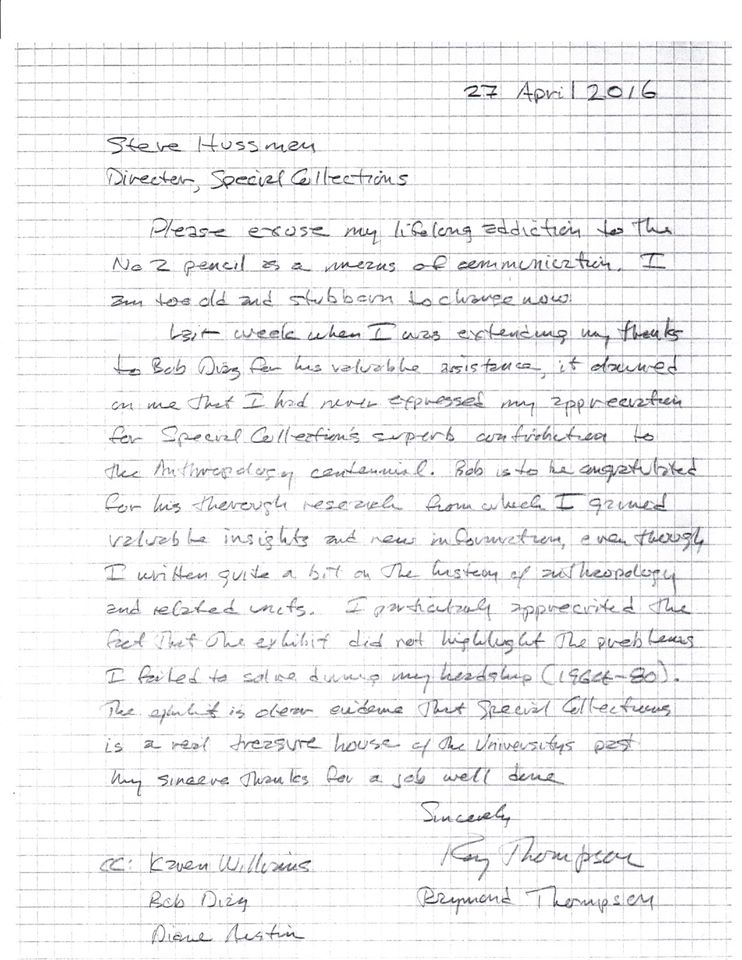
Dr. Raymond Thompson, who was director of both the School of Anthropology and the Arizona State Museum for many years, wrote a very kind letter to my supervisor where he noted how much he enjoyed the exhibit. I was both humbled and gratified to receive this kind of recognition, as I put my heart and soul into this project. Dr. Thompson passed away recently. He was a real gentleman.
Dr. Raymond Thompson, 1924-2020.
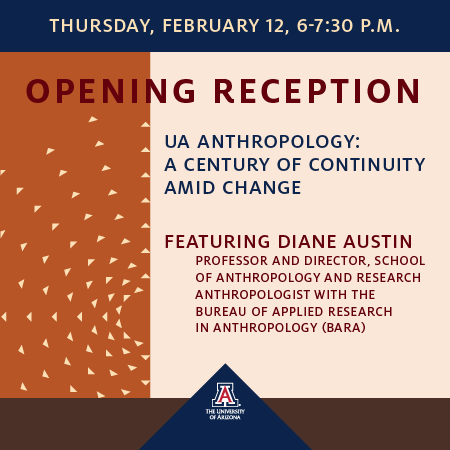
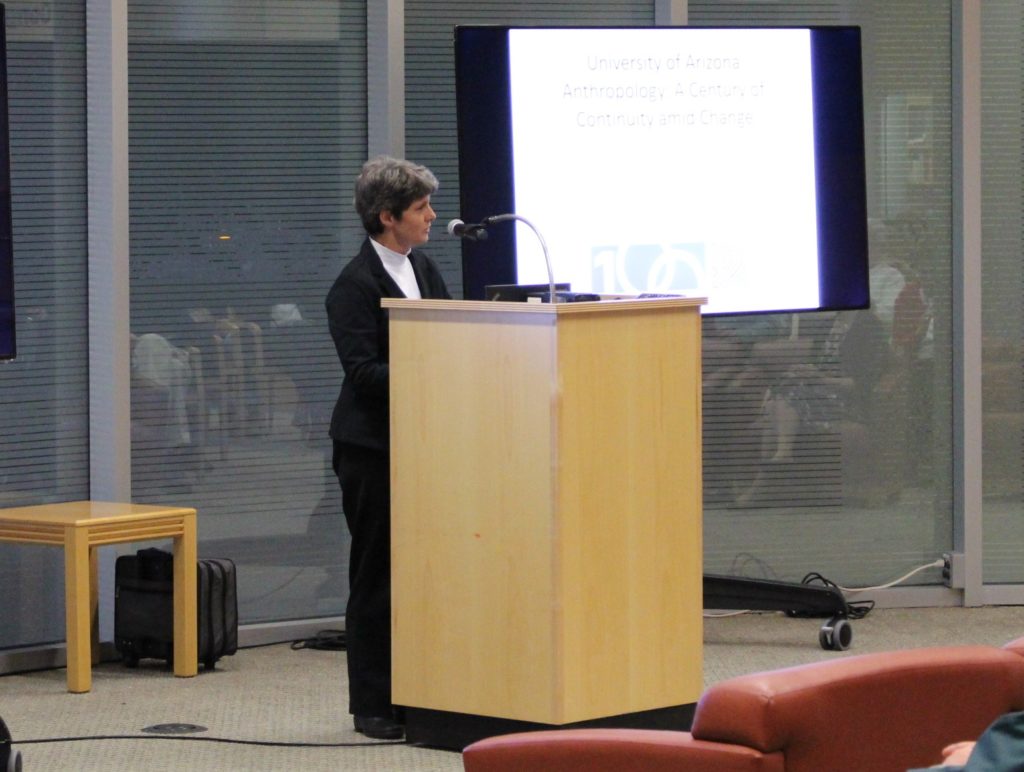
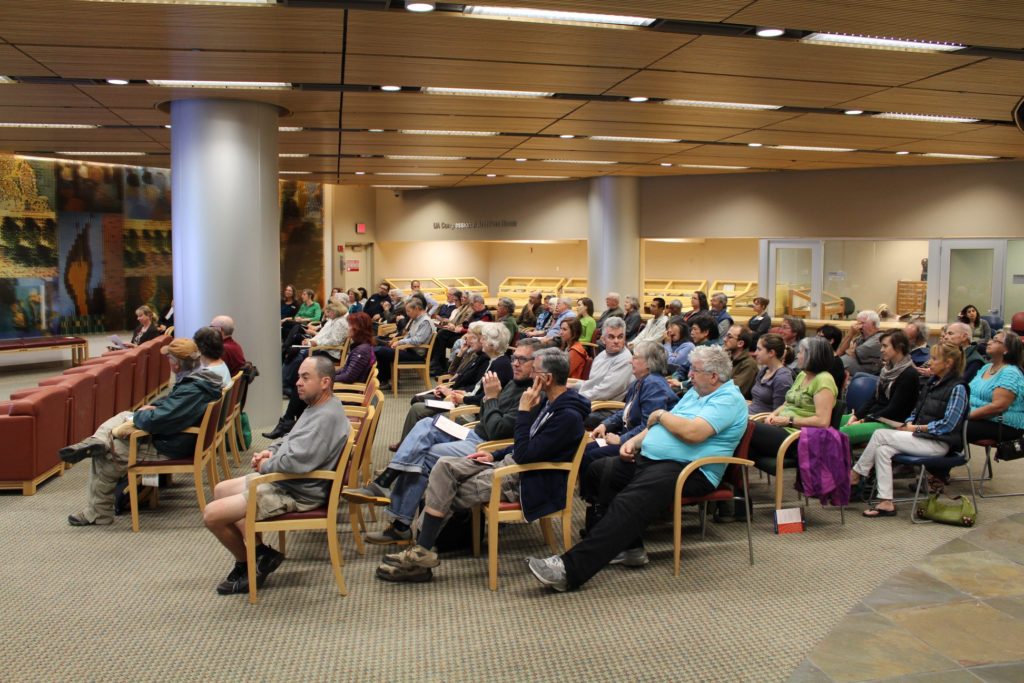
“Join us as Diane Austin, Professor and Director of the School of Anthropology and Research Anthropologist with the Bureau of Applied Research in Anthropology (BARA) opens Special Collections’ newest exhibition.
The presentation will highlight some of the key historical and current challenges addressed by University of Arizona anthropologists”
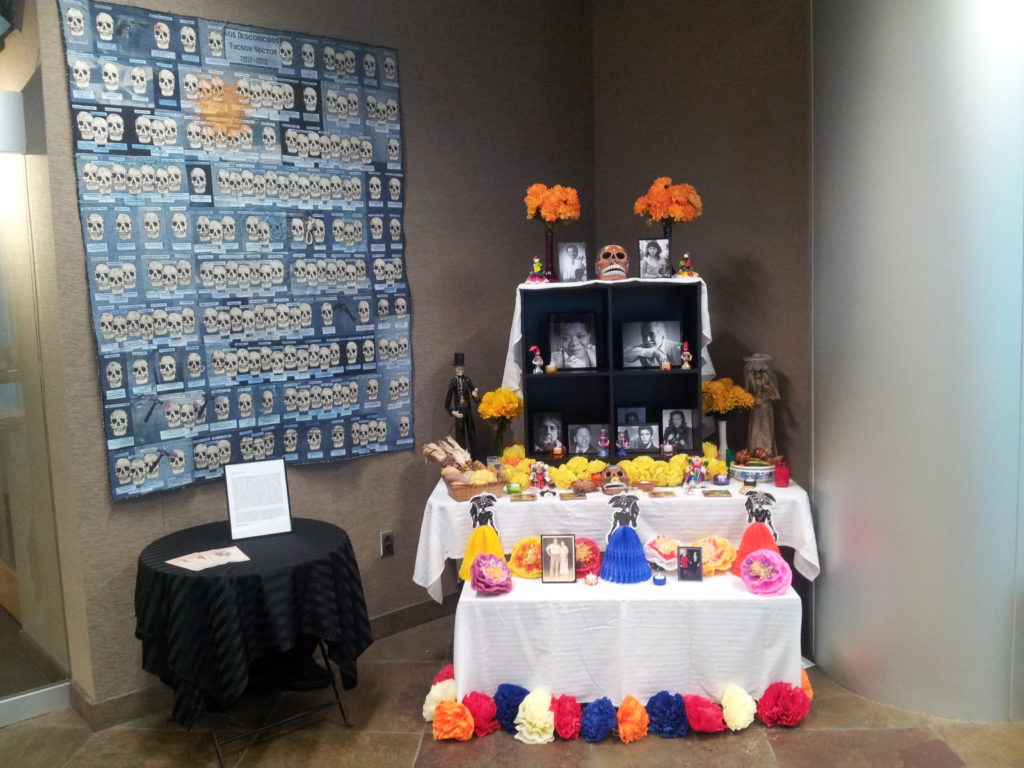
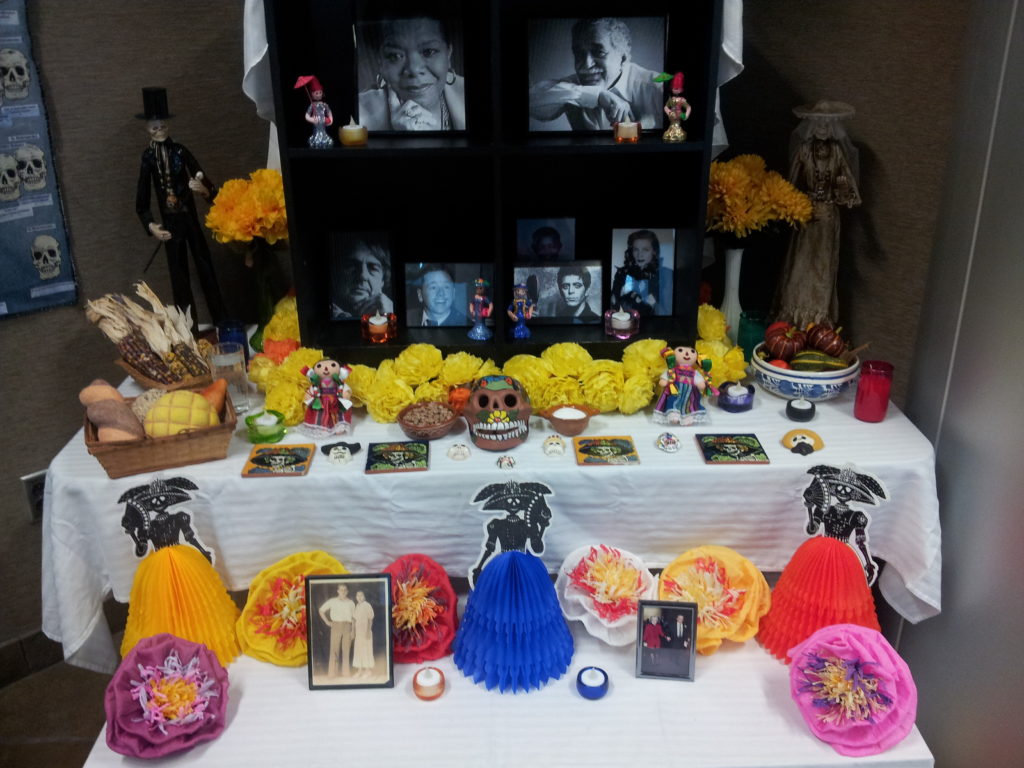
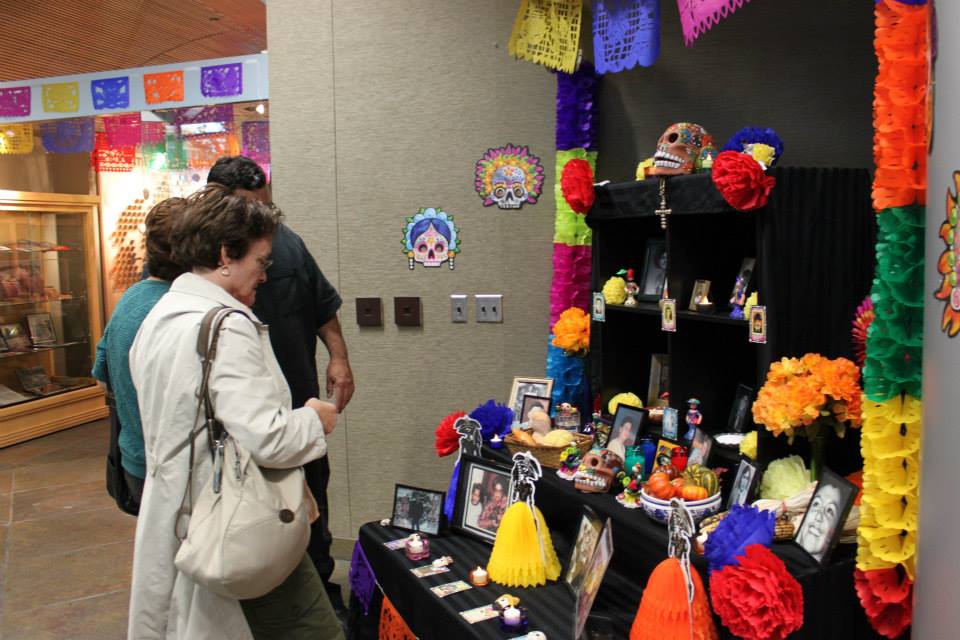
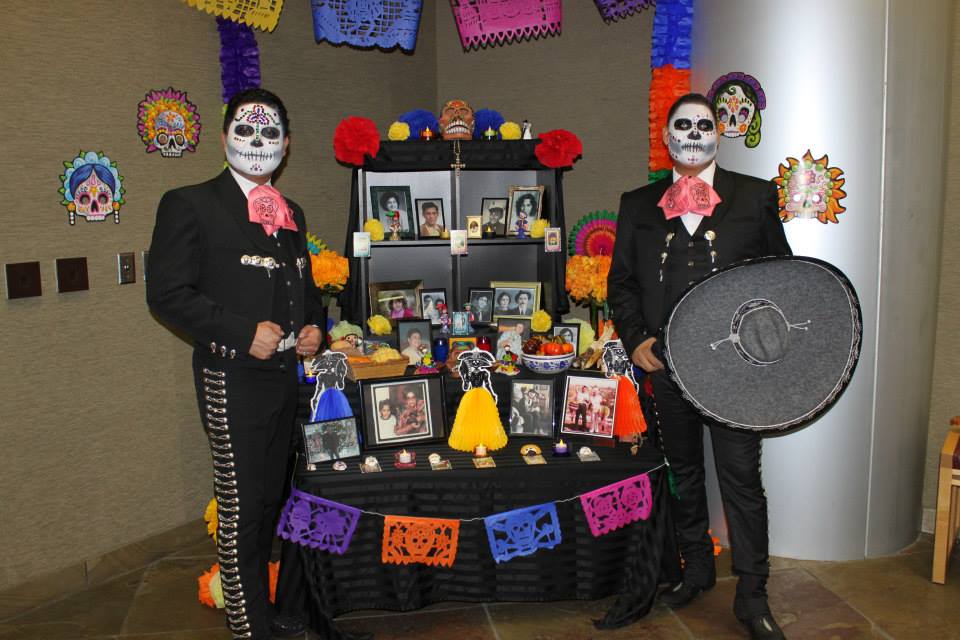
I designed this year’s altar. Jennifer Eschedor loaned us her quilt, titled, “The Unknowns” for the occasion.
This year’s altar focused on honoring people how had died in 2015, including actors, musicians, writers and other prominent Americans, such as Pete Seeger, Maya Angelou, Lou Reed, Lauren Bacall, Carlos Fuentes and others. Jennifer Eschedor, a local educator and artist, also loaned her quilt, honoring those who had died while trying to cross the desert, to Special Collections, for display alongside the altar.
Here’s the promo I wrote for the altar:
Dia De Los Muerto Altar at Special Collections
The staff of Special Collections are once again setting up a “Dia De Los Muertos” altar in the Special Collections exhibit gallery. There are several ways you can participate. You are welcome to bring a photo of a departed loved one to place on the altar anytime from now until November 7. You can also join the procession that will take place at noon on Monday November 3. Led by a group of visiting teachers from Mexico, it will start at Special Collections and finish at the Cesar Chavez Building. “Pan de muerto” (Day of the Day bread) and hot chocolate will be served . Talks about the significance of “El Dia De Los Muertos” will also be presented by our guests from Mexico. Everyone is welcome!
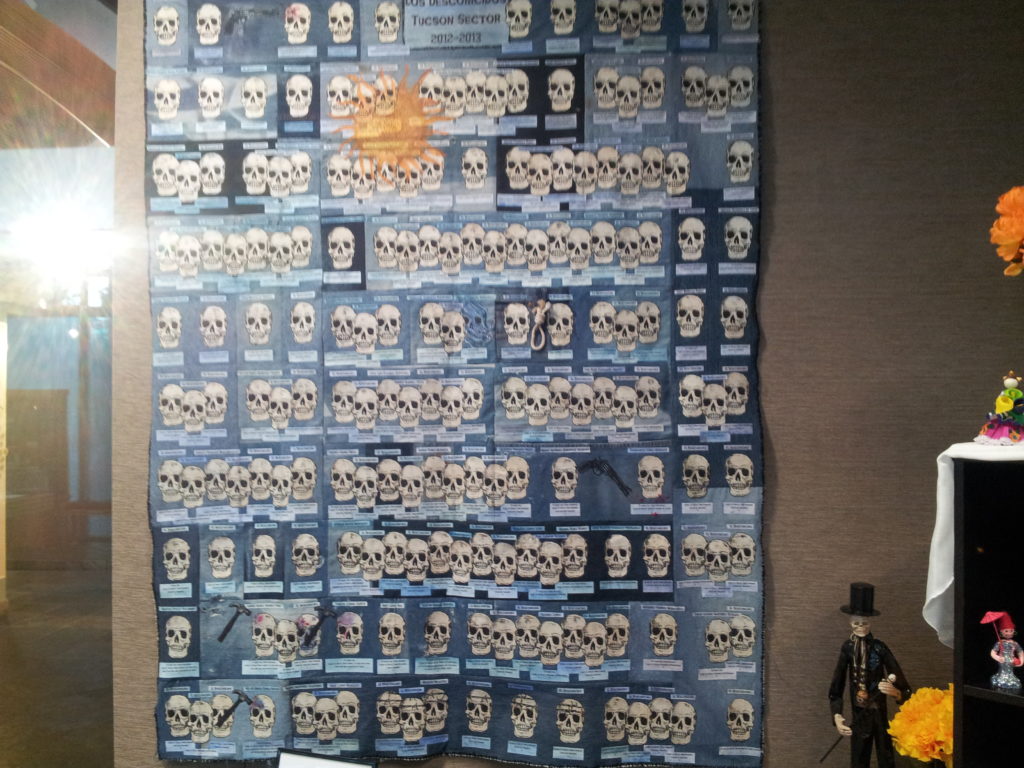
“The Unknowns” by Jennifer Eschedor.
ABOUT THE QUILT:
This quilt, titled The Unknowns,
was made to commemorate the people who lost their lives while attempting to
cross the US/Mexican border during fiscal year 2012-2013 as they were seeking a
better life for themselves and their families.
An organization called Los Desconicidos, founded by Jody Ipsen,
seeks individuals and groups to use migrant clothing to create a quilt to honor
those who have died during each fiscal year since 2000. I found the names and causes of death on a
website provided by the Coalition de Derechos Humanos. My purpose for creating this quilt was to
increase awareness of the horrors that continue at our border. The skull image has become a pop symbol, yet
it is used here to hopefully confront viewers with the outrageous number of
deaths (183) that occurred during one year.
The skull, gun and hammer images were carved out of linoleum and printed
individually on cloth. I wanted to give
a graphic illustration of the cause of deaths.
In the extremes of the desert environment, many bodies are found so
decomposed that the cause of death, and even gender can not be determined. Working with jeans that were actually worn
by the migrants made me feel a strong connection to them as real people….I couldn’t help but
imagine the families they left behind.
I received a BFA from Kent State
University in Studio Art with a focus in textiles. After teaching art in public schools in
Pittsburgh, PA for a few years, I grew tired of the gray skies and moved out to
Tucson in 1999 to attend the University of Arizona. In 2000, I earned my MA in Art Education and
have taught in a variety of situations, both public and private in Tucson. Currently, I enjoy working in mixed media.
Jennifer Eschedor
A close up of this year’s altar, honoring those who had passed on in 2015.
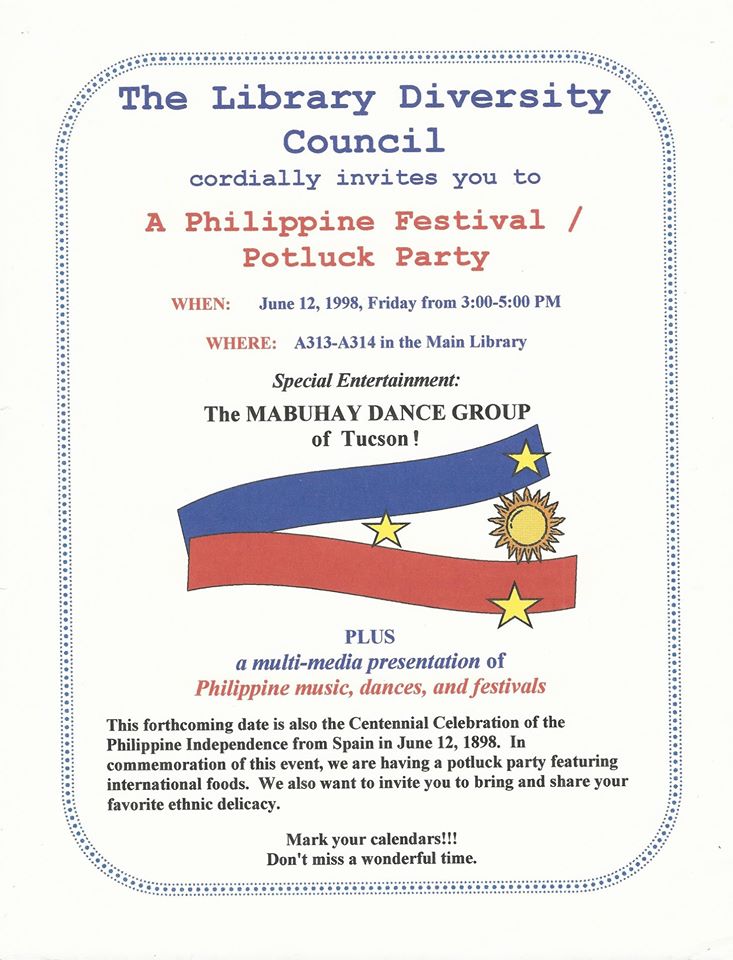
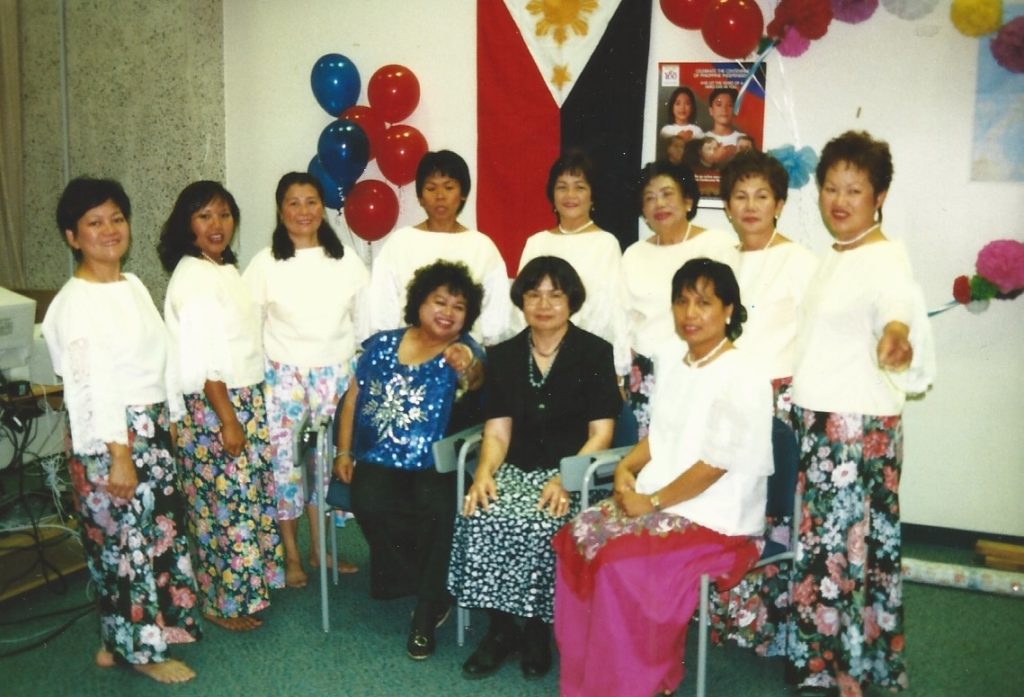
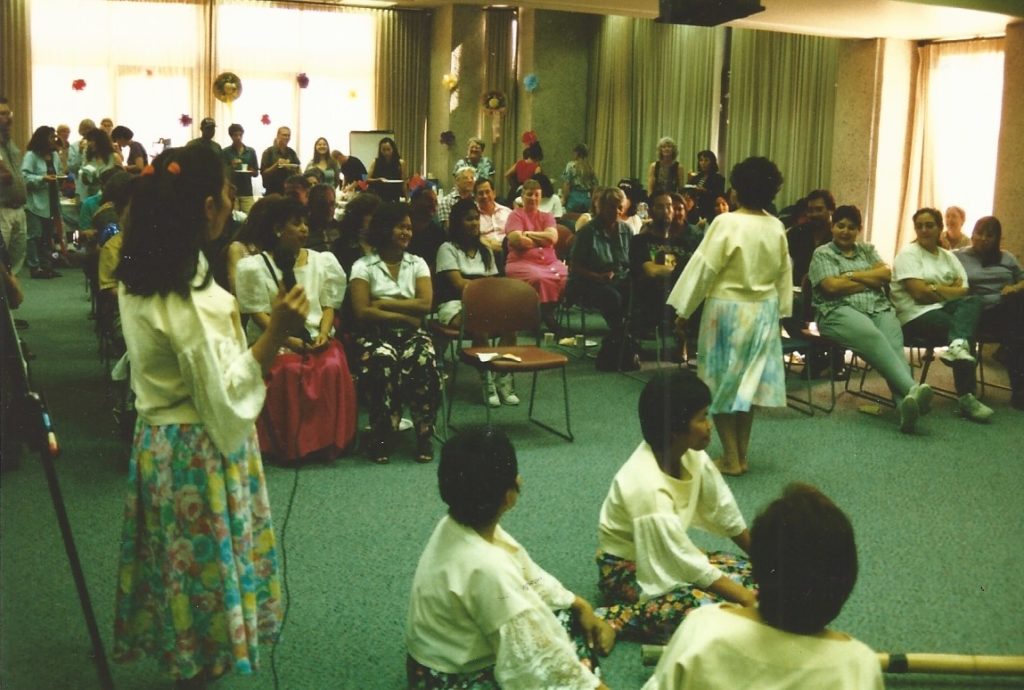
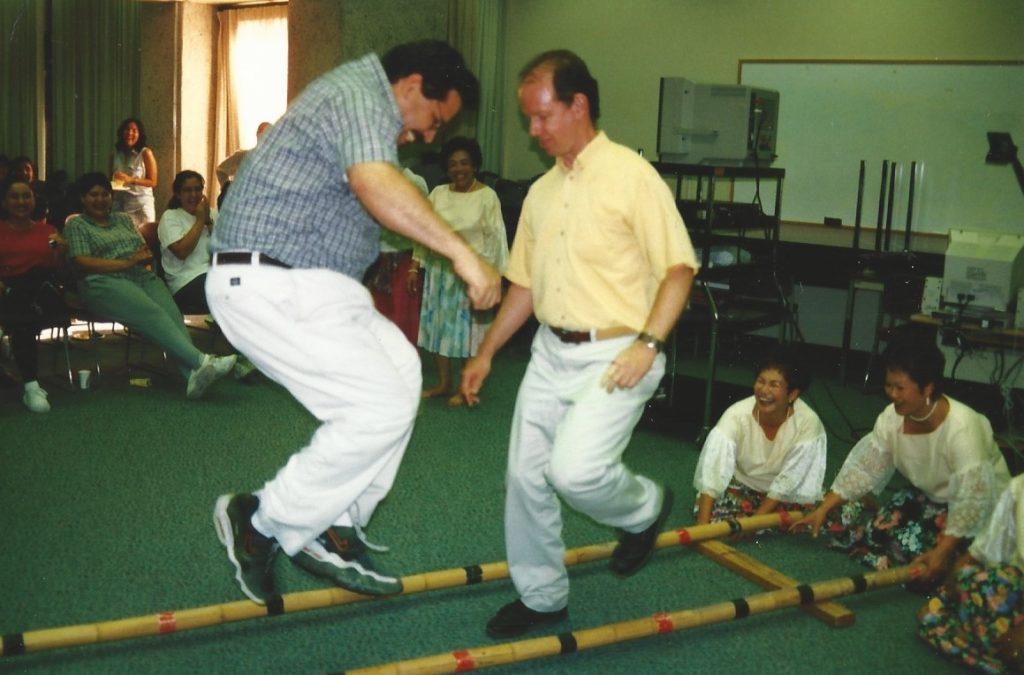
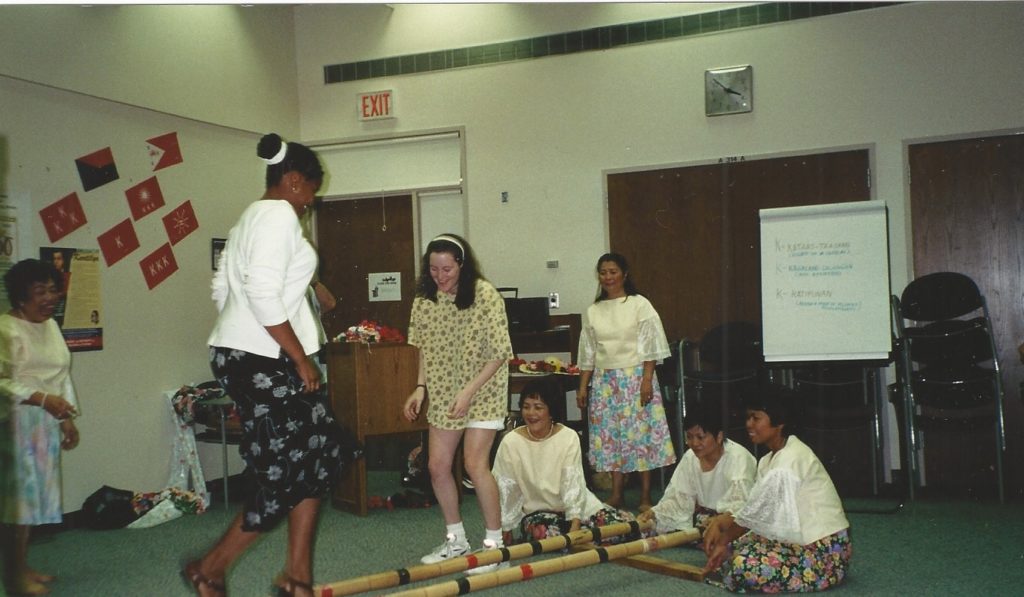
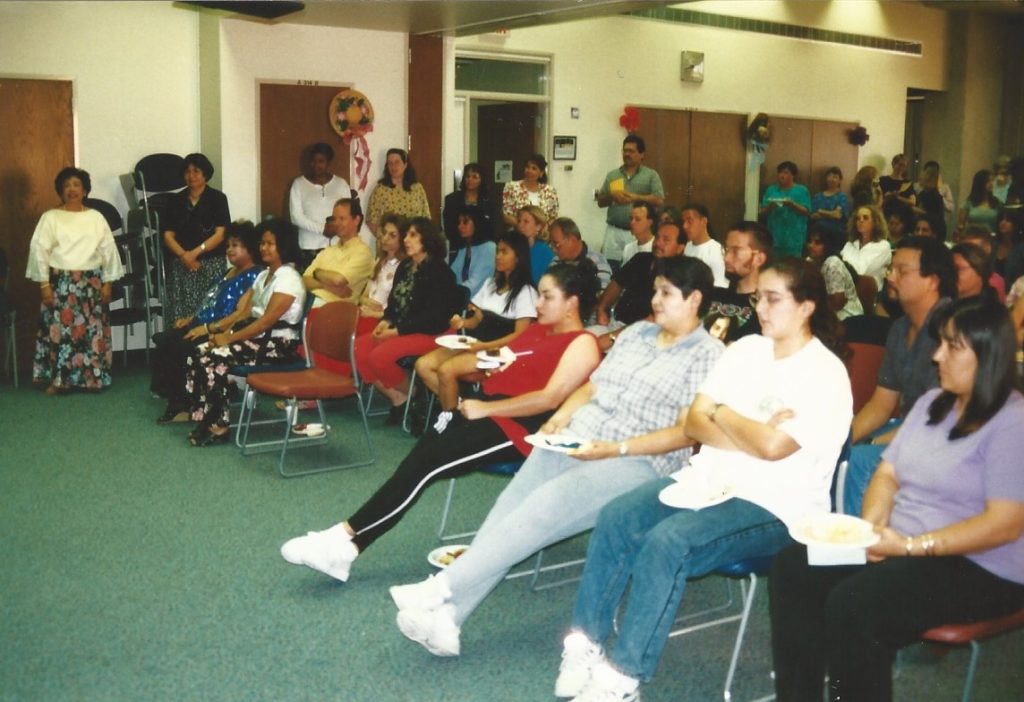
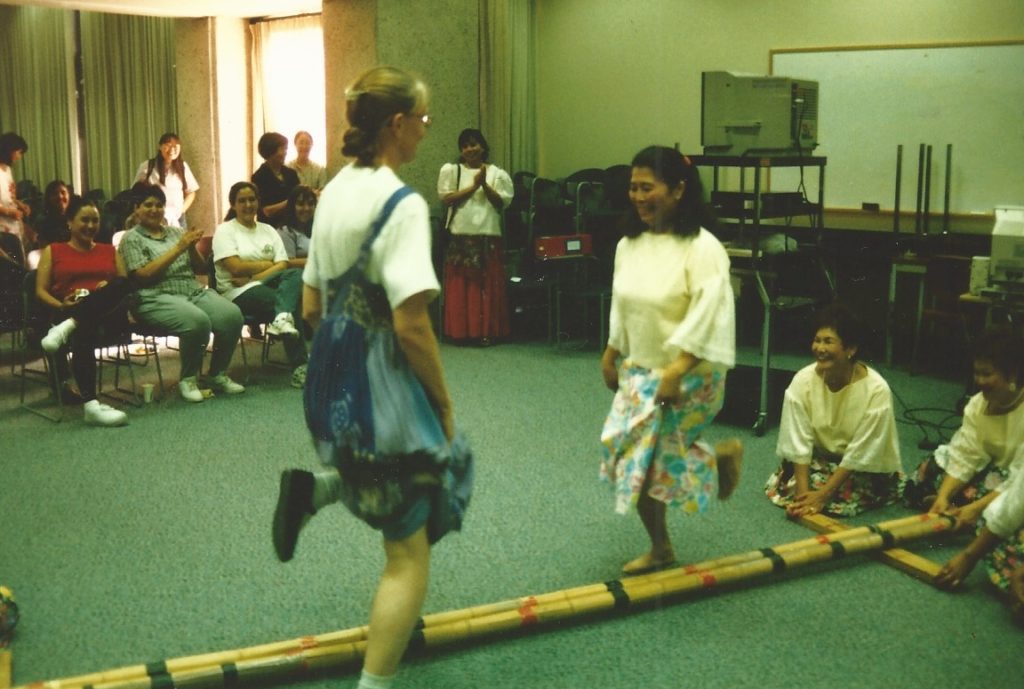
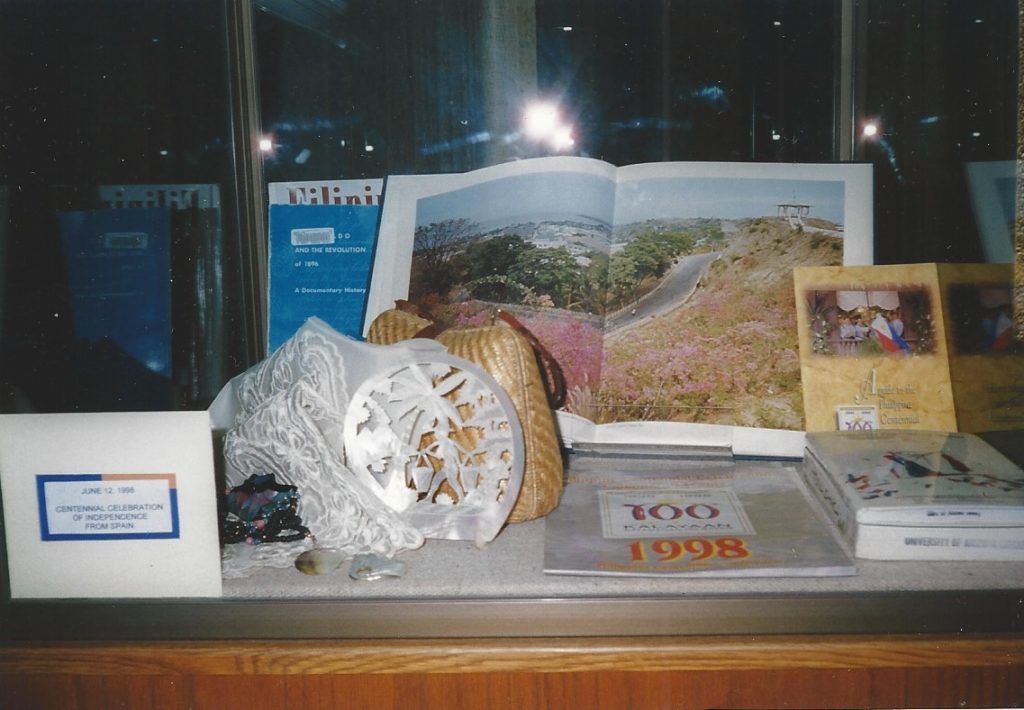
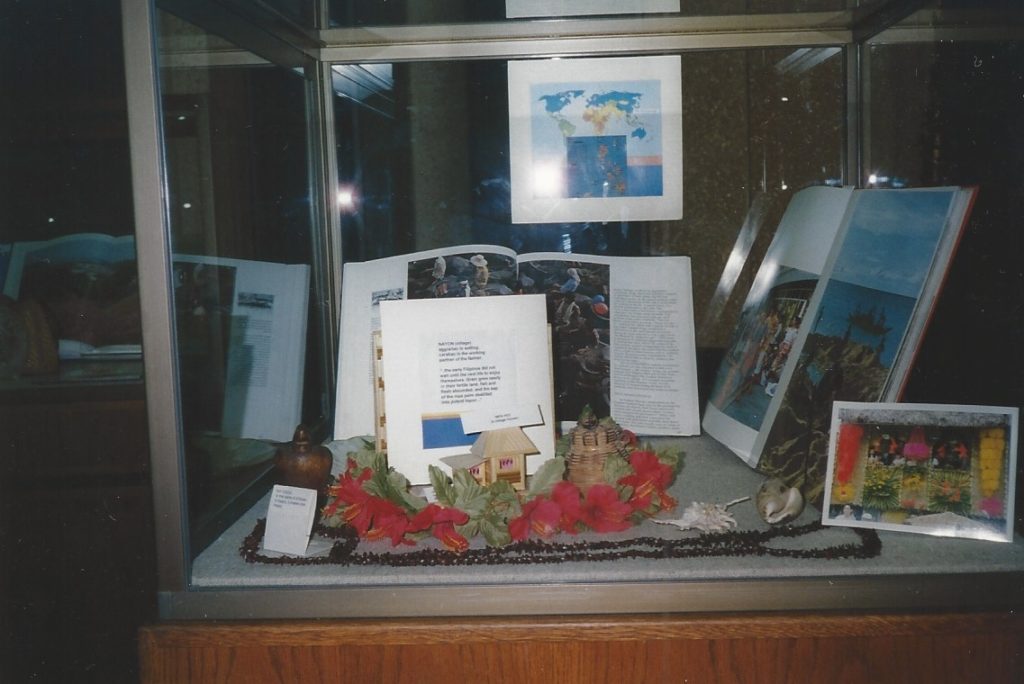
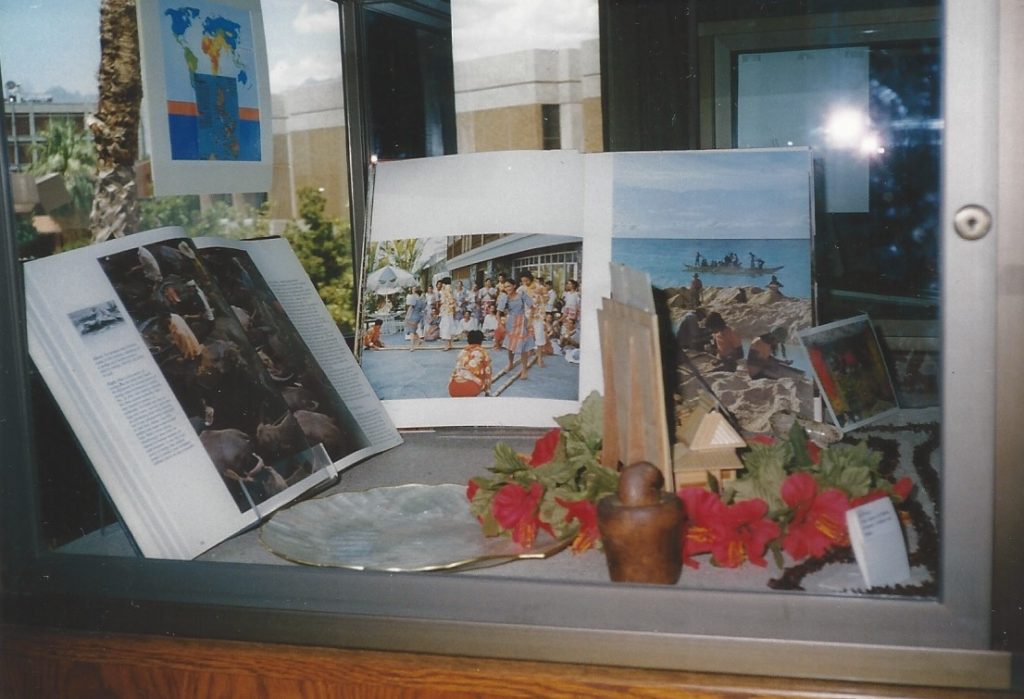
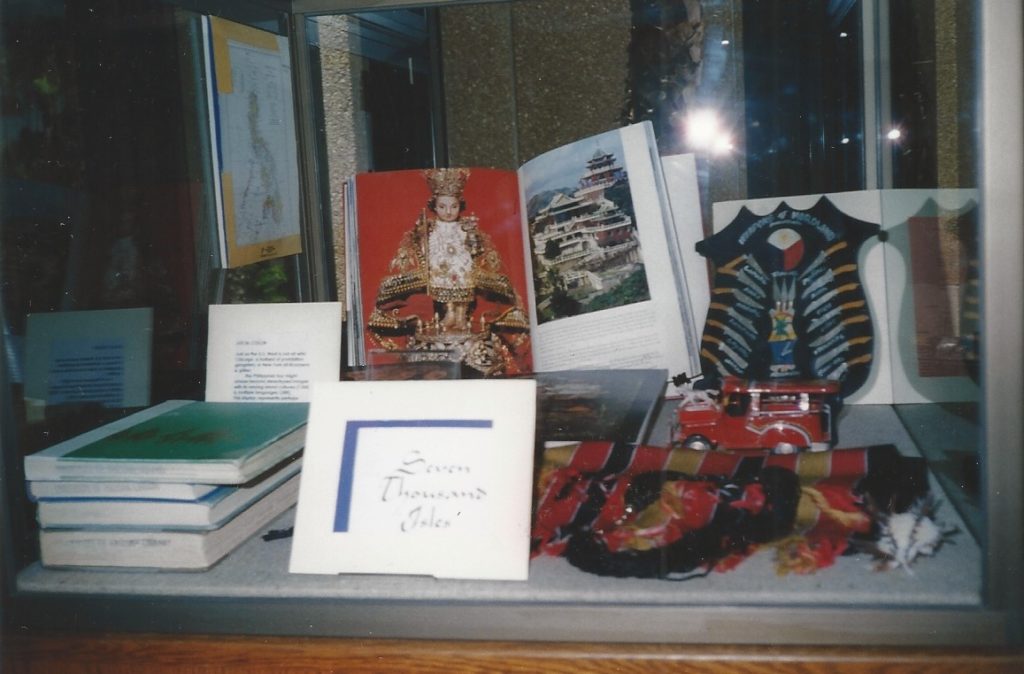
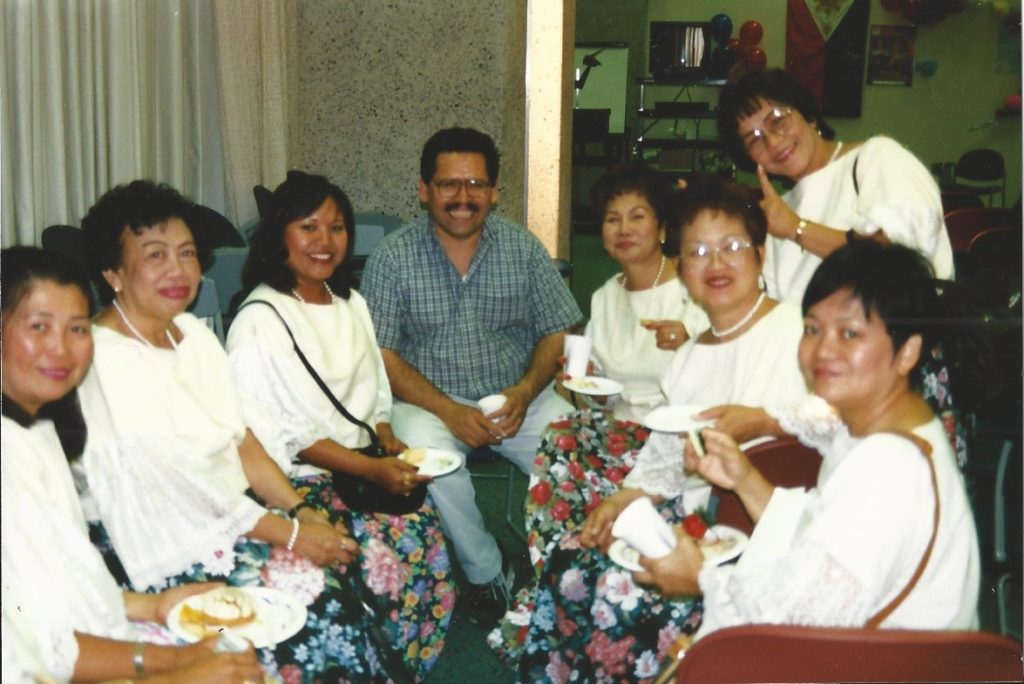
When I was Assistant to the Dean for Staff Development, Recruitment and Diversity, I worked with a group called the Library Diversity Council to provide training and programming for the Library staff. One of our most memorable events was the Philippine Festival and Potluck Party we hosted, in commemoration of the 100th anniversary of Phillipine Independence from Spain. There were several Filipino staff members in the Library at the time, including MaryLou Myers, Aida Short, and Ditas Reitz, and they were able to convince a local club, The Mabuhay Dance Group to join us in the festivities. There was wonderful food, and the group curated an exhibition outside the Library Administrative Offices that was both informative and colorful. My role was that of sponsor, mostly. The bulk of the work on this one was done by Library staff. It was a fun event!
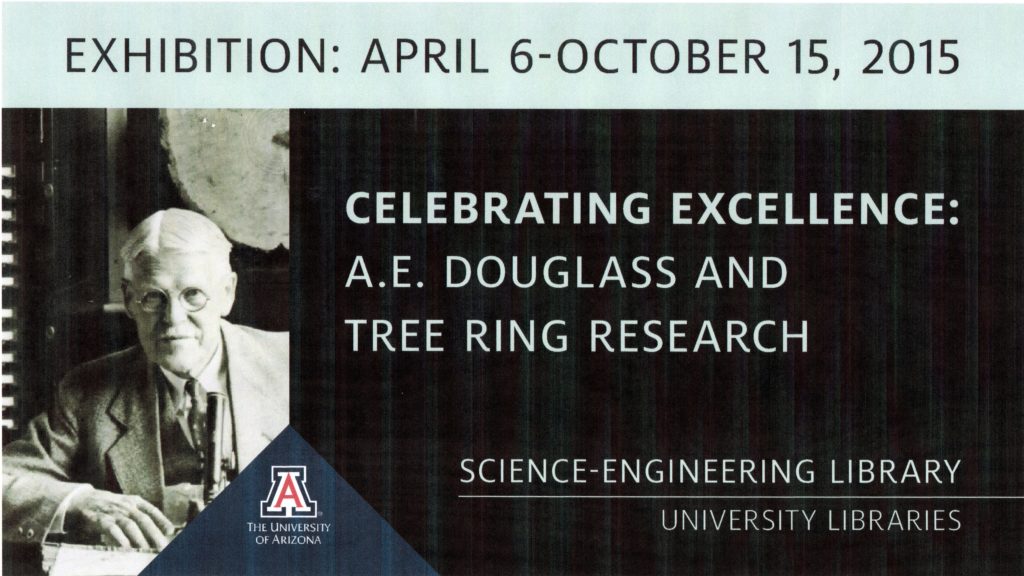
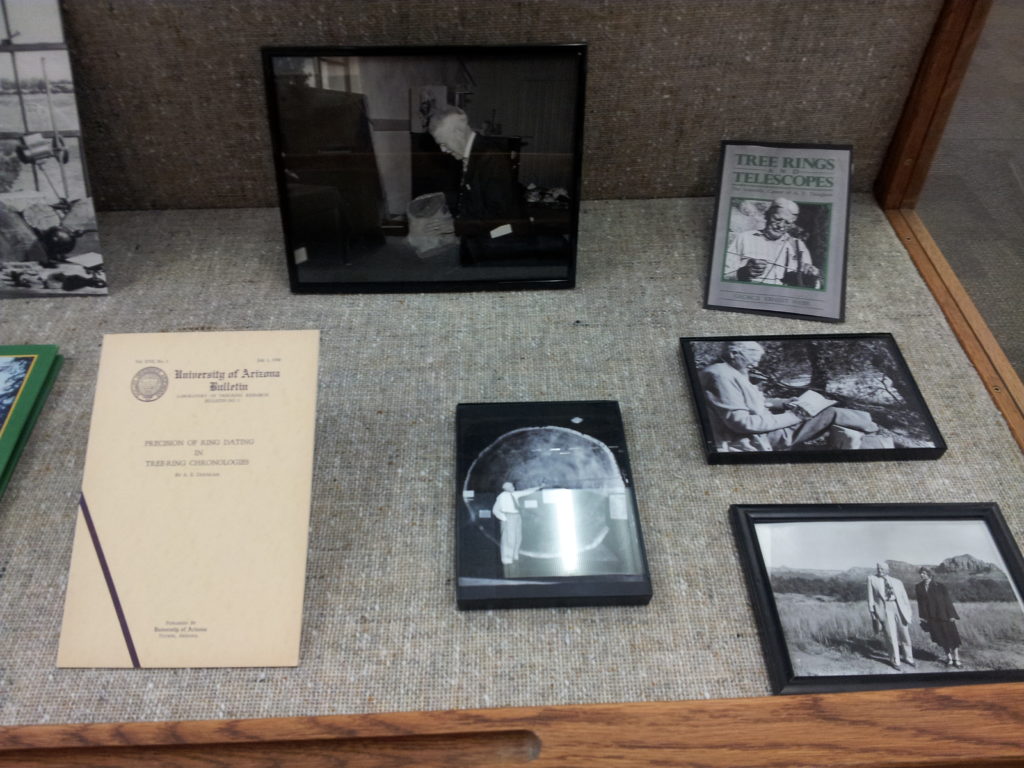
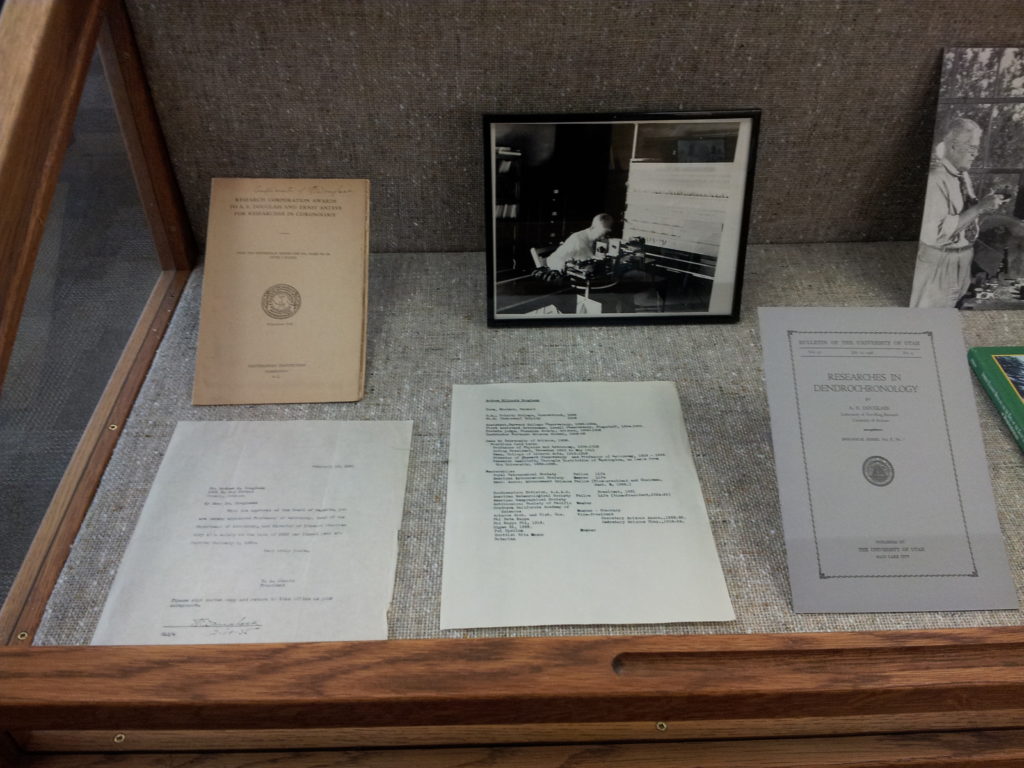
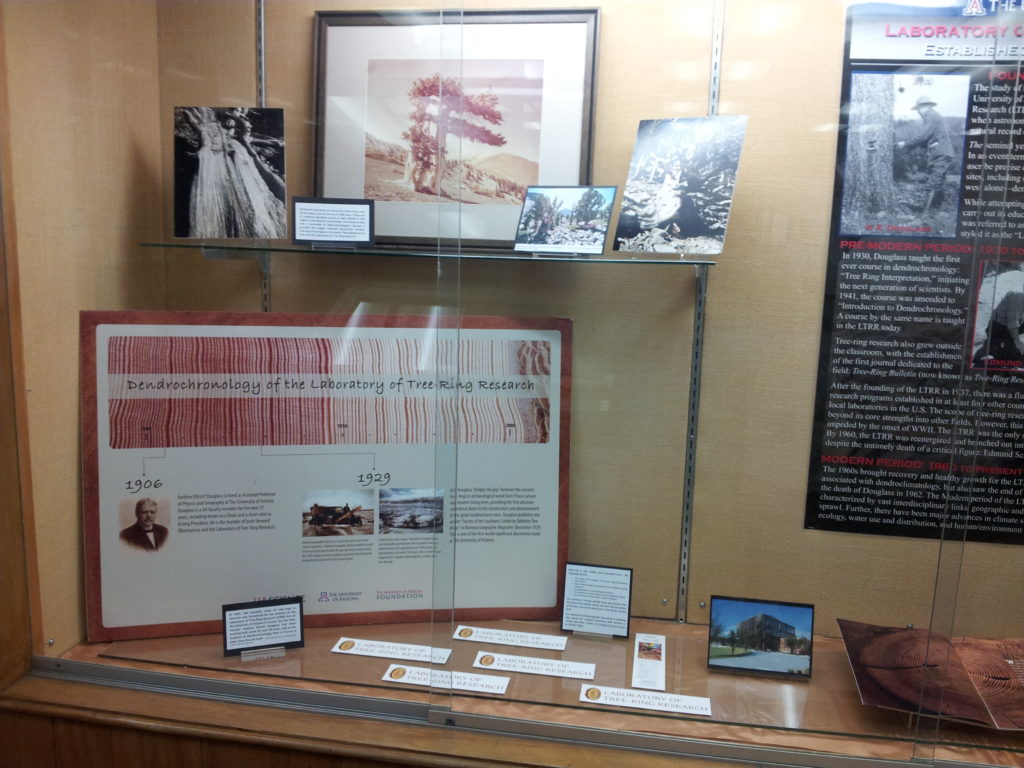
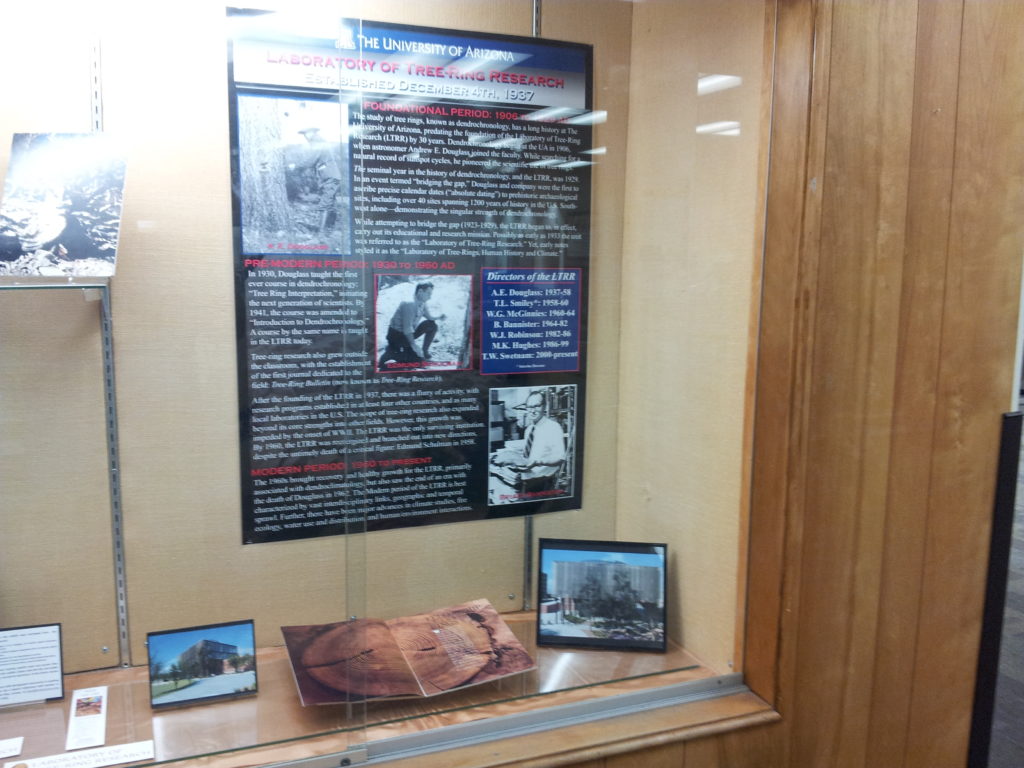
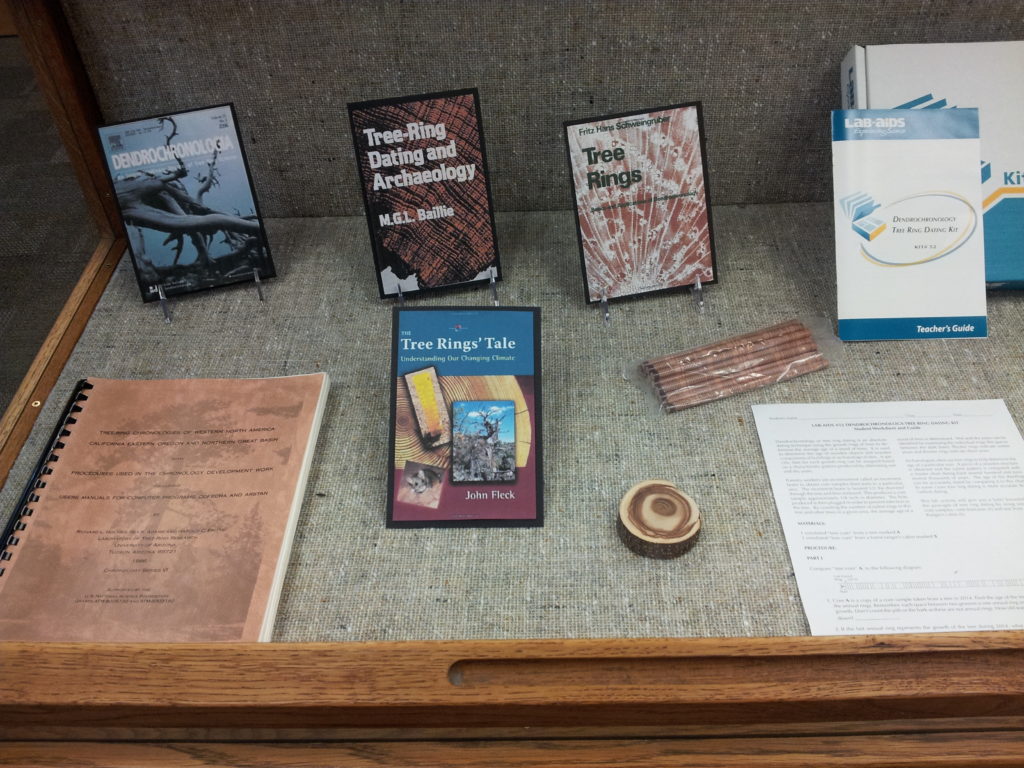
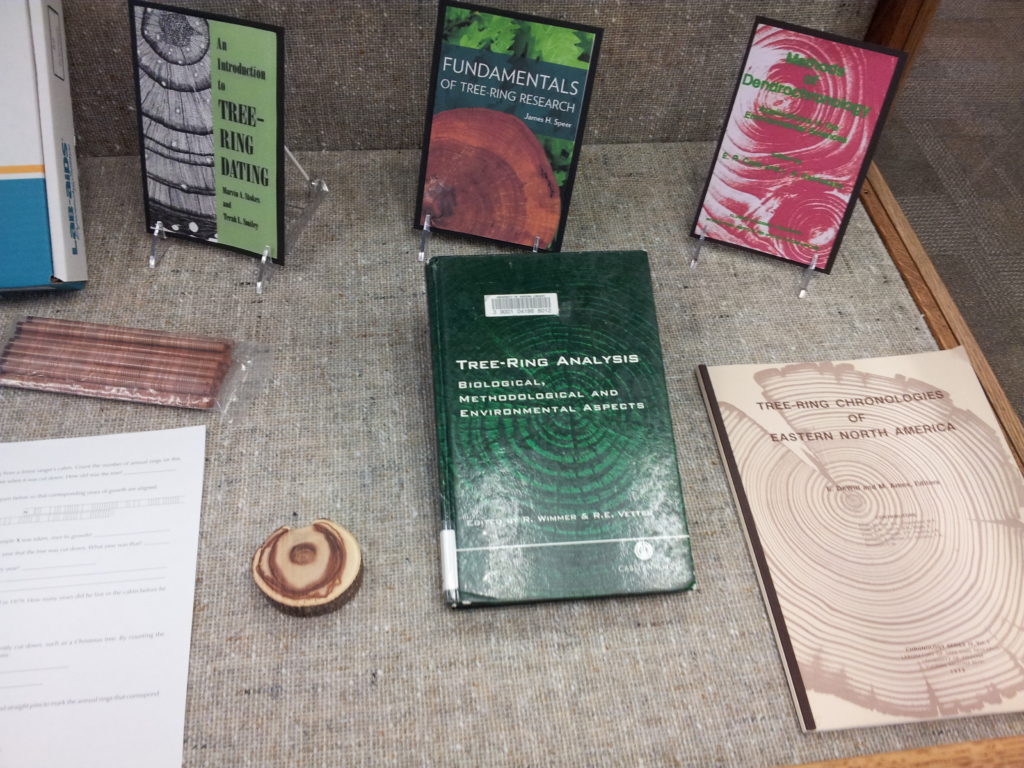
This exhibit in the
Science-Engineering Library will offer a broad overview of the career of A.E.
Douglass and basic information about the Laboratory for Tree Ring Research.
A.E. Douglass was an
astronomy professor at the University of Arizona who headed the Stewart
Observatory and established the science of dendrochronology, or the study of
tree rings, which can be used to determine how old various archeological sites
are. He also founded The Laboratory for Tree Ring Research in 1937. The exhibit
will feature materials from the A.E. Douglass papers (Special Collections AZ
72), including photos, documents and artifacts from Douglass’s
early youth through his later years. It will also feature material on
loan form the Laboratory for Tree Ring Research, including a wooden beam from
an archaeological site known as Chetro Ketl that is nearly
1,000 years old.
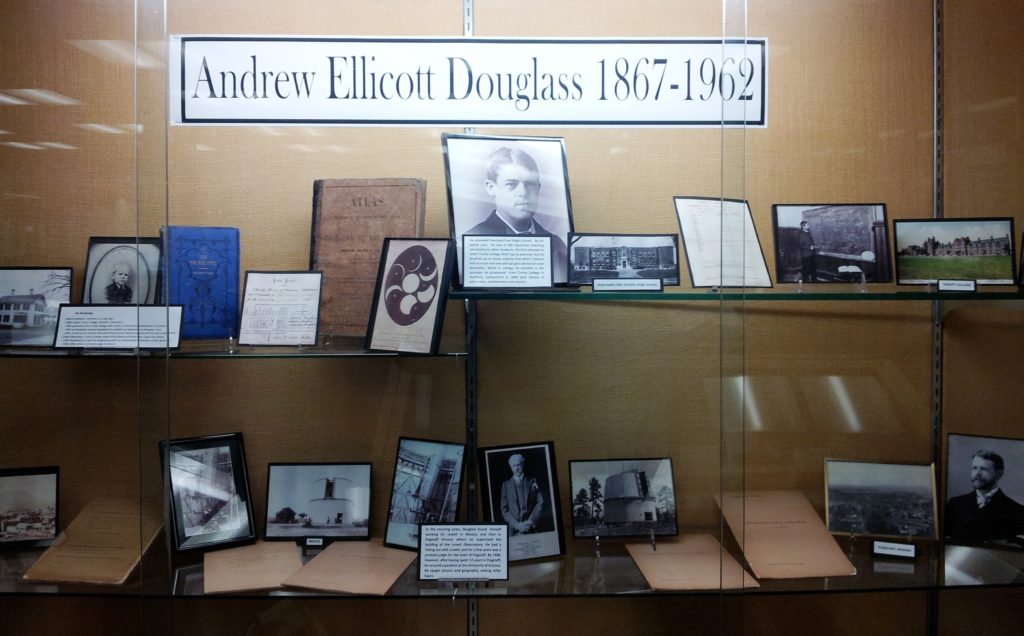
A.E. Douglass was born in Windsor, Vermont on July 5, 1867, the fifth child of the Reverend Malcolm Douglass and Sarah Hale Douglass. He grew up in Andover, Massachusetts and attended Punchard Free (High) School. His love for astronomy started at an early age. By his senior year, he was teaching the subject to other students. While in college, he excelled in the sciences. He graduated from Trinity College in Hartford, Connecticut in 1889 with honors in astronomy, mathematics and physics.
After graduation, Douglass found work as a research assistant with William H. Pickering at the Harvard College Astronomy. He spent a year there before he was sent to South America to help build an observatory in Arequipa, Peru. He traveled to various other locales in South America and soon met Purcivell Lowell, an amateur astronomer with whom he began to work and who like Douglass, had a strong interest in the study of the planet Mars.
In the ensuring years, Douglass found himself working for Lowell in Mexico, and
then in Flagstaff Arizona where he supervised the building of the Lowell
Observatory. He had a falling out with Lowell, and for a few years was a
probate judge for the town of Flagstaff. By 1906, however, after having spent
12 years in Flagstaff, he secured a position at the University of Arizona. He
taught physics and geography, among other topics.
Douglass entered the University of Arizona as Assistant
Professor of Physics and Geography. Upon his arrival he, with the help of his Harvard friends the
Pickerings, made sure that the University of Arizona had a telescope. It was a
borrowed, 8 inch, refracting telescope,
but it was better than what was there
before. The telescope stayed at
the University of Arizona for many years atop the original Science Building
just north of Old Main, but was eventually returned to Harvard.
It didn’t take Douglass
long to start lobbying the powers that
be for an observatory. He argued that the Tucson skies were perfect for star
gazing. His wish was finally granted when in 1916, Mrs. Lavinia Steward, a wealthy donor, gave the University $60,000
for a new observatory. It took nearly 6 years to complete, but Douglass
happily witnessed a dream come true. The
Steward Observatory was officially dedicated on April 23, 1923.
Douglass served the UA in other capacities over the years.
He was head of the Dept. of Physics and Astronomy, Interim President, and Dean
of the College of Letters, Arts and Sciences.
Materials in this exhibit were borrowed from the following sources:
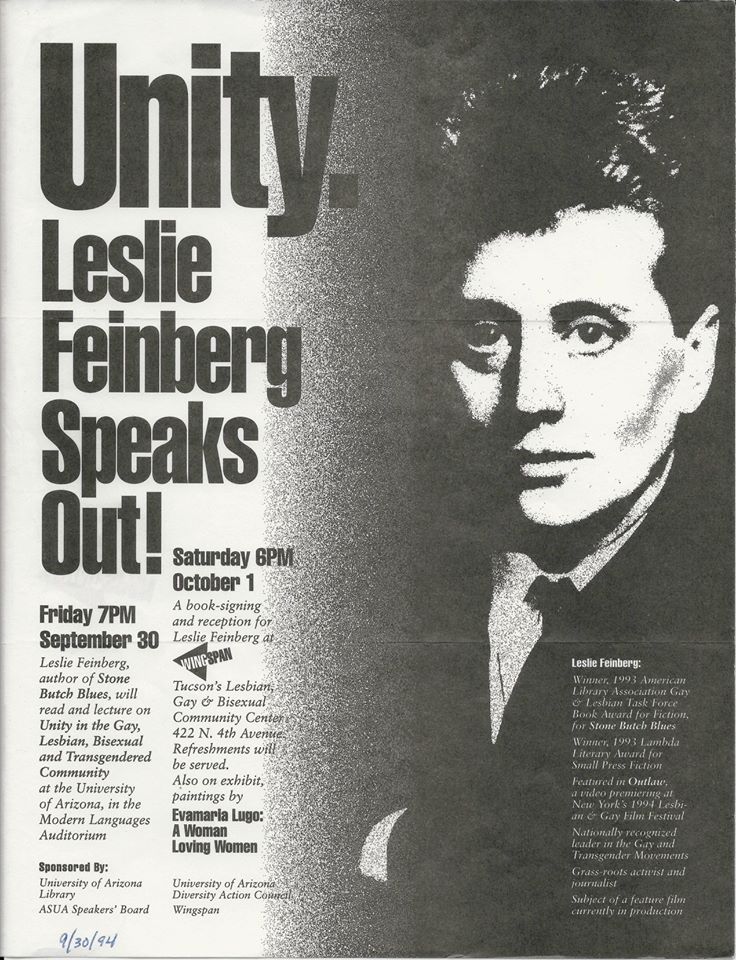
Flyer designed by Ken Godat, Wingspan Board member and owner of Godat Design.
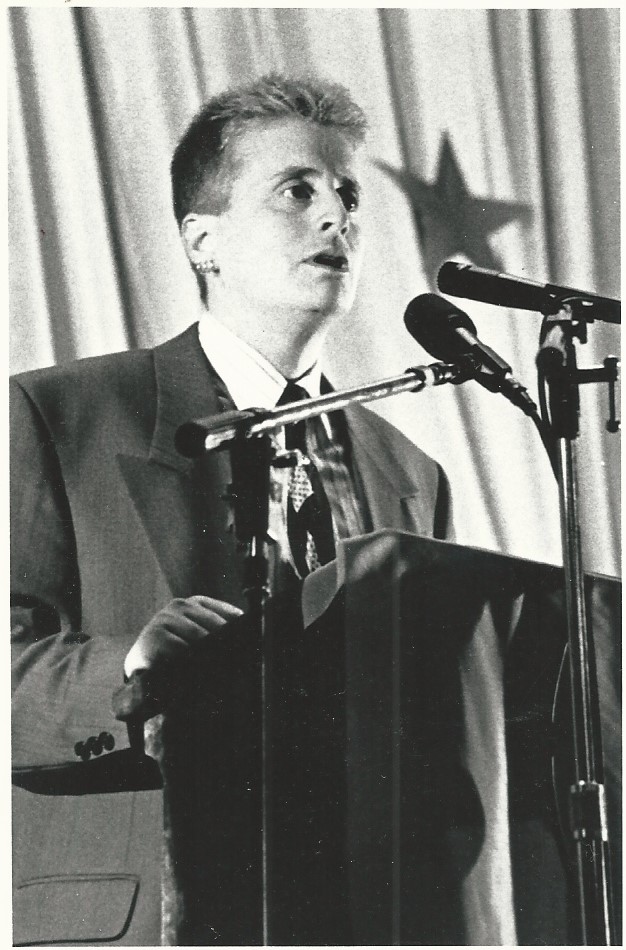
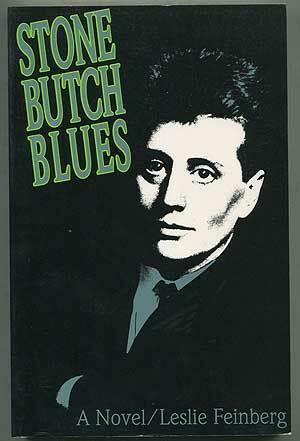
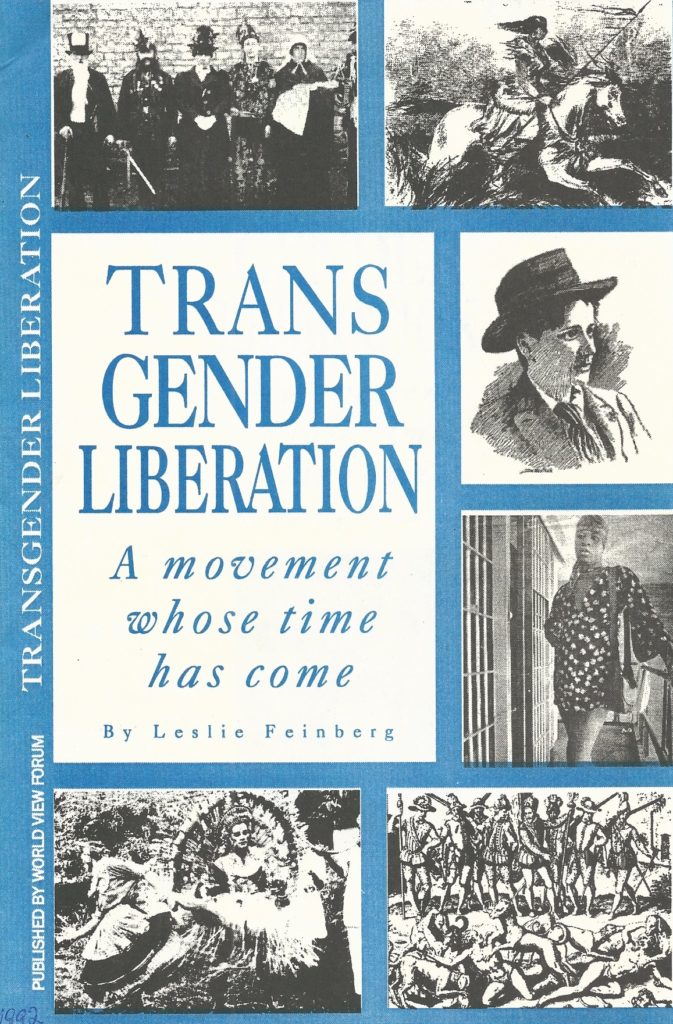
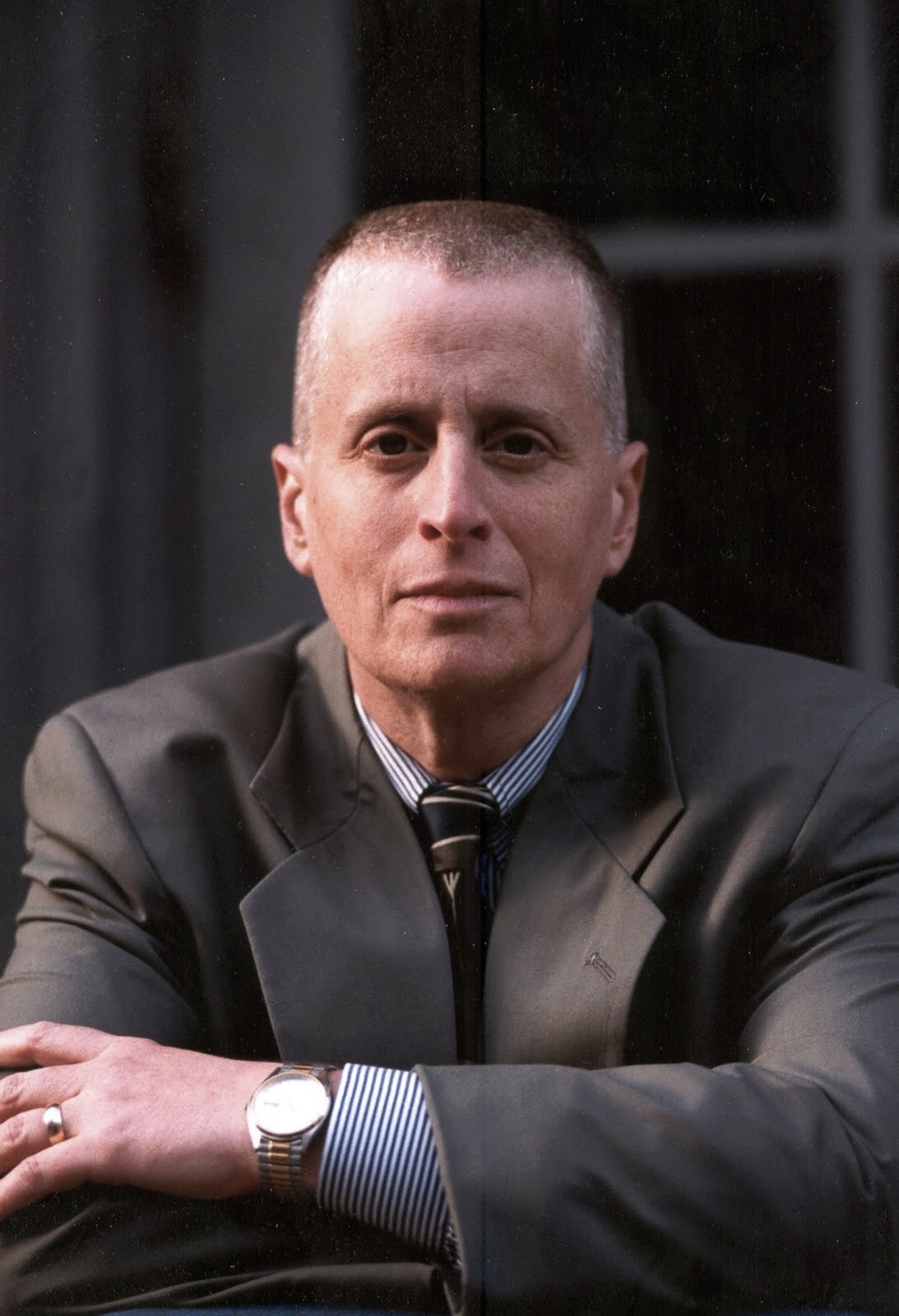
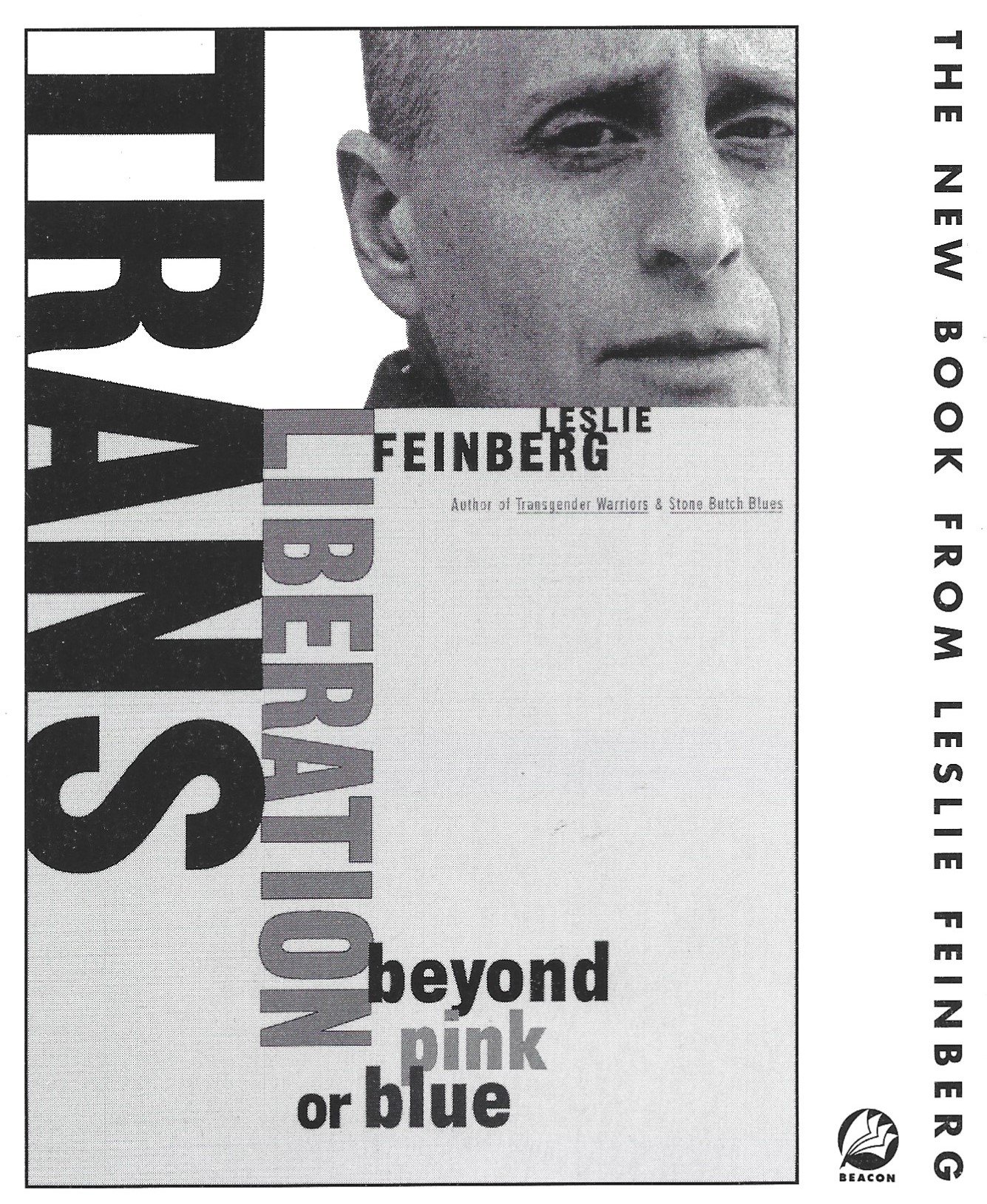
In the early 90’s I was a member of the American Library Association’s GLBT Book Award committee. One of the books published for the year under review was Leslie’s Feinberg’s groundbreaking novel, Stone Butch Blues. It brought to light the issues faced by people who were transgendered and it struck a strong chord with me. I lobbied hard for the book to win the award for fiction, and indeed it did, in 1993. At the time, my position at the UA Library was that of Assistant to the Dean for Staff Development, Recruitment and Diversity and part of my work was to engage in building partnerships with campus and community groups to help educate the campus and the community at large about issues faced by underrepresented or misunderstood groups, such as the GLBT community. I decided that it would be great to bring Leslie to Tucson, and worked with the members of Wingspan, the local gay community center to raise money to fund her visit, which took place during the Fall 1994 semester. We received support from the University’s Diversity Action Council as well as from the University Library and other groups.
This is the news release I wrote for the occasion:
September 30, 7pm: Reading/lecture on Unity in the Gay, Lesbian, Bisexual and Transgendered Community. Modern Languages Auditorium, University of Arizona.
October 1, 6pm: Book signing and reception at Wingspan, Tucson’s Lesbian and Gay Community Center, 422 N. 4th Ave.
Biographical sketch: Leslie Feinberg came of age as a young butch
lesbian in the factories and gay bars of Buffalo NY in the 1960’s. Since that time,
Feinberg has been a grassroots activist and a journalist.S/he is nationally
known in the gay and transgender movements.
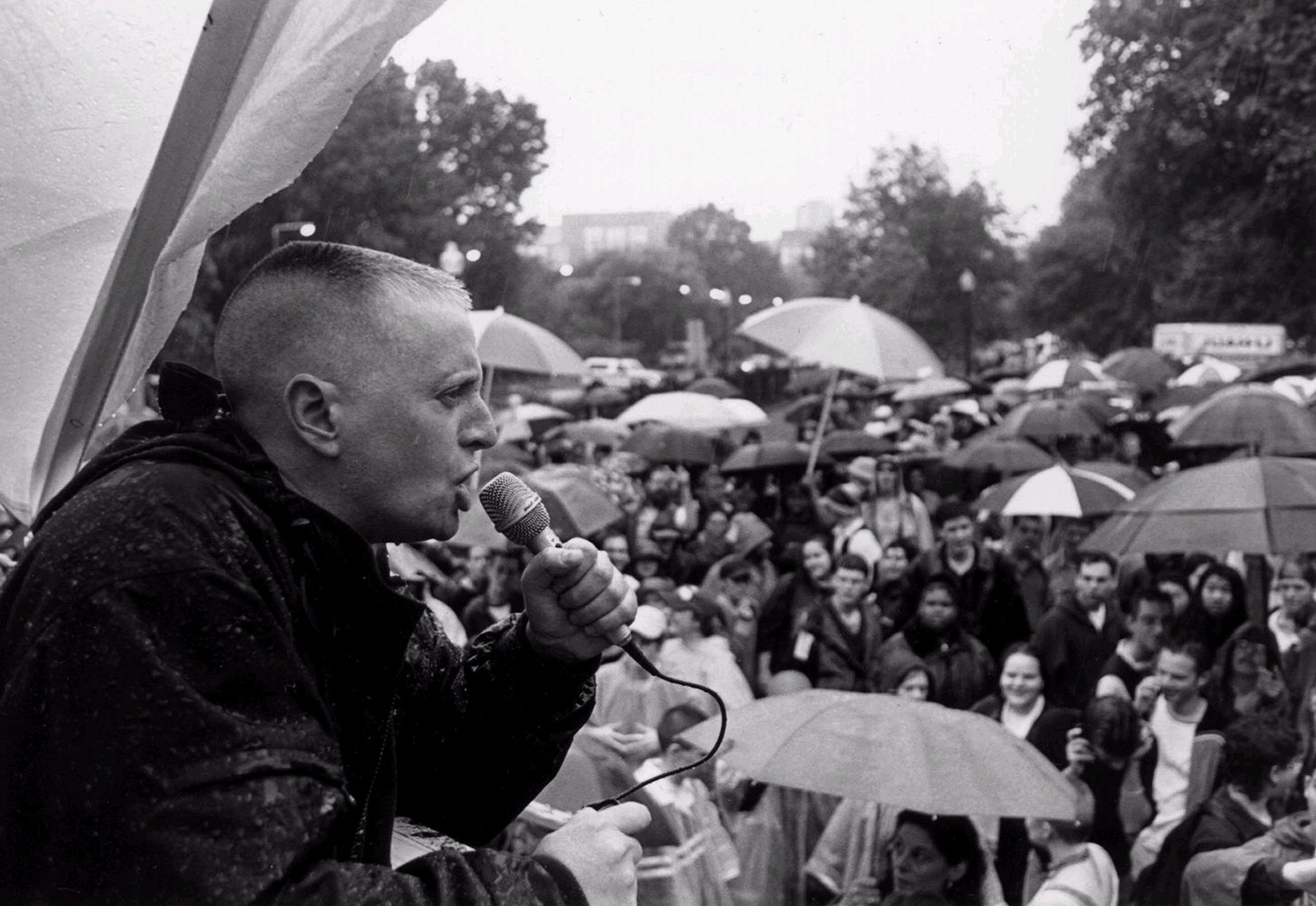
Leslie Feinberg was given the distinct honor of being the opening speaker at this summer’s Stonewall 25 rally in New York City, which drew millions of people from across the country and around the world. Feinberg’s novel, Stone Butch Blues, published on March 1, 1993 by Firebrand Books, has received a wildly popular response. The novel has received the prestigious American Library Association Award for Gay and Lesbian Literature and a LAMBDA Literary Award.
A video about Leslie Feinberg titled Outlaw (see excerpt below) premiered at the New York City Lesbian and Gay Film Festival this summer and is being distributed nationally and internationally.
Feinberg has toured the country for two years with the slide show on transgender issues that has played to packed audiences and standing ovations. Since October 1993, s/he has appeared on the Joan Rivers show and scores of other television and radio programs. Feinberg has been interviewed and and her work reviewed by virtually every lesbian/gay, transgender and feminist publication in the last two years.
Winner of the 1993 American Library Association
Gay and Lesbian
Task Force Book
Award for Fiction.
Winner of the 1993 Lambda Literary Award for
Small Press Fiction.
Subject of the video production, OUTLAW, which
premiered at the
1994 Lesbian and
Gay Film Festival in New York City.
Nationally known leader in the Gay and
Transgendered movements.
Grass roots activist and journalist.
A feature length movie about Ms. Feinberg’s life is now in production in Hollywood.
bd 9/94
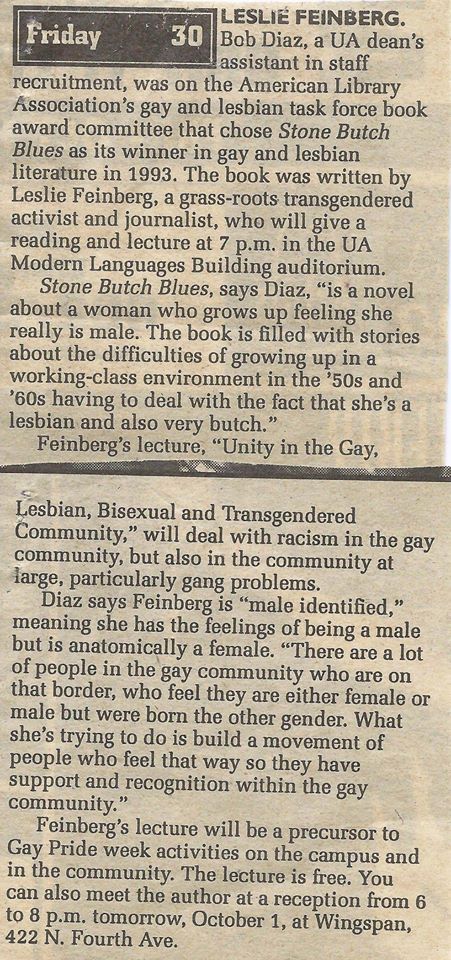
Here’s a copy of the article that appeared in the Tucson Weekly about Feinberg’s visit:
Feinberg’s visit was the first of several made to Tucson over the years. Within a few years of her visit, the Southern Arizona Gender Alliance was founded, which was a support and advocacy group whose focus was to support those who identify as transgendered. The group still exists and is stronger than ever.
Az Daily Star, October 23, 1998
Feinberg visited Tucson again in 1998
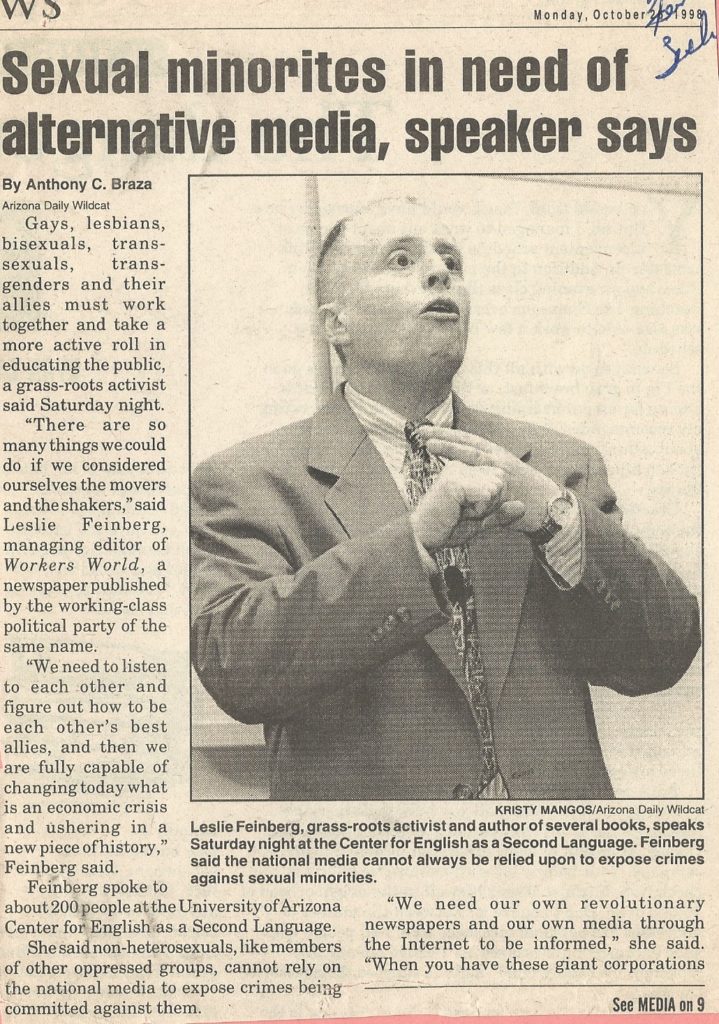
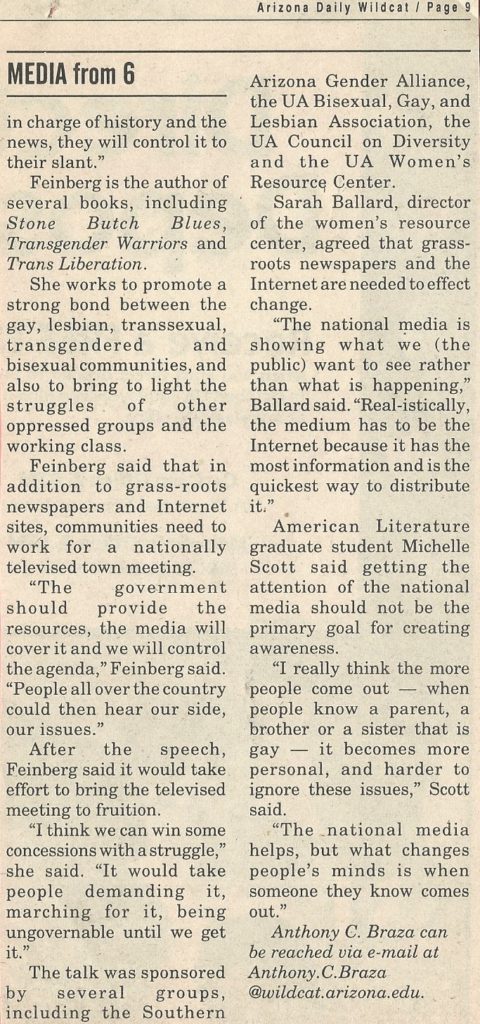
From the Arizona Daily Wildcat, October, 1998
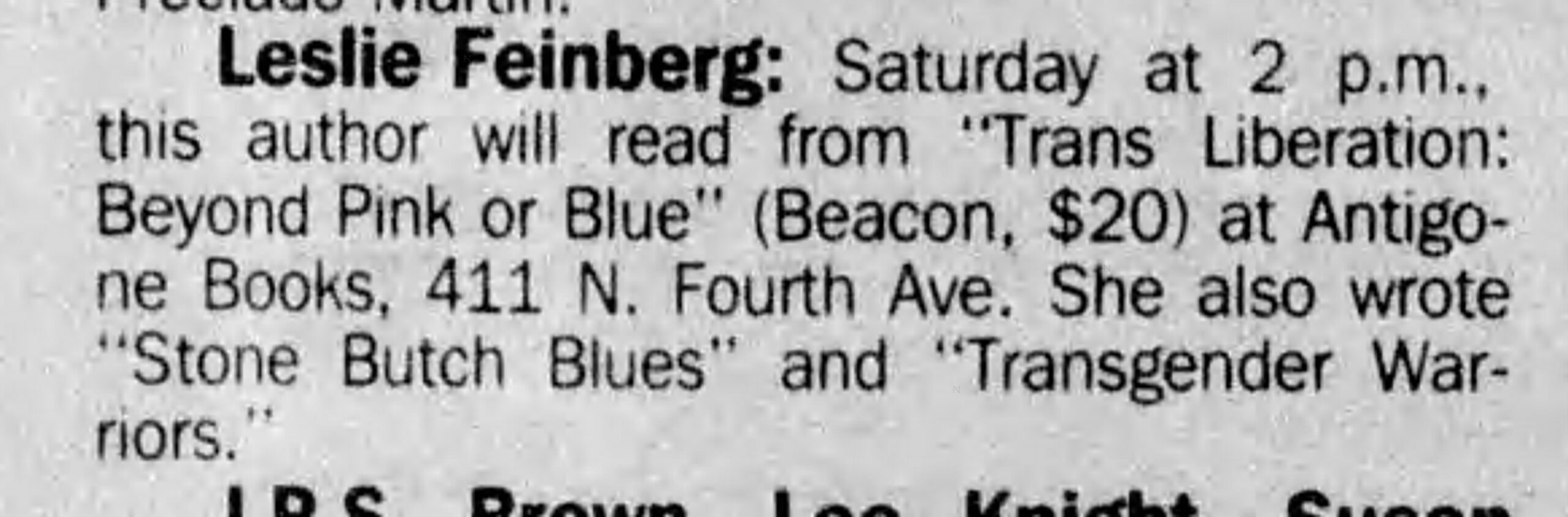
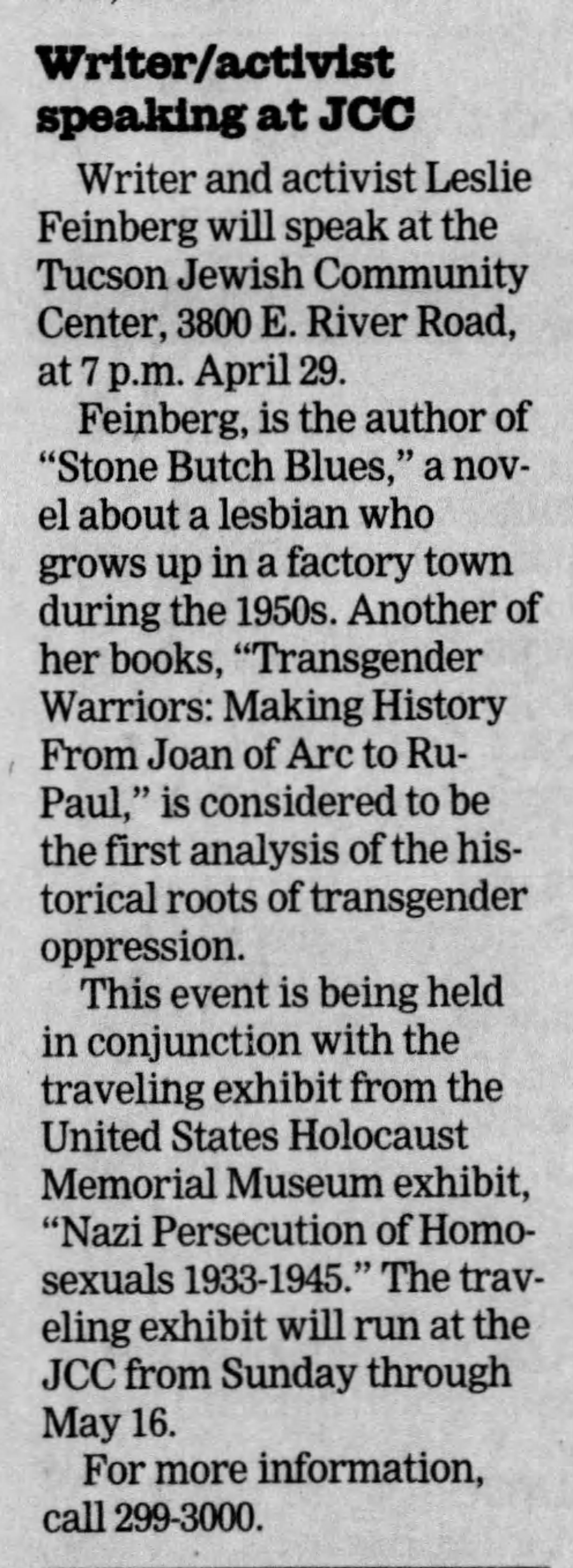
Feinberg returned to Tucson in 2004 for the following event.
April 21, 2004, Arizona Daily Star
In 2007, Leslie was the keynote speaker at the Annual Wingspan dinner in Tucson. Read about it here.
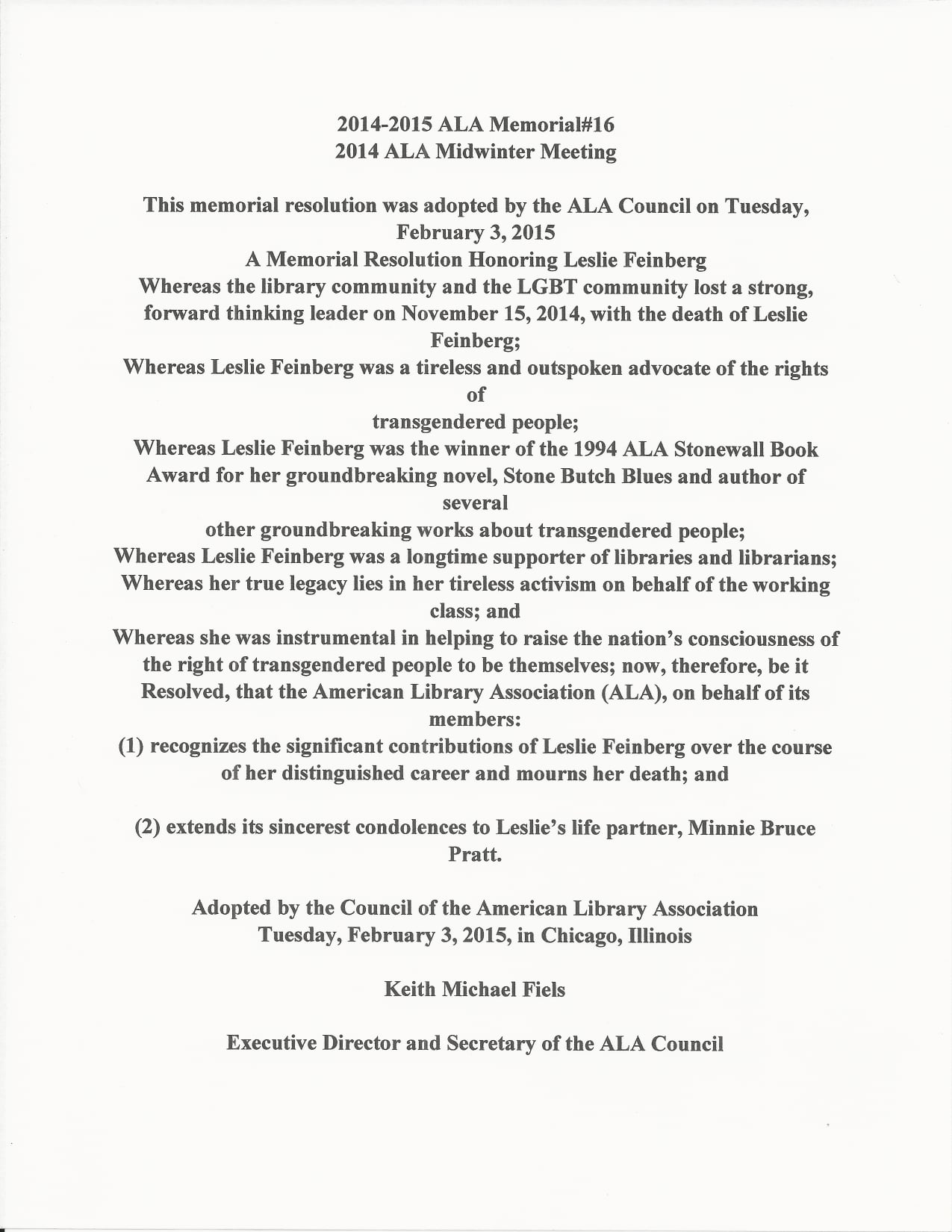
Years later, after Feinberg died in 2014, when I was a member of the American Library Association Council, I authored a resolution for the Association that was passed in Leslie’s memory. I’ll never forget how encouraging and supportive Leslie was to me and my partner, with whom she became fast friends. She encouraged me to do more community organizing and complimented me on the work I did when I brought her to town all those many years ago. Introducing her to the Tucson community was one of the best moments of my career.
She was a true revolutionary.
Leslie and longtime partner Minnie Bruce Pratt. Pratt died on July 2, 2023 at the age of 76.
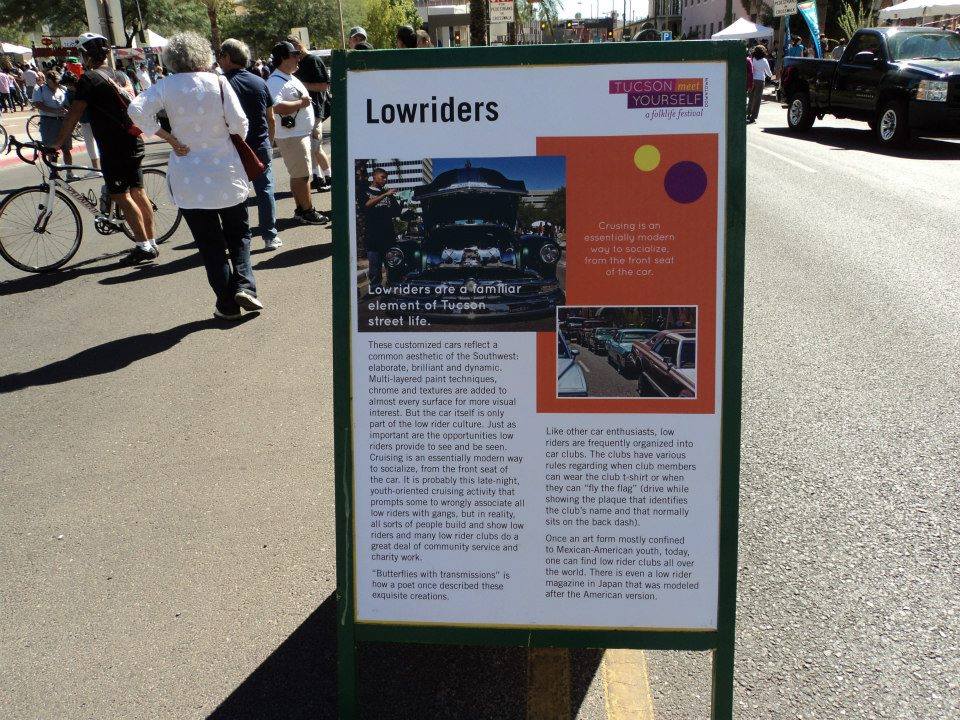
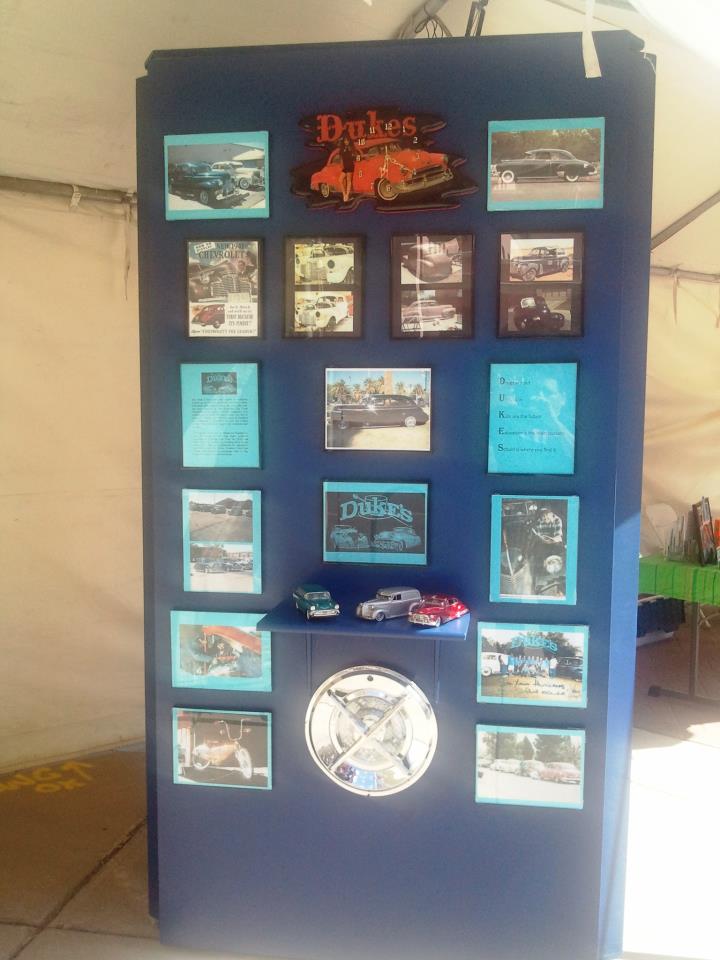
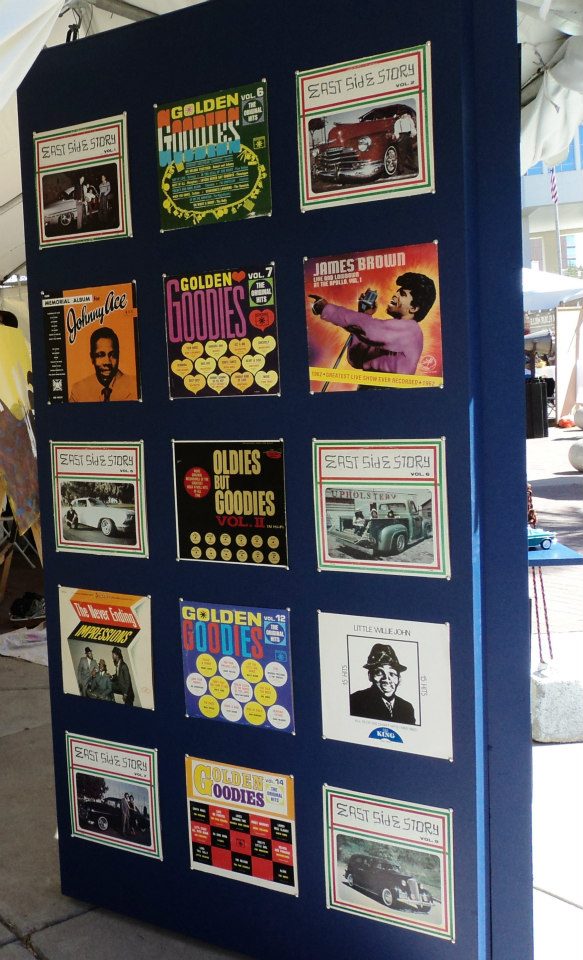
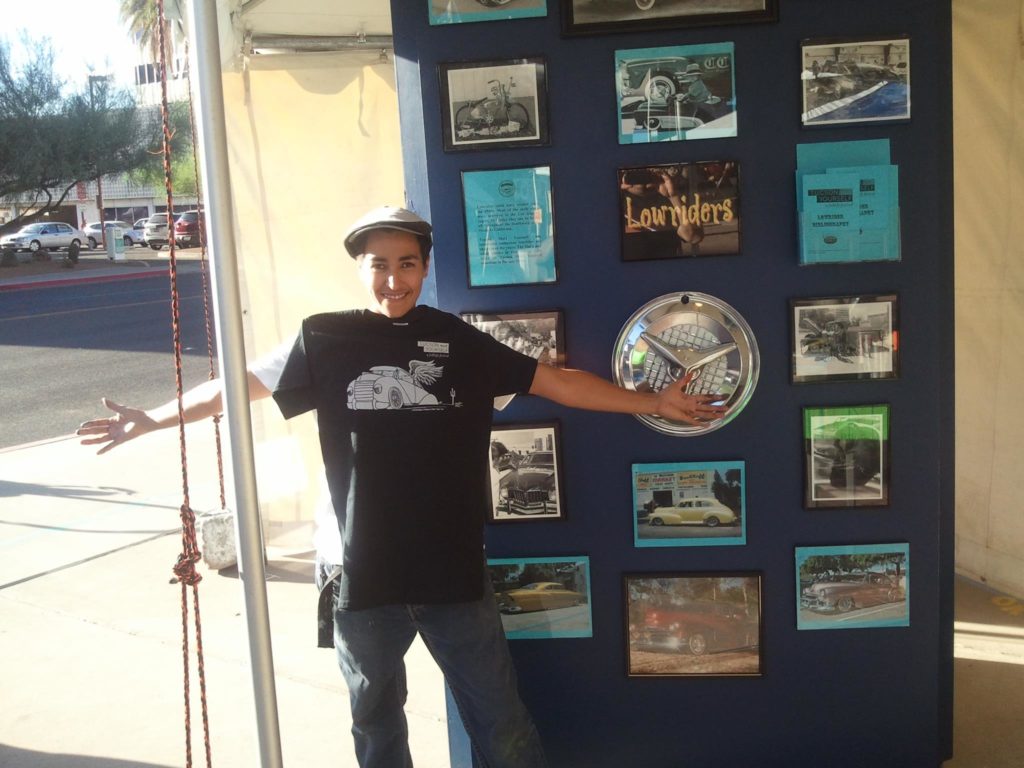
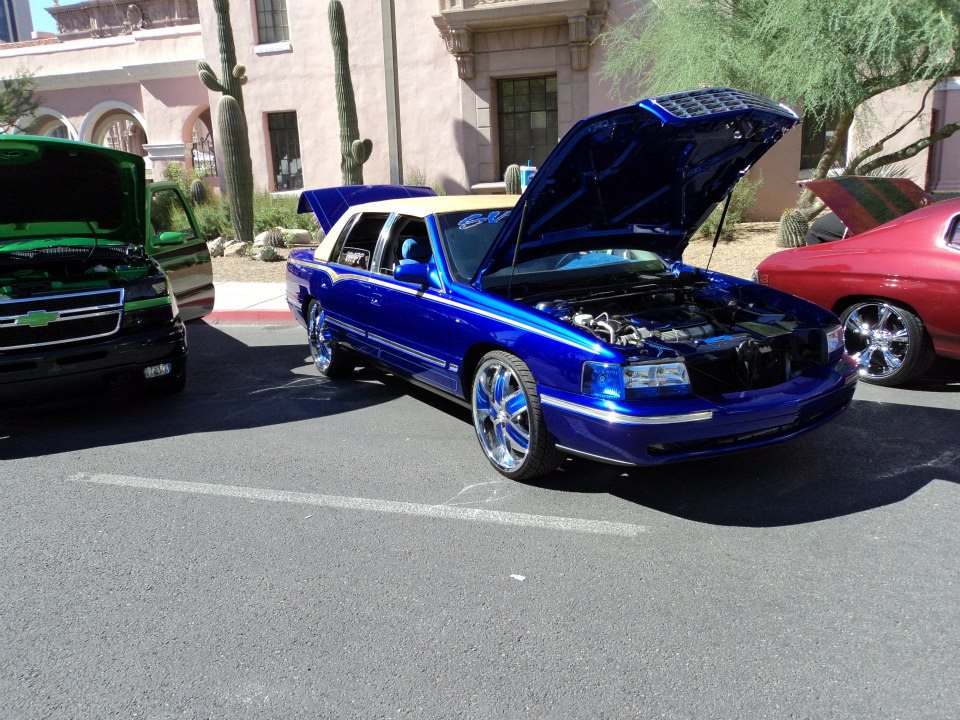
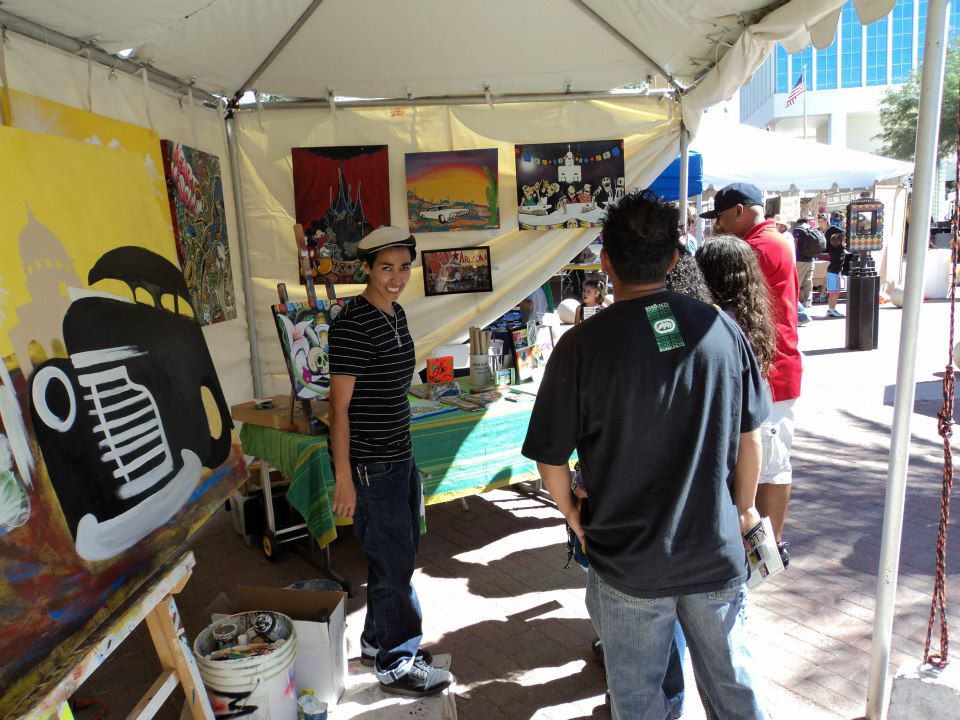
A few years back, I was a member of the Board of Directors of Tucson Meet Yourself and for the 2012 Festival, I was invited to create a small exhibition on lowriders for display at the festival. The results can be seen below. I had a great time working on this, from painting the display boards to writing a bibliography on lowriding (see below) to meeting with members of the local car club, The Dukes, to borrow materials for the display. These include the little cars and the Dukes clock, as well as the hubcaps that are shown. I used material from my own record collections to create the display on oldies but goodies music. The photos below include a couple of my good friend Mel “Melo” Dominguez, a wonderful local artist with whom I shared a booth at the festival. Friends of mine stopped by and their photos are also included. Finally, I had to include some photos of the many beautiful cars that were on display that day. Again, this was another fun project!
Local artist extraordinaire, Mel “Melo” Dominguez, showing off the t-shirt he designed for the festival.
These t-shirts sold like hotcakes at the festival. I still have mine. It’s held up pretty well!
My friend Mel.
My friend RIcardo Andrade and his friends stopped by to say hello.
Lowrider
Bibliography
These resources can be obtained from
either the University
of Arizona Library or the Pima
County Public Library.
How to build a lowrider. / by Frank
Hamilton. North Branch MN. Cartech, 1996. University of Arizona Library, Special Collections. TL 255.2 .H36 1996
Lowrider: history, pride, culture. / by Paige R. Penland. St. Paul MN: Motorbooks,
International, 2003. University of Arizona Library. Special Collections. TL
255.2 .P46 2003
Lowrider Magazine. San Jose, Calif.: A.T.M. Communications. Pima County Public Library. Various
branches.
Lowrider space: aesthetics and politics of Mexican
American custom cars./ by Ben
Chappel. Austin, TX: University of Texas Press, 2012. University of Arizona Library. E184.M5 C3837
2012
Lowriders. /
by Lisa Bullard. Minneapolis, Minn: Lerner Publishing, 2007 (children’s book)
Pima County Public Library. 629.2872 B8729L 2007 CHILD
Lowriders /
by Matt Doeden. Mankato, Minn.: Capstone Press, 2005. (children’s book) Pima
County Public Library. 629.2872 D67L 2005 CHILD
Lowriders. /
by Robert Genat. St. Paul, Minn: MBI, Publishing, 2001. Pima County Public
Library. 629.222 G2852L 2001 Espanol
TEEN
Lowriders handbook, The: engines, tires and wheels,
hydraulics, custom interiors, custom bodywork, chassis and suspension, air ride. / from the editors of Lowrider Magazine. New York:
HP Books, 2002. University of Arizoan Library. Special Collections. TL 255.2
.L68 2002
Lowriders in Chicano culture: from low to slow to show. / by Charles M. Tatum. Santa Barbara, Calif:
Greenwood, 2011. University of Arizona Library. E-book.
Lowriding in Aztlan: the truth about lowriding! / a film produced by Katrina Jasso-Osorio, Daniel Osorio;
written and directed by Daniel Osorio. New York: Universal Music and Video Distribution,
2006. Pima County Public Library. 629.222 L9552 2006 DVD TEEN
Low ‘n slow: lowriding in New Mexico. / photographs by Jack Parson; text by Carmella Padilla;
poetry by Juan Estevan Arellano. Santa Fe: Museum of New Mexico Press, 1999. Pima
County Public Library. 917.89004 P254L 1999
Low y cool.
/ a film by Marianne Dissard. Tucson, Az. M. Dissard, 1997. Pima County Public
Library. 362.7089 L95 1996 DVD, available at various branches.
Old barrio guide to low rider music, The. / by Ruben Molina. La Puente, Ca: Mictlan Pub.,
2005. University of Arizona Library. Fine Arts Library and Special Collections.
ML 3558 .M65 2005
Prepared by Bob Diaz for Tucson Meet Yourself. October, 2012.
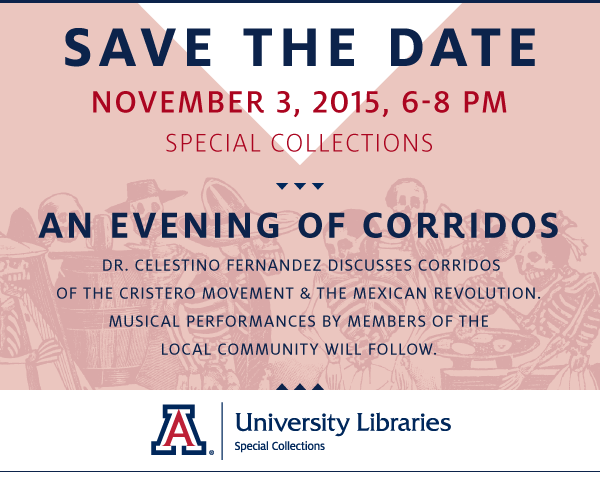
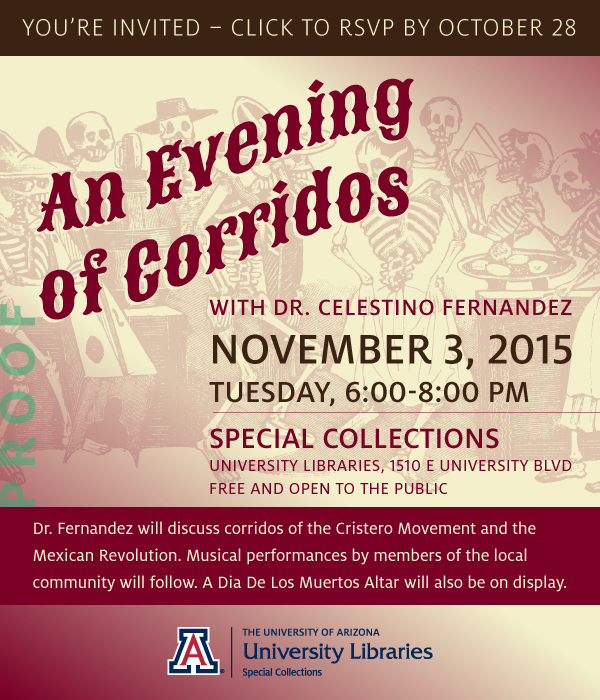
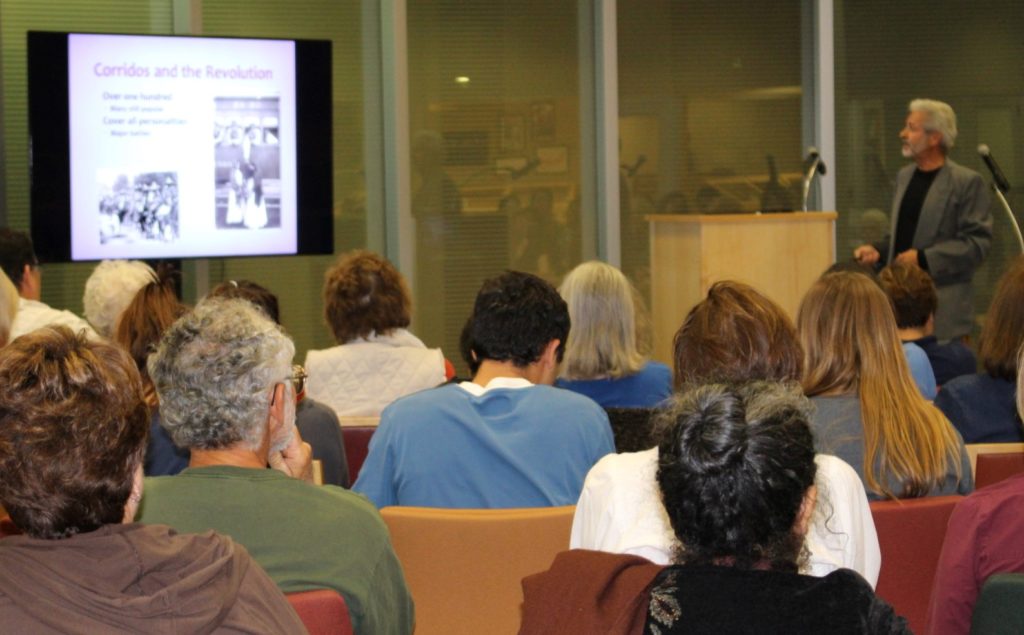
Corridos are narrative songs which often chronicle socially relevant historical events. The corridos featured in this evening’s program come from both the Mexican Revolution and the Cristero Rebellion, a revolt by Catholics against the Mexican government that occurred in response to anti-Catholic legislation in the 1920’s.
A lecture by Dr. Celestino Fernandez will be followed by the performance of corridos by local artists, including Juan Aguilar and Justin Enriquez, members of the quartet, Los Cuatro Vientos.
Dr. Celestino Fernández, Professor Emeritus in the University of Arizona School of Sociology, is himself a composer of corridos. He served as University Distinguished Outreach Professor and Director of Undergraduate Studies for many years. His research focuses on various issues pertaining to culture, Mexican immigration, ethnic diversity, and education and he has published approximately 50 articles and book chapters. Dr. Fernandez serves on numerous community boards, and helped start San Miguel High School, a college-prep school for students from poor and working class families. Dr. Fernández received an M.A. and Ph.D. from Stanford University.
To learn more about the Cristero Rebellion, you may wish to visit the online exhibition La Vida Fronteriza: Church, Economy and Daily Life which features materials documenting the De la Torre family and their involvement in the Cristero Rebellion.
My introduction to the event:
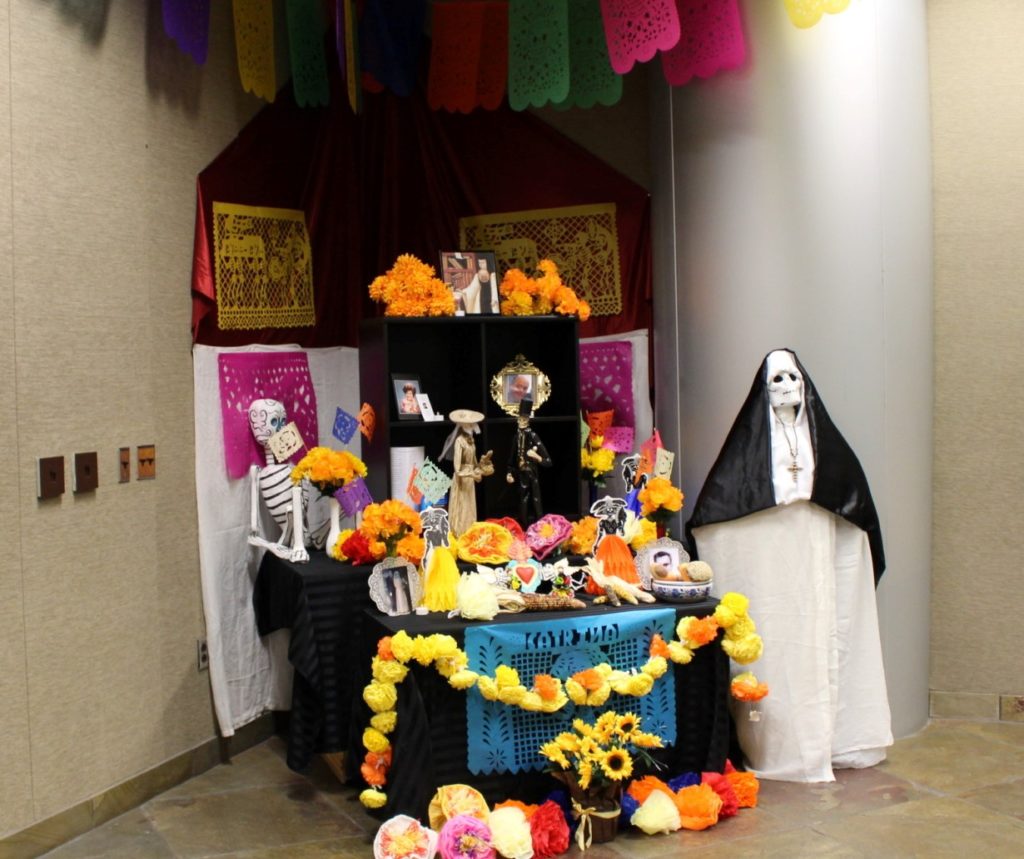
“Good evening. My name is Bob Diaz. I am the curator for the performing arts and the exhibits and events coordinator here in Special Collections. Thank you for for joining us tonight. It’s my pleasure to welcome you to our second annual evening of corridos. Before I introduce our guests, I’d like to mention our Dia De Los Muertos altar. This year’s altar was put together by Luis Coronado Gruel and students from his History 368 class on Colonial Mexico. The altar is dedicated to Sor Juana Ines de la Cruz, one of the most important Mexican writers of all time. Thank you, maestro Gruel, for doing such a wonderful job.
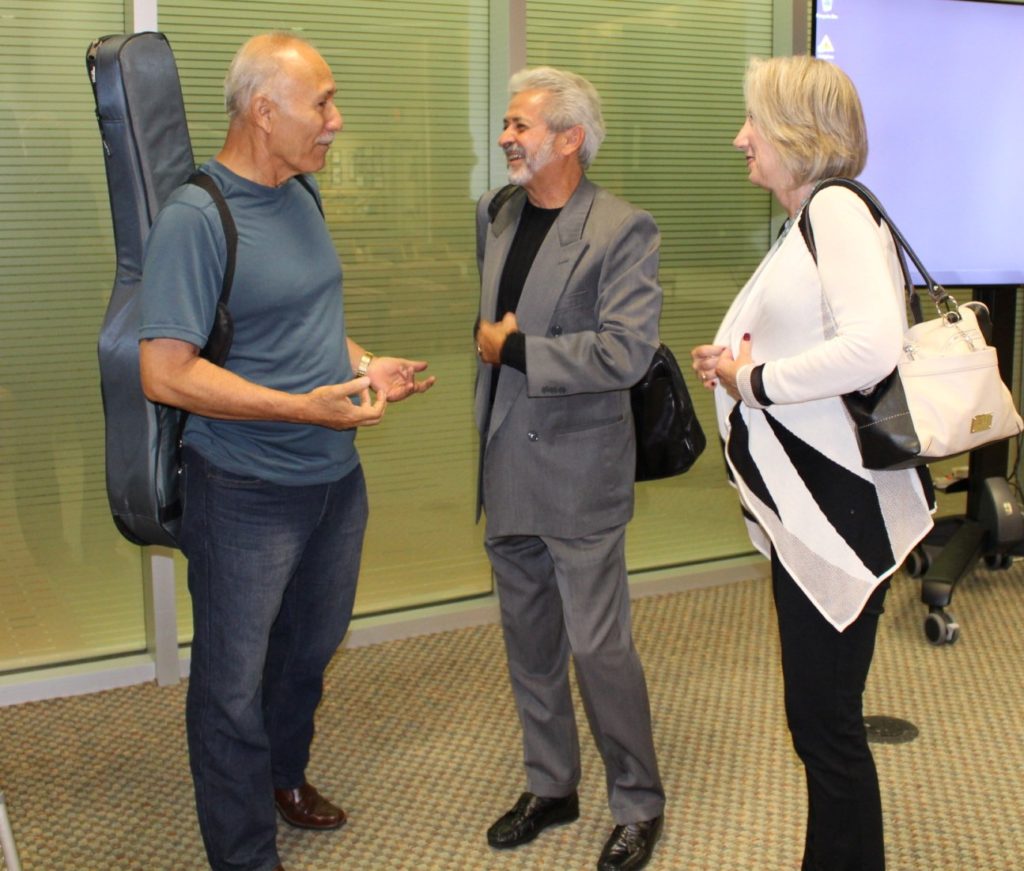
Aristeo Brito, Dr. Celestino Fernandez and his wife
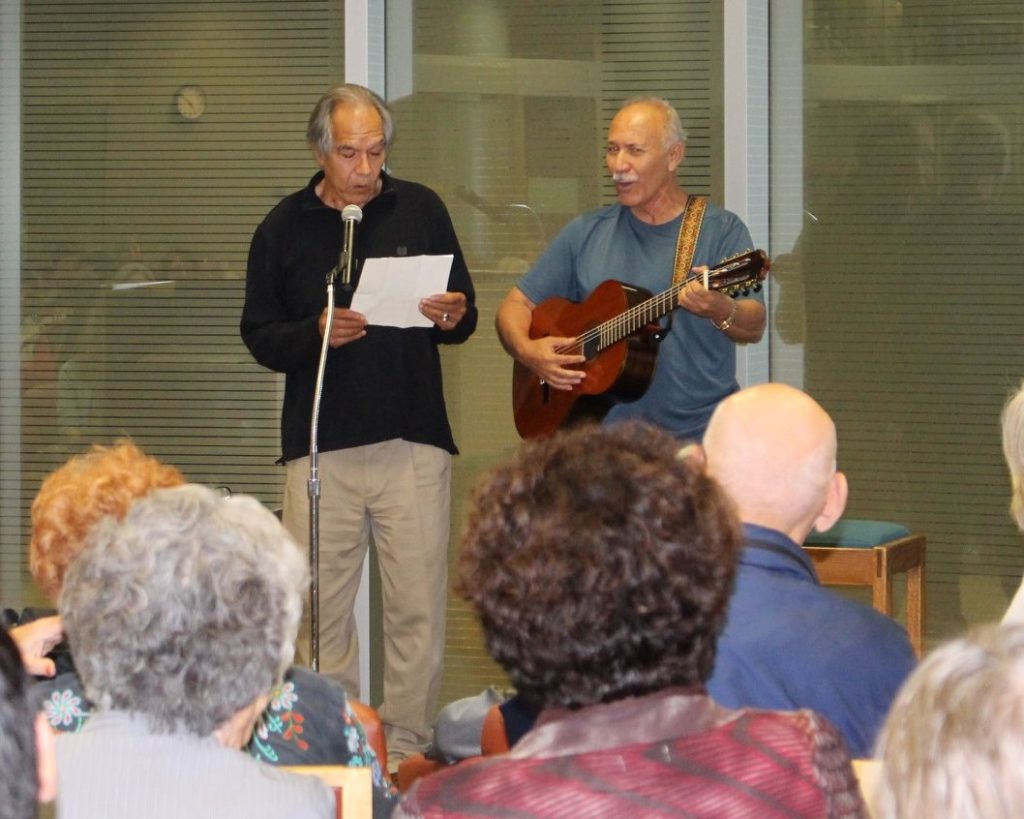
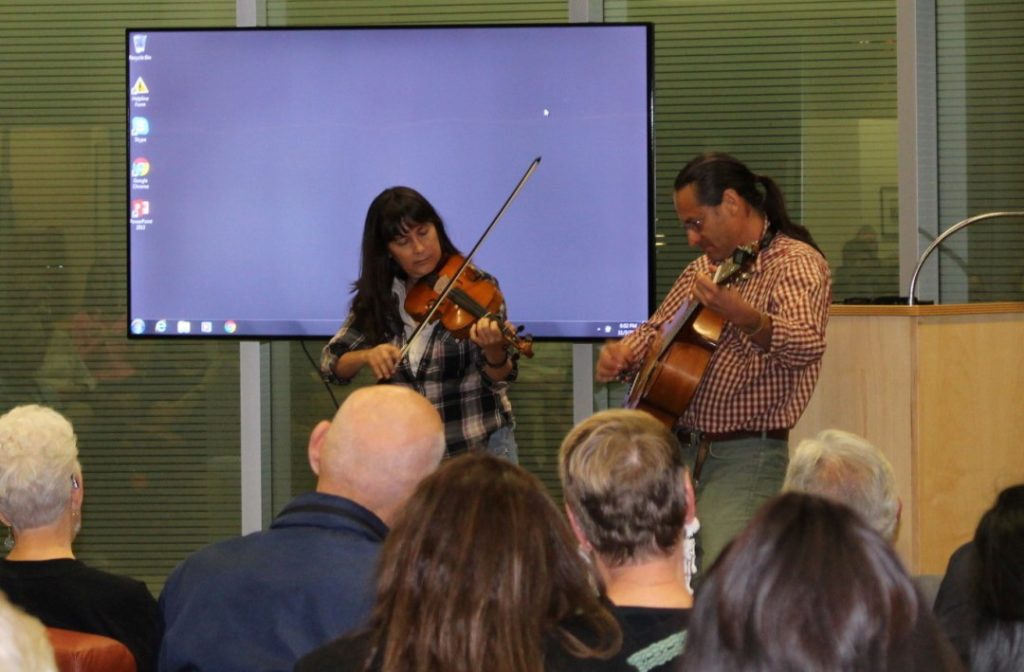
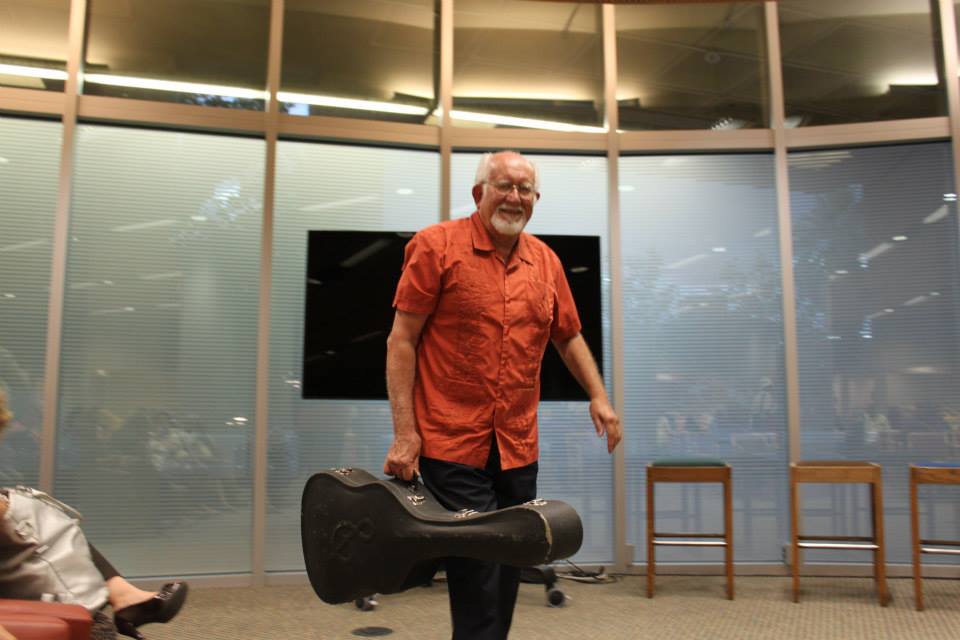
Tonight Dr. Celestino Fernandez, professor emeritus of Sociology, will be giving a presentation on the corridos of the Cristero Movement and the Mexican Revolution. Following his presentation, we will hear from a number of folks who brought their guitars with them and who will be singing some corridos for us. We have with us again, Justin Enriquez and Juan Aguilar, as well as a few other musical guests, including Bobby Benton, Jim Griffith, Antonio Gomez and Aristeo Brito, and Dena Cowan and Jesus Garcia. There may be others who have come along to join in on the fun, and hopefully we’ll have time to hear everyone sing at least one song.
Dr. Fernandez giving a presentation on Corridos of the Revolution
After the lecture and performances we will have refreshments, including pan de muerto from La Estrella Bakery. Please enjoy the program, stick around and check out the altar and our exhibit on Tucson, and enjoy yourselves. Nuestra casa es su casa”.
Mr. Bobby Benton
Juan Aguilar and Justin Enriquez
Aristeo Brito and a friend
Ms. Dena Cowan and Mr. Jesus Garcia
Day of the Dead altar prepared by Professor Luis Coronado Gruel and his History 368 class. The altar was dedicated to Sor Juan Ines de la Cruz
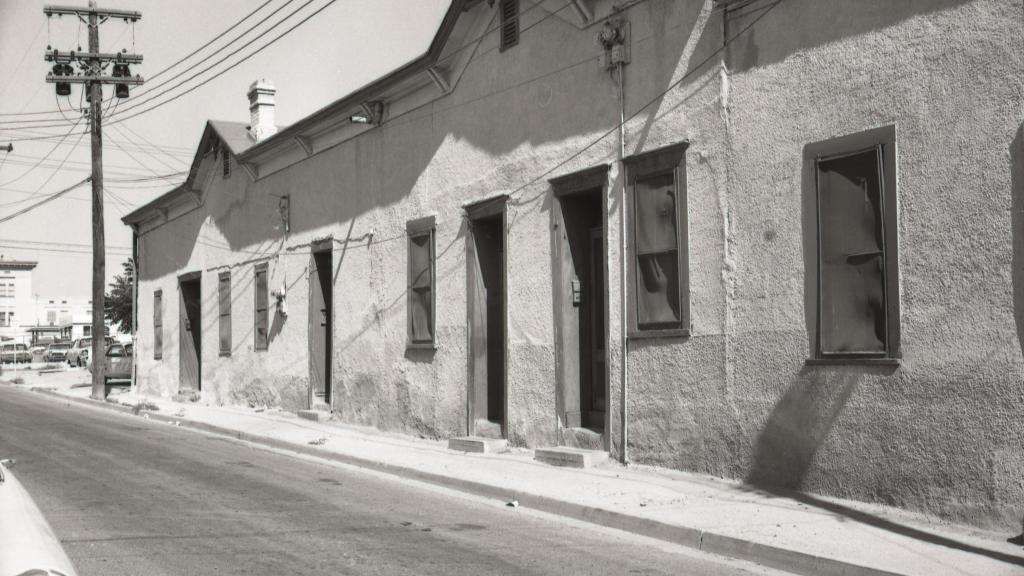
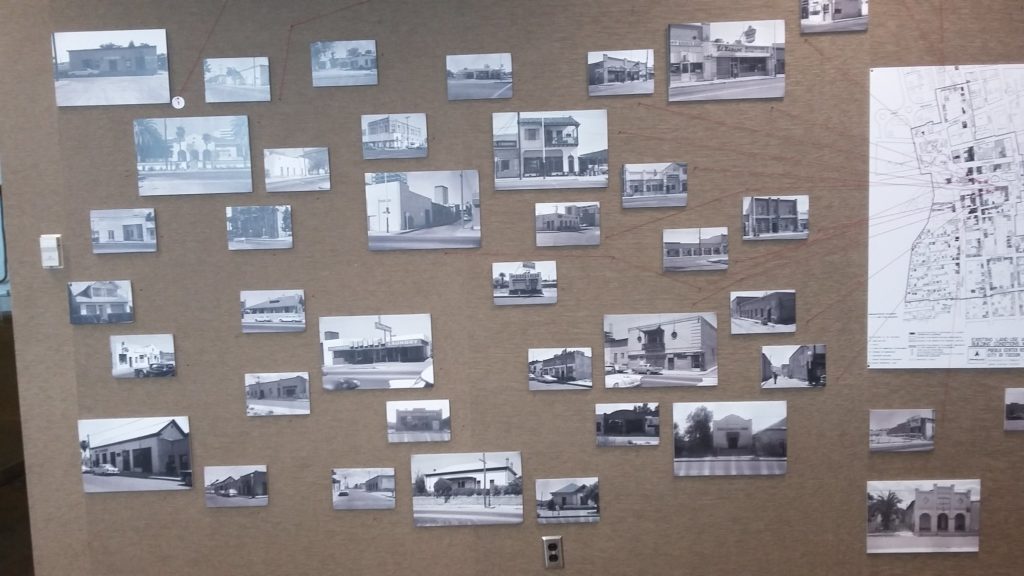
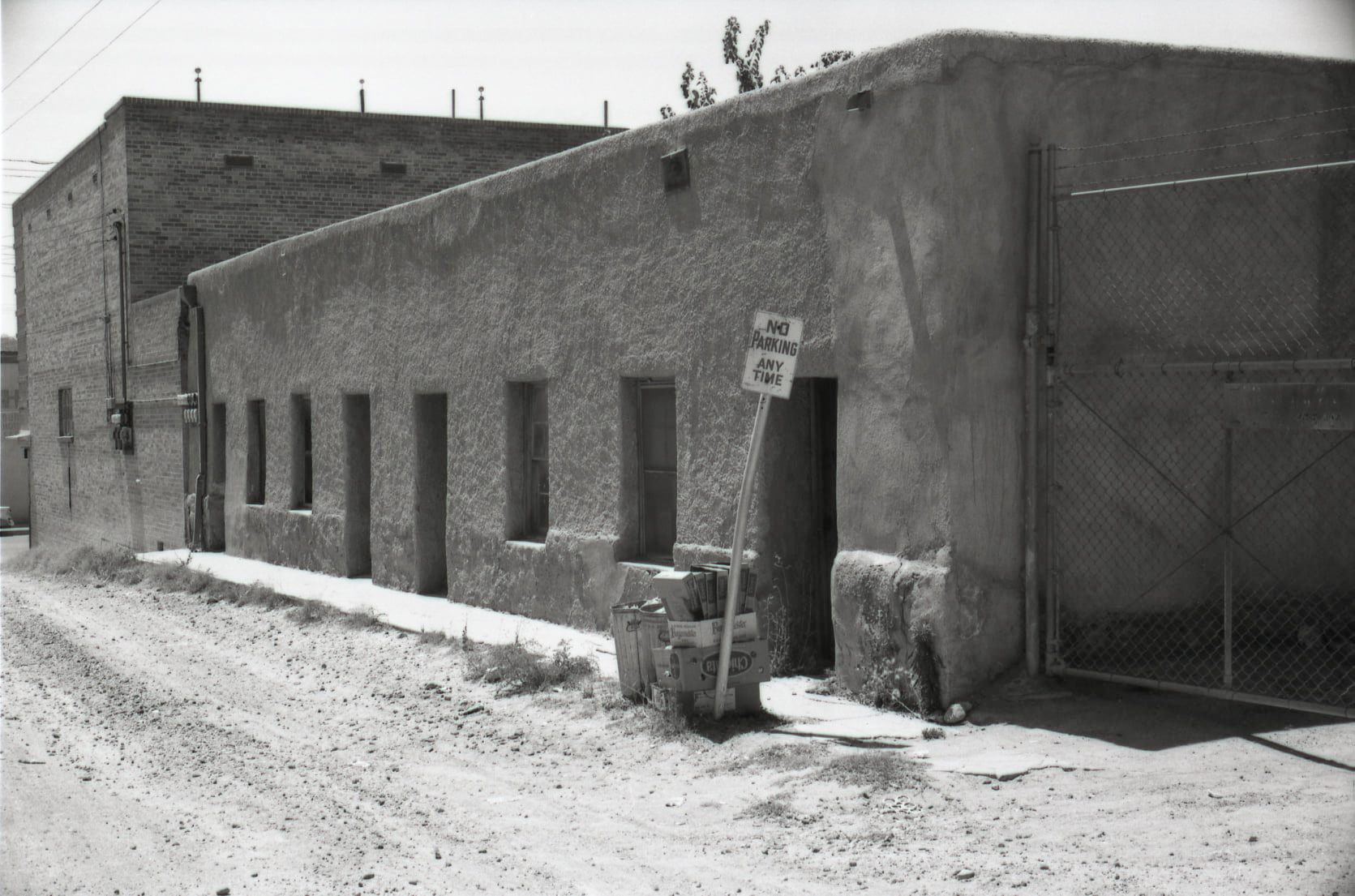
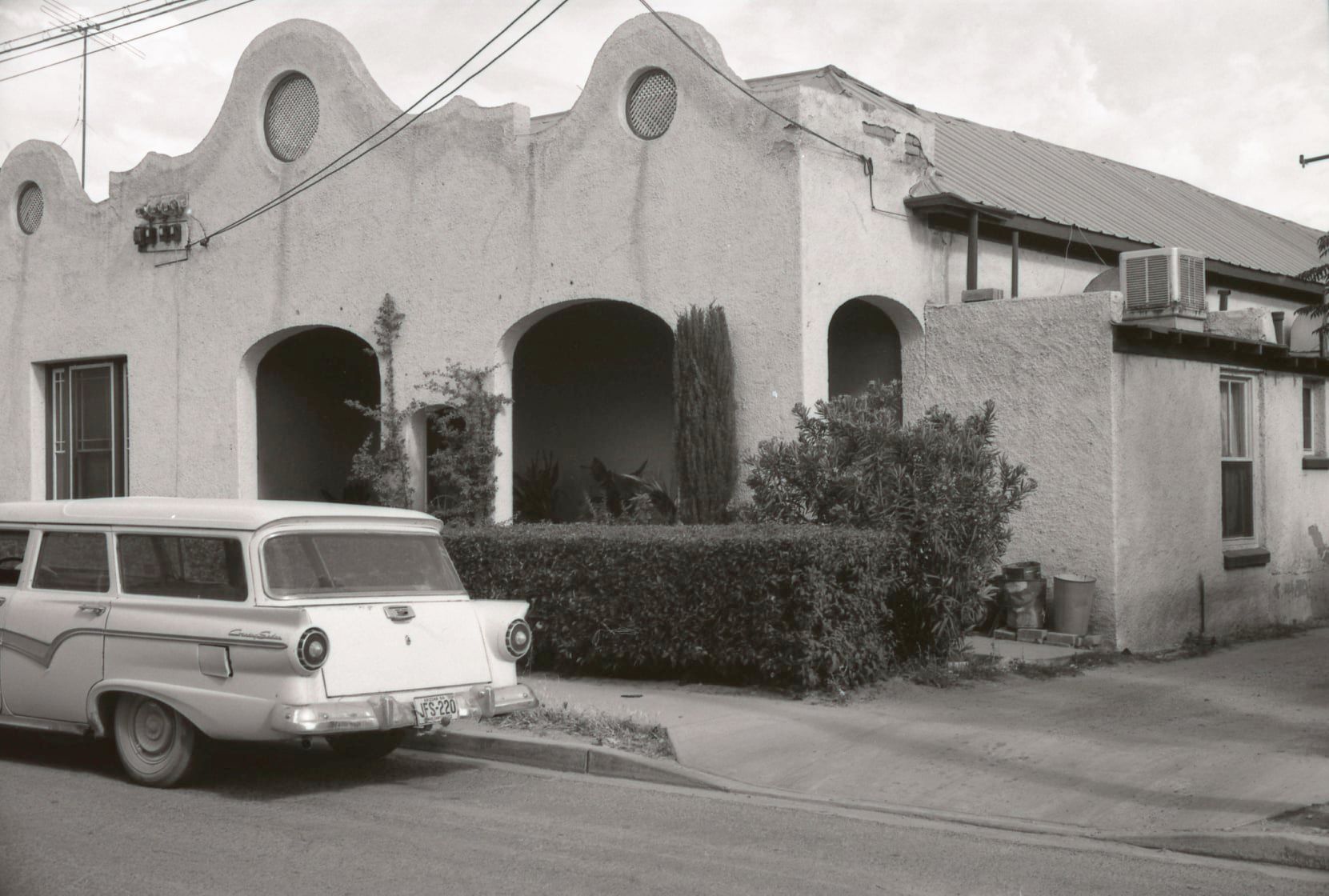
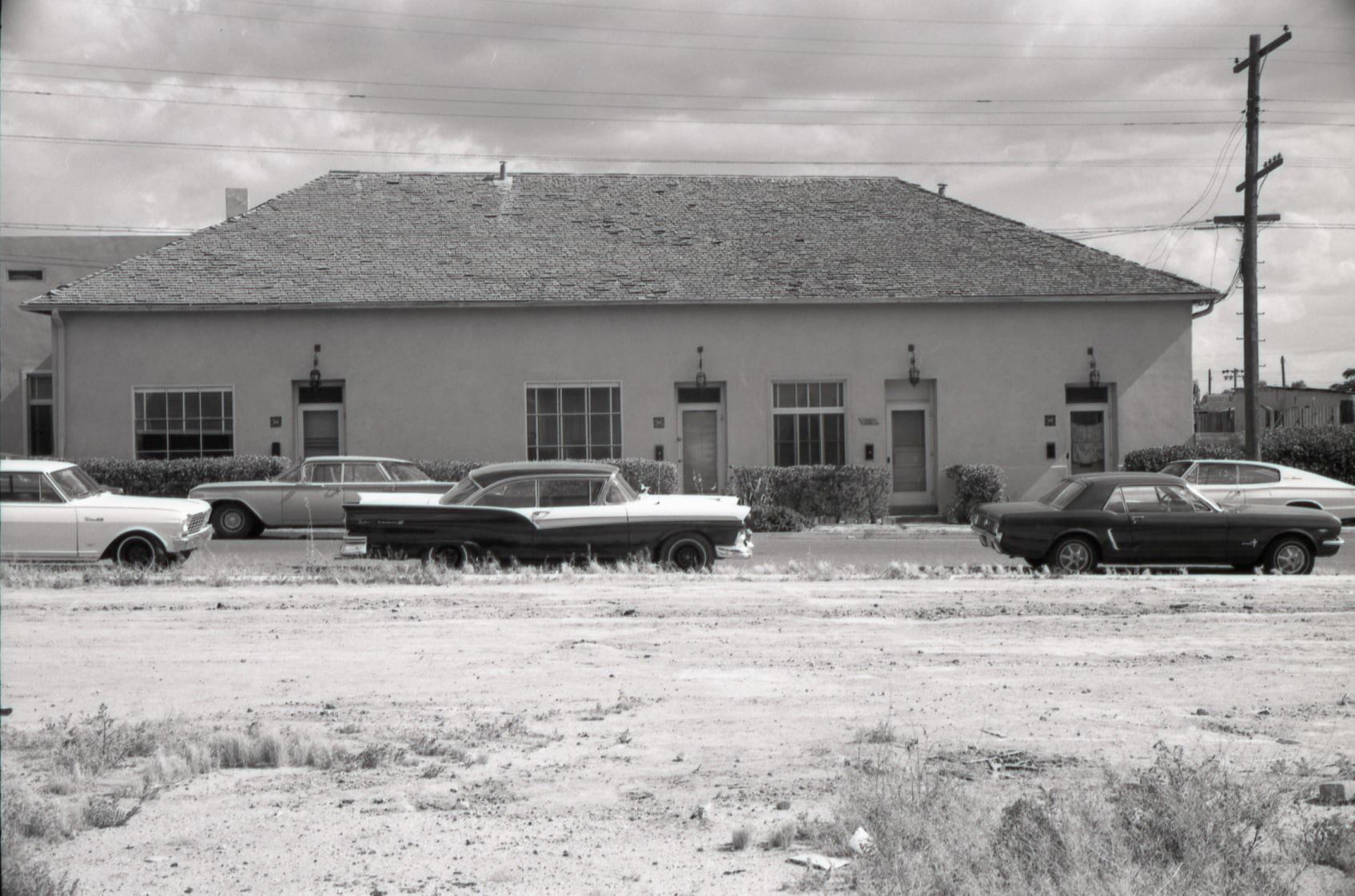
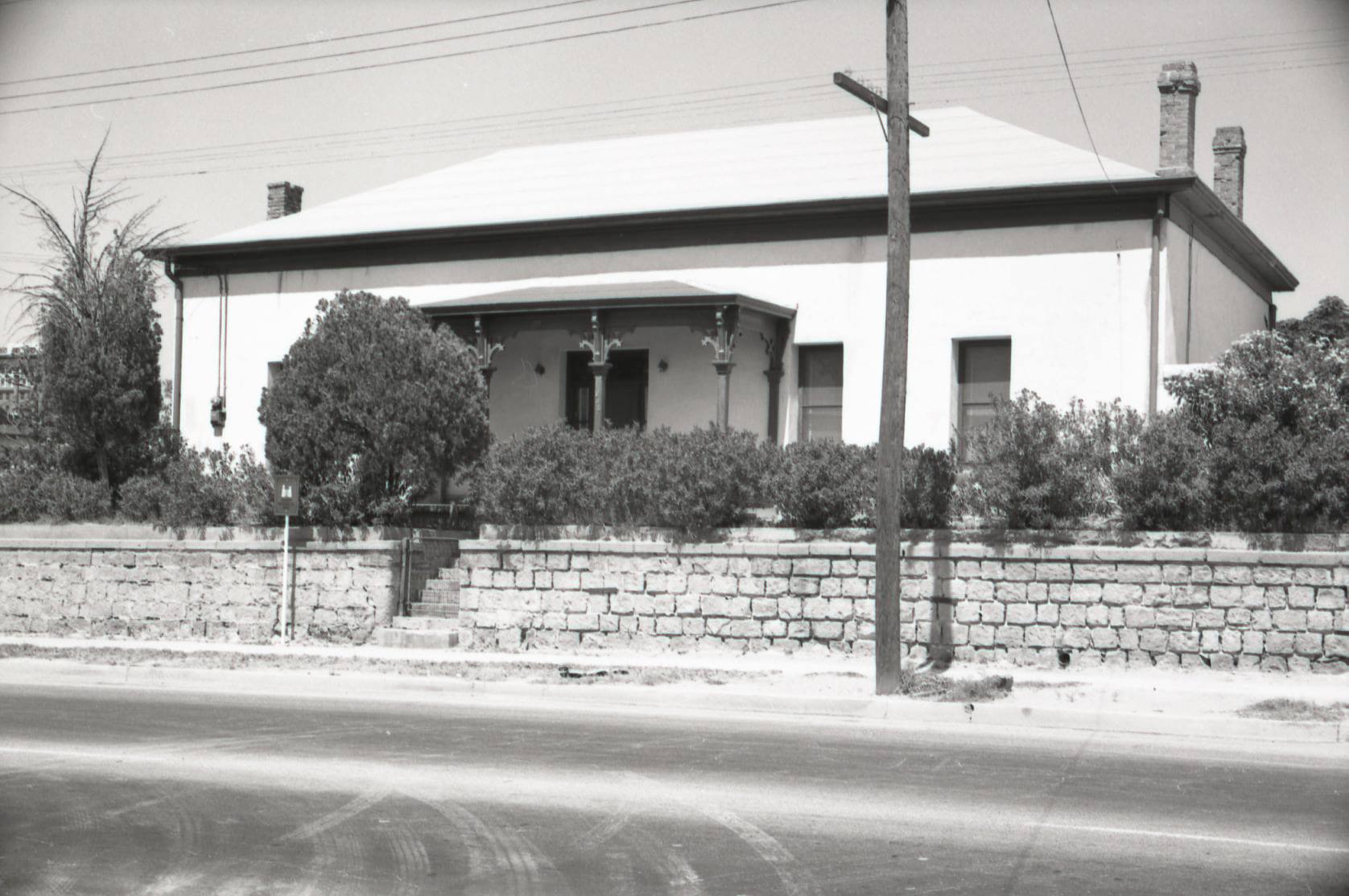
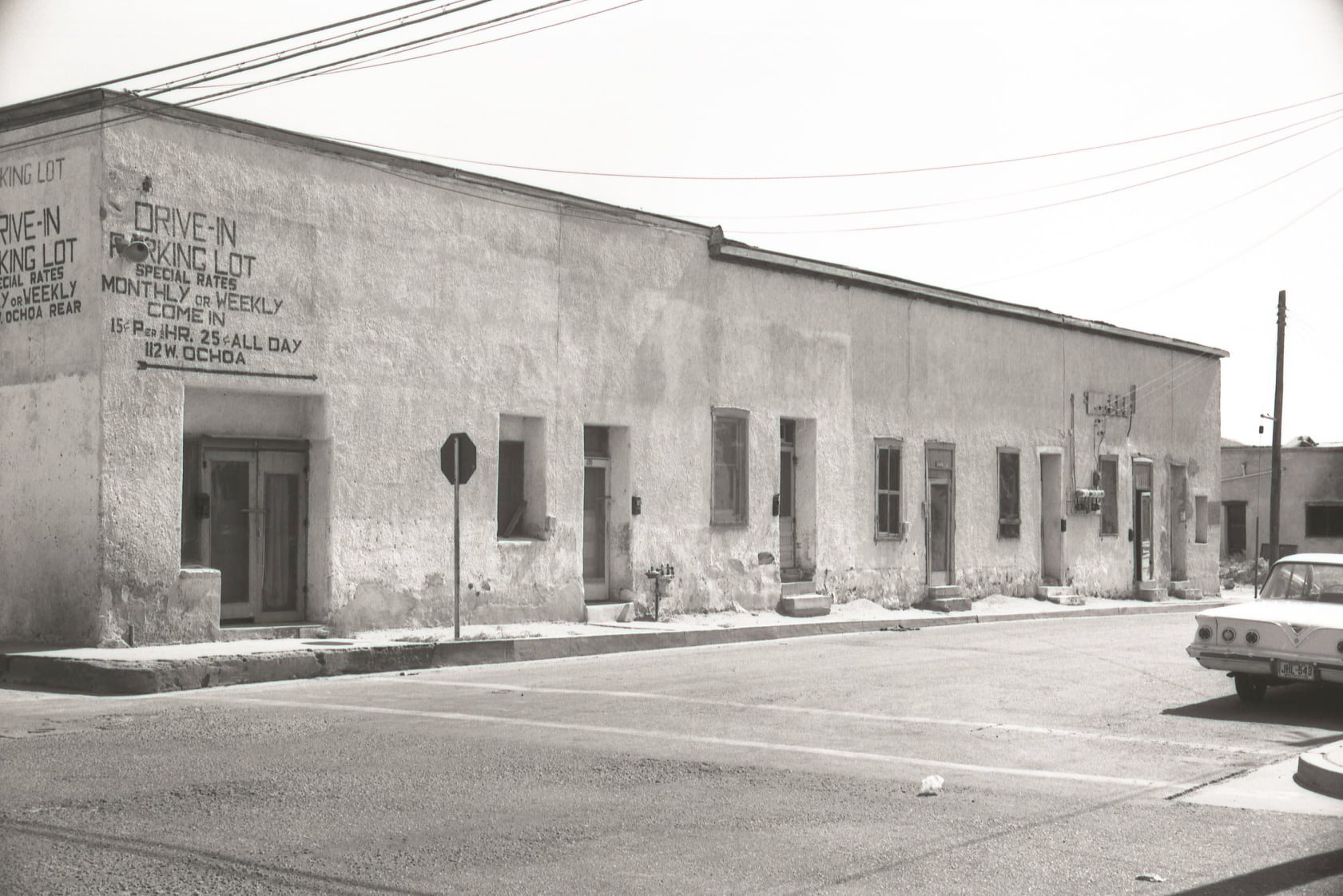
This exhibition was held in celebration of the anniversary of the “founding” of Tucson in 1775 by Spanish colonizers, and was centered around a collection of photographs I had found in Special Collections that consisted of photos of all of the buildings in the oldest part of town that had been demolished during Tucson’s urban renewal rampage, which took place in the latter part of the 1960s. Some beautiful houses and many historically significant buildings were lost in the old barrio, or “Barrio Viejo” to to make way for the building of the Tucson Community Center. My friend Richard’s father, Mr. Albert Elias, had mentioned to me that they existed, so I looked and looked until I found them. I was frankly quite shocked that these photos never got much attention before I pushed to have them digitized for use in this exhibition. The events I planned included a lecture by Tom Sheridan, assessing the present state of the Mexican community in Tucson and a panel discussion on growing up in Tucson that featured Katya Peterson, Molly McKasson, Lydia Otero and Ernesto Portillo, Jr. This was one of my best efforts. The programs were both well attended and the exhibition drew many visitors.
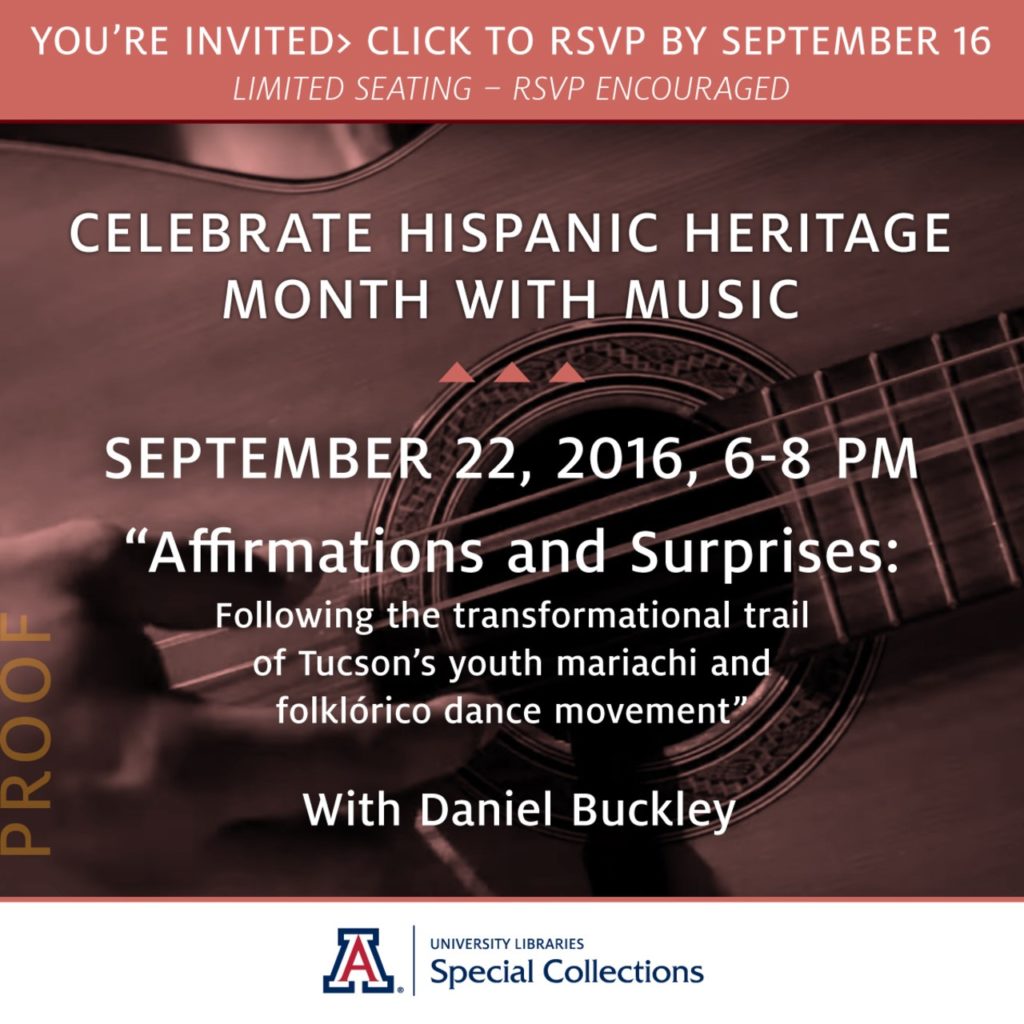
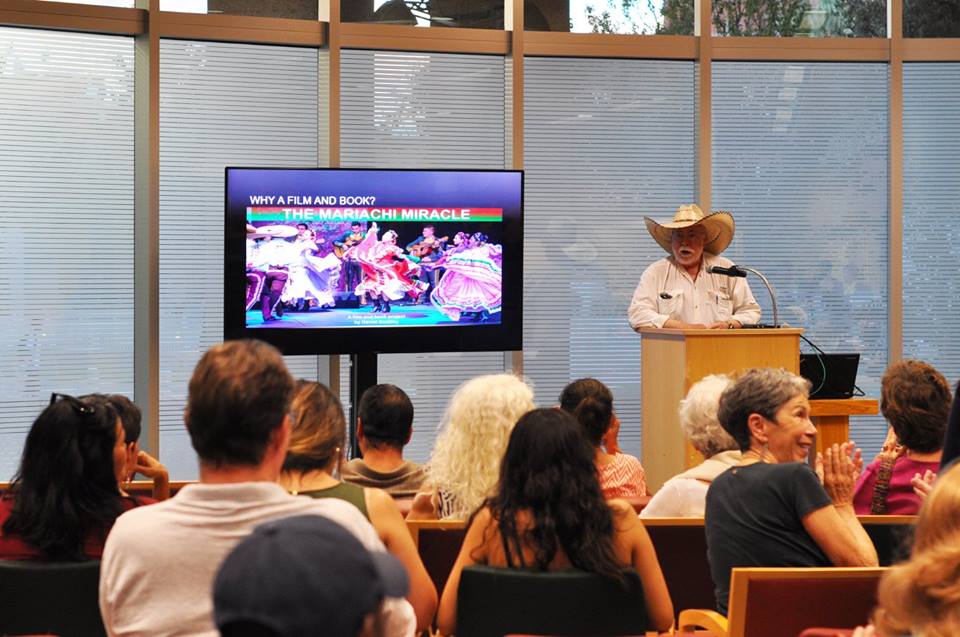
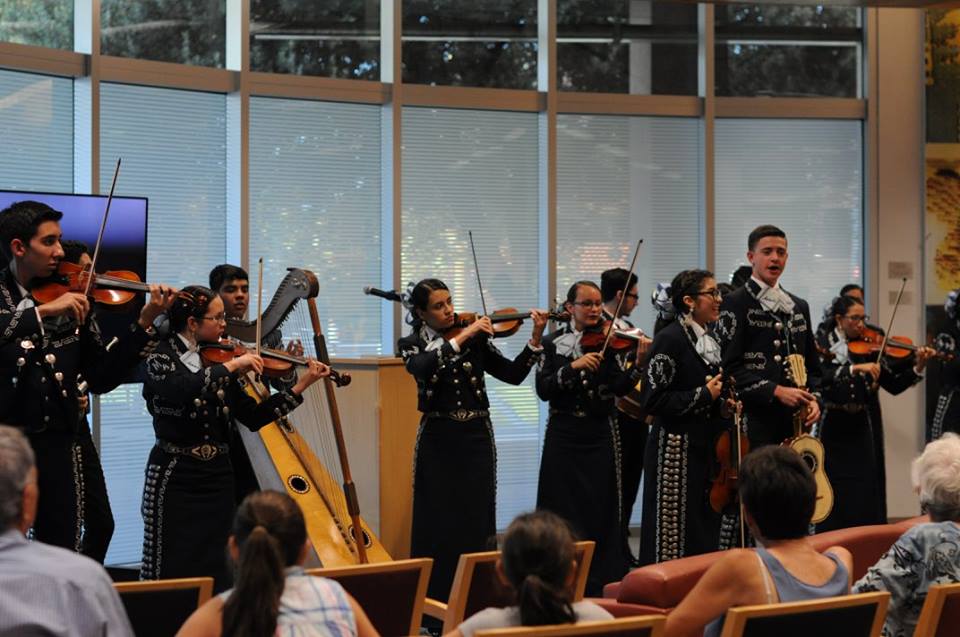
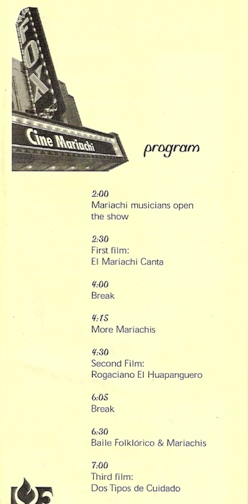
I coordinated two different programs held in Special Collections for Hispanic Heritage Month in 2016. I worked with Socorro Carrizosa of the Chicano Hispano Center on the planning. Dan’s talk was the first one. The second program was another “Noche de Corridos” evening. I’ve known Dan Buckley since my days as a member of the Board of Directors of the Tucson International Mariachi Conference in the mid-2000s. He’s been a long time supporter of the Tucson International Mariachi Conference and his writing for the Tucson Citizen on the festival was always something one could eagerly look forward to reading.
Publicity designed by Marty Taylor, University of Arizona Libraries
Local documentary producer, writer and music critic, Daniel Buckley, will share the story of the Tucson youth mariachi movement. He is currently in production on his eighth documentary, “The Mariachi Miracle,” which traces the impact of youth mariachis and folklórico dance groups on the social economic, educational, political and artistic fabric of Tucson, Arizona.
Producer/director Daniel Buckley is currently in production on his 8th documentary film, The Mariachi Miracle, which traces the impact of your mariachis and folklorico dance groups on the social, economic, educational, pollitical and artistic fabric of Tucson.
Buckely spent over 30 years as a music journalist, and later multimedia developer for newspapers in Tucson, Arizona and national magazines. During his nearly 23 years with the Tucson Citizien, de developed a deep interest in Tucson’s traditional Mexican and Native American cultural expressions.
In 2013, the Tucson International Mariachi Conference inducted Buckley into its Mariachi Hall of Fame, and in 2014 he was named Artist of the Year at the Arizona Governor’s Arts Awards for his work as a writer, composer, filmmaker, performance artist, and photographer.
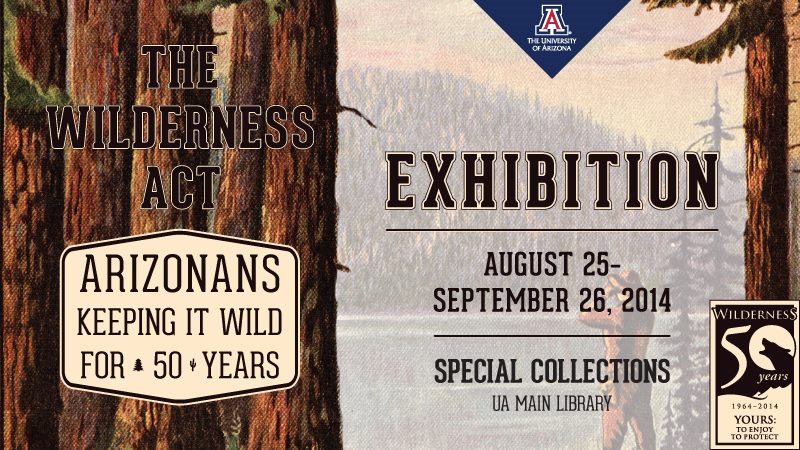
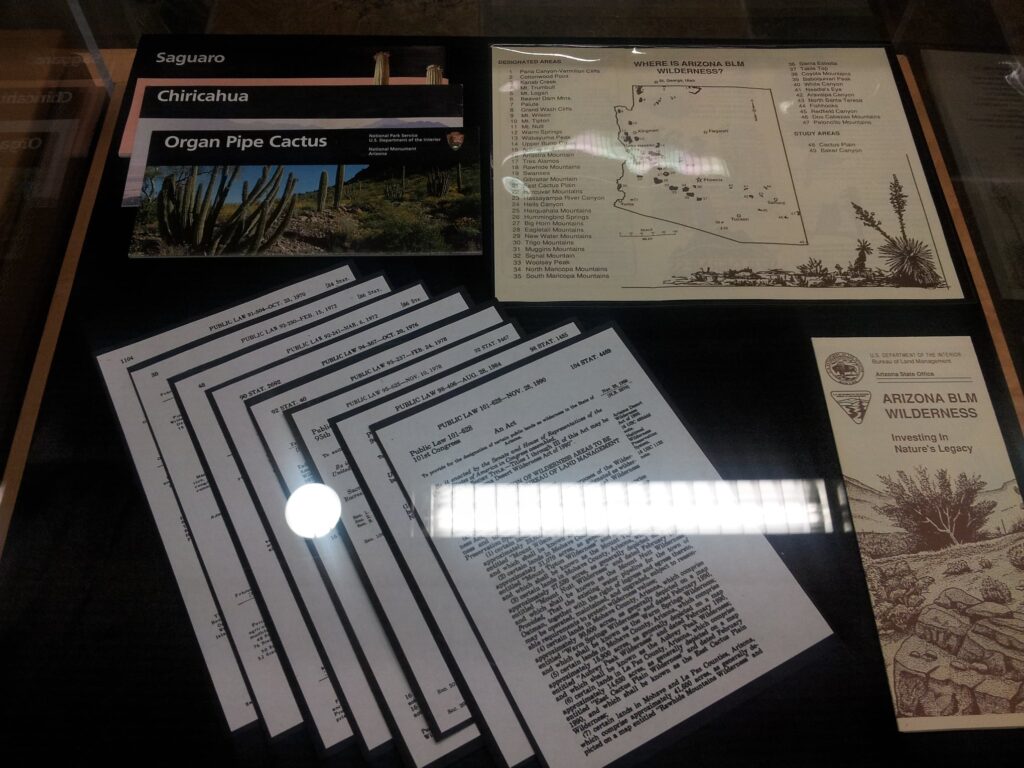
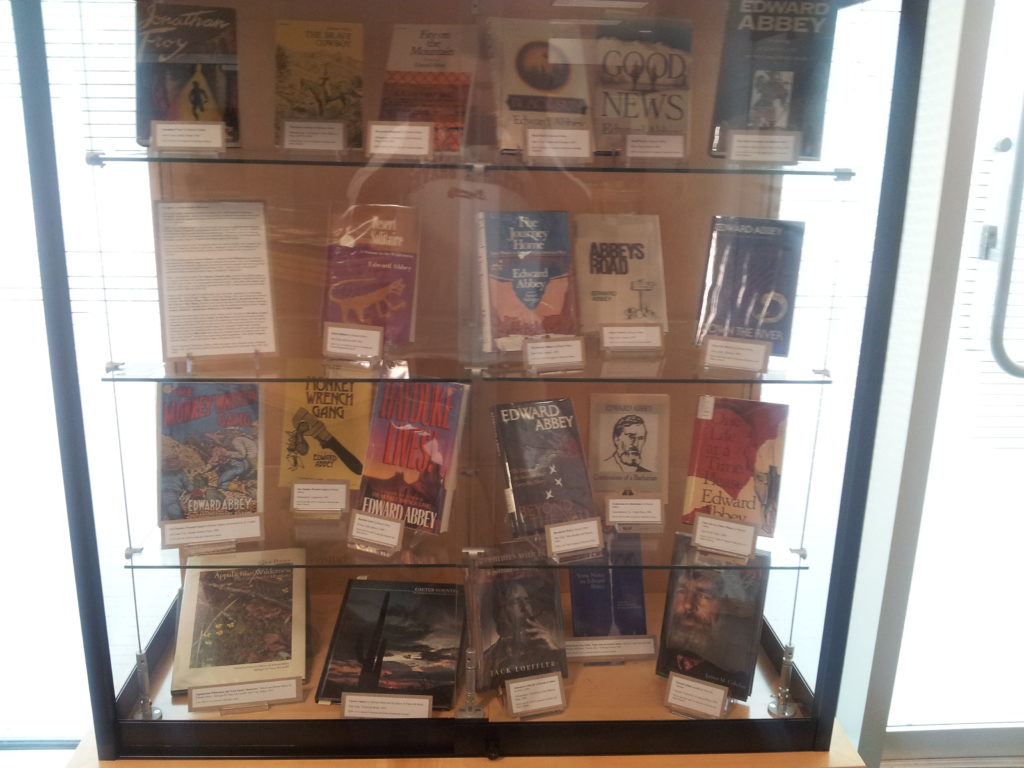
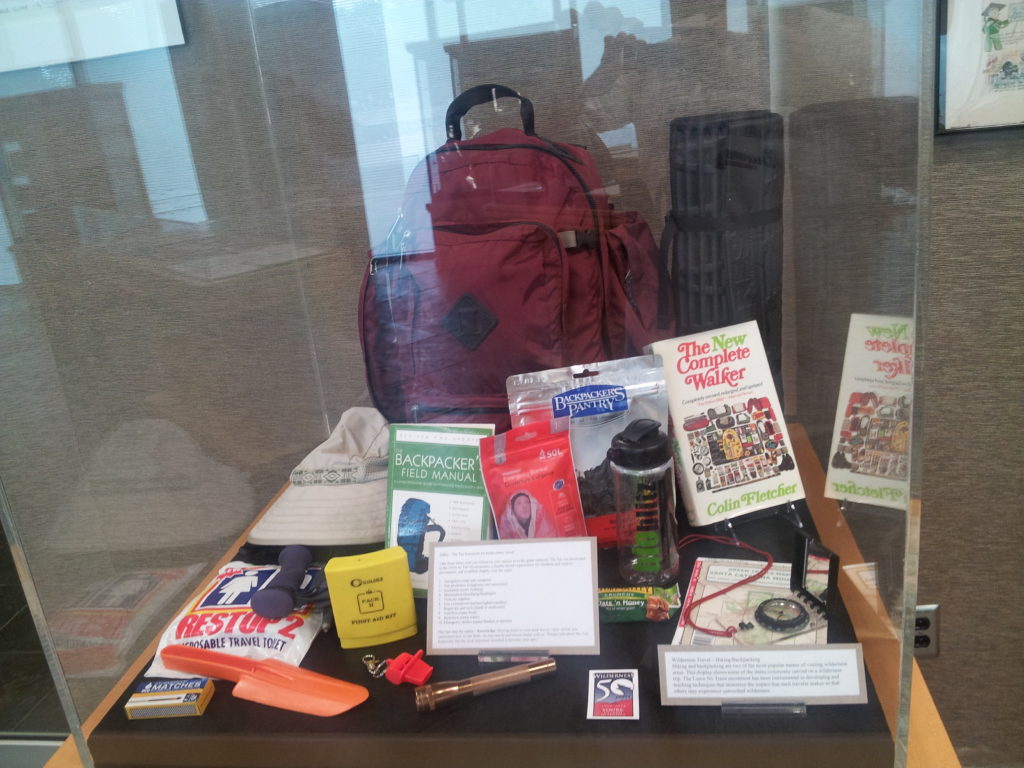
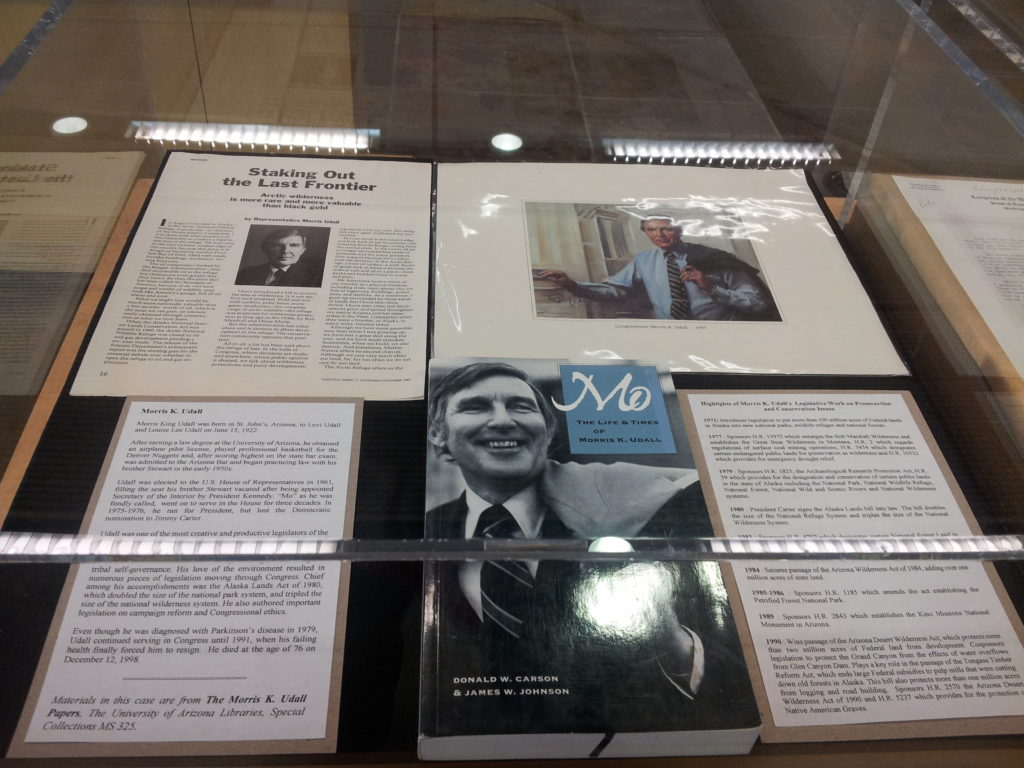
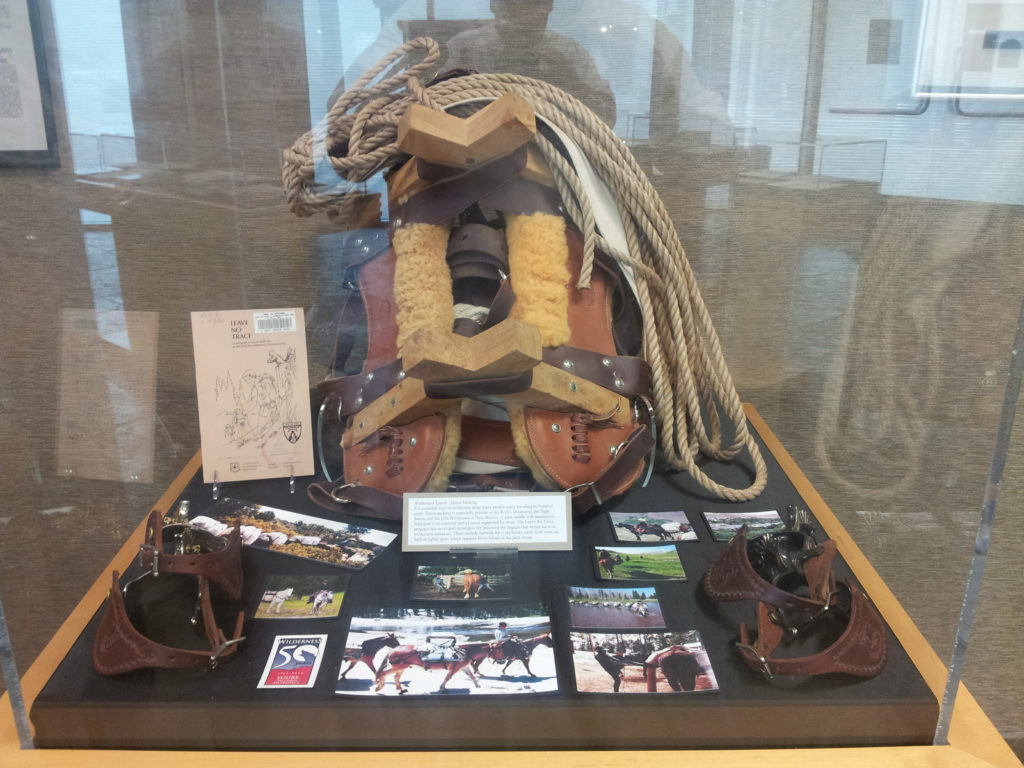
In late 2013, I was approached by my friend Keith Bagwell, who asked me if I would be interested in working with a couple of people he knew who wanted to work on an exhibition in commemoration of the 50th anniversary of the passage of the Wilderness Act. Those two people turned out to be Meg Weesner, formerly of the National Park Service, and Kevin Dahl, executive director of the Tucson Audubon Society. They knew we housed the papers of the Udall brothers as well as those of Edward Abbey, and they were very eager to share their knowledge of conservation and environmental issues with me and to work with me to design an exhibition celebrating the 50th Anniversary of the passage of the Wilderness Act. It was a real pleasure working with them. Meg, in particular, put in a lot of time and effort into this project. She led the way.
Promotional material designed by Marty Taylor, University of Arizona Libraries
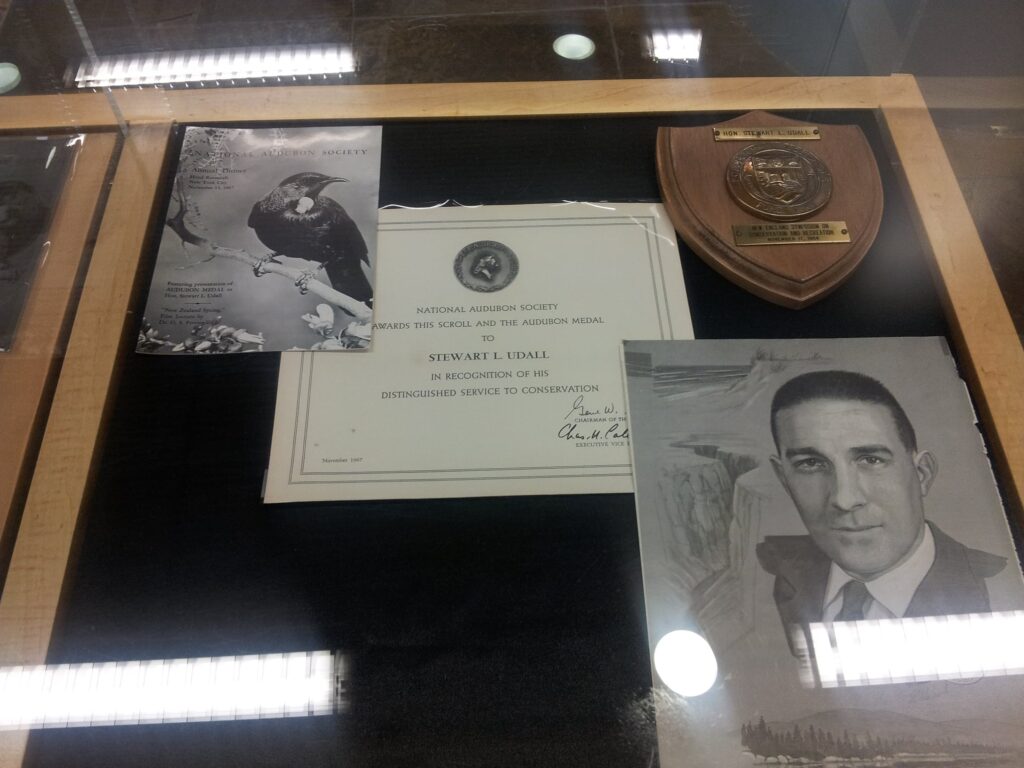
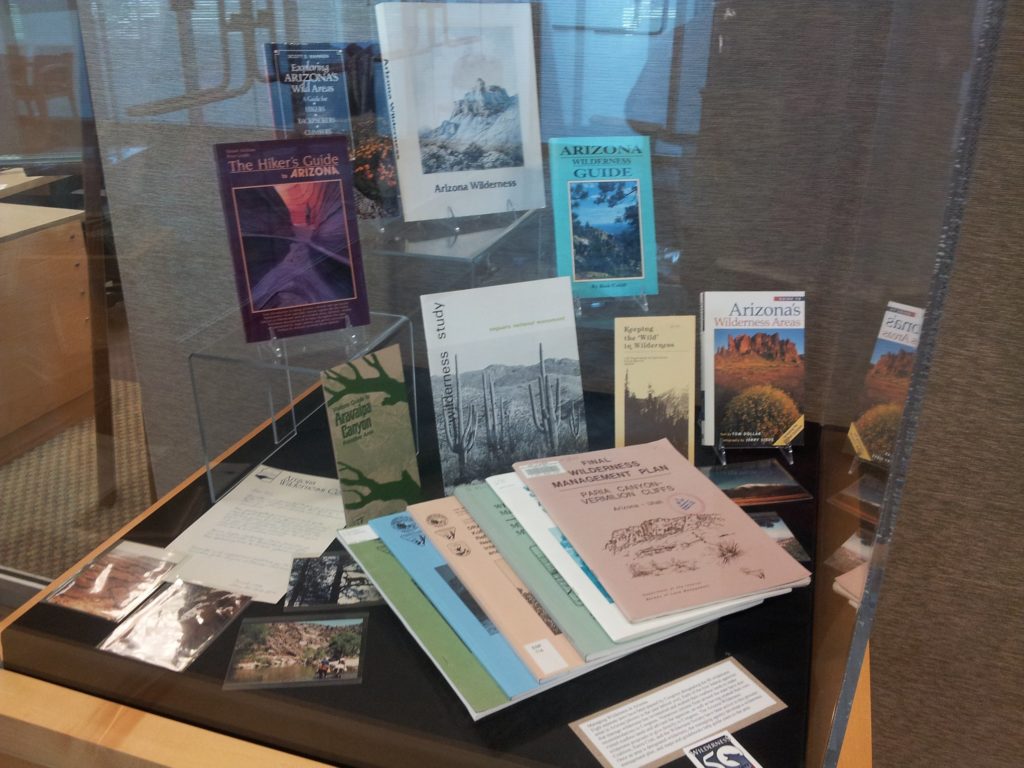
“This new exhibit showcases how, 50 years after becoming law, the Wilderness Act continues to benefit the American people by ensuring millions of acres of public land are available for recreation, exploration and inspiration. “The Wilderness Act” features original material from Special Collections including maps, books, archival documents and photographs from the collections of Edward Abbey and Stewart and Morris Udall.”
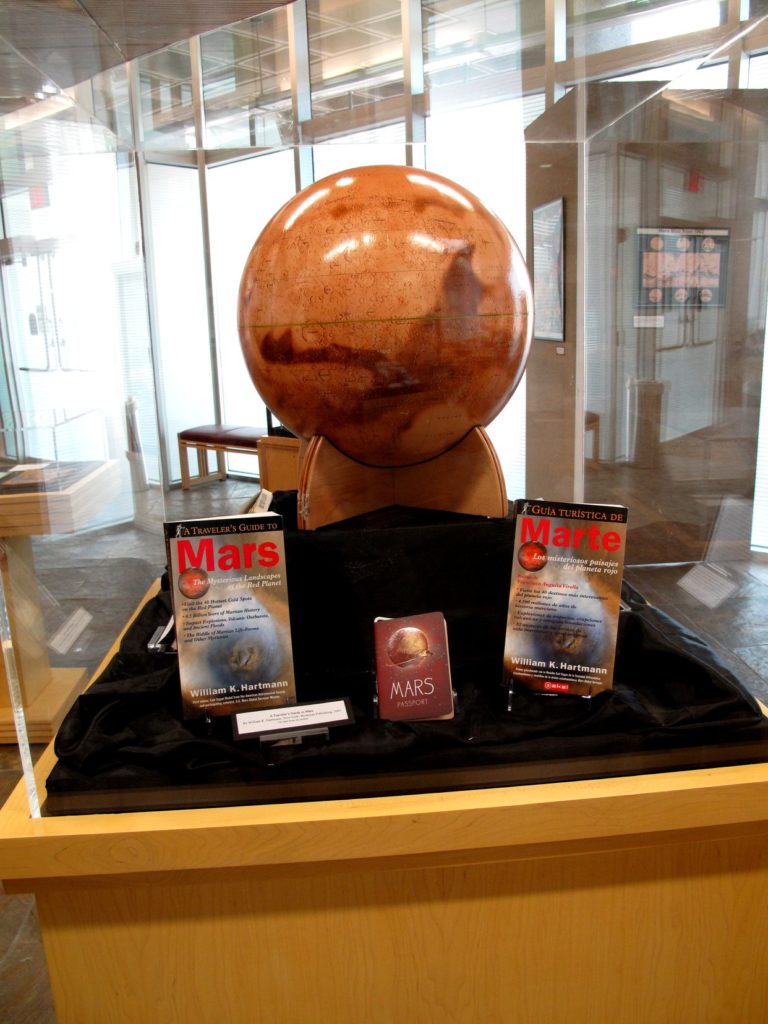
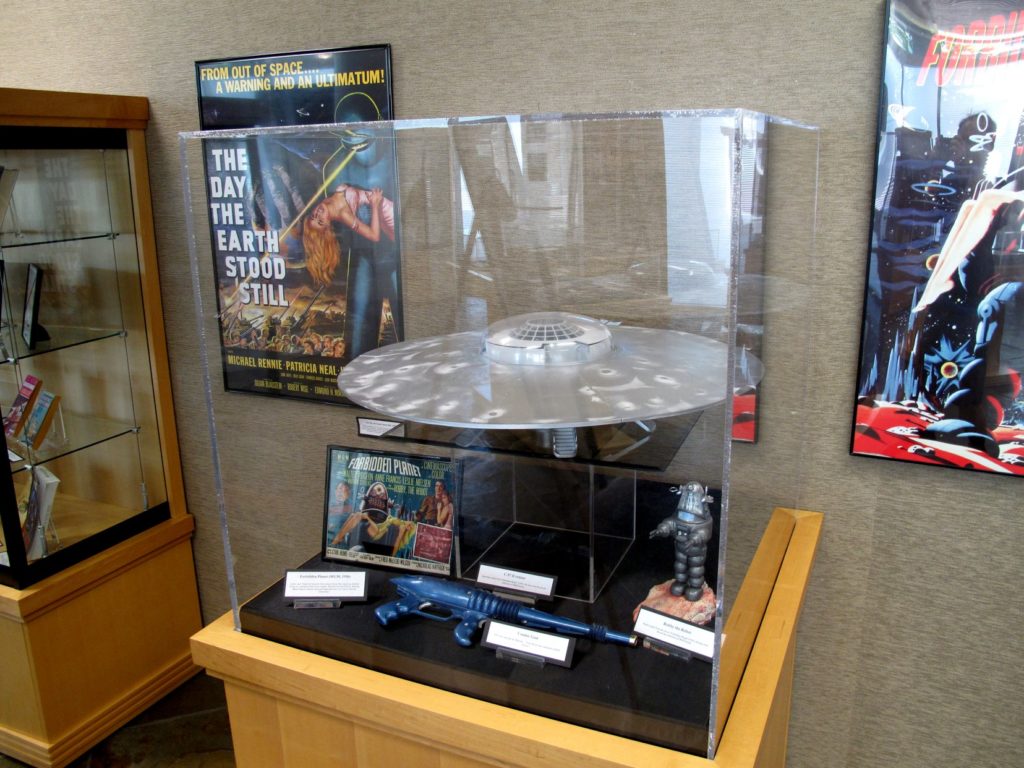
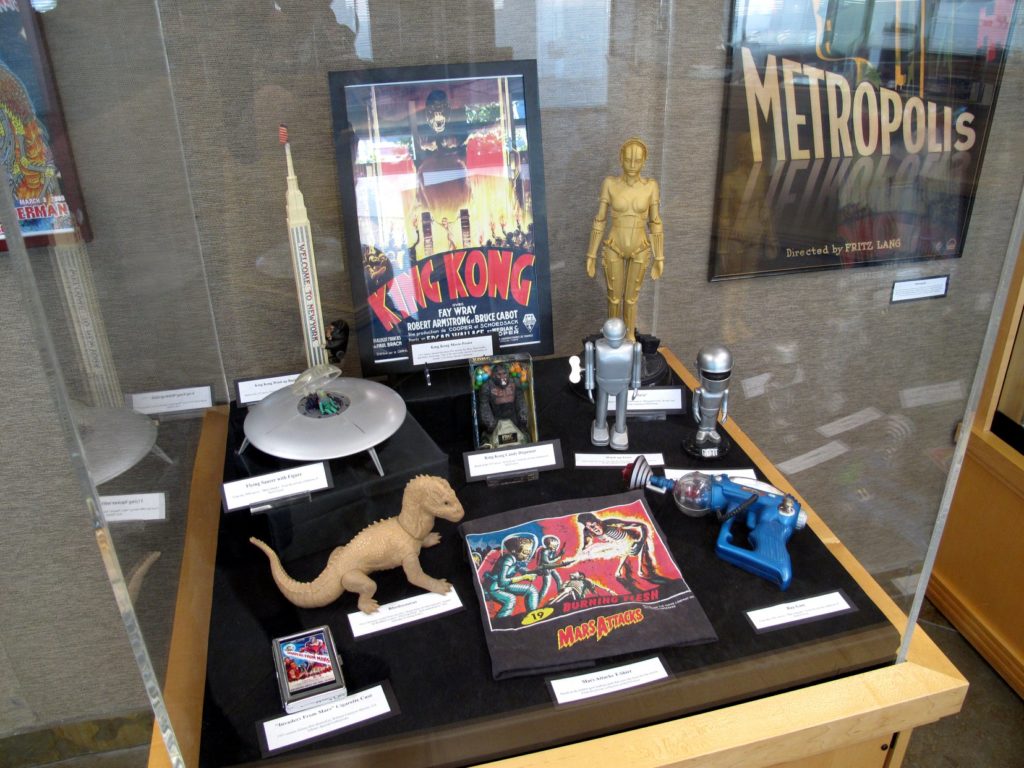
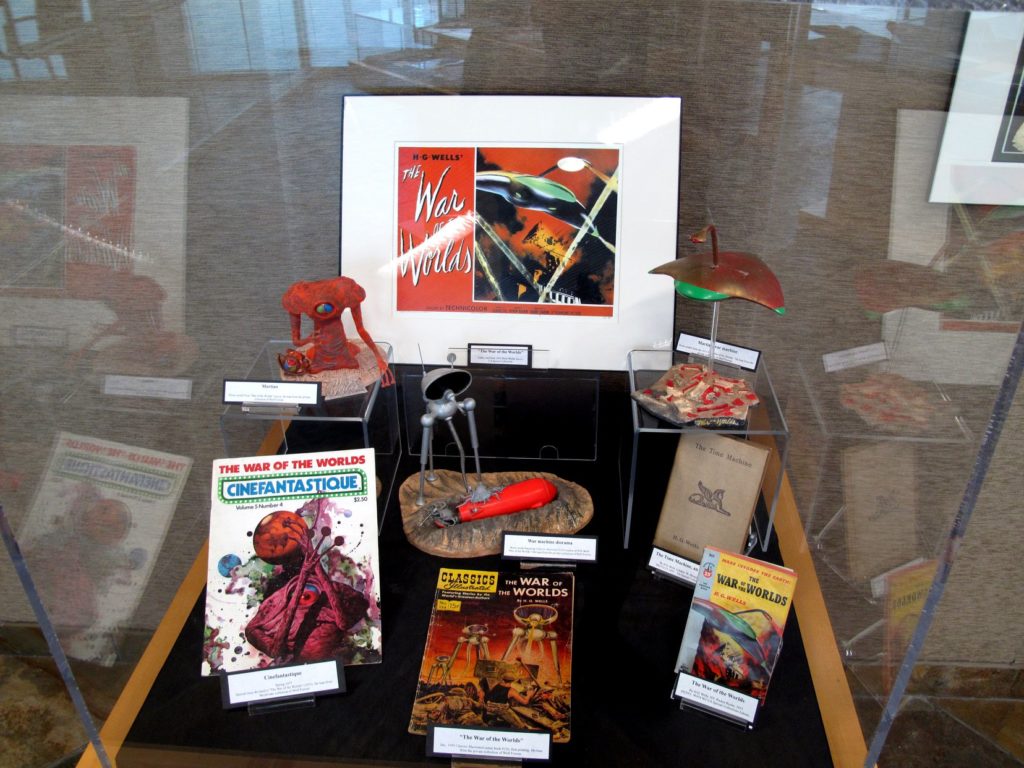
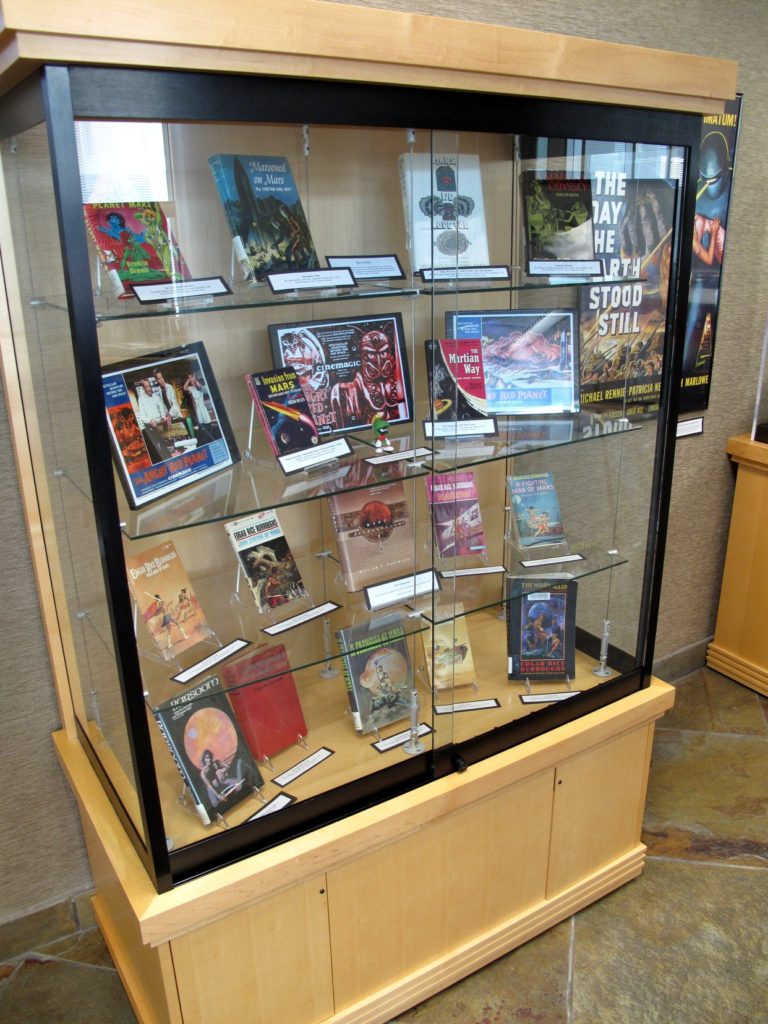
I co-curated this exhibit with Gloria McMillan and India Spartz. My sections of the exhibition are shown below. I created the displays featuring science fiction-related toys loaned to Special Collections by Wolf Forrest, the featured speaker for our opening event. I also made arrangements with the staff at the Lunar and Planetary Lab to borrow the Mars globe, and visited with Dr. William Hartmann at his home, where he graciously loaned me one of his Mars paintings and some of his Mars-related reference books for inclusion in the exhibition. I also purchased the posters that were displayed and made arrangements for Dr. Bradley Schauer to speak at the exhibition’s second event. It was a real pleasure getting to know Mr. Wolf Forrest, who it turns out, is not only a Sci-Fi buff, but a rock and roll music buff too!
The Mars Madness exhibit, subtitled “Sci-Fi, Popular Culture and Ray Bradbury’s Literary Journey to Outer Space” opened January 21st, and will be on display until August 1, 2014 in the Special Collections at the University of Arizona, 1510 E. University Blvd., Tucson, AZ. An array of Ray Bradbury material will be on display, including original works by the author, works of others who influenced him, pulp SF magazines, photos of Mars, movie memorabilia, and a selection of SF related toys on loan from the private collection of Wolf Forrest. The exhibit is curated by India Spartz, Bob Diaz, and Gloria McMillan, editor of Orbiting Ray Bradbury’s Mars (McFarland),
Promotional material designed by Marty Taylor, University of Arizona Libraries
https://vimeo.com/112532202
Promo video for Mars Madness exhibition
Mr. Wolf Forrest, featured speaker at the exhibition’s opening event.
The opening reception will be held on January 21, 2014, at 5:30 p.m with a talk by Mr. Wolf Forrest. A book signing with McMillan will be held March 15, 2014, at 3:30 p.m., and a lecture, “Filming Pulp Poetry: Ray Bradbury and It Came From Outer Space” with assistant professor of the School of Theater, Film and Television, Bradley Schauer, will be held on April 8, 2014, at 5 p.m.
Mars globe on loan from the Lunar and Planetary Lab. Mars books by William K. Hartmann on loan from the author.
Toys on loan from the collection of Mr. Wolf Forrest
More of Mr. Forrest’s collection
And more toys. Books/magazines from Special Collections huge collection of science fiction related works.
More books from Special Collections science fiction holdings.
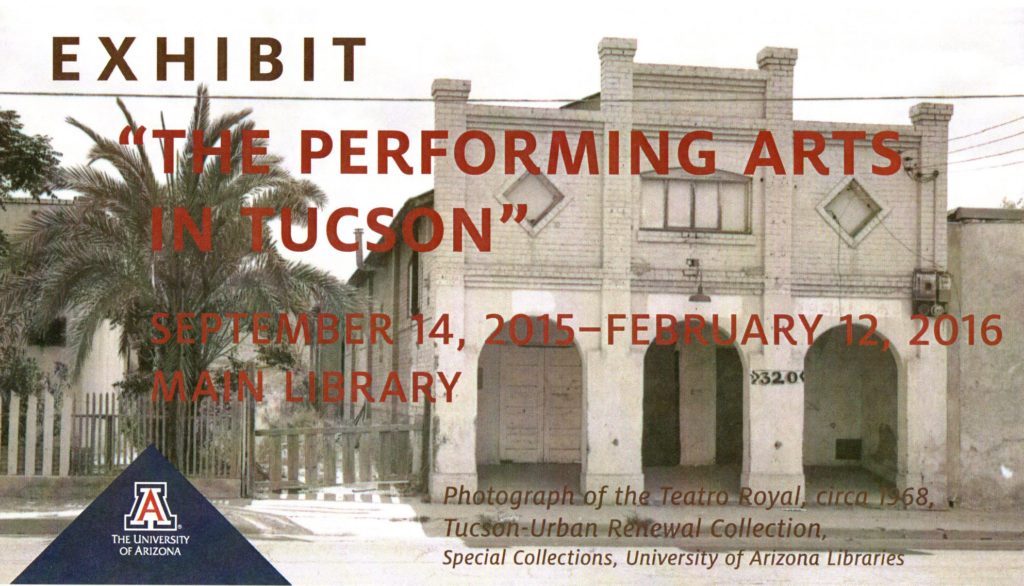
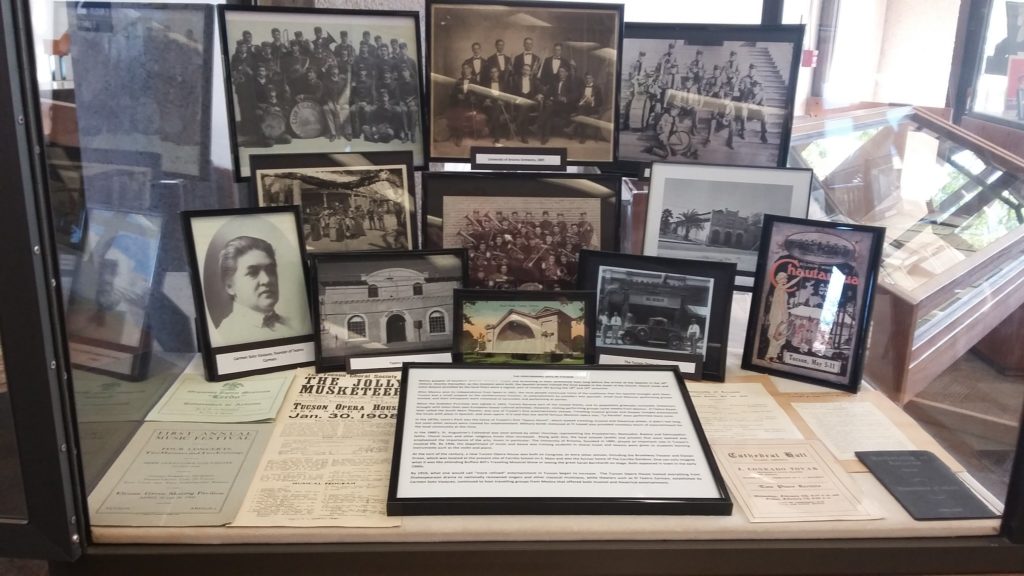
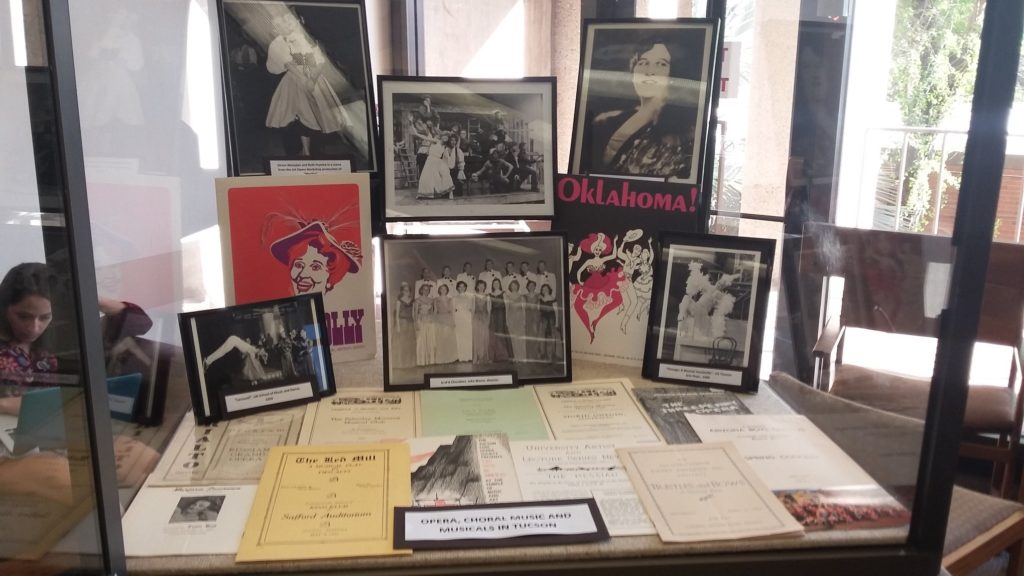
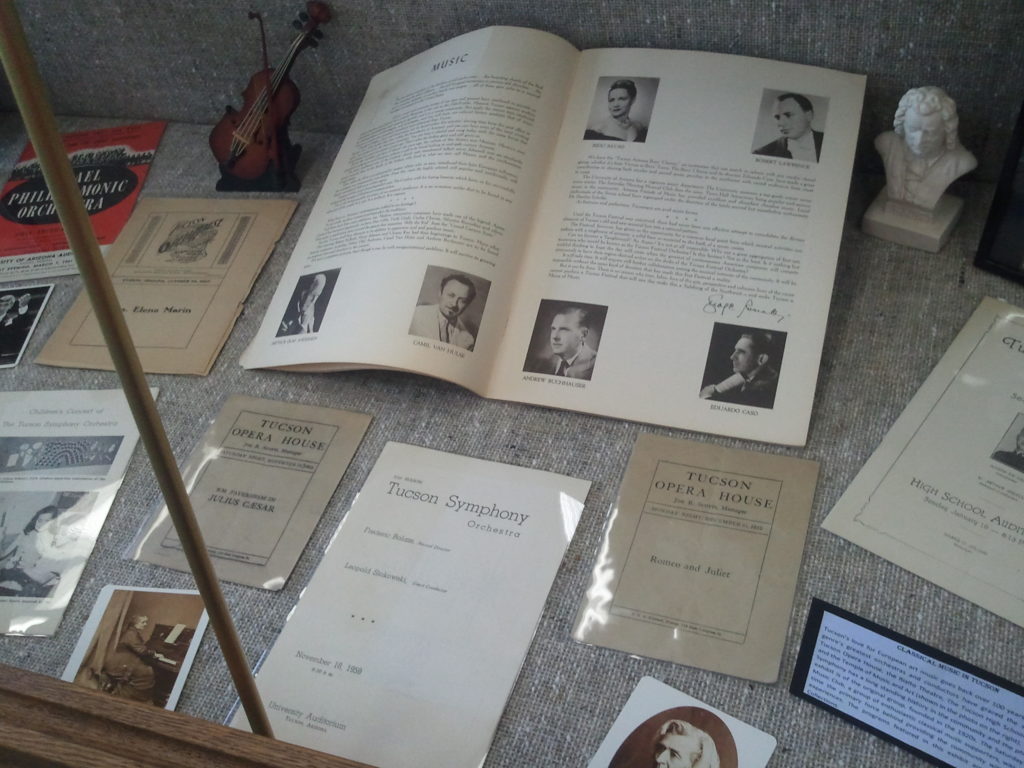
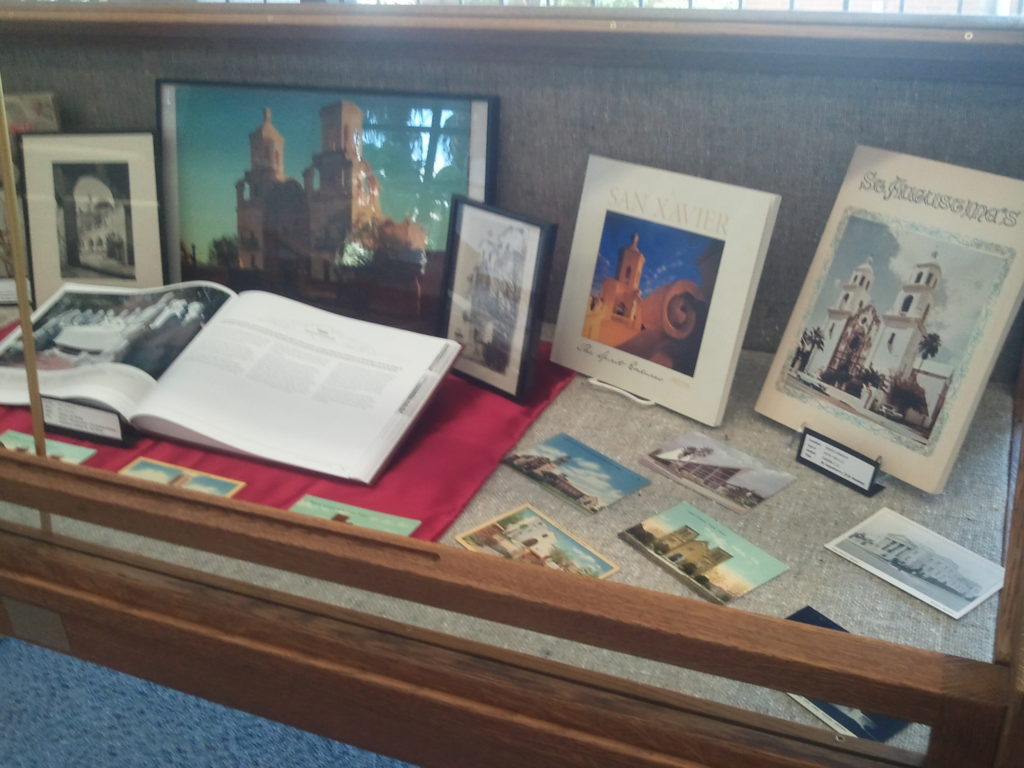
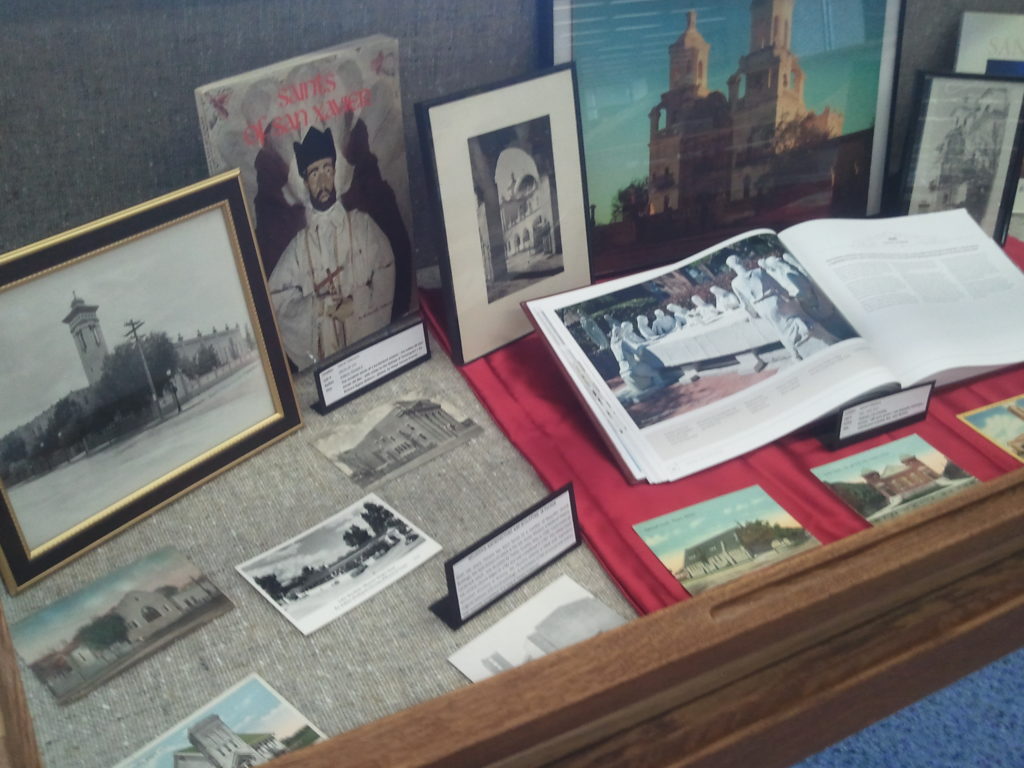
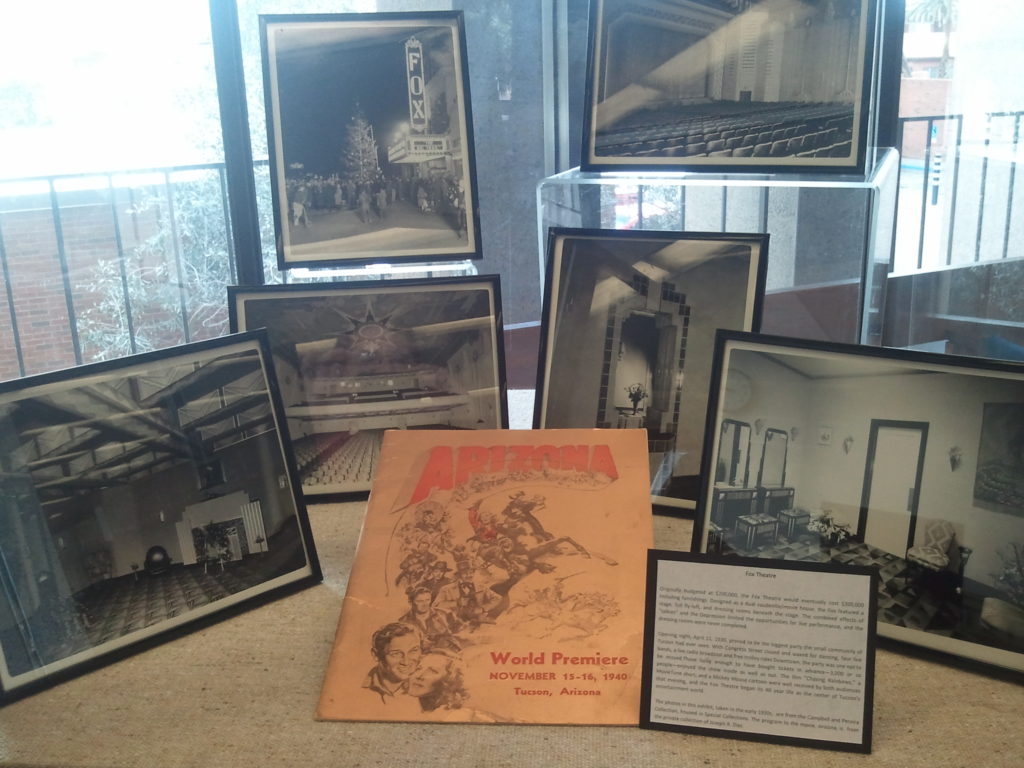
I put this exhibition together for display in the Main Library. All of the material comes from Special Collections, which has an amazing collection of performing arts-related holdings. The exhibition, although small, was well received, and was a pleasure to work on. I don’t have photographs of every section, but I did save some.
Description:
“Special Collections has a growing number of collections about the performing arts. This exhibit will draw on these collections to provide a look at Tucson’s history of performing arts from the 19th century to the present day. Included will be recordings, photographs, programs and other ephemera.
Tucson has been home to a rich arts scene encompassing music, dance, theater and cinema. The Tucson scene has thrived in part because of its inclusive nature, which has included classical as well as popular offerings. For instance, music offerings span symphonic and opera offerings at one end of the spectrum to street music and folk festivals at the other.
Tucsonans are fortunate that our community has so many arts and cultural organizations that sponsor performances, not the least of which is the University of Arizona. The exhibit will include materials from UA Presents, the “Saturday Morning Music Club” and Tucson Meet Yourself among other collections.”
THE PERFORMING ARTS IN
TUCSON
Native peoples of
Southern Arizona included chants and drumming in their ceremonial lives long
before the arrival of the Spanish in the 16th century. Shortly
thereafter, as the missions were built, the Spanish priests trained the local
people in the music of the Church. Choral music and voice lessons provided by
the local friars were a regular part of mission life during the 18th
and 19th centuries.
After Mexico won its
independence from Spain in 1821, the local people continued many of the
traditions that the Spanish brought with them. Tucson was a small outpost on
the northernmost frontier, so entertainment by outsiders was sporadic. Small
local Mexican performing groups existed, and their infrequent work consisted of
serenades and performing at parties.
When the Gadsden
Purchase was signed in 1854, Tucson became part of the United States, and its
population gradually increased. Easterners brought with them their own European-based
cultural activities. However, visiting performing groups came mostly from
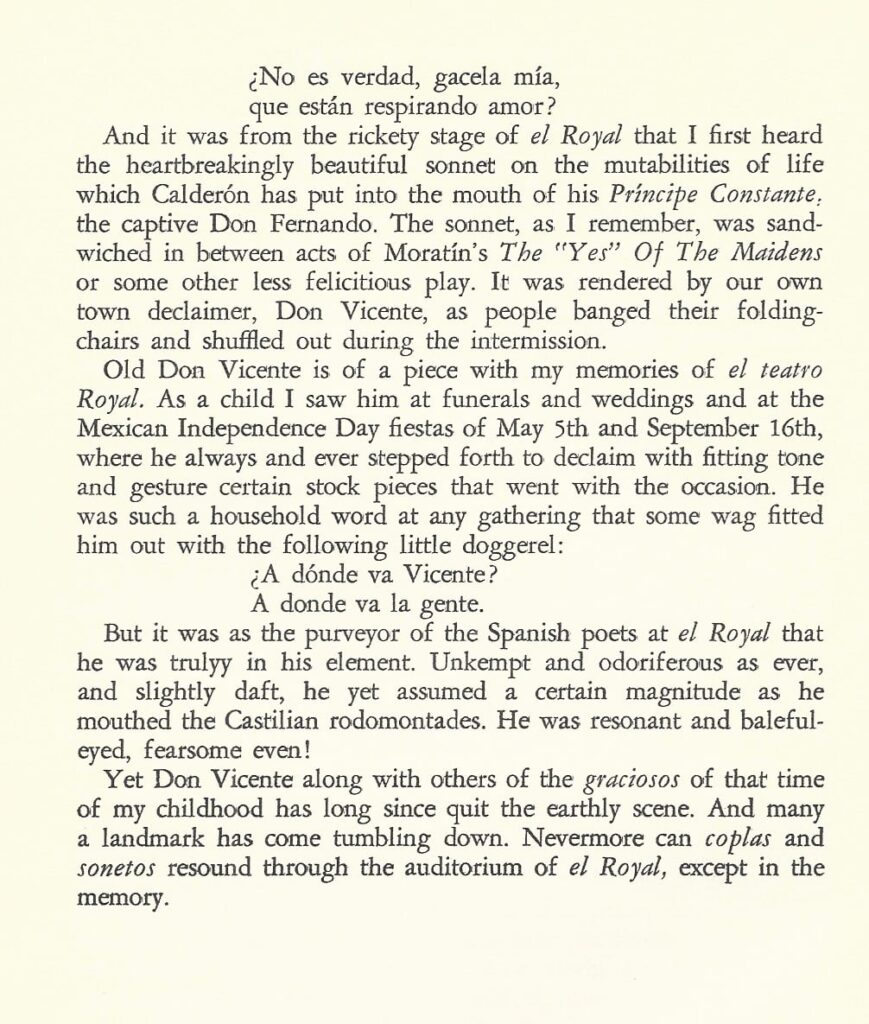
Mexico. El Teatro Royal, later called the South Main Theater, was one of
Tucson’s first entertainment venues. Traveling musical groups and theater
troupes entertained the locals with plays in Spanish, and even opera. It is
said that the world famous Mexican opera star, “La Peralta” even performed
there once.
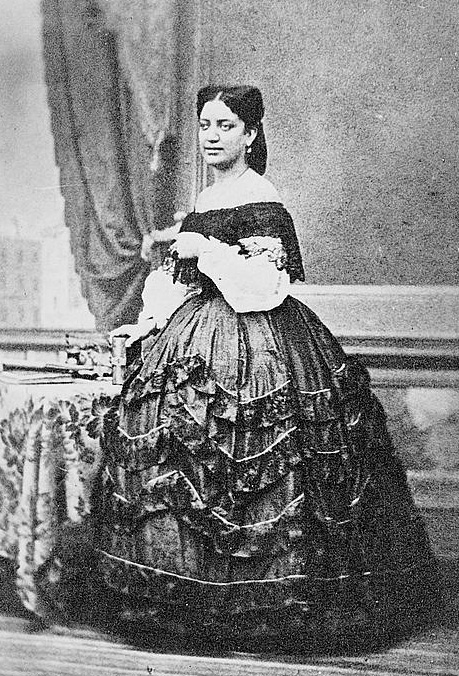
Angela Peralta, one of the greatest Opera stars of the Nineteenth Century.
The following story comes from the book, “Tucson Incunabula”, by Alexandra Maria Diamos.
In the 1870s, Levin’s Park was the home of Tucson’s first “Opera House”, which hosted traveling musical and theatrical shows. It didn’t last long, but soon other venues were created for entertainment. Military bands stationed at Ft Lowell also provided countless hours of entertainment for the local community at this time.
In the 1880’s, St. Augustine’s Cathedral was soon joined by other churches representing the Presbyterian, Methodist, Baptist and Episcopalian faiths. Choral music and other religious music thus increased. Along with this, the local schools (public and private) that were opened also emphasized the importance of the arts, music in particular. The University of Arizona, founded in 1885, played an important role in Tucson’s musical life. By 1906, the department of music and dance was training students in choral music and lessons were given to students learning instruments such as the violin and piano.
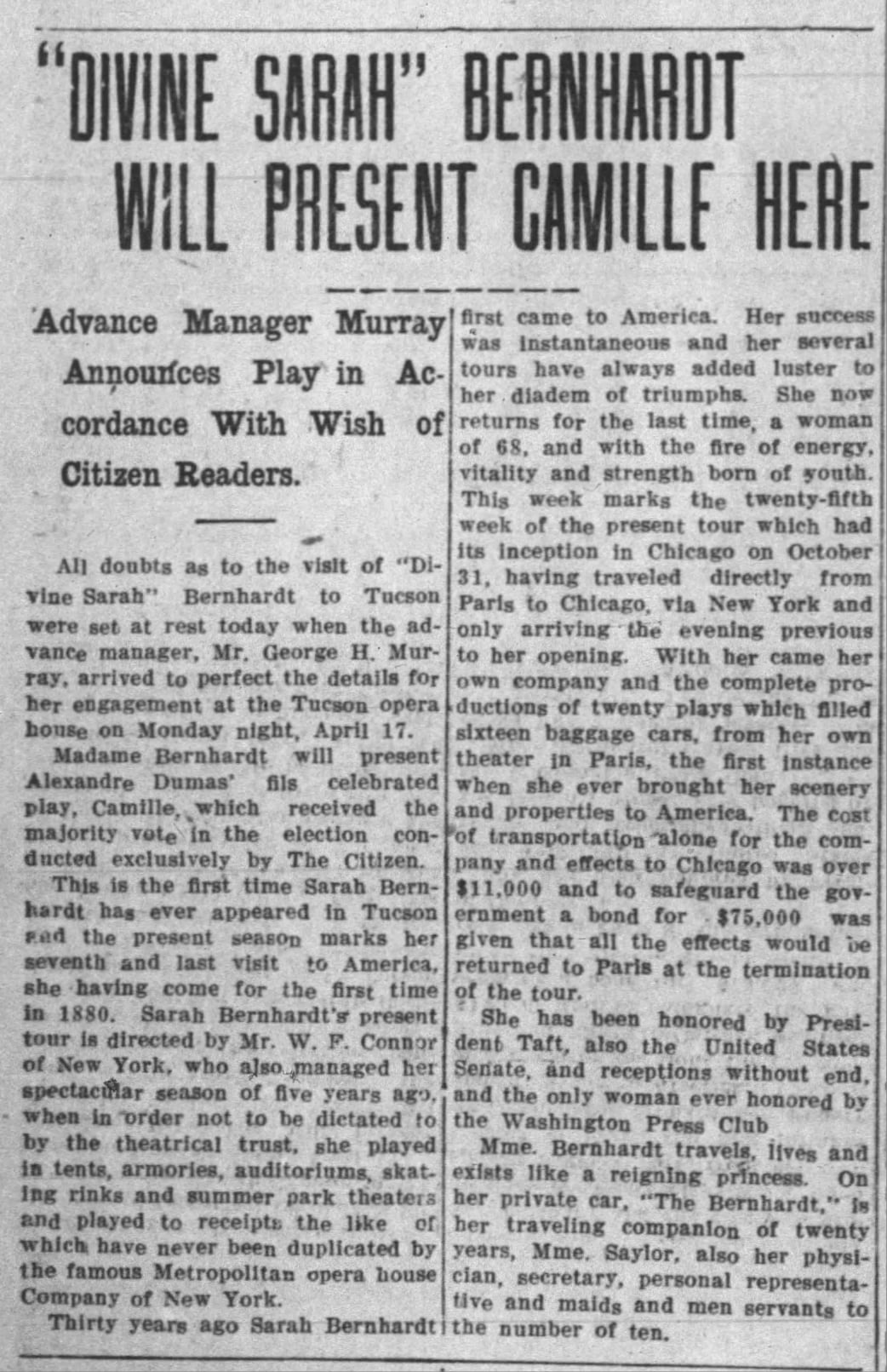
Tucson Daily Citizen, April 7, 1911.
Arizona Daily Star, April 12, 1911.
A scene from “Camille” with Sarah Bernhardt in the title role.
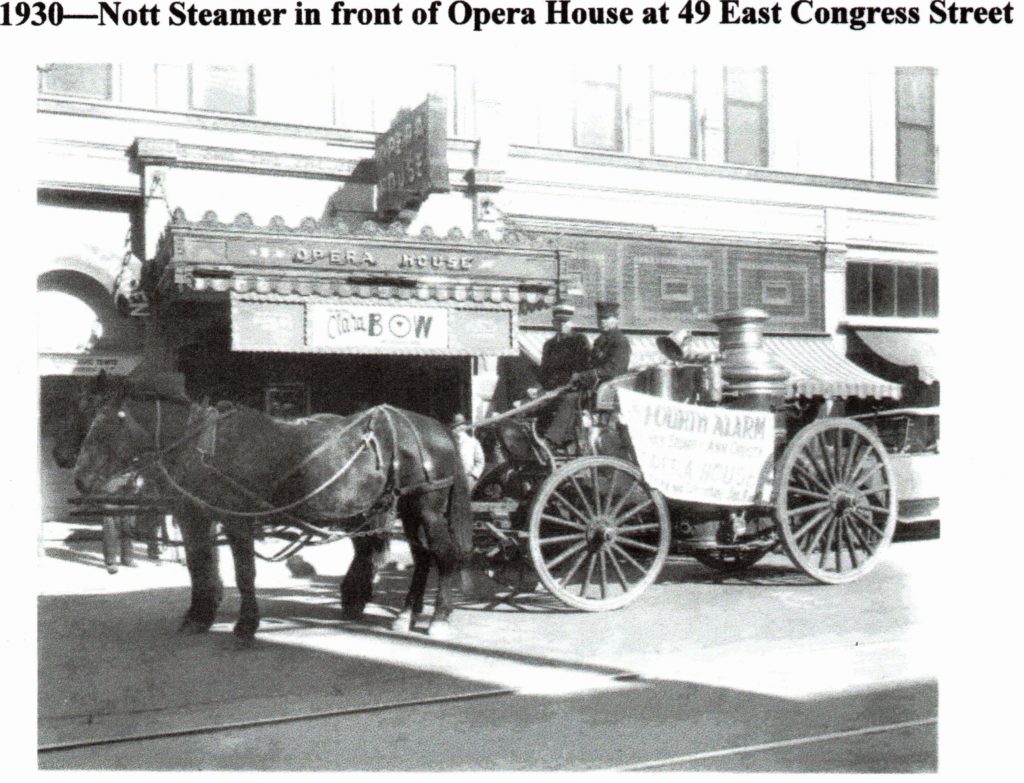
At the turn of the
century, a new Tucson Opera House was built on Congress, as were other venues,
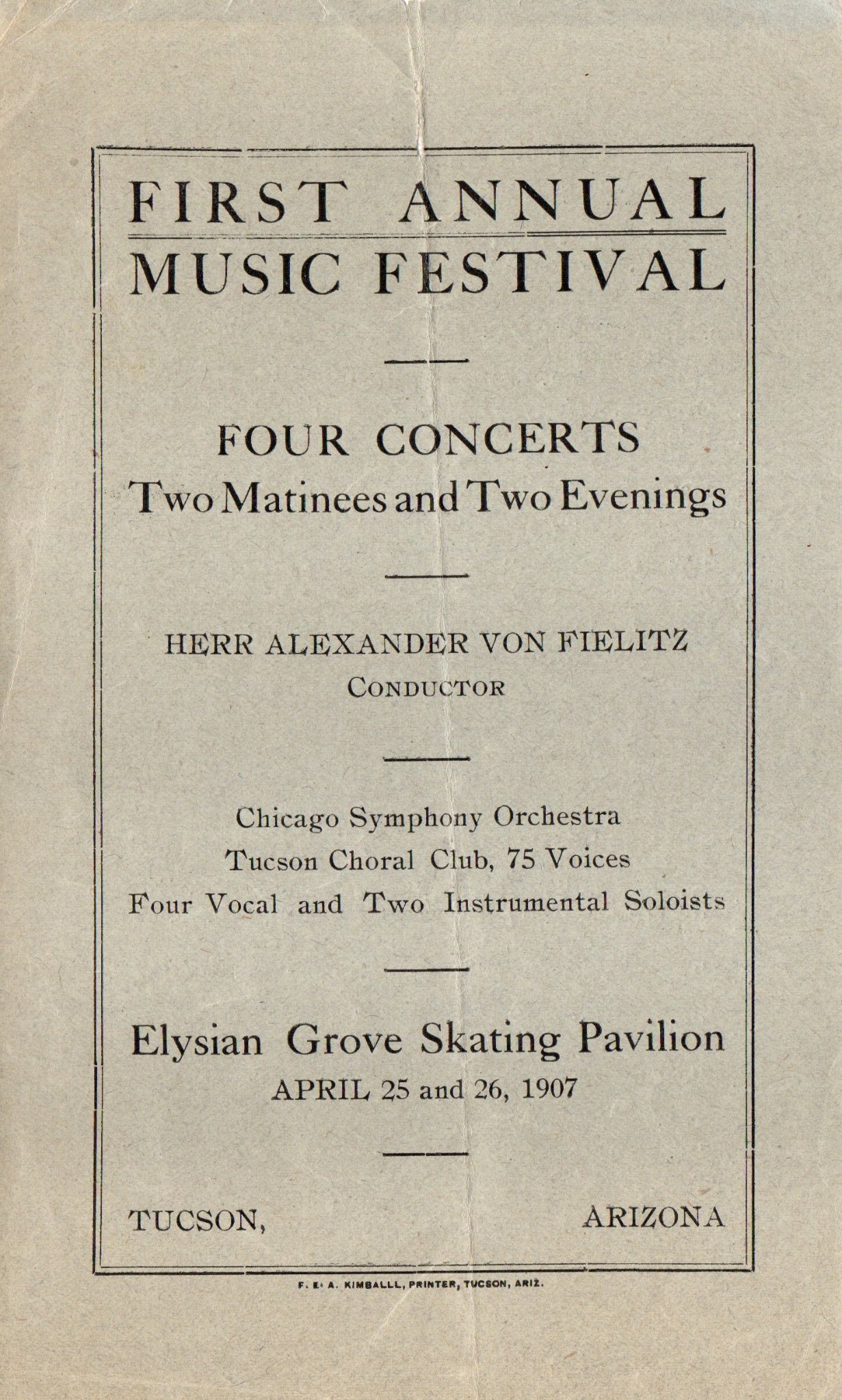
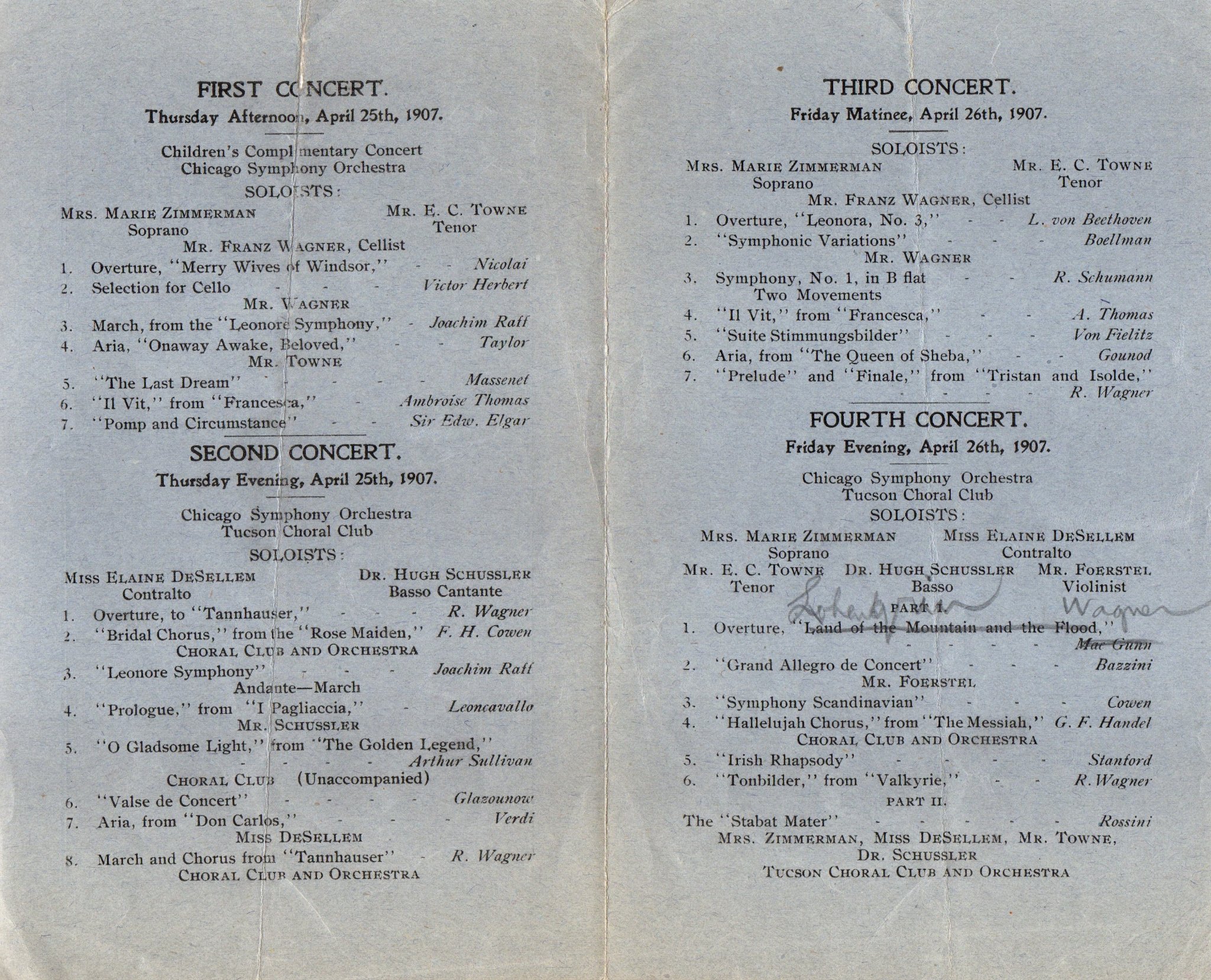
including the Broadway Theater and Elysian Grove, which was located at the
present site of Carrillo School on S. Main and was the former home of The
Carrillo Gardens. One can only imagine what it was like attending Buffalo
Bill’s Traveling Minstrel Show or seeing the great Sarah Bernhardt on stage.
Both appeared in town in the early 1900s.
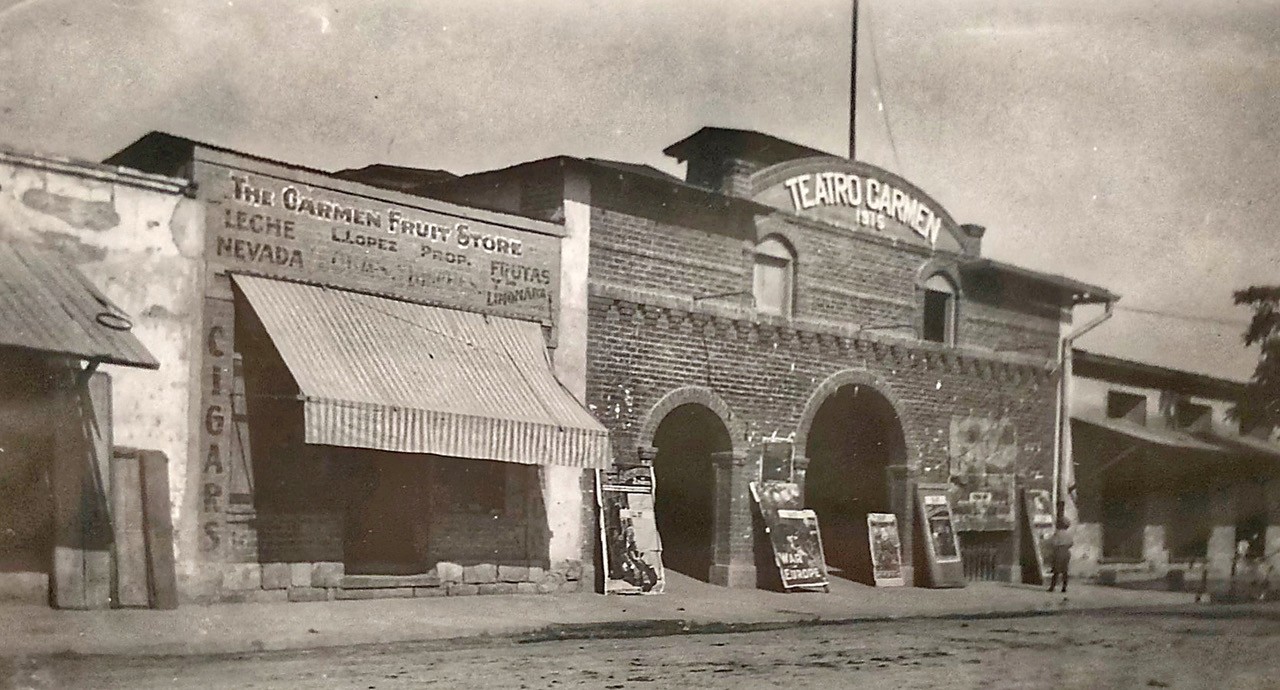
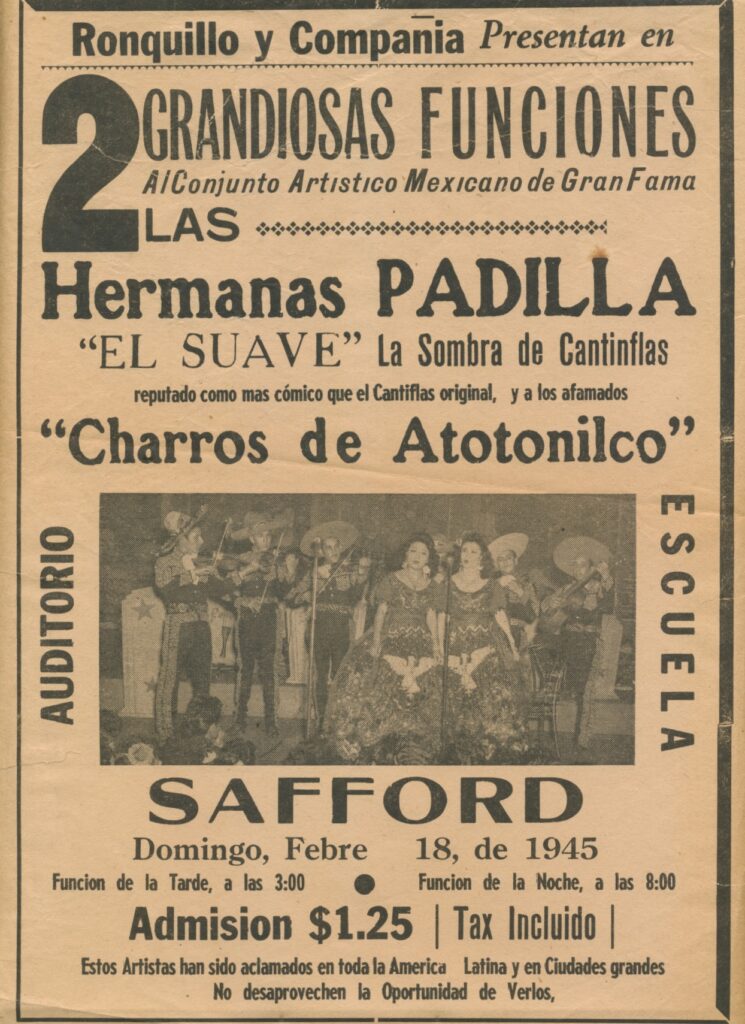
By 1910, what one would call “more refined” entertainment in Tucson began to increase. The Tucson Opera House hosted everything from Shakespearean drama to nationally renowned singers and other classical musicians, while theaters such as El Teatro Carmen, established by Carmen Soto Vasquez, continued to host travelling groups from Mexico that offered both musical and theatrical entertainment.
Teatro Carmen, circa 1918.
CLASSICAL MUSIC IN
TUCSON
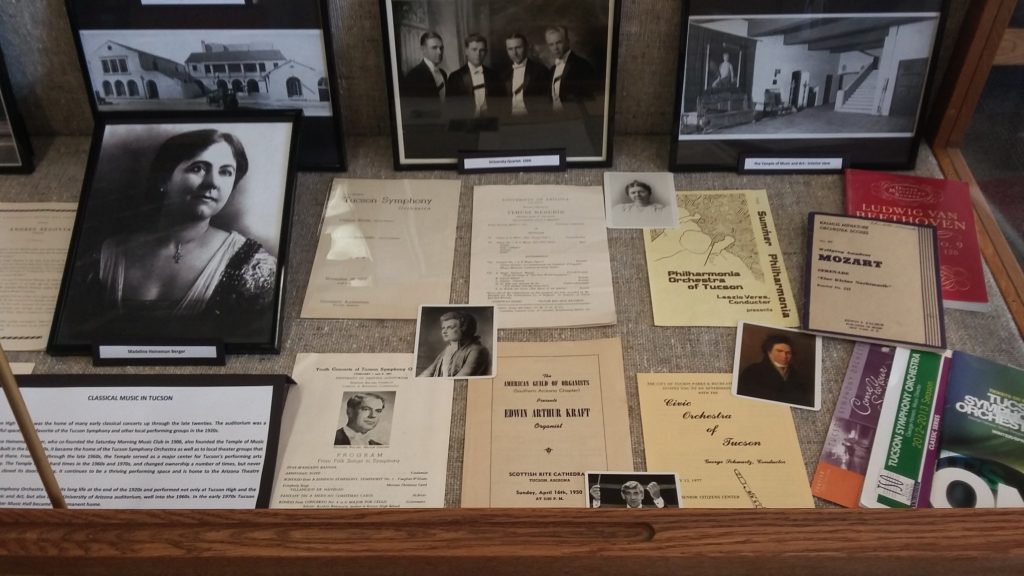
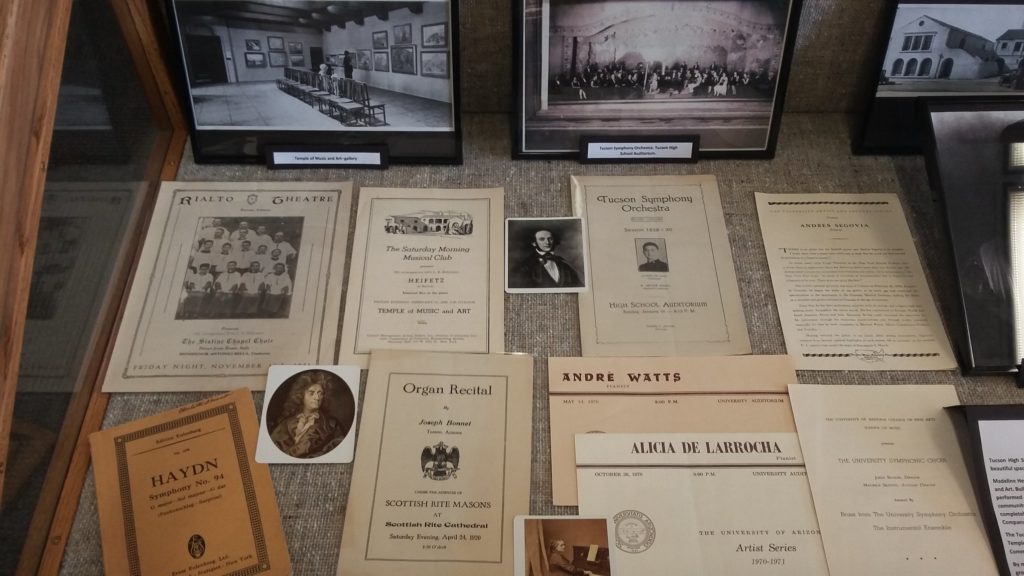
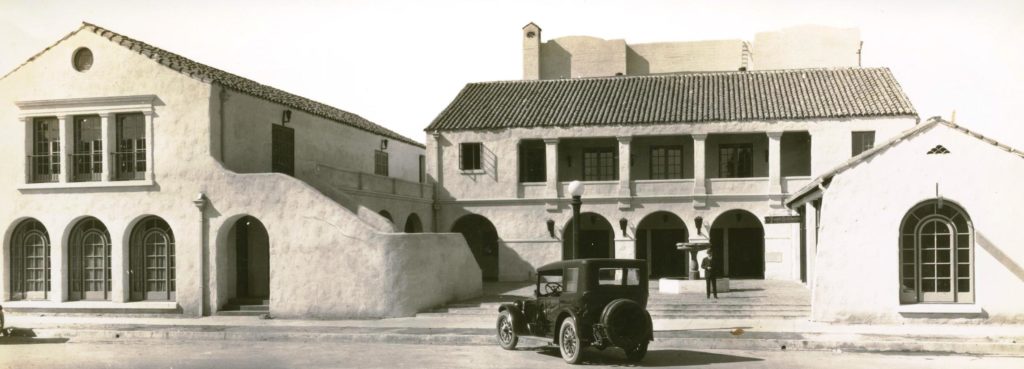
Tucson High School was the home of many early classical concerts up through the late twenties. The auditorium was a beautiful space, and a favorite of the Tucson Symphony and other local performing groups in the 1920s.
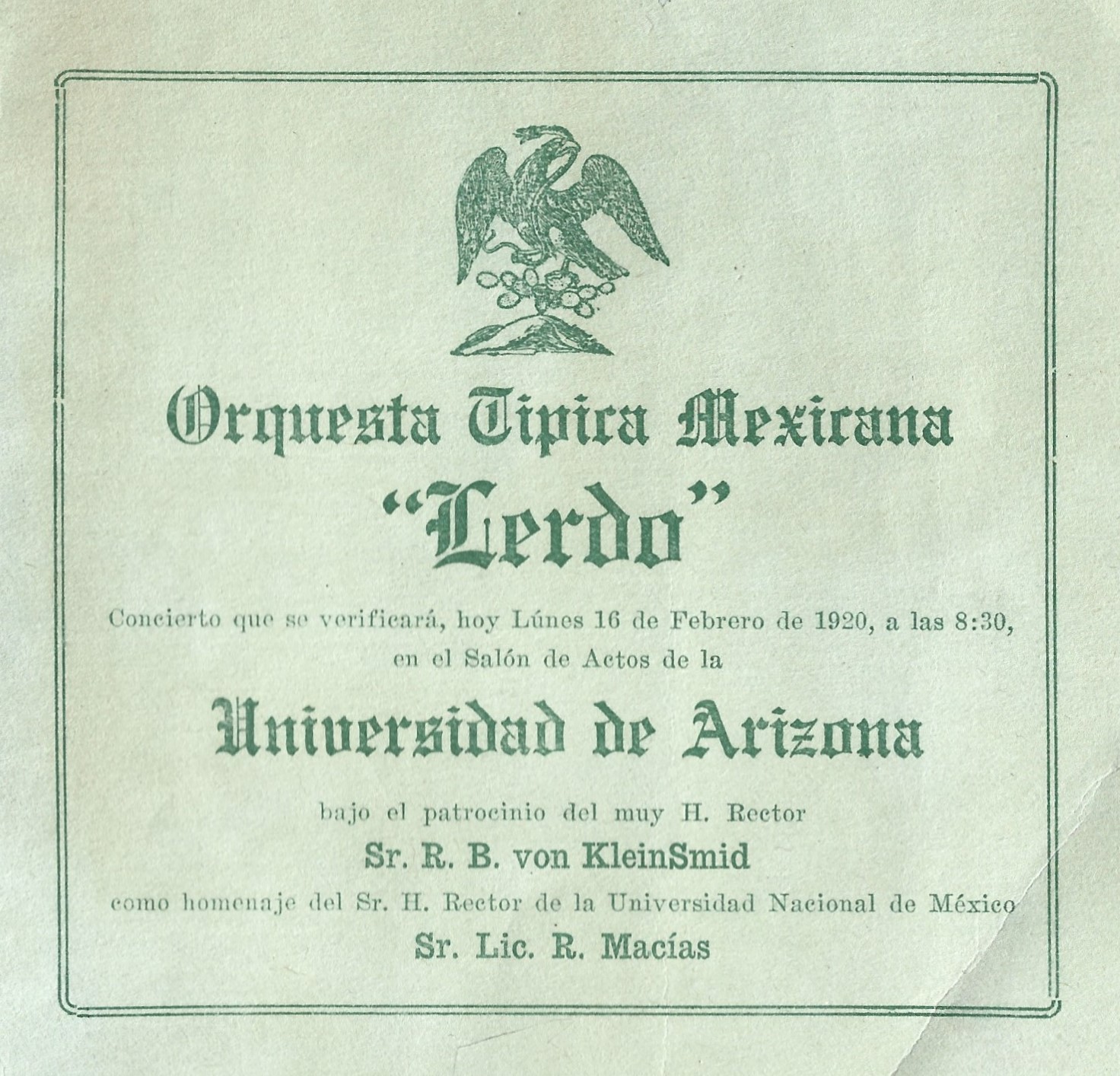
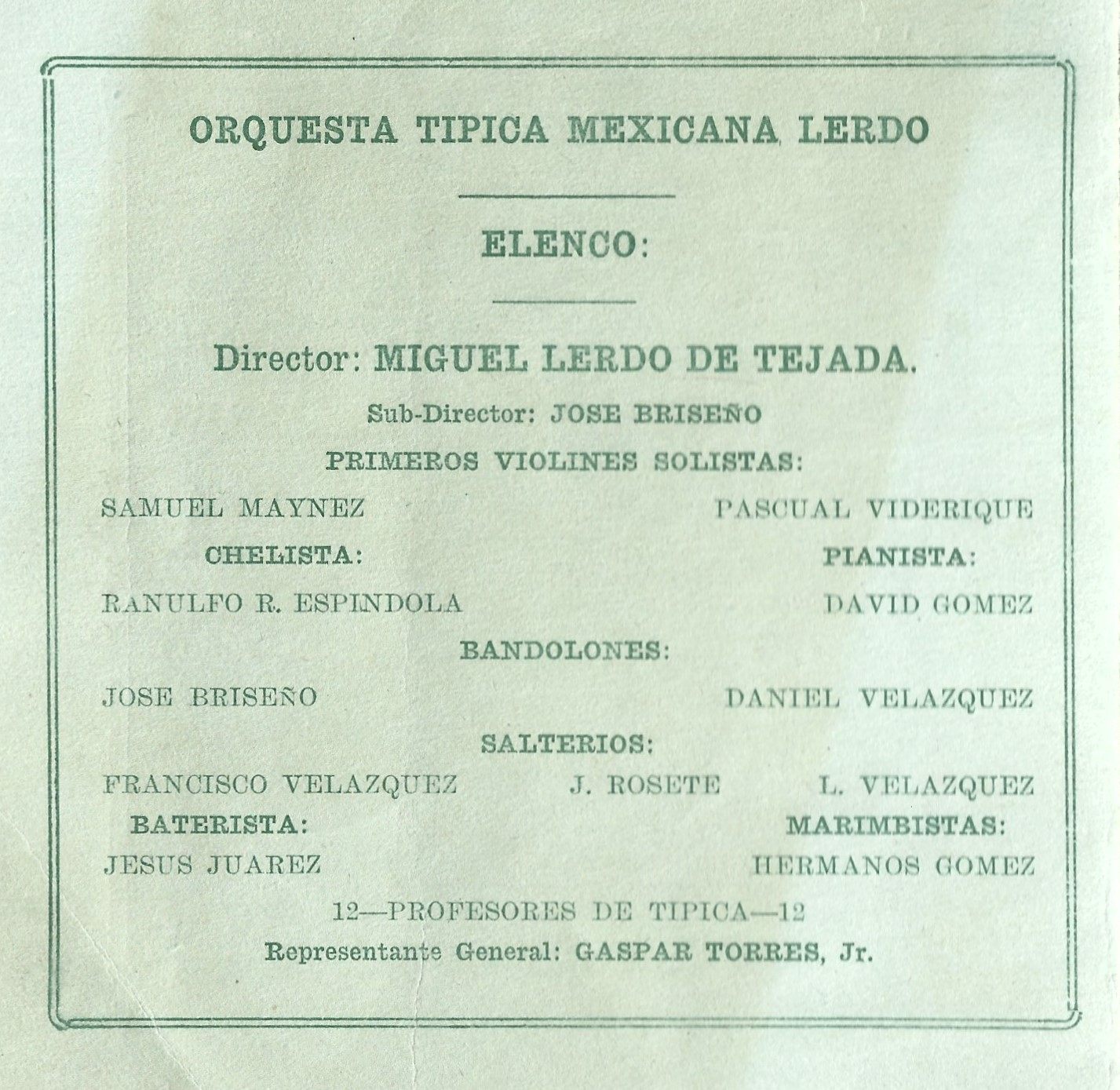
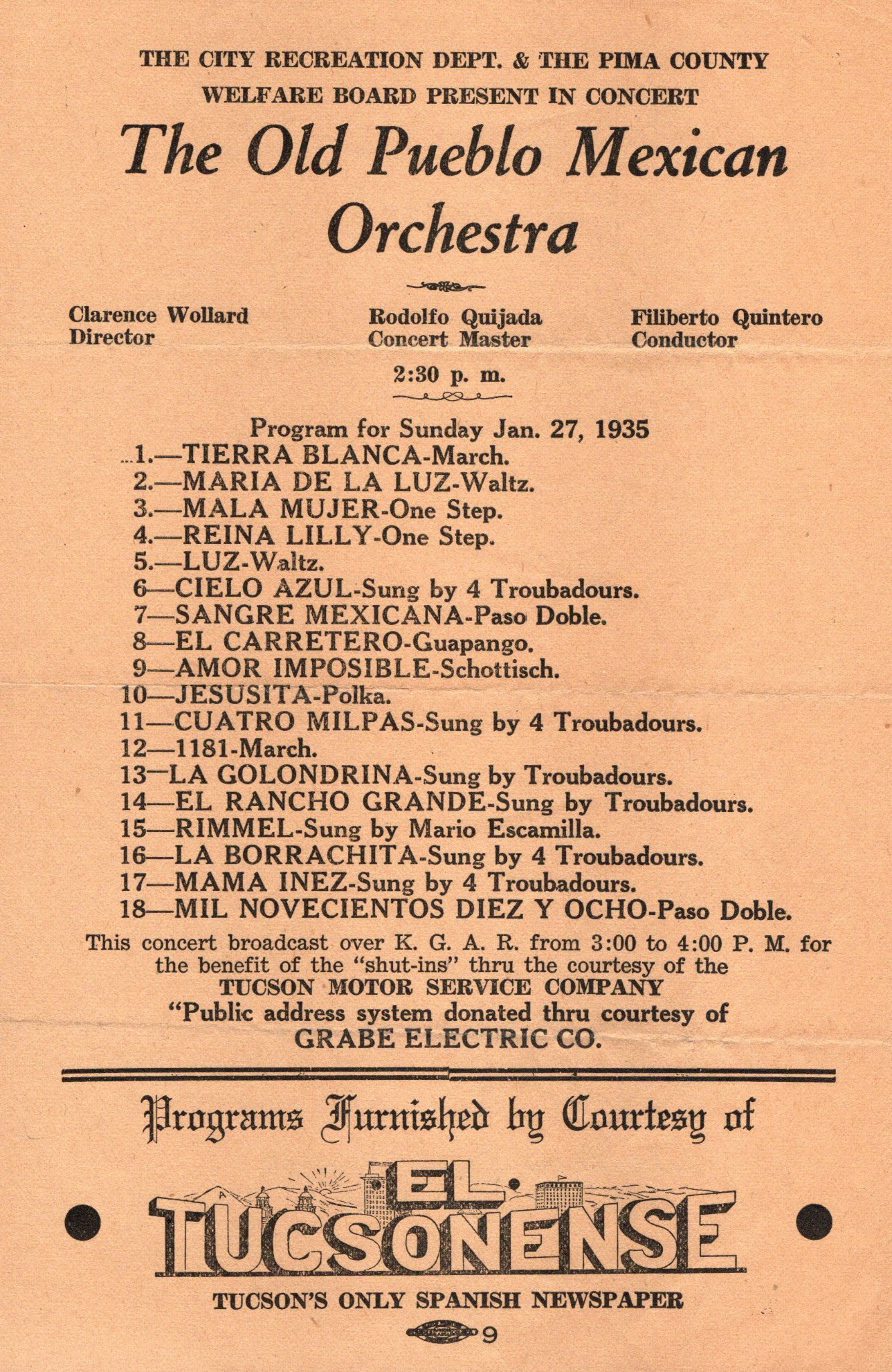
This concert program is from 1920 and features an orchestra from Mexico.
Madeline Heineman
Berger, who co-founded the Saturday Morning Music Club in 1906, also founded
the Temple of Music and Art. Built in the late 1920s, it became the home of the
Tucson Symphony Orchestra as well as to local theater groups that performed
there. From 1929 through the late 1960s, the Temple served as a major center
for Tucson’s performing arts community. The Temple fell on hard times in the
1960s and 1970s, and changed ownership a number of times, but never completely
closed its doors. Today, it continues to be a thriving performing space and is
home to the Arizona Theatre Company.
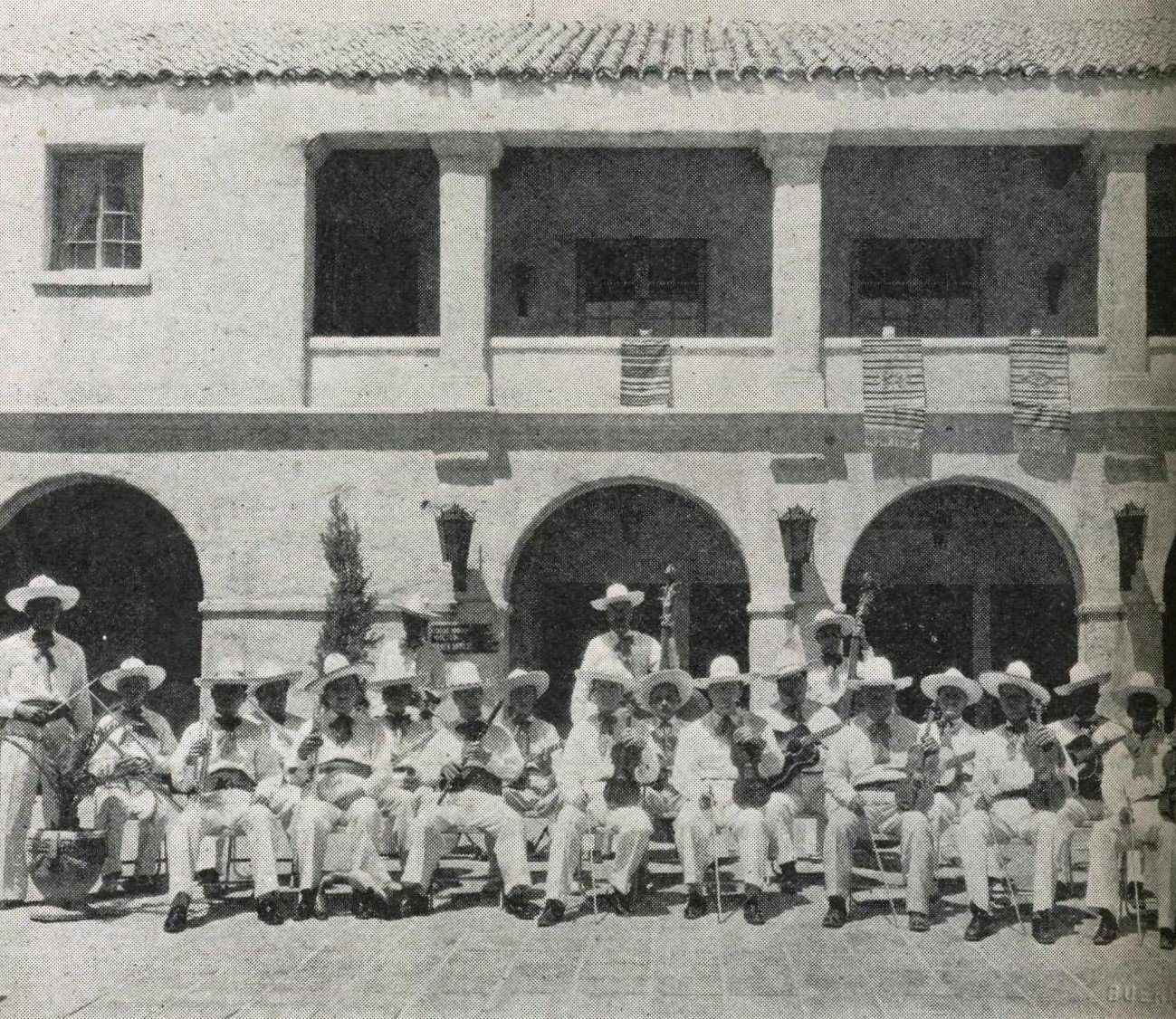
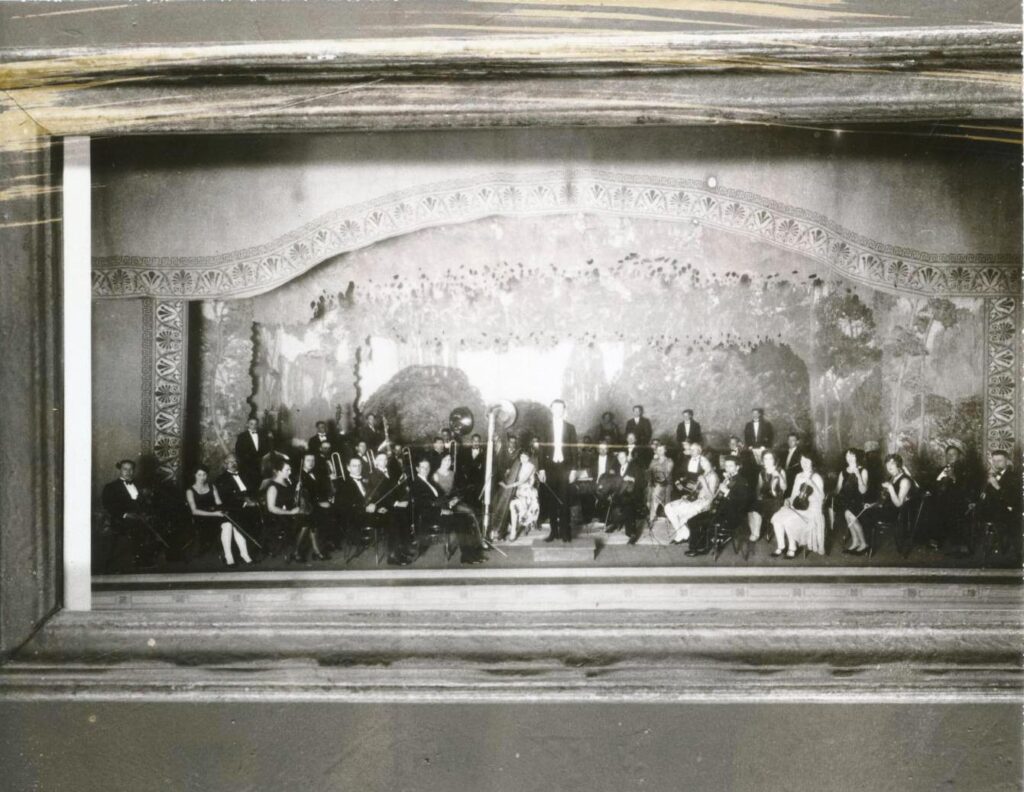
The Old Pueblo Mexican Orchestra, in front of the Temple of Music and Art
The Tucson Symphony Orchestra began its long life at the end of the 1920s and performed not only at Tucson High and the Temple of Music and Art, but also at the University of Arizona auditorium, well into the 1960s. In the early 1970s Tucson Community Center Music Hall became its permanent home.
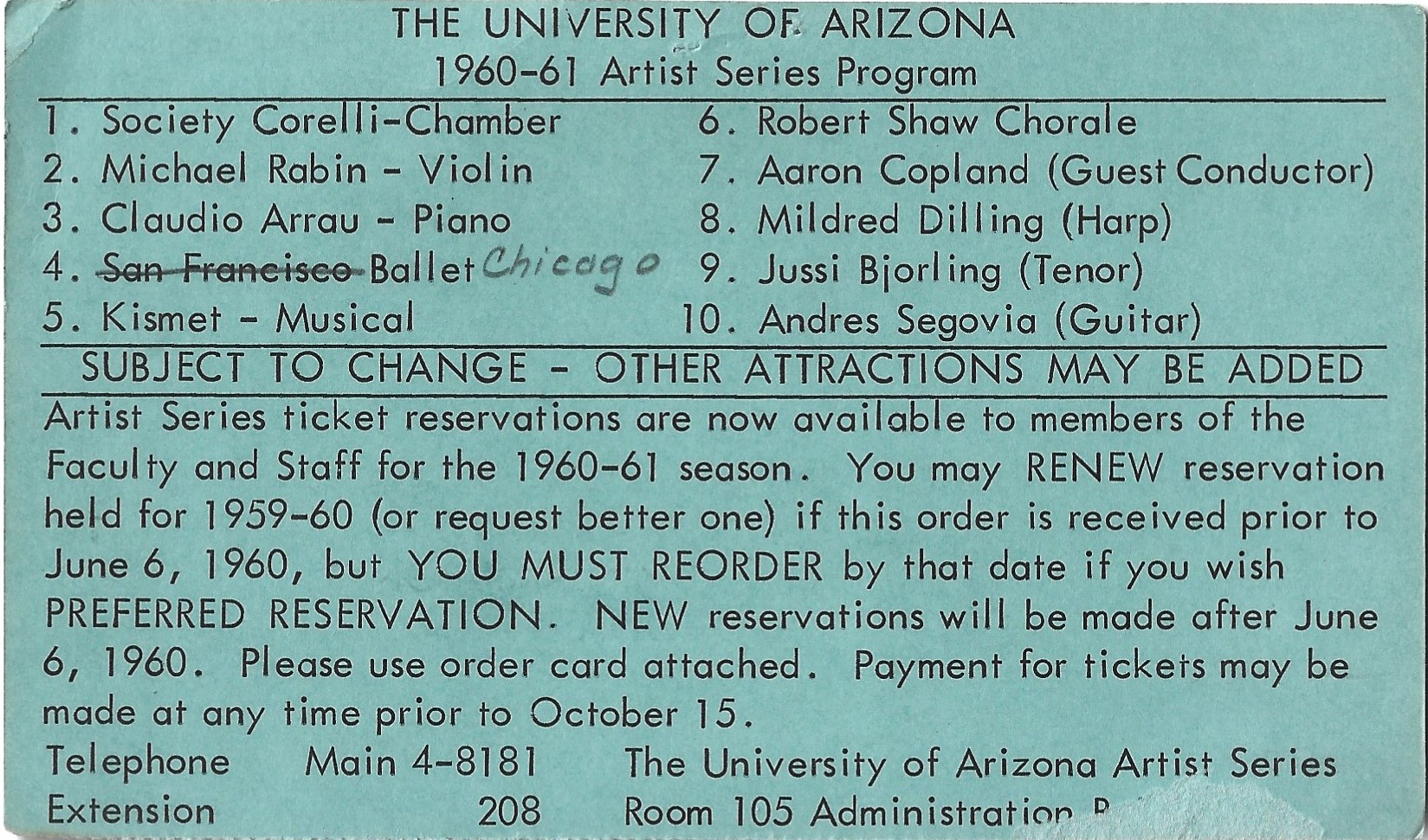
By mid-century, the University had a well-established annual visiting artist series, and hosted many talented musicians and groups, including dance troupes such as the Ballet Russe de Monte Carlo. The students and faculty of the School of Music also provided concerts for the public on a regular basis. Theater was taught both in the public schools as well as at the University level, and performances of plays, musicals and opera were held on a regular basis by both local and visiting performers.
This postcard is from my personal collection. What an amazing line-up of talent!
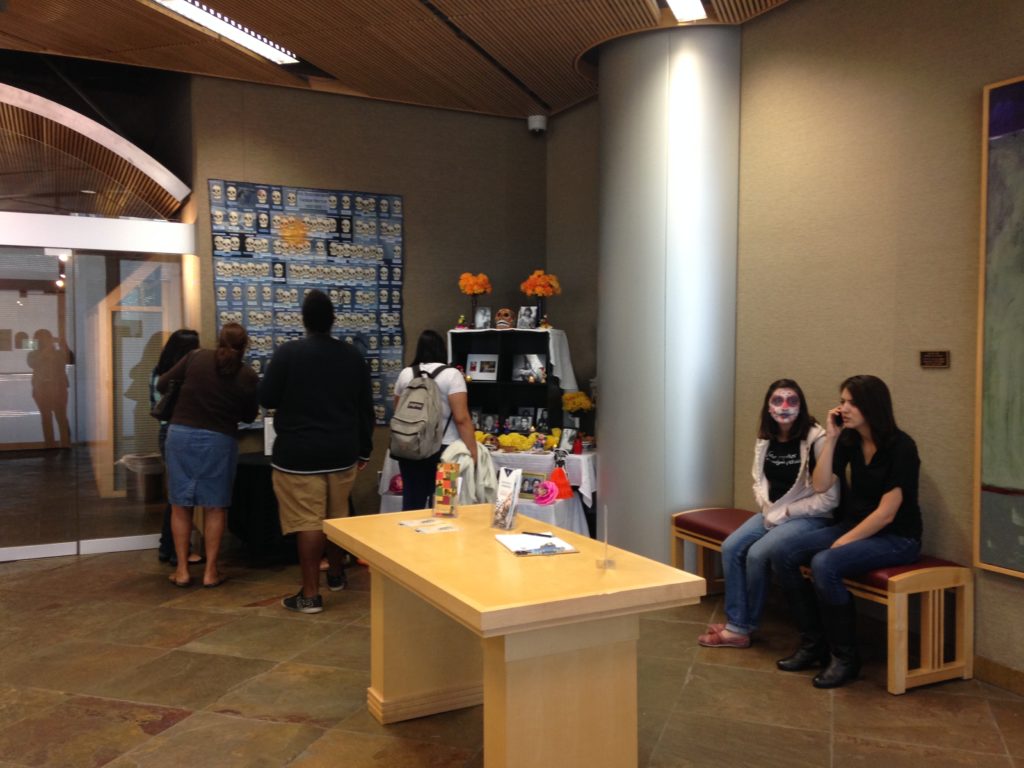
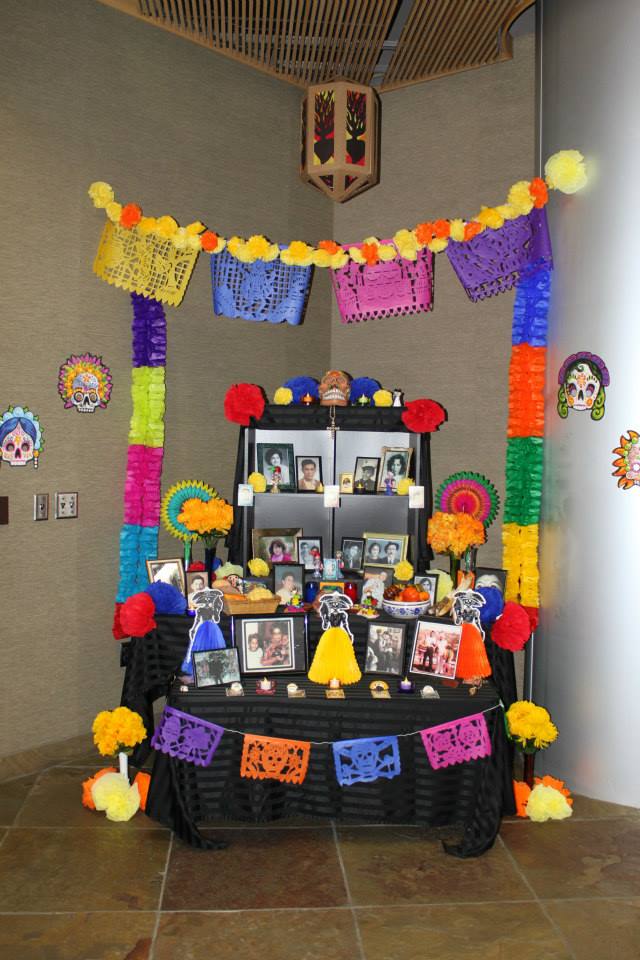
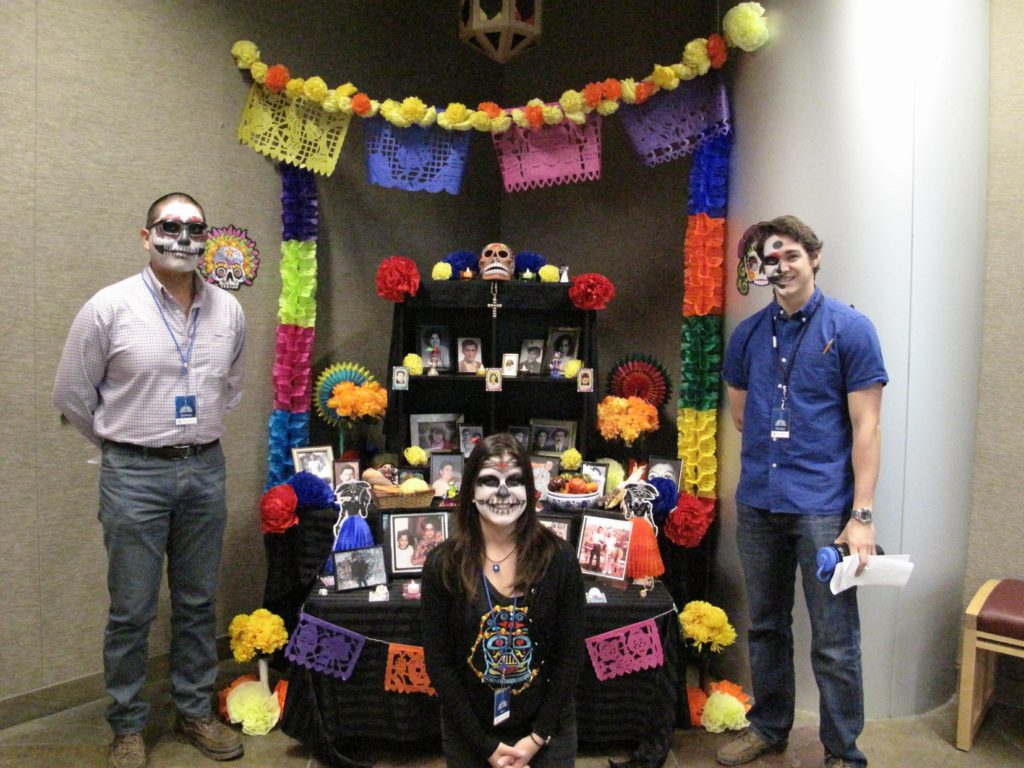
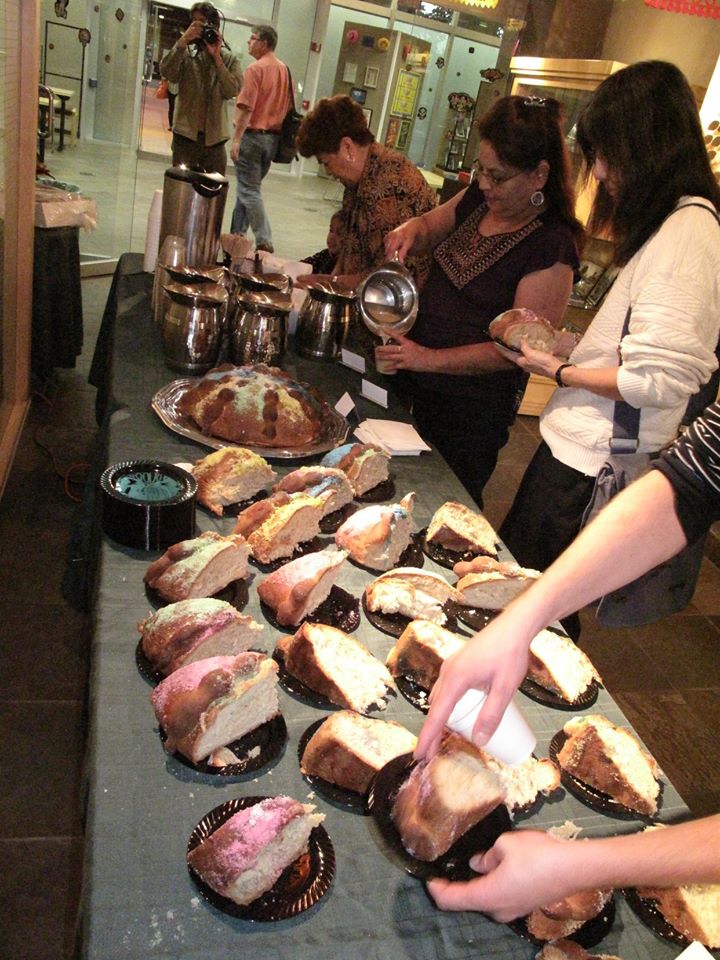
Over the past 25 years, the University of Arizona Library has hosted several El Dia De Los Muertos programs and altar installations. Dr. Alba Nora Martinez, a professor in the Spanish Department was an early promoter of this programming, and I worked with her at the Main Library to produce at least two different programs and installations in the late 1990s, when I was Assistant to the Dean for Staff Development, Recruitment and Diversity. Years later, after I became coordinator of exhibits and events at Special Collections, I decided to have the programming revived. In 2013, I worked with three graduate students, Amy Vaterlaus, Stephen Curley and George Apodaca on the altar below. We made paper flowers and I purchased other materials for inclusion in it. They also gave very informative presentations about various aspects of the Mexican Day of the Dead traditions in Mexico and the United States. Justin Enriquez and Juan Aguilar provided musical entertainment and there were Mexican beverages like horchata and jamaica as well as pan de muerto, provided by La Estrella Bakery. It was a fun and memorable event!
Promotional video for the El Dia De Los Muertos altar
2013 El Dia De Los Muertos altar created by Bob Diaz, Amy Vaterlaus, George Apodaca and Stephen Curley
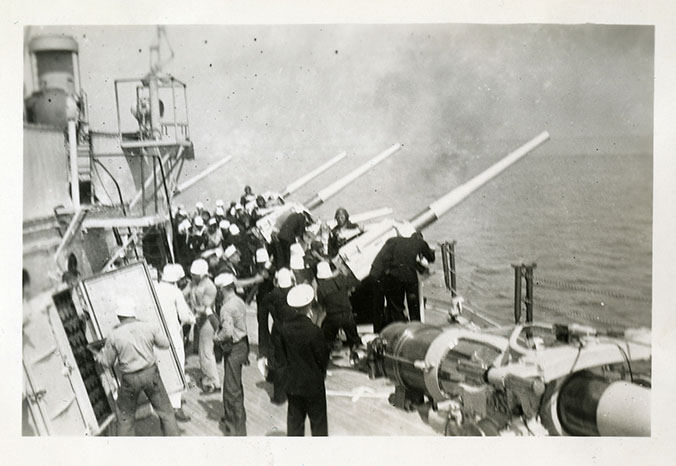
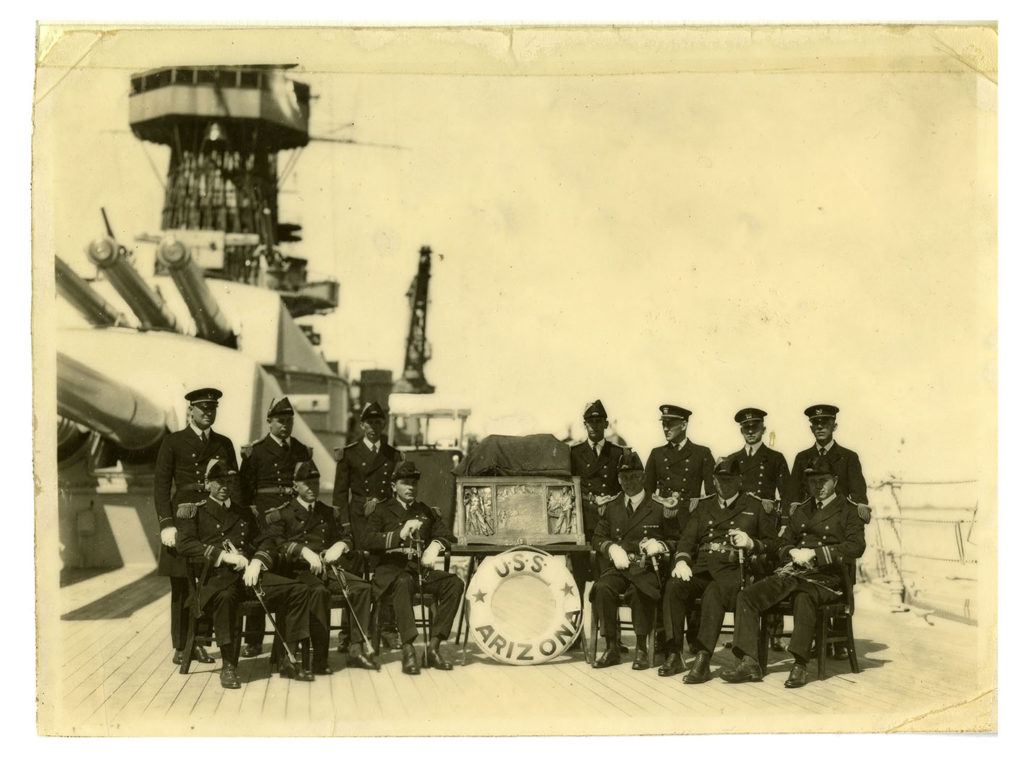
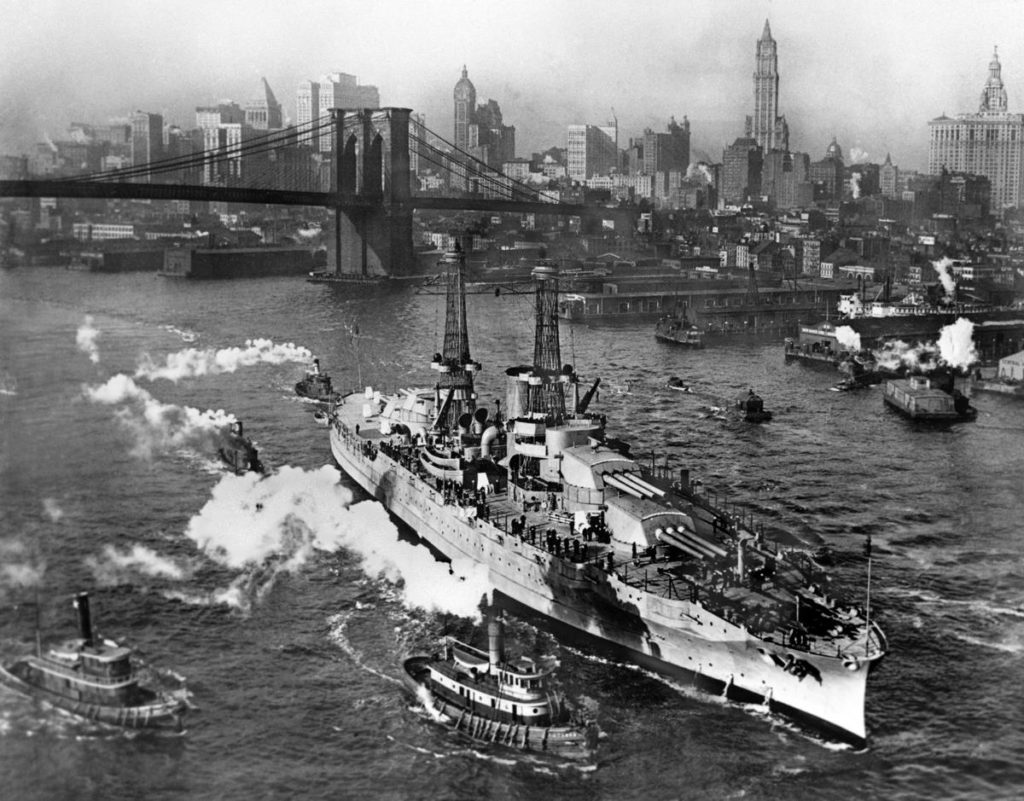
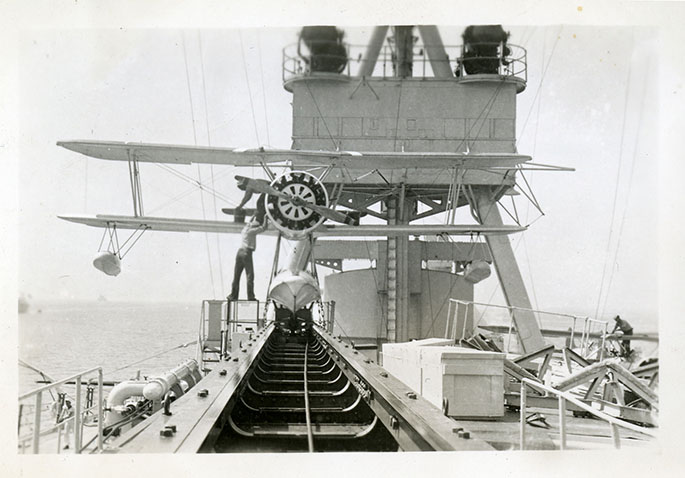
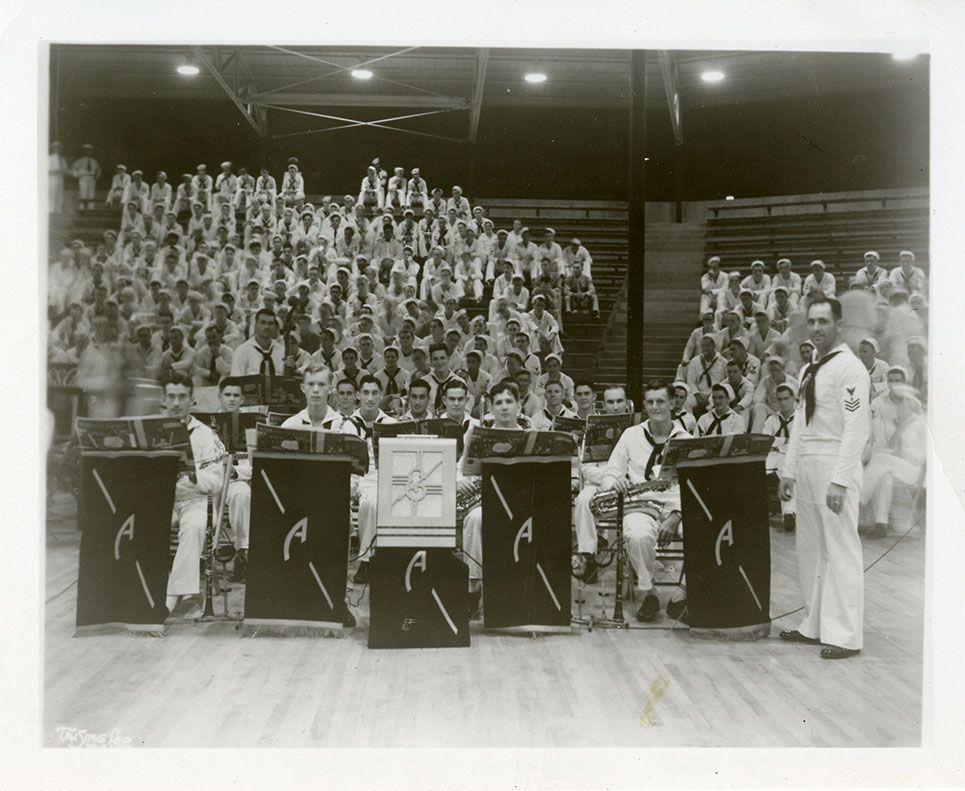
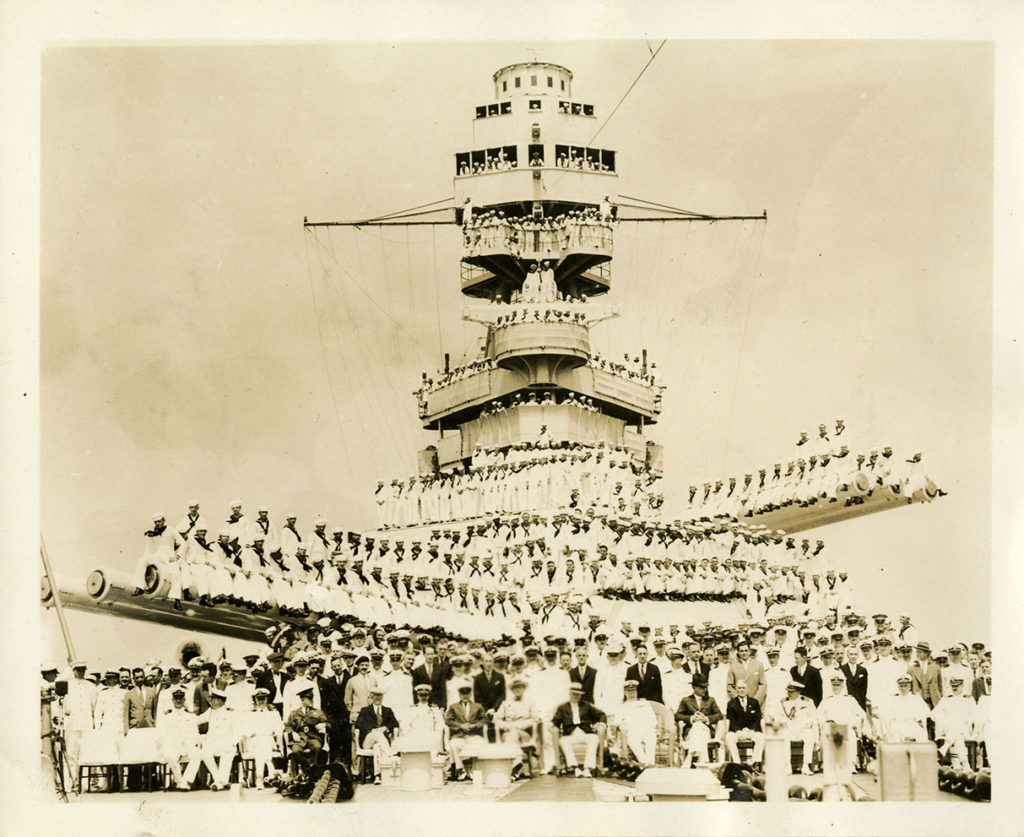
I co-curated this exhibition with another member of the Special Collections staff, who chose the materials for inclusion in the exhibition. My contributions included writing all of the captions and a narrative of the ship’s history (see the text below) as well as a timeline/chronology of key events in the life of the ship. All photos used here are from the U.S.S. Arizona collection, AZ 517, courtesy of Special Collections, The University of Arizona Libraries.
Promo from the UA News Service:
Special Collections, at the Main Library, has one of the largest collections of USS Arizona materials in the world. The collection will host a signature exhibition honoring the 1,177 USS Arizona crewmen and officers who gave their lives in the line of duty during the attack on Pearl Harbor.
The extensive USS Arizona collection, which has been created primarily from donations of individuals associated with the battleship during her 26-year life, is the source of content for the exhibition, “The Life and Legacy of the USS Arizona,” which opens on Aug. 29.
The exhibition will remain open through Dec. 23, featuring original photographs that document the USS Arizona’s personnel and operational history. Other materials on display will be papers, scrapbooks, documents and memorabilia, such as the ship’s newspaper, official Navy documents and crew correspondence. Also included will be oral histories with men who served on the ship and papers from the USS Arizona Reunion Association.
At the close of the 19th century, the military strength of
Japan and Great Britain was largely based on their sea power, and both led the
world in building great battleships. Domination of the seas meant domination of
commerce and trade. The United States,
not to be outdone, dedicated itself into building even greater, mightier war
ships, and in the early 1900s several were built. It took an act of Congress to
authorize the construction of such ships. Upon completion of construction, the
USS Arizona, the 41st battleship built by the US Navy, was said, by
the New York Times, to be “the
world’s biggest and most powerful, both offensively and defensively, super
dreadnought ever constructed.” The ship was built at a cost of 15
million dollars, and was a sister ship to the USS Pennsylvania.
There was speculation in the news media about the name of the new ship.
Some believed it would be named after the home state of the Secretary of the
Navy, Josephus Daniels, who hailed from North Carolina. However, as fate would
have it, the keel for the new ship was laid on March 14, 1914 and it was
christened the USS Arizona on June 19, 1915, in honor of its entry as the 48th
state into the union on February 14, 1912.
Esther Ross, an Arizona native and the daughter of a prominent Prescott businessman, was chosen by Governor George P. Hunt as the ship’s sponsor. It was her job to “christen” the ship, and an estimated 75,000 people crowded the New York Navy Yard in Brooklyn witness Miss Ross fling two bottles, one filled with champagne and one with water, at the prow of the ship, proclaiming, “I christen thee Arizona!”
1916-1920
The USS Arizona was commissioned on October 17, 1916 by Rear Admiral
Nathaniel R. Usher. Its first captain was John D. McDonald. Following her “shakedown
cruise”, or maiden voyage, on November 10, 1916, she joined the Atlantic fleet,
and by the end of 1916 had sailed to Cuba and had fired both her 5-inch and 14-inch
guns for the first time. Unfortunately, the ship had experienced some mechanical
problems with one of its engines, and as a result had to return to New York for
repairs, which took about four months.
The ship remained stateside during World War I because oil, which wasn’t
readily available in Europe during the war, was the ship’s main fuel source,
while other ships in the US fleet ran on coal, which was plentiful in places
like England.
Shortly after the war ended, the ship participated in escorting President Woodrow Wilson to Europe for the Paris Peace talks in December 1918. It was then sent to Turkey in 1919 at the beginning of the Greco-Turkish War to represent US interests, which included the oil companies owned by men such as John D. Rockefeller. It then sailed back to New York where it remained until the following year. In January, 1920, the ship sailed to the Caribbean once again, with visits to Cuba, Barbados and Panama.
1921-1925
In early January of 1921, the USS Arizona joined the rest of the Atlantic
fleet for a trek to Cuba to participate in a series of tactical exercises in
the Caribbean. Having its sister ships in proximity offered the crew of the USS
Arizona the opportunity to compete with the crews of other ships in a variety
of sports, including football, rowing, boxing and baseball. Several of these
athletic teams from USS Arizona won awards and trophies.
The fleet transited the Panama
Canal on January 17, 1921, and made its way to Peru, crossing the Equator for
the first time on January 24. This was the USS Arizona’s first opportunity to
both transit the Canal and to cross the Equator. Crossing the Equator,
according to naval tradition, meant it was time for the “crossing the line” ceremonies, a series of mostly fun-filled activities
and practical jokes intended to initiate new recruits into the naval
brotherhood.
By mid-1921, a number of changes took place, including a change in senior
leadership. The USS Arizona was now under the command of Rear Admiral Josiah S.
McKean and tasked to join the Pacific fleet, with its new home base at San
Pedro, a port adjacent to Long Beach, Ca.
In 1923, President Warren Harding reviewed the ship while anchored in Seattle. Upon his death the following month, the USS Arizona half-masted her colors and joined other ships in firing a salute to the deceased President.
1925-1930
The latter part of the 1920s found the USS Arizona with a busy schedule. It was continually moving, often engaged with its sister battleships in a variety of military exercises. From its home base in Southern California, it sailed up and down the West Coast, from San Pedro to San Francisco to Seattle and back numerous times. It sailed to Hawaii twice, to Panama and the Caribbean, and up to New York and back. Its final trip of the 1920s was through the Panama Canal up to the Norfolk Navy Yard where it was dry docked in late May, 1929, and underwent major renovations. The cage masts were replaced with newer tripod-type masts, and newer five inch guns replaced her old three-inch anti-aircraft battery. Outer plating was added to protect against underwater mines and torpedos. Work on the ship was finally completed in December of 1930.
1931-1935
Remodeling of the ship was completed by 1931 and the ship is re-commissioned. It sails the East Coast, and escorts President Herbert Hoover on a cruise to the West Indies and back to Maine. It also makes trips to Cuba and the Panama Canal on its way back to the West coast. By early 1932 it makes its way to Hawaii with other battle ships for tactical exercises, but soon returns to the West Coast. This would be the normal routine for the ship for the remainder of the 1930s, although there were a few out of the ordinary adventures, including the occurrence of an earthquake in Long Beach in 1933. The crew of the ship assisted with the relief efforts that followed. Another was the use of the ship as the main prop for the movie, “Here Comes the Navy” starring James Cagney in 1934.
1936-1940
The next five years (1936-1940) finds the ship spending time sailing up and down the Pacific coast, as well as making a few long distance trips to Hawaii, Panama and the South Seas. It crossed the Equator two more times, offering the ship’s men the opportunity to engage in more rounds of “crossing the line” ceremonies. It also participated with the rest of the US Fleet in various military exercises throughout this time period. Tragically, on July 9, 1937, one of the USS Arizona’s planes, an O3U-3 biplane, was caught by a sudden wind that plunged it five hundred feet, into Puget Sound, leaving one man, Seaman First Class William H. Meyers, dead. By late September, 1940. the ship returned to the West Coast and spent the last days of 1940 in the Puget Sound region.
December 7, 1941
Pearl Harbor. The fate of the crew on the USS Arizona took the worst turn
imaginable on December 7, 1941. Early in the morning, the Japanese attacked the
US fleet docked in the harbor, and virtually destroyed the USS Arizona with a
direct hit which split the ship in half and caused it to sink, killing most of
its men. In all over 1,100 lives were lost. Over 900 of these men are still
buried on the ship. As then President Franklin D. Roosevelt proclaimed shortly
after the bombing, Dec. 7 1941 “would be
a day that would live in infamy”.
There are numerous first person accounts of the day Pearl Harbor was attacked.
To learn more about these personal testimonies, please see the computer kiosk included
as part of this exhibit. It includes two recorded oral histories.
The book, “The USS Arizona: the ship, the men, the Pearl Harbor attack, and the symbol that aroused America,” by Joy Waldron Jasper, James P. Delgado and Jim Adams. New York: Truman Talley, 2001, is also available in the Main Library and Special Collections. (Call #: D 767.92 J37 2001)
Daily Life on the USS Arizona
The USS Arizona was home to over 1500 crew members at any given time.
There was a clearly defined chain of command and very little, if any, informal
interaction between officers and the non-commissioned and enlisted ranks. Those
in the enlisted ranks were assigned the most laborious jobs, such as holystoning
the deck, (sanding the deck with a brick attached to a pole) polishing brass
and peeling chipped paint.
While daily life on the USS Arizona was very regimented, the sailors
still found time for engaging in various activities, including a variety of
sports such as boxing, rowing, baseball and football. Over the years the teams representing the USS
Arizona in competition with teams from other ships won a number of trophies and
awards.
The ship housed a printing operation, and published a weekly newsletter, as well as programs for events and other activities. The ship had its own band, and concerts were given whenever possible. Parties, and special dinners occurred all too rarely, but were memorable events. The ship also had a library, and a canteen, and church services were held every Sunday.
William Watkins
William Allen Watkins was born in Jackson County, West Virginia and served aboard the USS Arizona from 1931-1938. He remained with the US Navy for 23 years, and retired in 1953. His duties while on the USS Arizona included that of turret crew member, where he kept the turret #1 clean and ready for firing. He was active in sports, and participated on the ship’s tennis, baseball and rowing teams throughout the 30s. He donated over 400 USS Arizona related items to the University of Arizona, including photographs, albums, books, certificates, banners, a kerchief and various handmade souvenirs such as handmade photo frames and ashtrays, made from shell casings and scrap metal.
Carlos Cecil
Carlos Cecil enlisted in the US Navy in 1917. He was a Carpenter’s Mate 1st class, and served on board the USS Arizona from 1919 to 1921, whereupon he received an honorable discharge. He was born on October 15, 1899 in St. Louis Missouri, and passed away at the age of 70 on July 8, 1970. His last will and testament stipulated that his collection of Navy memorabilia be donated to the University of Arizona. These included photographs, news articles and programs for various events. They were presented to the University by Cecil’s widow at the 18th Annual Fleet Reserve Associations SS Arizona Memorial Service, held at the Student Union building on December 5, 1971.
Crew-Kin Association
The USS Arizona Crew-Kin, an Arizona non-profit organization, was founded in 1979 shortly after the fourth annual reunion of the USS Arizona Reunion Association. The organization’s objectives were to: maintain membership of the immediate relatives of persons who served on board the USS Arizona; to perpetuate and memorialize the Battleship USS Arizona and the officers and men who served on board; and to conduct reunions with such members. Meetings were held annually and reunions were to take place on the weekend nearest the 7th of December at the University of Arizona’s Student Union building. The organization’s bylaws included descriptions and duties for various committees, including the newsletter committee, a historian committee, and a publicity committee.
Pearl Harbor Memorial
Efforts to create a memorial at Pearl Harbor date back to 1950, when
Admiral Arthur W. Radford, commander of the Pacific Fleet, attached a flag pole
to the main mast of the USS Arizona and began a tradition of hoisting and lowering
the flag. A temporary memorial was created that same year above the remaining
portion of the deckhouse. As early as
1951, Radford requested funding to create a national memorial, but it took over
10 years to see his vision realized.
The USS Arizona Memorial was built in 1962, and is the resting place of
1,102 of the 1,177 sailors and Marines killed on the USS Arizona during the
Japanese attack on Pearl Harbor. The memorial was designed by Honolulu
architect, Alfred Preis.
The National Park Service currently manages a visitor’s center, where historical information about the ship is provided. It also runs a shuttle to and from the memorial, and provides other general visitor services. 2 million people visit the site annually. The sunken remains of the USS Arizona were declared a National Historic Landmark on May 5, 1989.
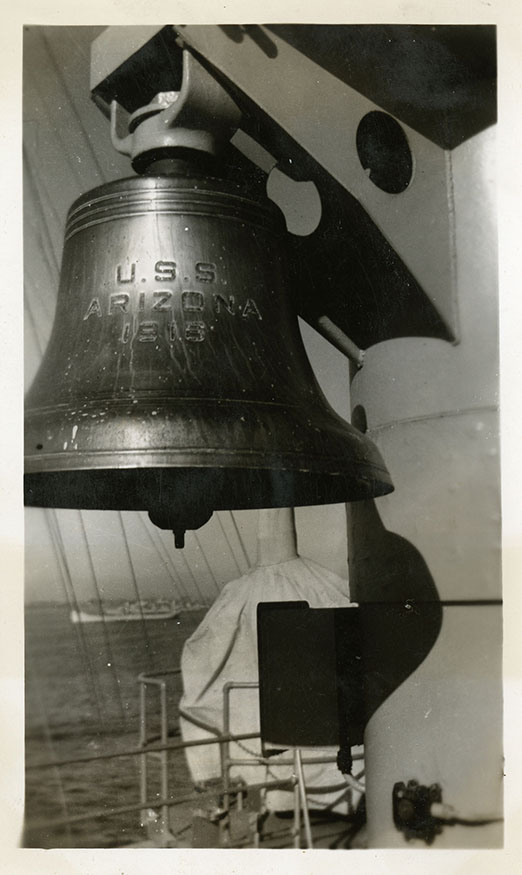
The Ship’s Bell
In June, 1944, while in search of scrap material in the Bremerton Navy Yard, Wilbur Bowers, (a University of Arizona graduate, class of 1927), discovered one of the ship’s bells from the USS Arizona, enclosed in a crate and in line to be melted down. Bowers worked immediately to save the bell, contacting the senior Naval command. In August of the same year, Arizona Governor Sidney P. Osborn wrote to the Honorable James V. Forrestal, Secretary of the Navy, requesting that once the war ended, that the ship’s bell be turned over to the State of Arizona, to be hung at the University of Arizona’s Old Main building. The bell reached the campus in 1946, and when the new Memorial Student Union building was constructed in the early 1950s, was installed in a tower built specifically for it. While the Memorial Student Union has since been re-modeled, the bell remains a stalwart fixture in the structure, and is rung on special occasions. It is also rung seven times every third Wednesday of the month to honor the achievements of UA students, faculty and staff.
Crossing the Line Ceremonies
The Crossing the Line ceremony is an initiation rite in the US Navy that
has origins going back hundreds of years. It commemorates a sailor’s first crossing of the
Equator. The two-day event is a ritual in which previously inducted crew
members called Trusty Shellbacks, are
organized into a “Court of Neptune” to induct “slimy pollywogs” into the “mysteries
of the deep”. The pollywogs undergo a series of personal initiation
ordeals. After a day and half of such activities, a pollywog receives a
certificate indicating his new status as a shellback.
The USS Arizona crossed the Equator three times, first on January 24, 1921, then again on May 19, 1936 and a final time in July, 1940. On each occasion, the crossing of the line ceremony was held. The USS Arizona collection includes a variety of photographs and memorabilia commemorating each crossing.
Promotional material by Marty Taylor, University of Arizona Libraries
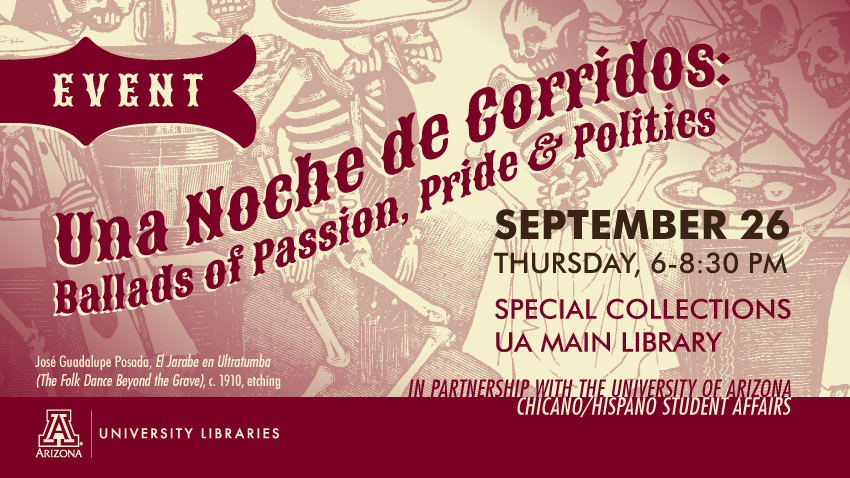
This was the first in a series of 3 corridos programs held between 2013 and 2016. Several performers shared their talents, including Mr. Bobby Benton, Mr. Jim Griffith, Justin Enriquez and Juan Aguilar of Los Cuatro Vientos, and an unknown gentlemen who shared some of his own original compositions. It was a night to remember. See below to listen to the audio of the program.
Many thanks to Aengus Anderson for shooting this beautiful promotional video for Una Noche De Corridos, featuring Justin Enriquez and Juan Aguilar.
From the UA News Service:
“Celebrate Hispanic Heritage Month at the UA Special Collections as local musicians, including UA students, perform ballads of passion, pride and politics, also known as corridos. Throughout the oral history and tradition of Mexico, the corrido has been a source of information, education and celebration about events, people or places.
The corrido was particularly important during the Mexican War of Independence and the Mexican Revolution when news of events, heroes and tragedies were shared through the genre.
Often times sung by a single performer playing a guitar, corridos vary in length, style and rhythm. As a staple of Mexican musical life, corridos are also celebrated in an annual contest held during the Tucson Meet Yourself festival”.
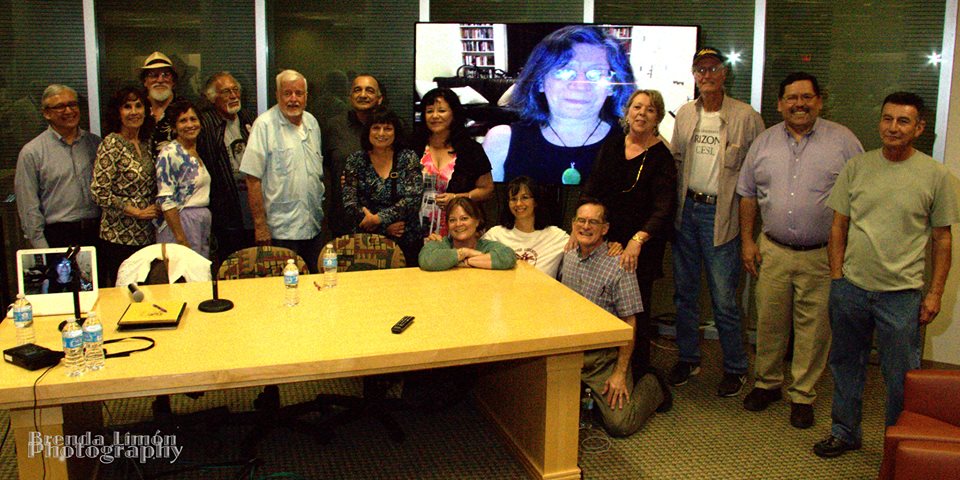
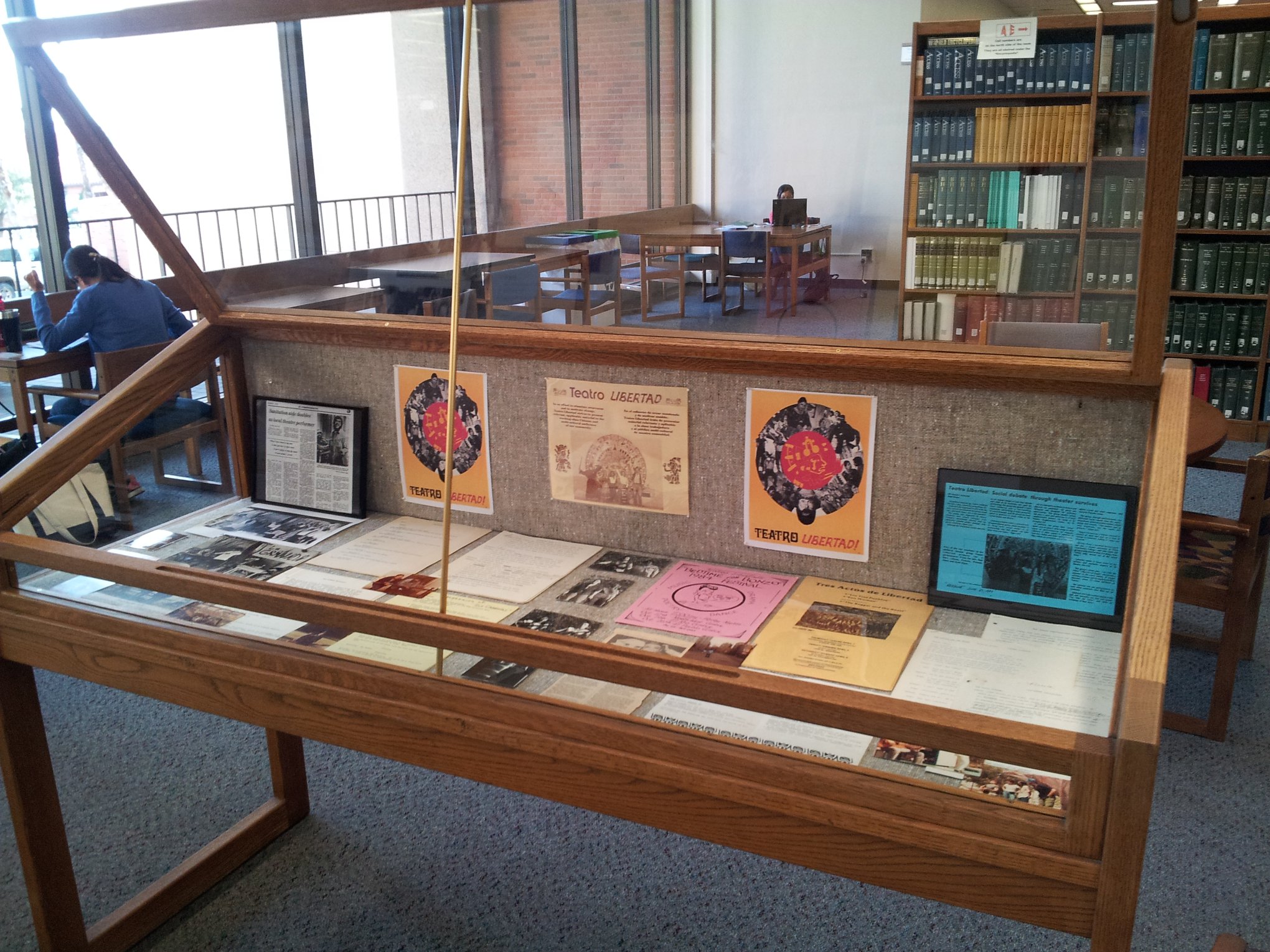
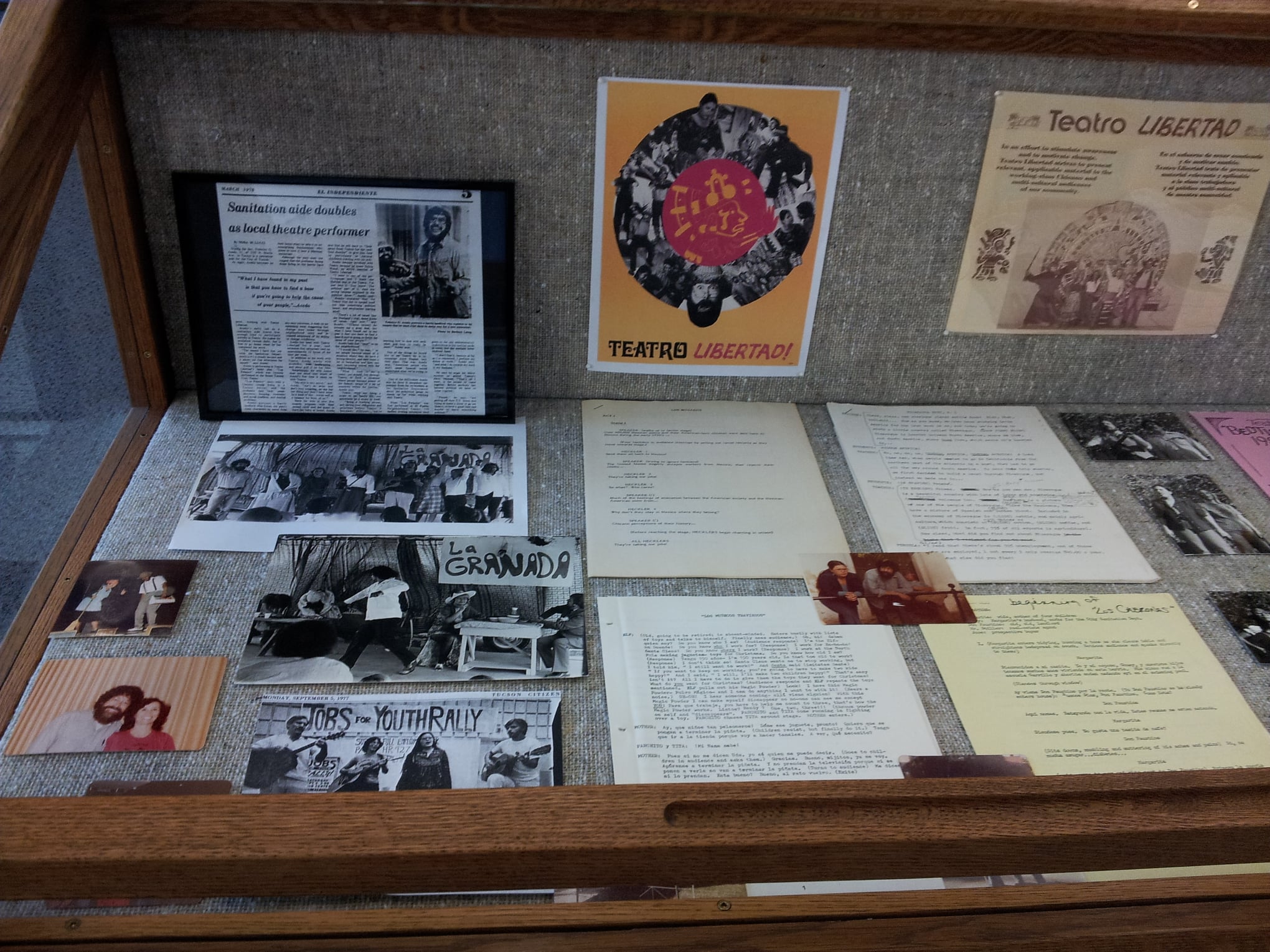
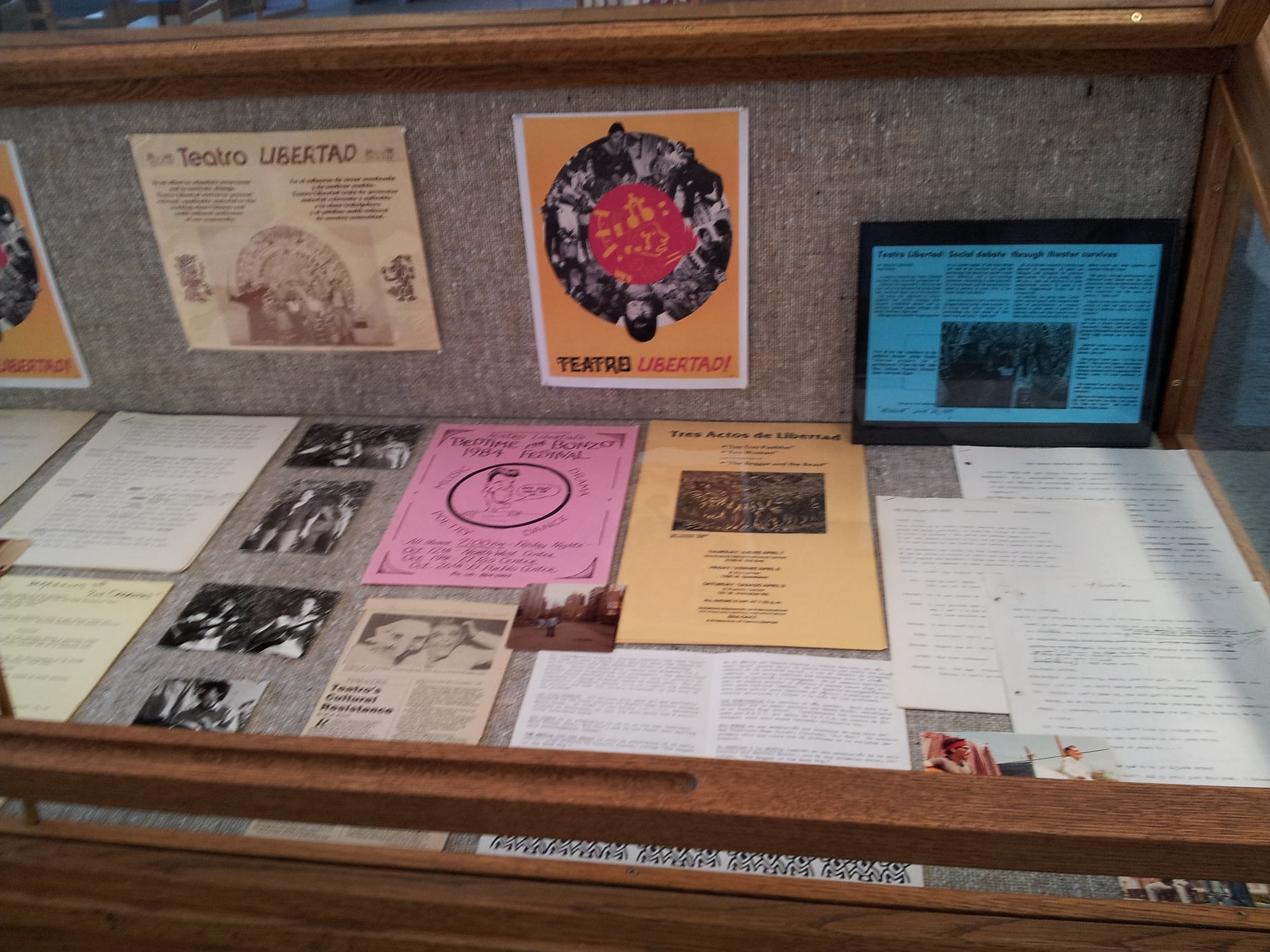
I was a member of Teatro Libertad from 1983 to 1985. Putting this exhibit and program together was one of the highlights of my career in librarianship. It took many months of planning to bring over 25 former members together, but I managed to pull it off. Teresa Jones flew in from Seattle, Pamela Calla joined us live from New York via Skype, and other members just seemed to pop out of the woodwork. The reunion was a memorable occasion, and putting the exhibit together was a blast.
Promotional material designed by Marty Taylor
From the UA News Service: “A local street theater company from the 1970s, Teatro Libertad, is featured in a new exhibit on display from Sept. 3, 2013 – Jan. 12, 2014 at the UA Main Library. Formed in 1975 by seven local actors and musicians – Scott Egan, Barclay Goldsmith, Teresa Jones, Arturo Martinez, Pancho Medina, Arnold Palacios, and Sylviana Wood – the group was influenced by the tradition of teatro Chicano, the Chicano movement of the 60s and 70s, and with inspiration from El Teatro Campesino – a group formed by Luis Valdez in the early 1960s.
Teatro Libertad tackled real life, everyday issues as experienced by the Chicano community in Tucson and the Southwest. Using satire, comedy, and music, the group wrote and performed their plays with the goal of getting people to think about issues such as unemployment, union organization, race, and cultural identity. Among the plays written and performed by Teatro Libertad were “Los Peregrinos,” “El Vacil de 76,” “Los Pelados,” “La Jefita,” “Semilla Sembrada” and “La Vida Del Cobre.”
Teatro Libertad’s first full length play, Los Peregrinos
The bilingual, multicultural group relied on simple stage sets and props – old boxes, masks, and signs – when performing in local neighborhood centers throughout Tucson and in Mexico City, San Diego, Santa Barbara and New York. The group also performed – sometimes from a flatbed truck – in Arizona’s mining towns for striking miners or farm workers.
More than 25 performers participated in the all-volunteer Teatro Libertad during the group’s 14-year run. Additional members included Pamela Bartholomew, Olivia Beauford, Bob Diaz, Lilliana Gambarte, Pernela Jones, Jean McClelland, Juan Villegas and a host of others.
Semilla Sembrada was written and performed in the early 1980s
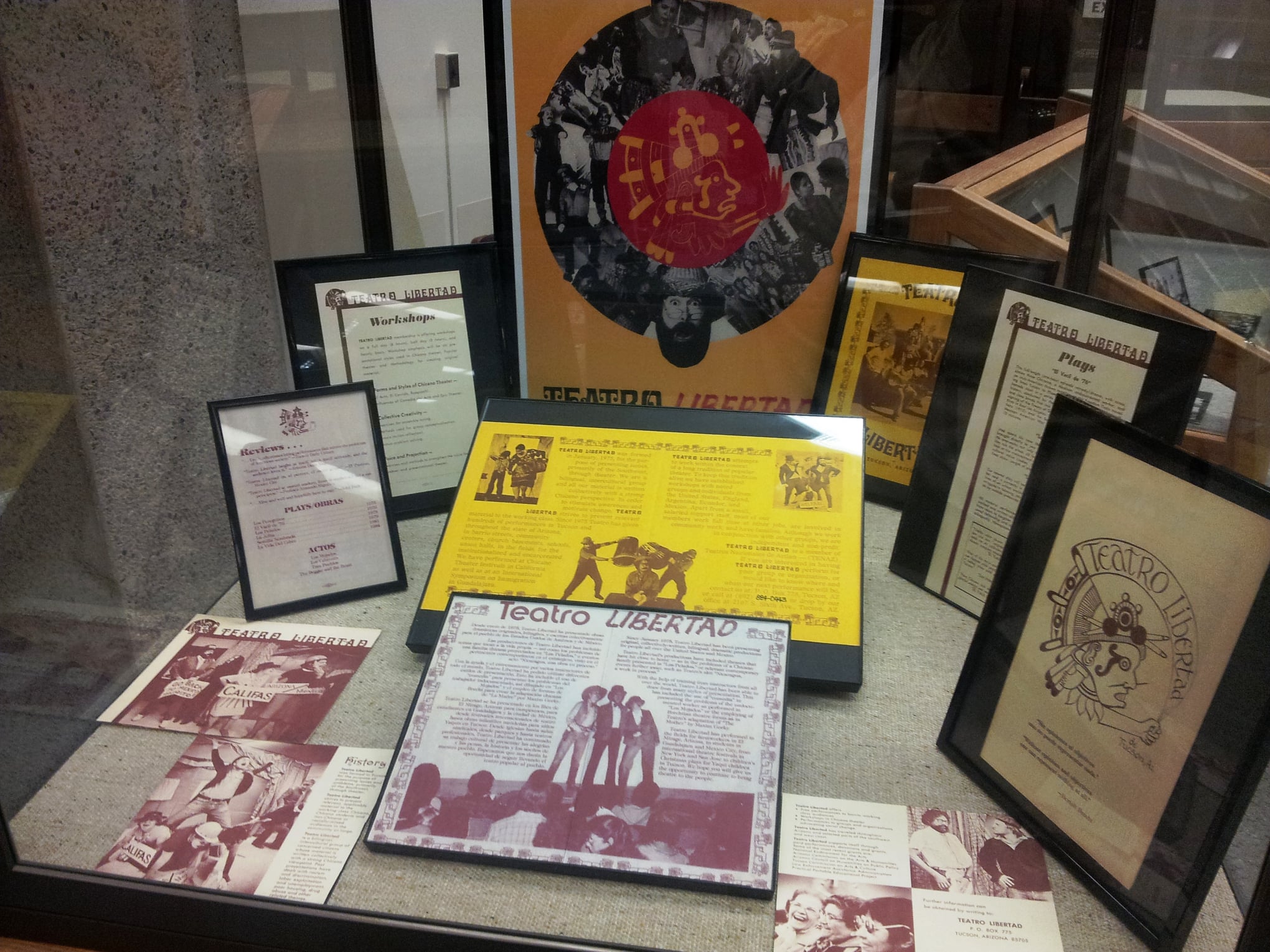
The exhibit, “Teatro Libertad and Chicano Theatre in Tucson,” is a retrospective review of the societal and cultural context in which the group performed. Original scripts, promotional materials, photographs, newspaper articles, reviews, and other original documents recreate the work of Teatro Libertad. Bob Diaz, associate librarian in Special Collections, curated the exhibit, with material on loan from former members. A permanent archive of Teatro Libertad will also be established for the benefit of future academic research and scholarship.
A selection of plays and other materials on Chicano theater
Promotional material by Marty Taylor, University of Arizona Libraries
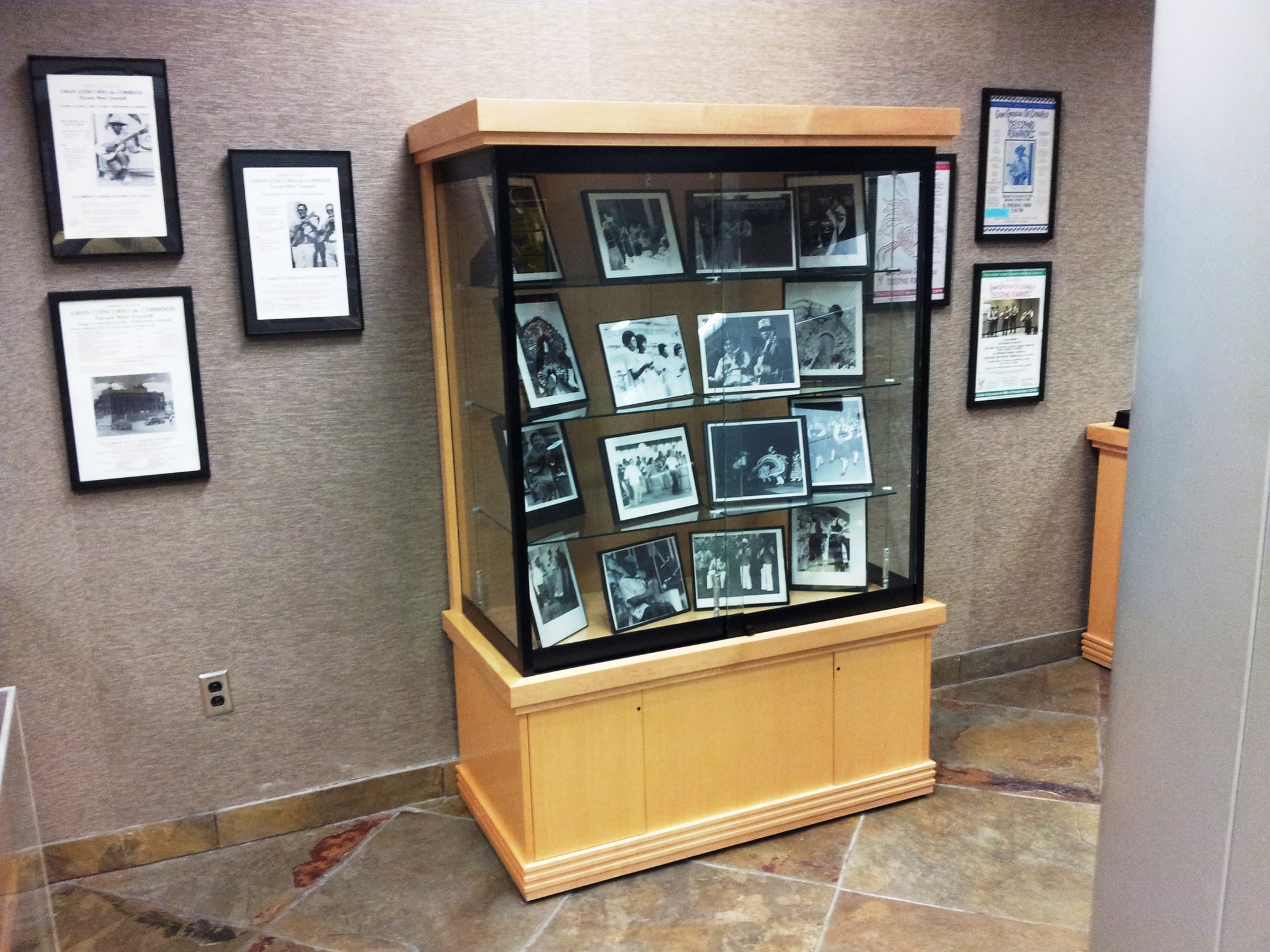
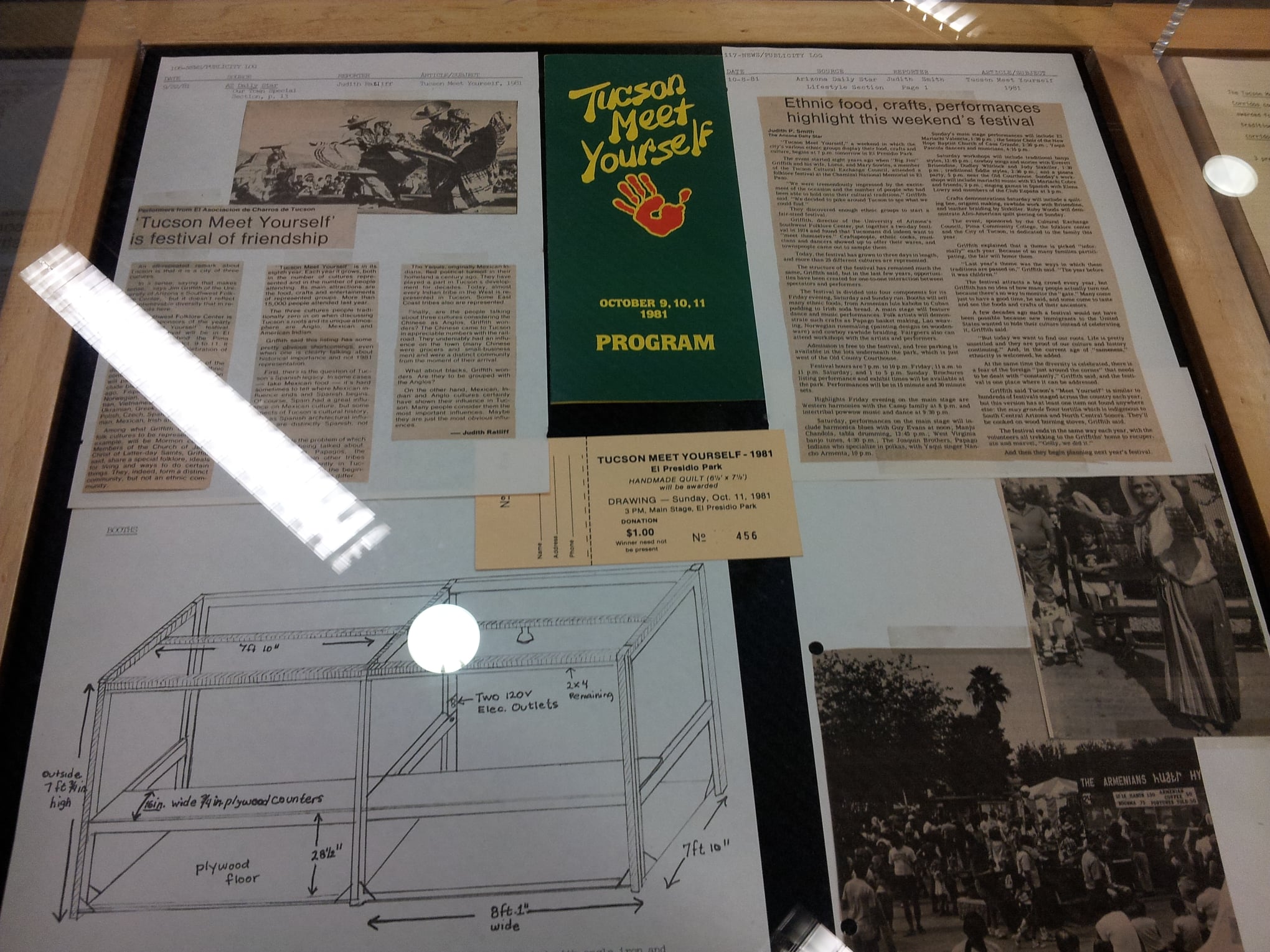
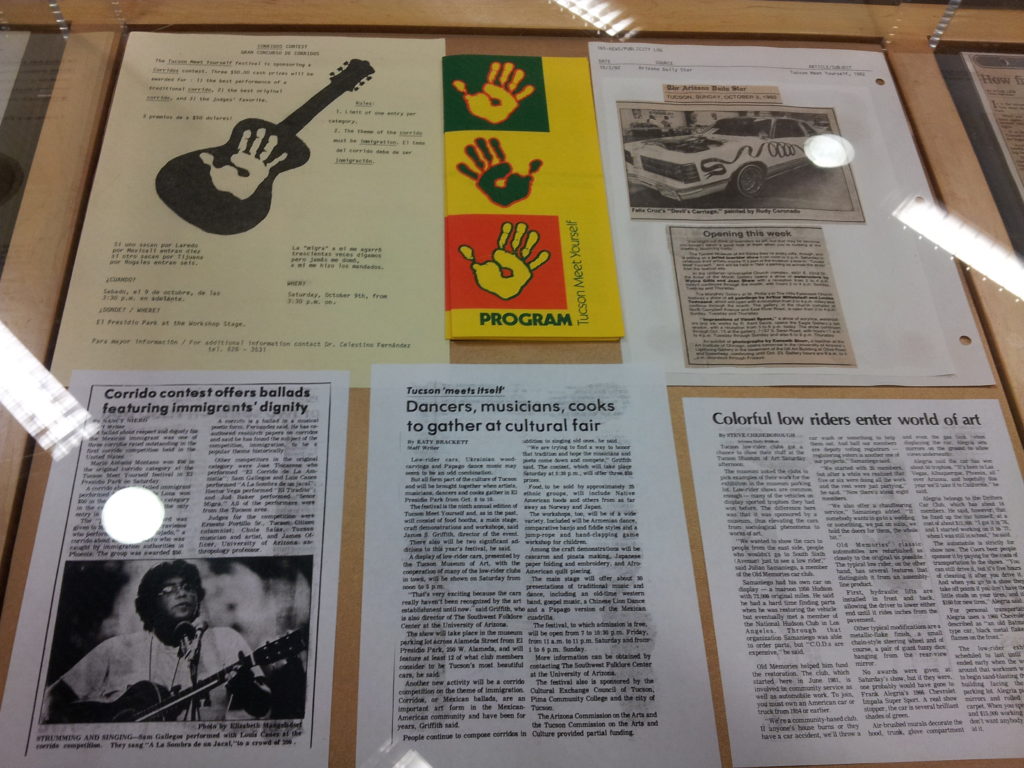
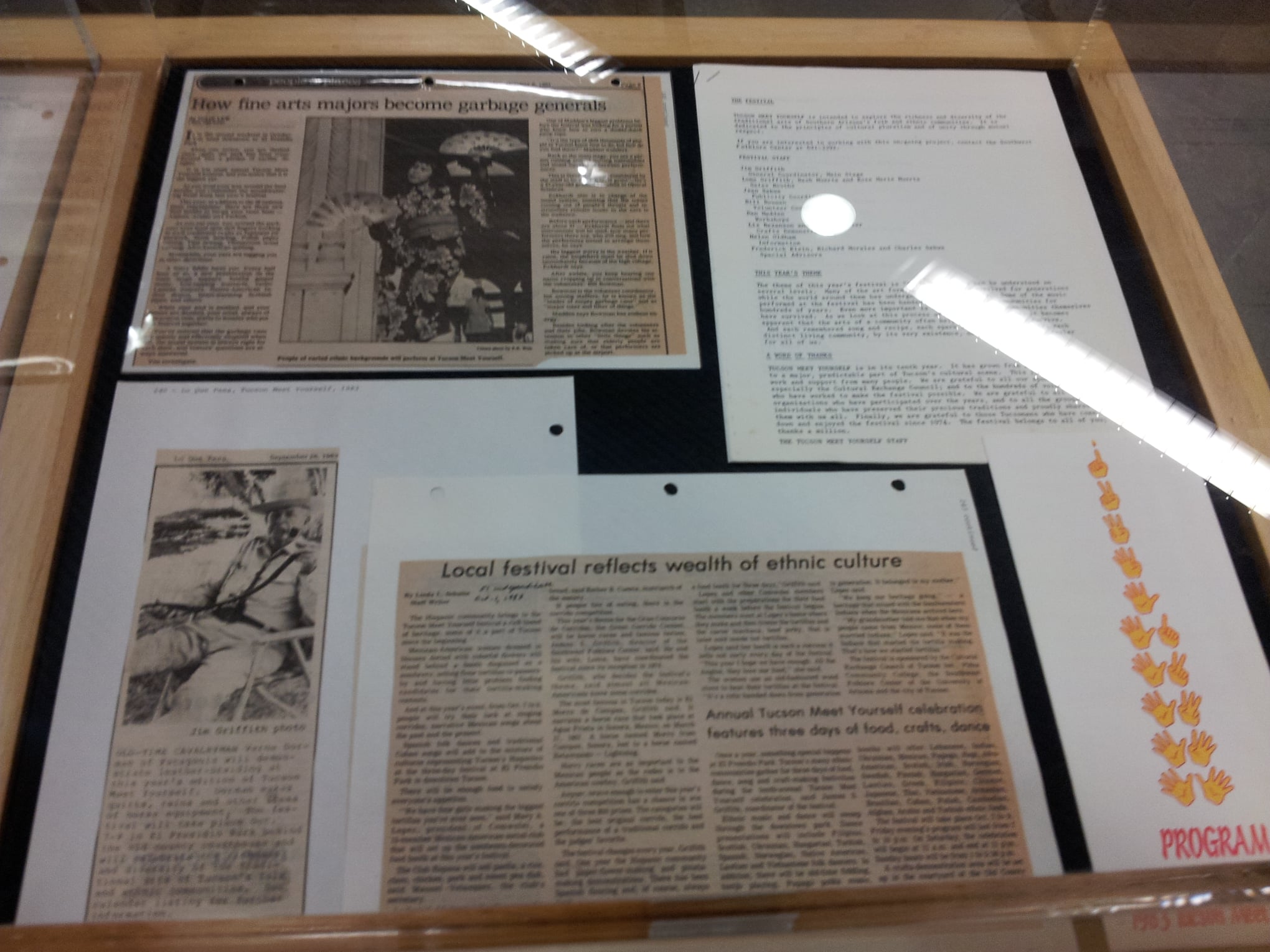
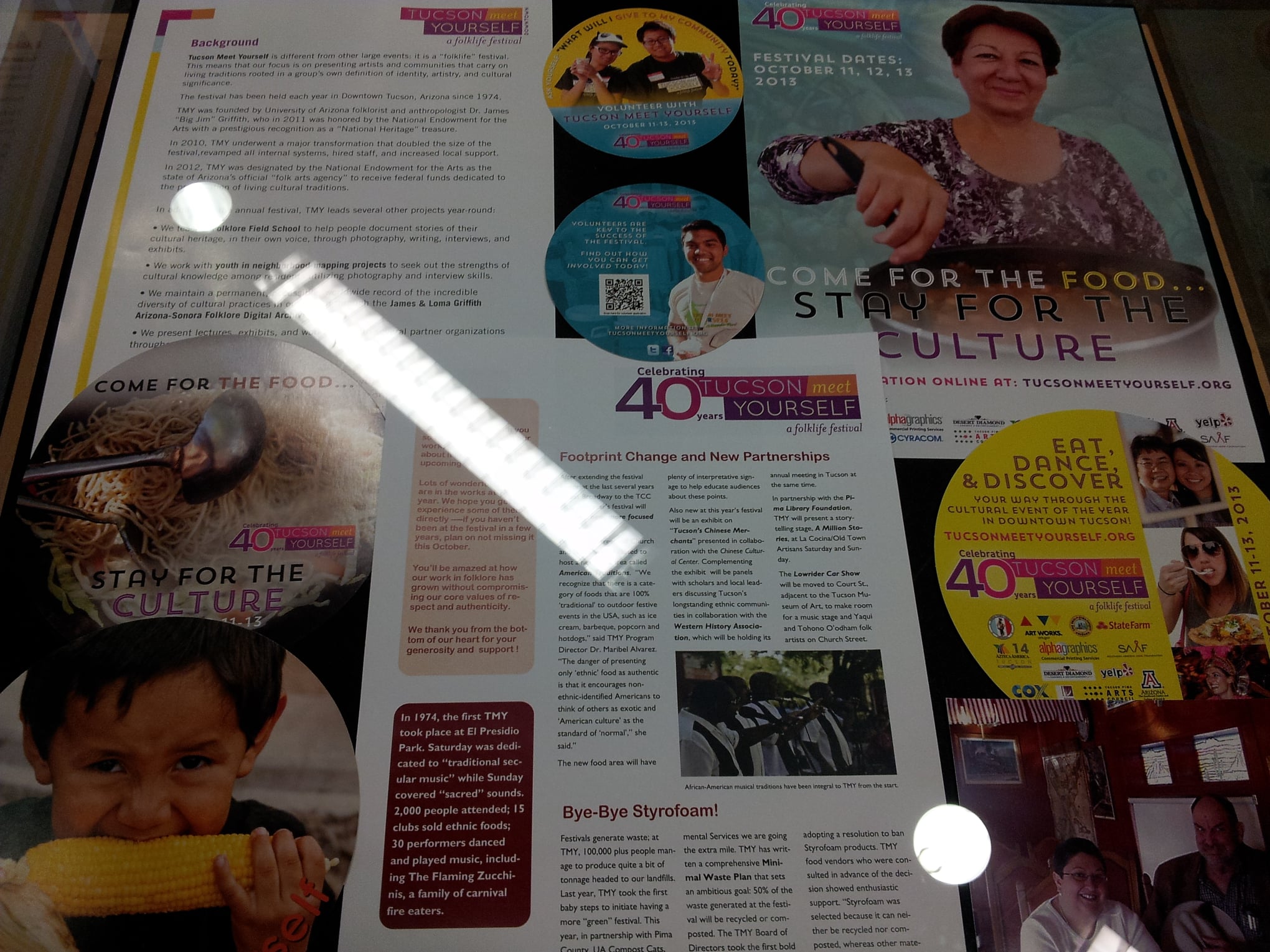
In the mid-2000s I was a board member of Tucson Meet Yourself. Knowing that the 40th anniversary of the event was coming up, I decided to curate an exhibit on the event. Special Collections is home to the archives of the Southwest Folkore Center, which sponsored Tucson Meet Yourself. There was a wealth of materials to choose from, and it was great fun putting this exhibition together.
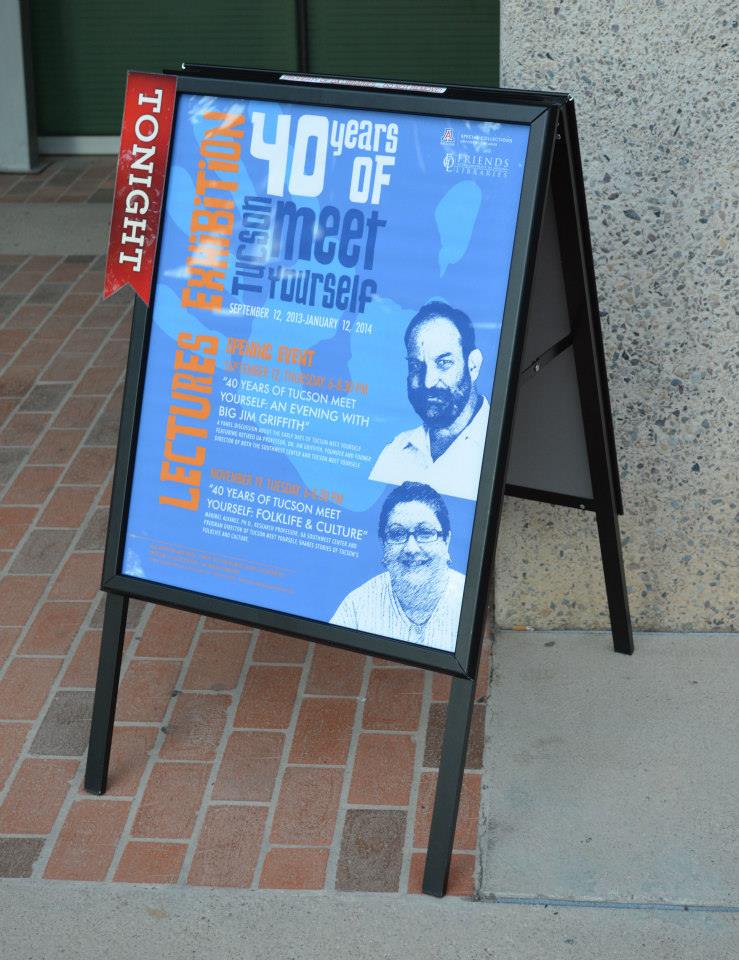
From the UA News Service: In celebration of the 40th anniversary of Tucson Meet Yourself, the UA Special Collections is hosting “40 Years of Tucson Meet Yourself” through Jan. 10. The special exhibition, curated by Bob Diaz, offers a retrospective review of the origins, traditions and celebrations that define Tucson Meet Yourself.
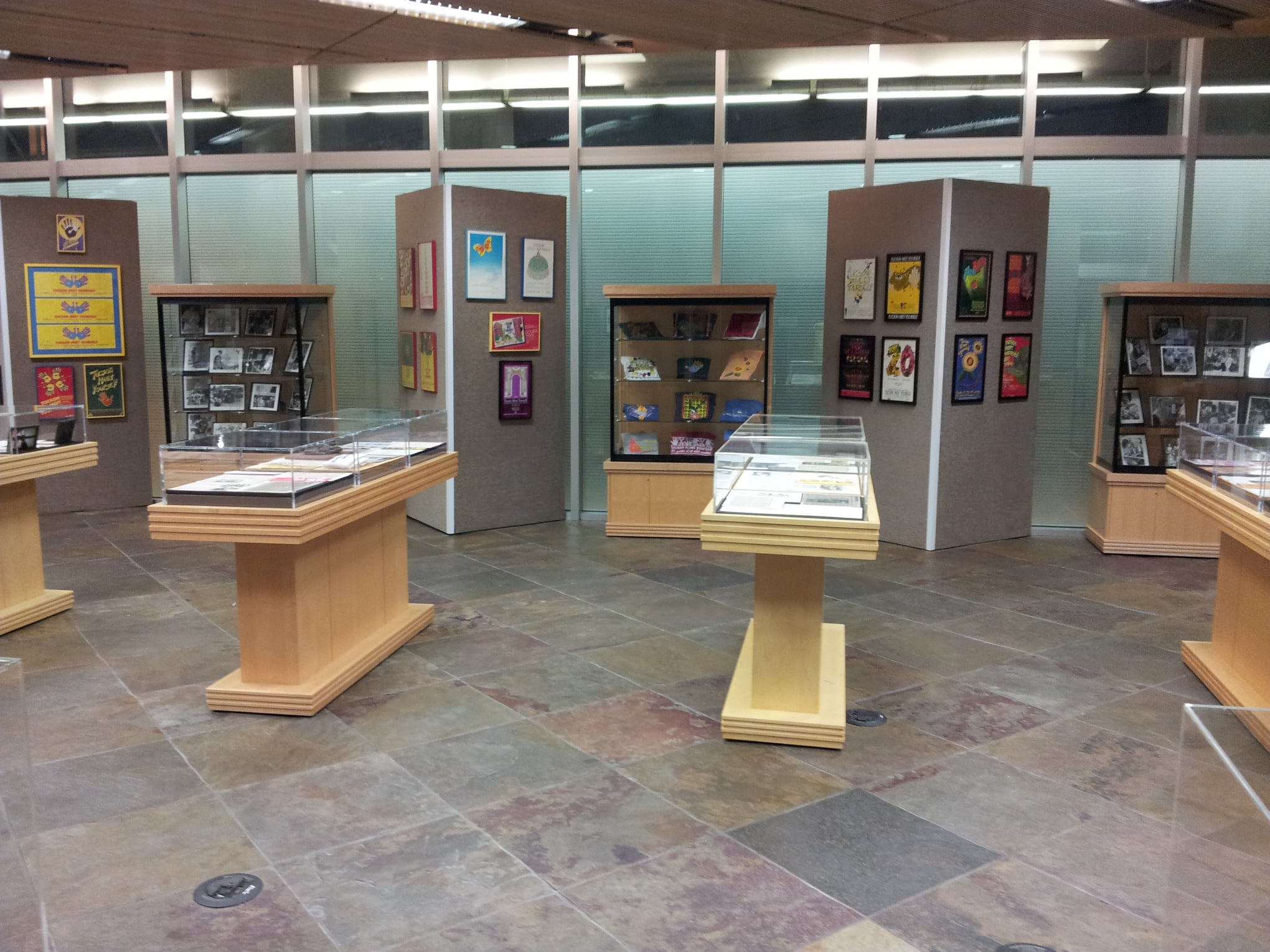
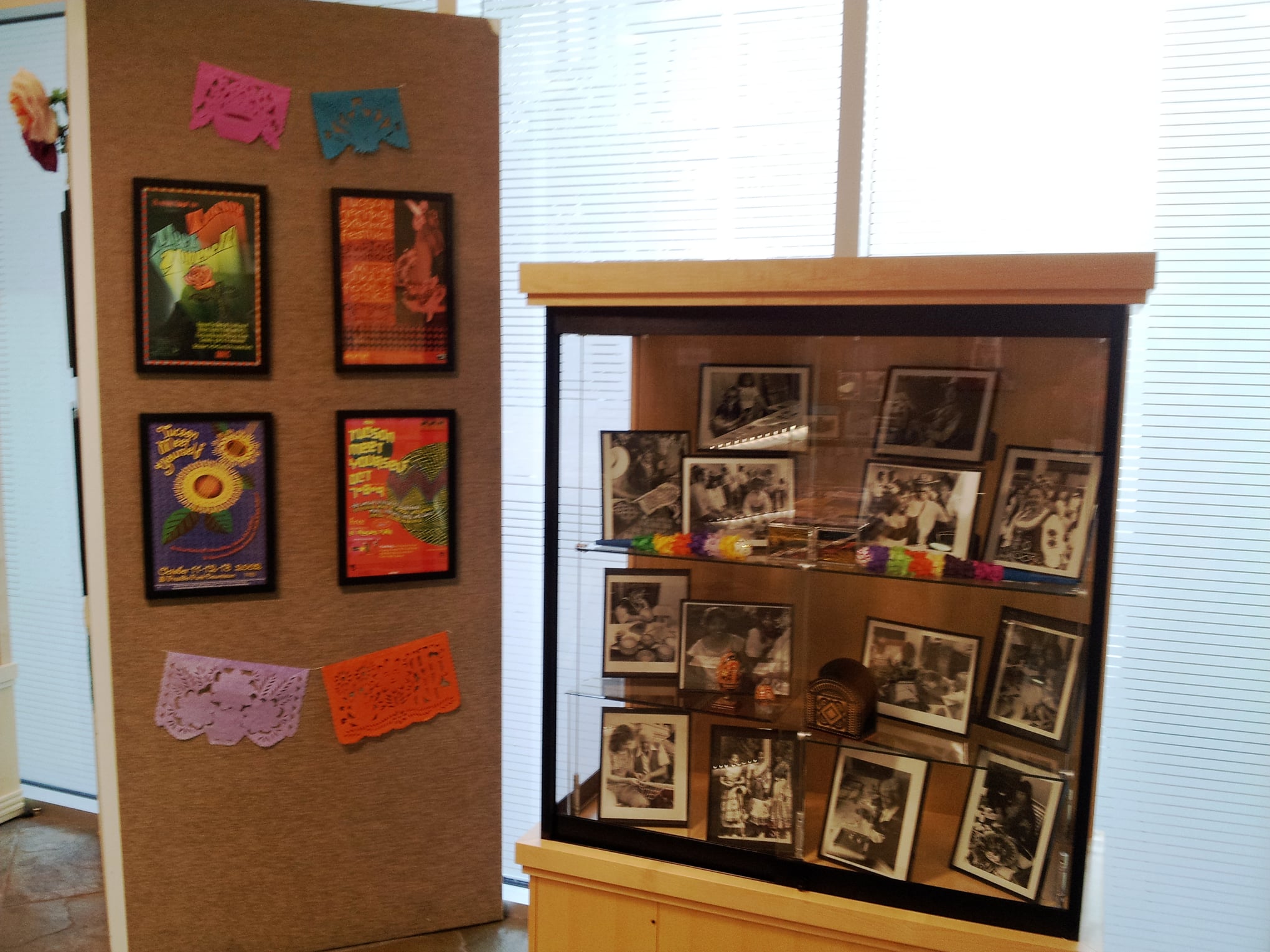
A view of the exhibition gallery
A display of Tucson Meet Yourself t-shirts
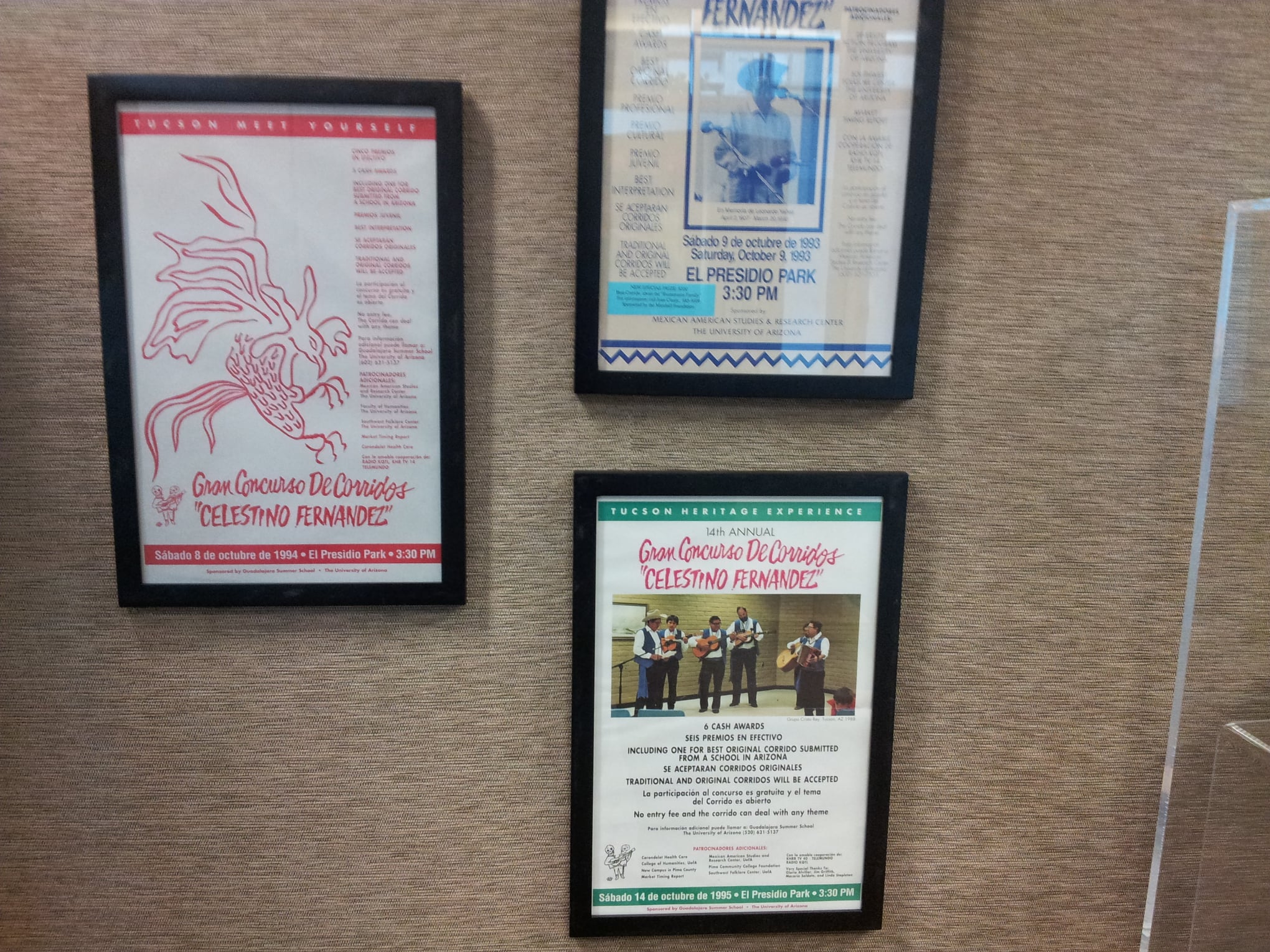
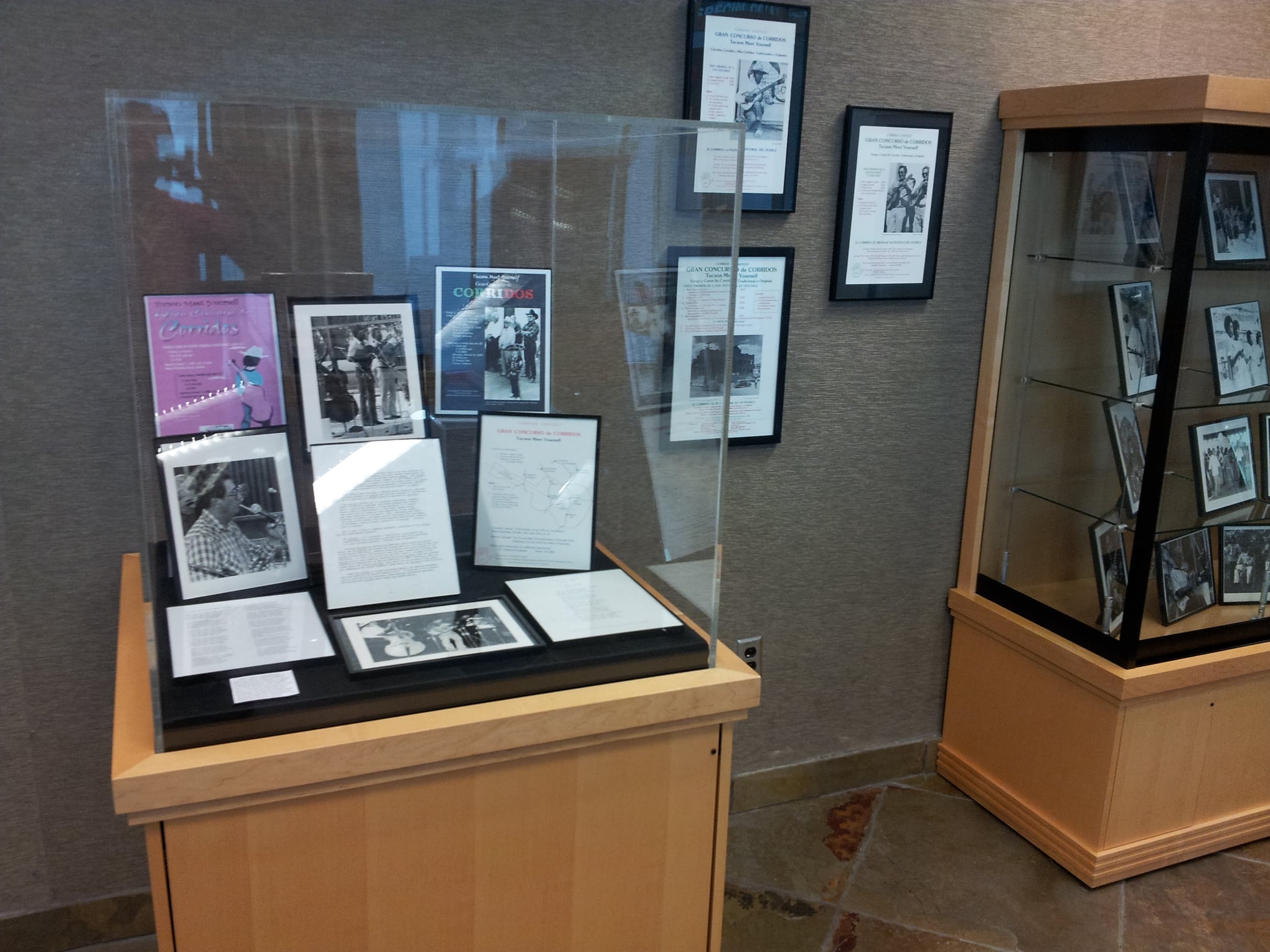
On display at Special Collections, 1510 E. University Blvd., the exhibition includes decades of posters, newspaper articles, programs, photographs and original documents, such as meeting notes. Also included is a music kiosk and a history of the festival’s annual corrido contest as well as a special profile of Griffith, the festival’s founder who is now retired from the UA.
Curated from the Tucson Meet Yourself Archive in Special Collections, which documents the festival from its first year through 1995, the exhibit also includes select items borrowed from the festival headquarters that were recently relocated to the UA Downtown campus in the Roy Place building.
A display of recordings by Lydia Mendoza and Lalo Guerrero, two regional musicians who performed at Tucson Meet Yourself
For more information about the 40th anniversary of Tucson Meet Yourself and the exhibition, see the Zocalo article, “Ephemera and Eccentricities”, by Monica Surfaro Spigelman.
Publicity material by Marty Taylor, University of Arizona Libraries
From the UA News Service:
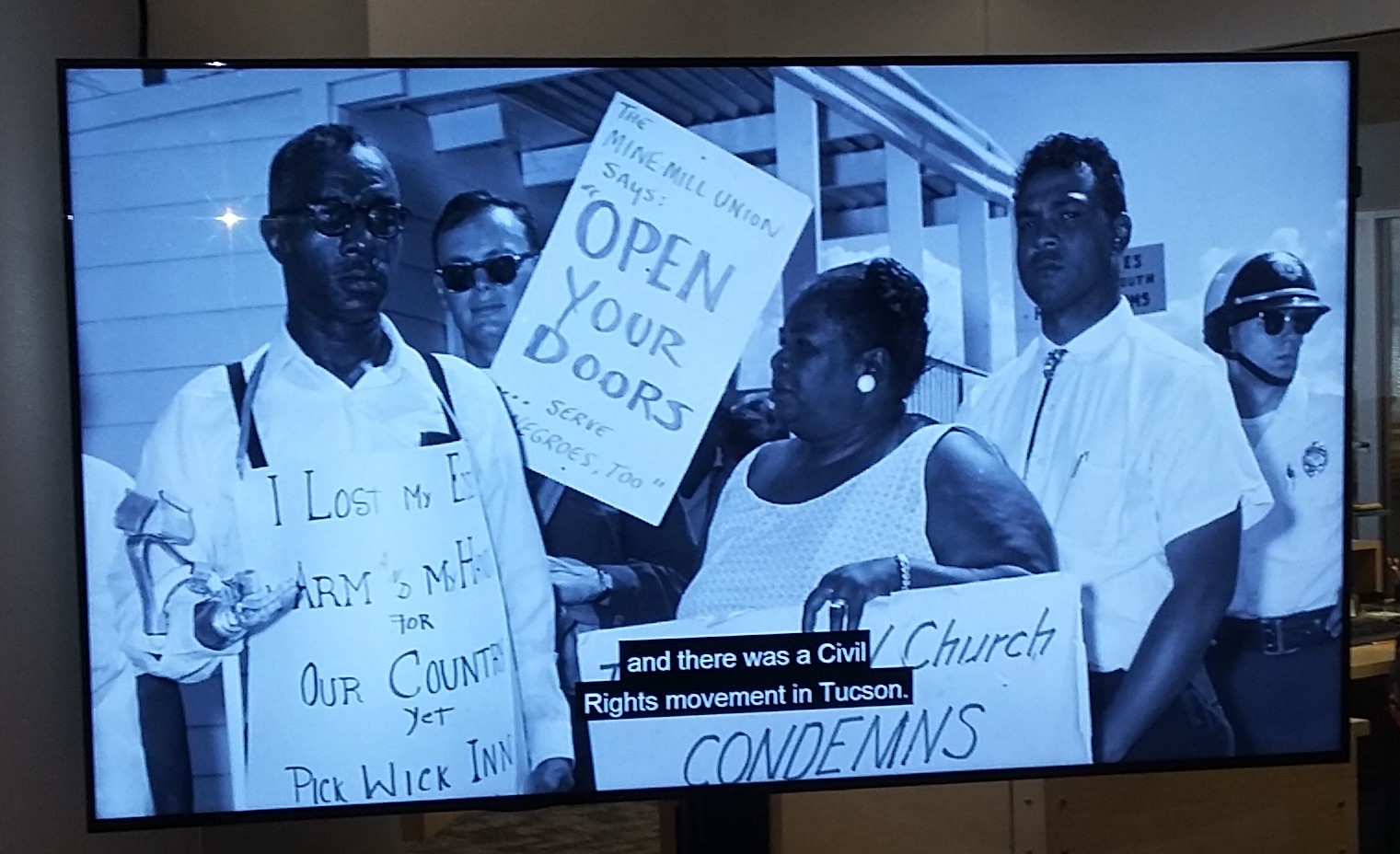
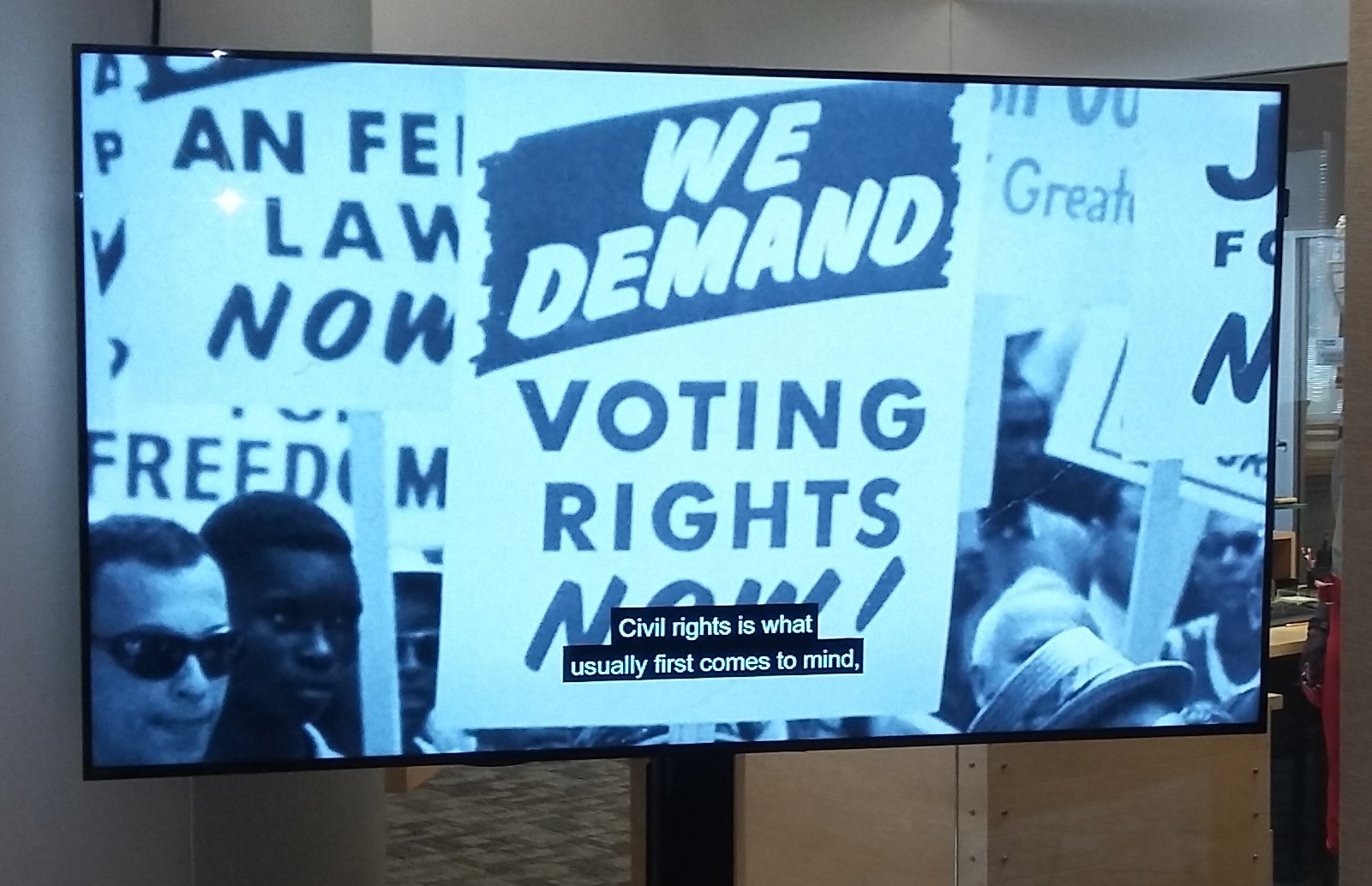
UA Exhibition Reflects on Decades of Civil Rights in Tucson
Jan. 14, 2013
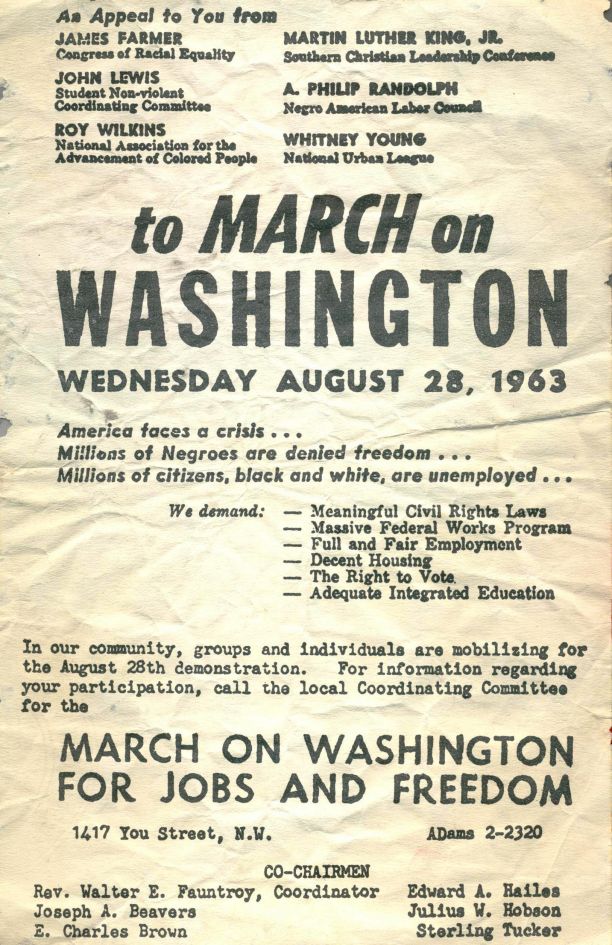
On Aug. 28, 1963, thousands were drawn to the National Mall in Washington, D.C. to be part of what would become a historic event: the March on Washington for Jobs and Freedom.
On a national level, the march spurred the passing of important civil rights legislation.
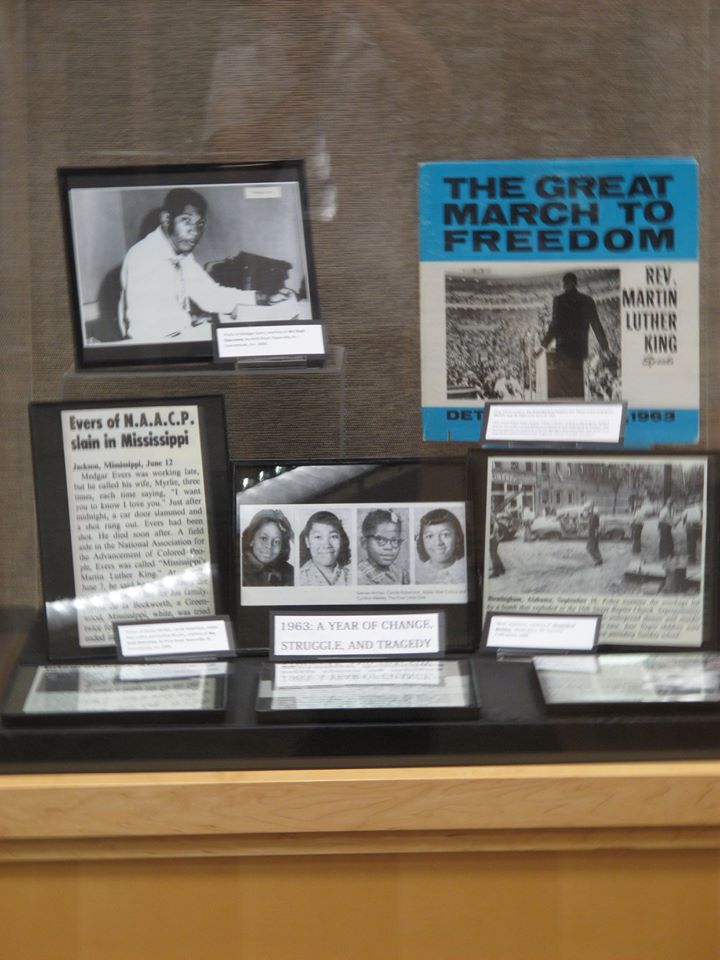
To honor that history, a new exhibition at the UA’s Special Collections will review how, 50 years later, the fight for civil rights has impacted local Tucson communities.
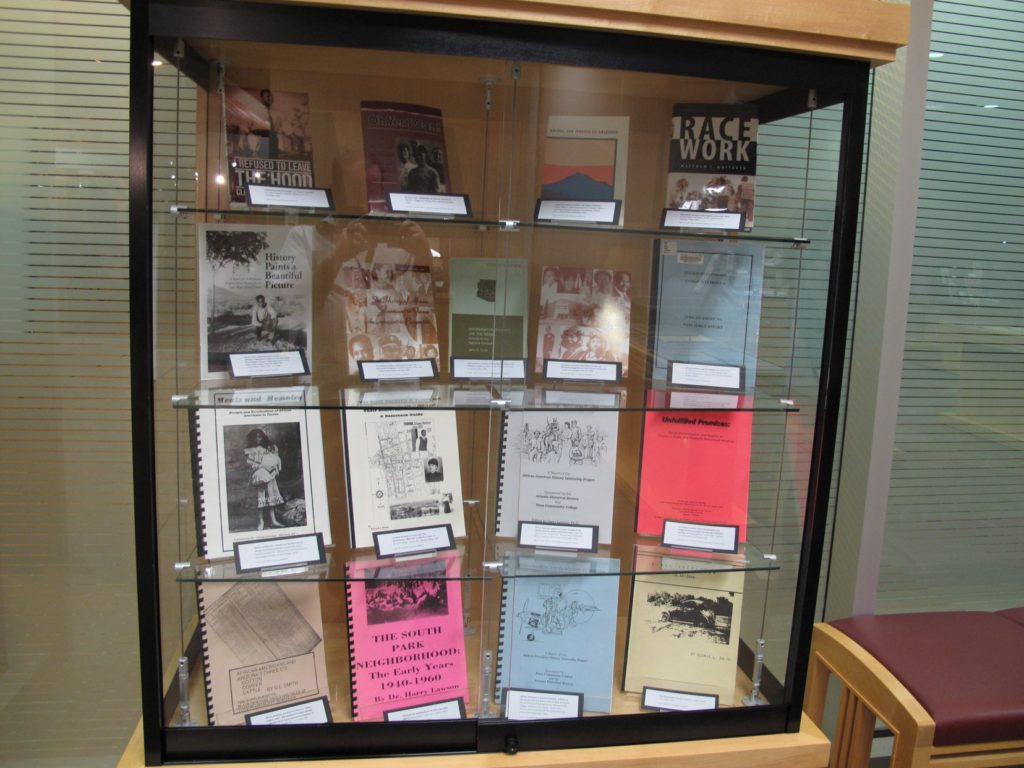
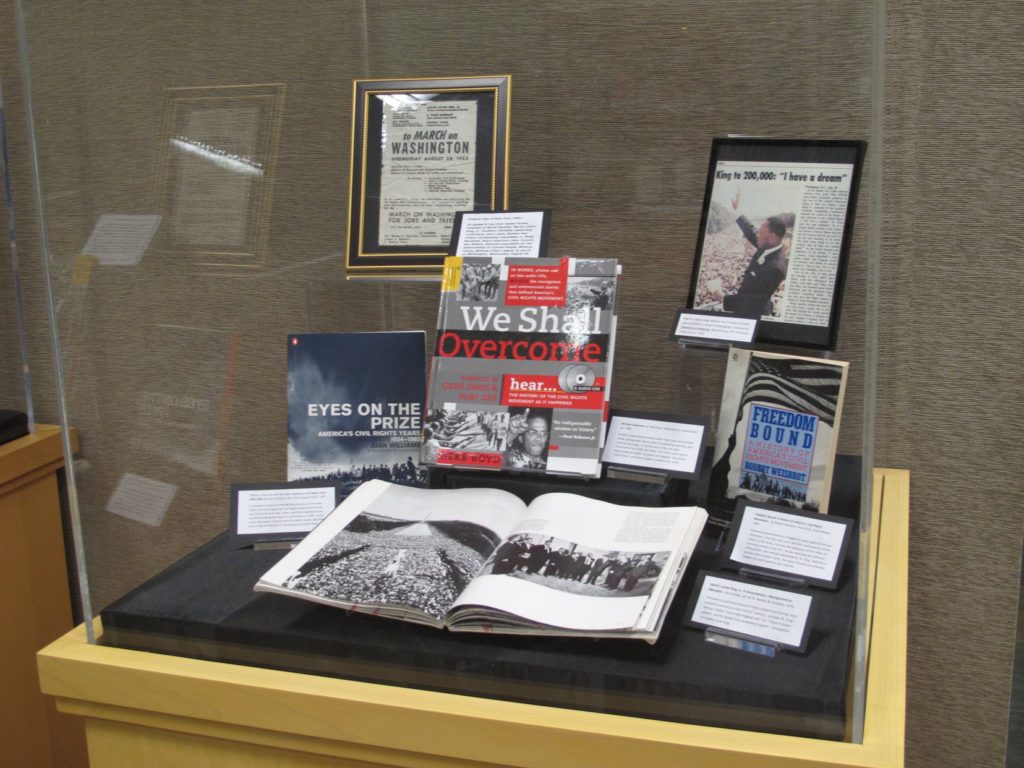
The exhibition, “50 Years: Civil Rights in Arizona from 1963 to Today,” is on display Jan. 15 through Aug. 31 at the UA Special Collections, 1510 E. University Blvd. The Special Collections exhibition focuses on national civil rights issues. A companion exhibition focusing on local civil rights will be on display in the UA Main Library during the same time period.
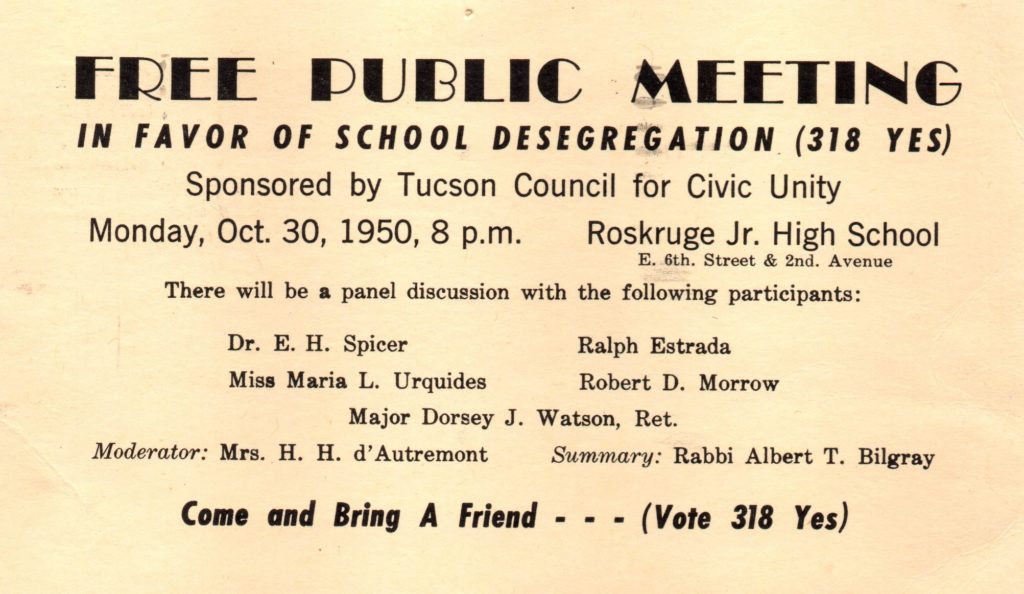
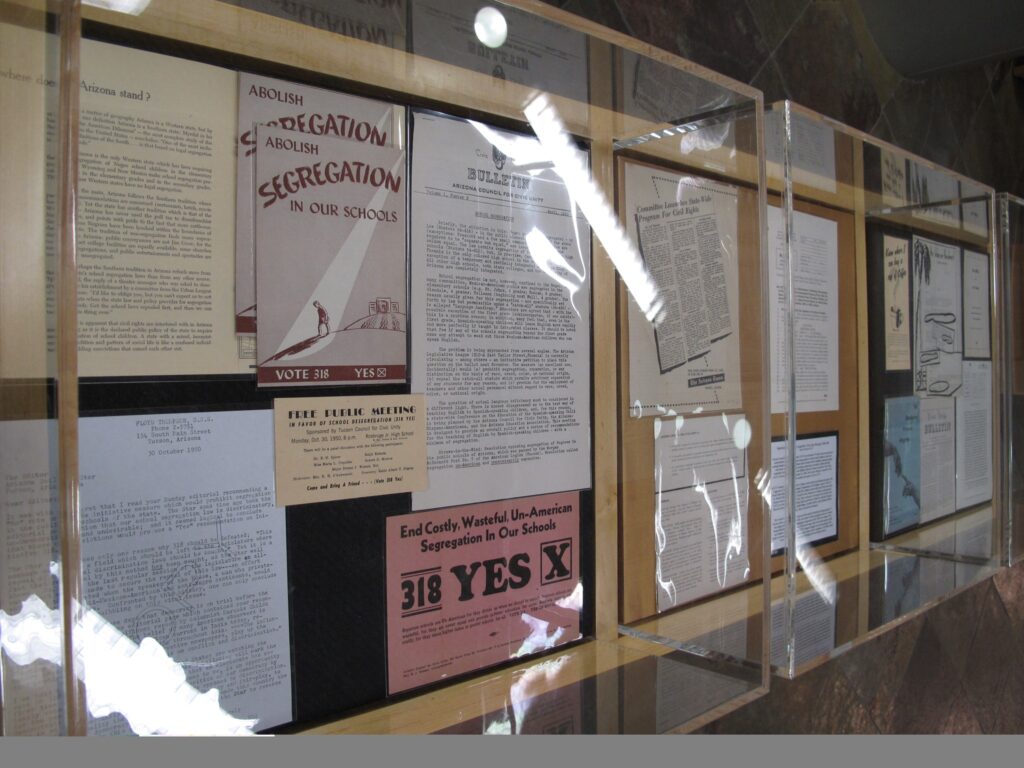
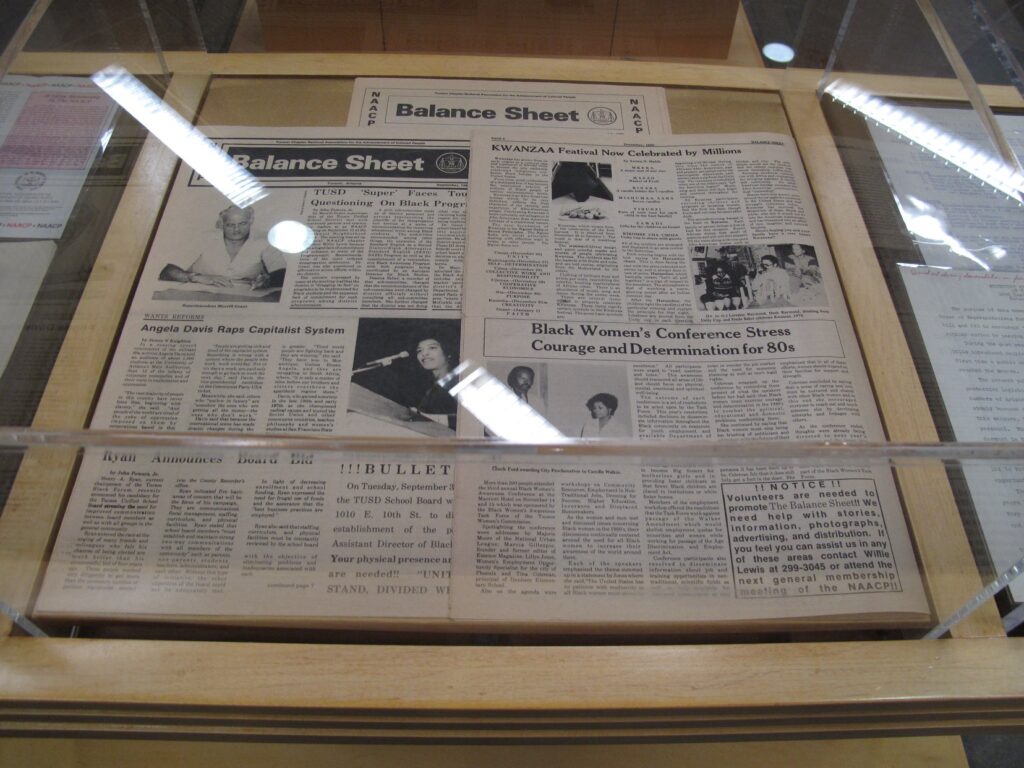
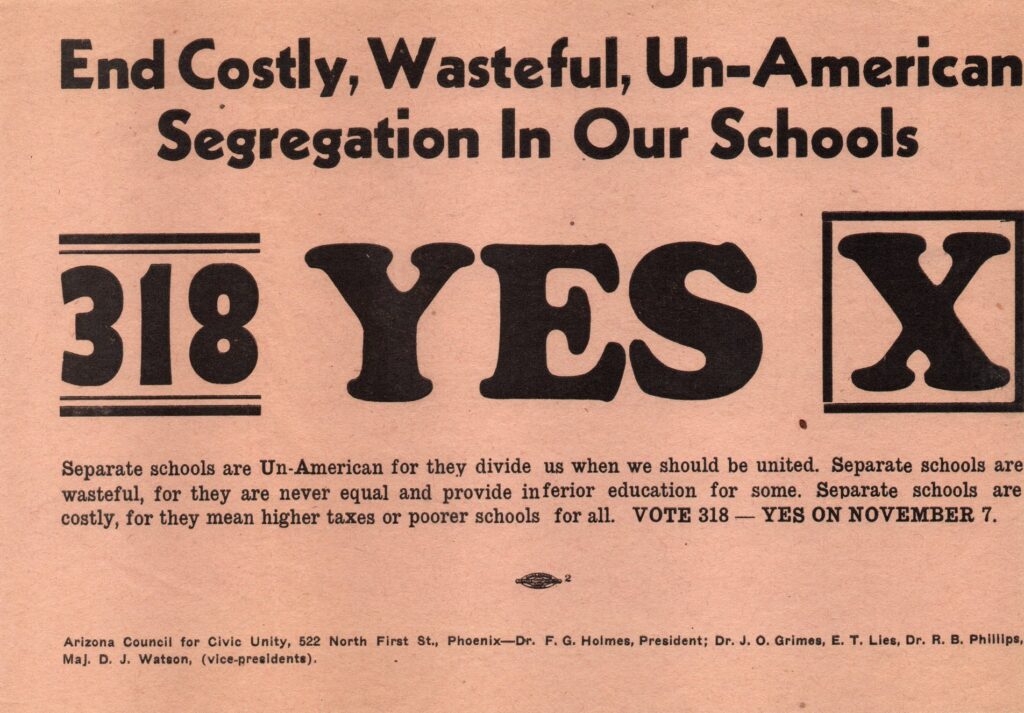
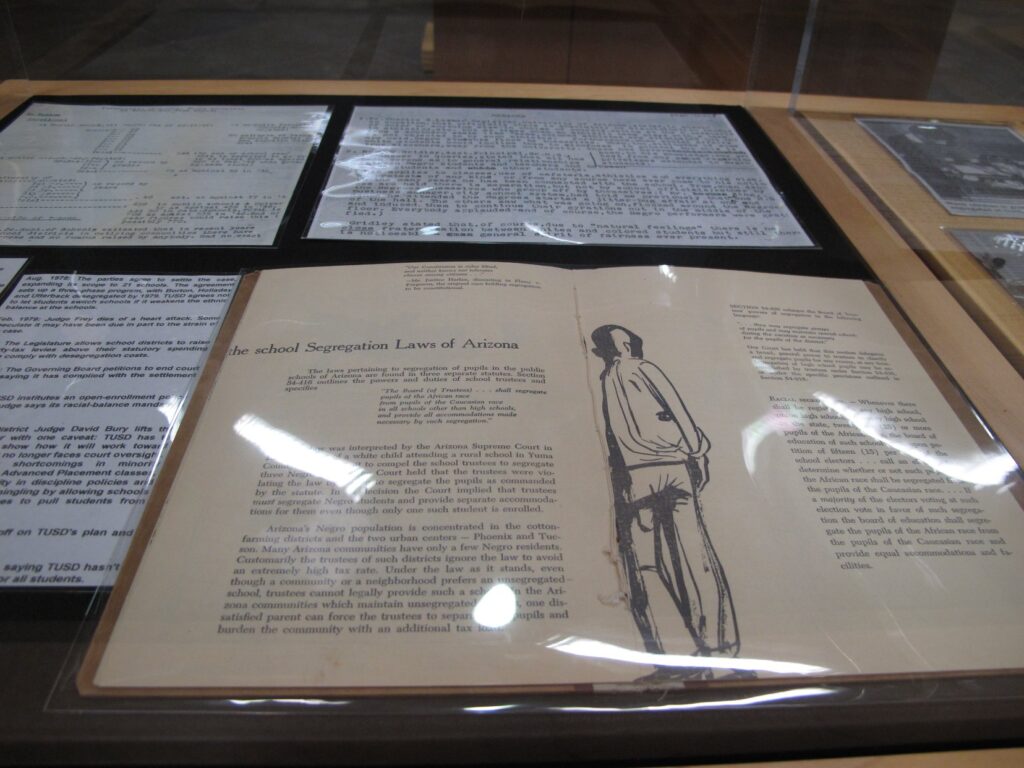
Highlights of the exhibit include national civil rights legislative documents from the Morris K. and Stewart L. Udall Collections and from the Tucson Council for Civic Unity archive, which detail the council’s effort to end discrimination and segregation in Tucson and Arizona.
The exhibition also includes photographs and papers from civil rights groups and individuals representing the African American, Native American, Asian American, Mexican American and lesbian, gay, bisexual and transgender (LGBT) communities of Tucson. An audio kiosk with songs from the civil rights era is also part of the exhibition.
A lecture series featuring community leaders, UA scholars and local educators, will accompany the exhibition. All lectures take place at Special Collections and are free and open to the public. They are:
Jan. 15: “50 Years: Tucson’s African American Community will be held 7-9 p.m. A screening of the documentary film “In Their Own Words: The 1960s Civil Rights Movement in Tucson” and a panel discussion with Charles Ford, former Tucson Vice Mayor and retired Tucson Unified School District principal, and Cressworth Lander, anative Tucsonan and president of the Dunbar Coalition.
Feb. 12: “50 Years: Tucson’s Native American Community” will be held 4-6 p.m. A discussion about Arizona, the Supreme Court and legal cases affecting and involving tribal members law cases, Arizona during the civil rights era with Robert A. Williams, Jr., the E. Thomas Sullivan Professor of Law and American Indian Studies at the UA James E. Rogers College of Law.
April 29: “50 Years: Tucson’s Mexican American Community” is a discussion with Lupe Castillo, a faculty member at Pima Community College, and Margo Cowan, a Pima County public defender.
Here is another overview of the exhibition and programs, from the February 21, 2013 issue of the Tucson Weekly. The exhibition and programs were The Weekly’s “Pick of the Week”.
Promotional material by Marty Taylor, University of Arizona Libraries
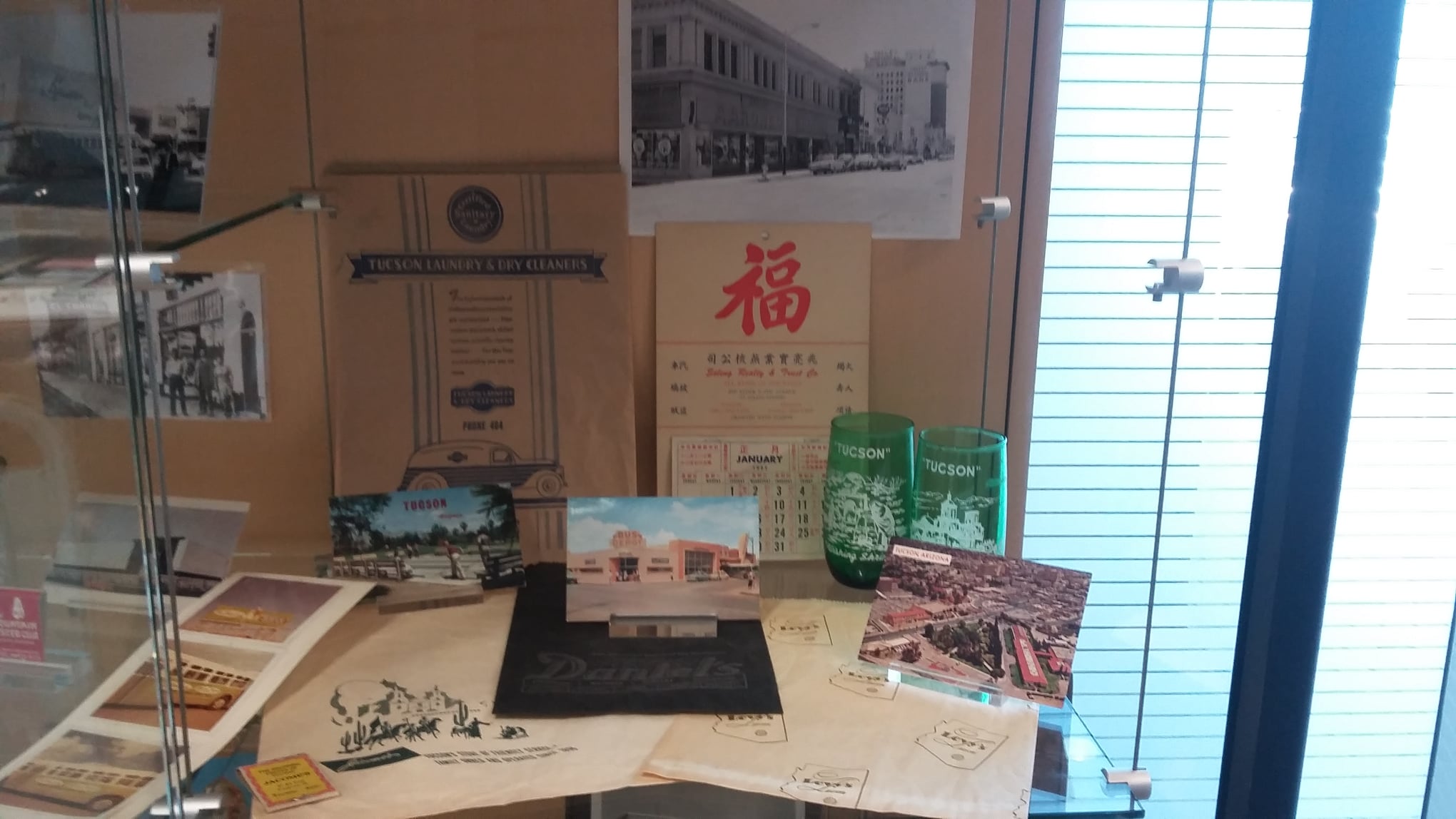
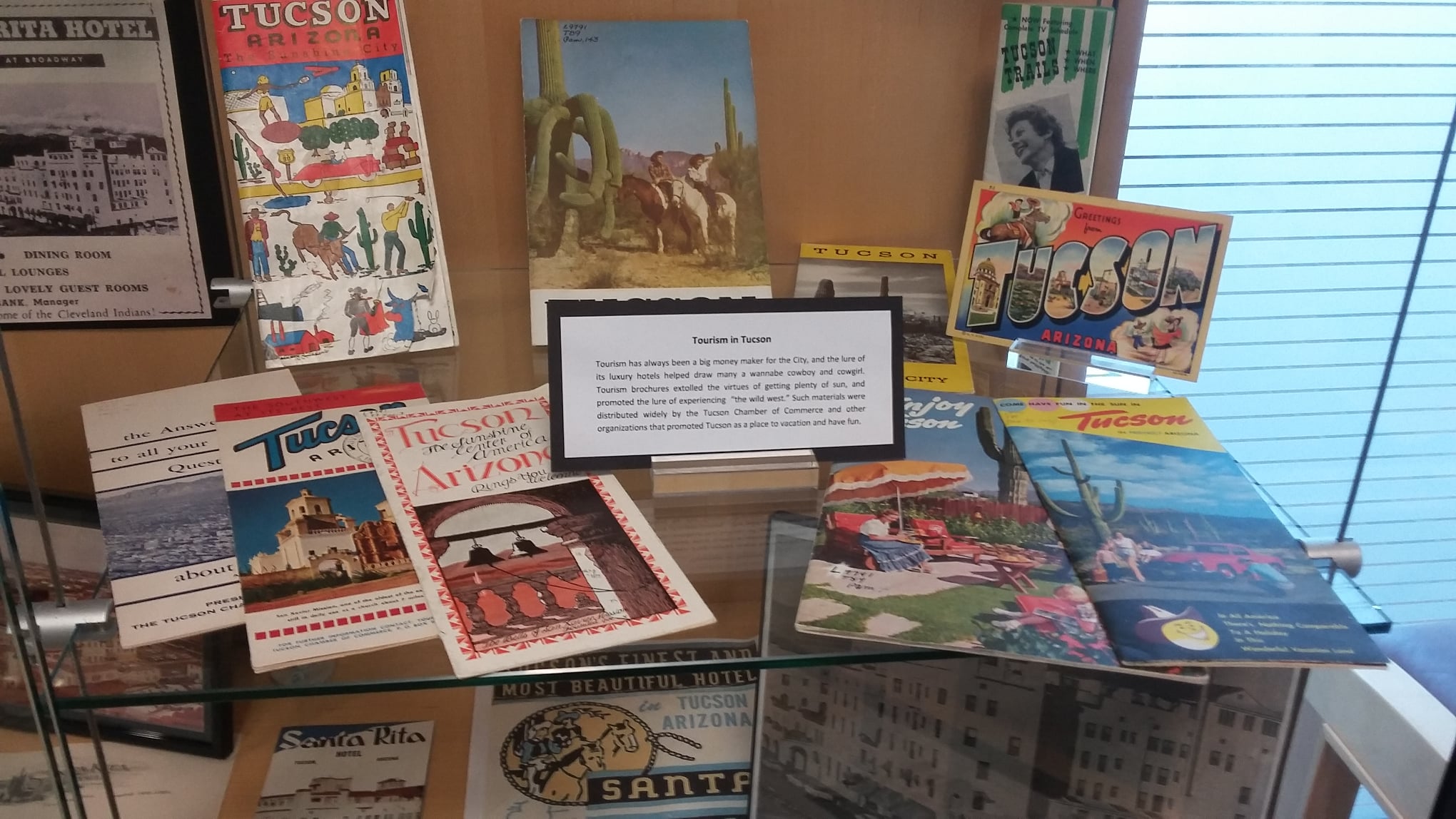
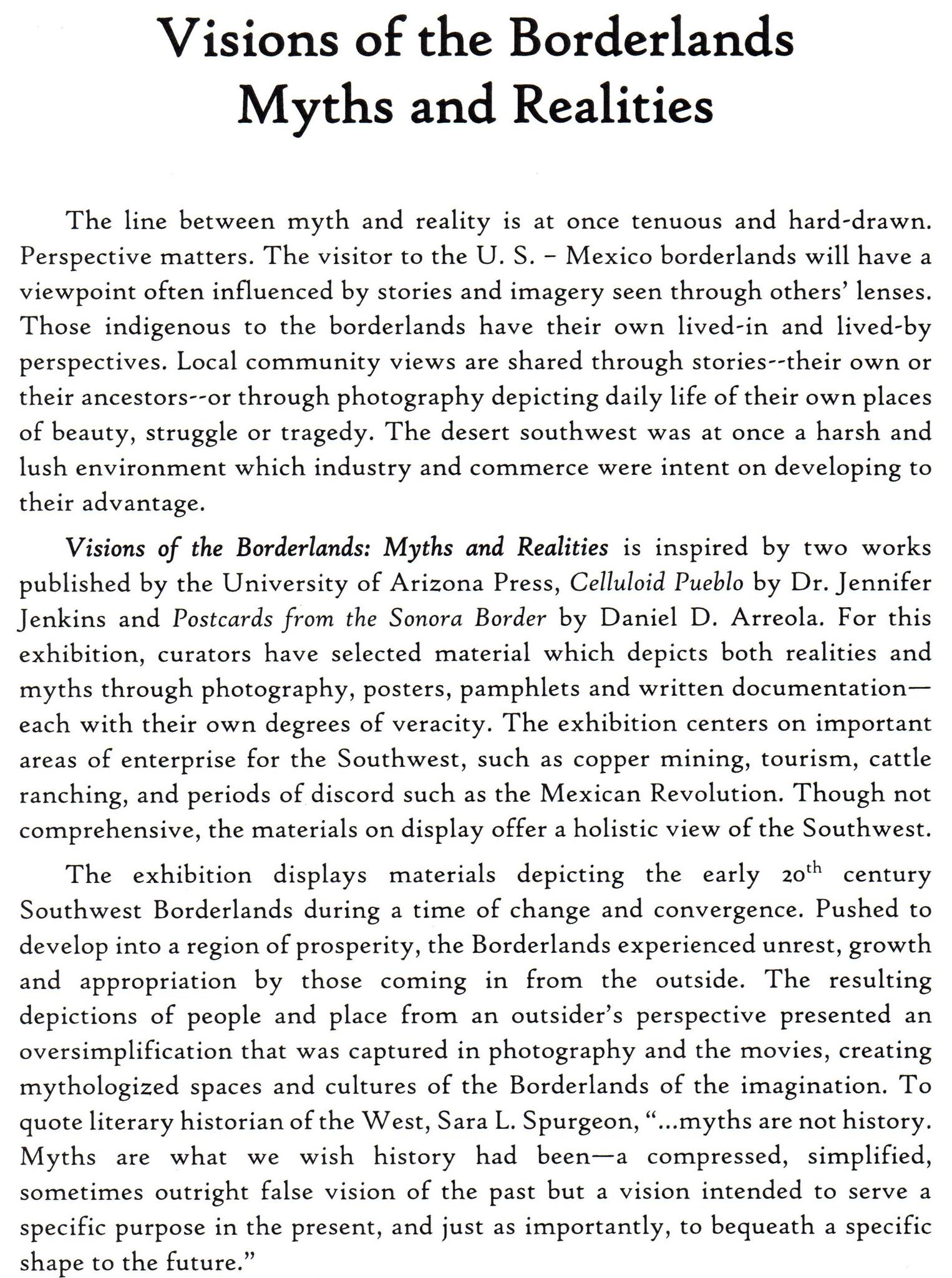
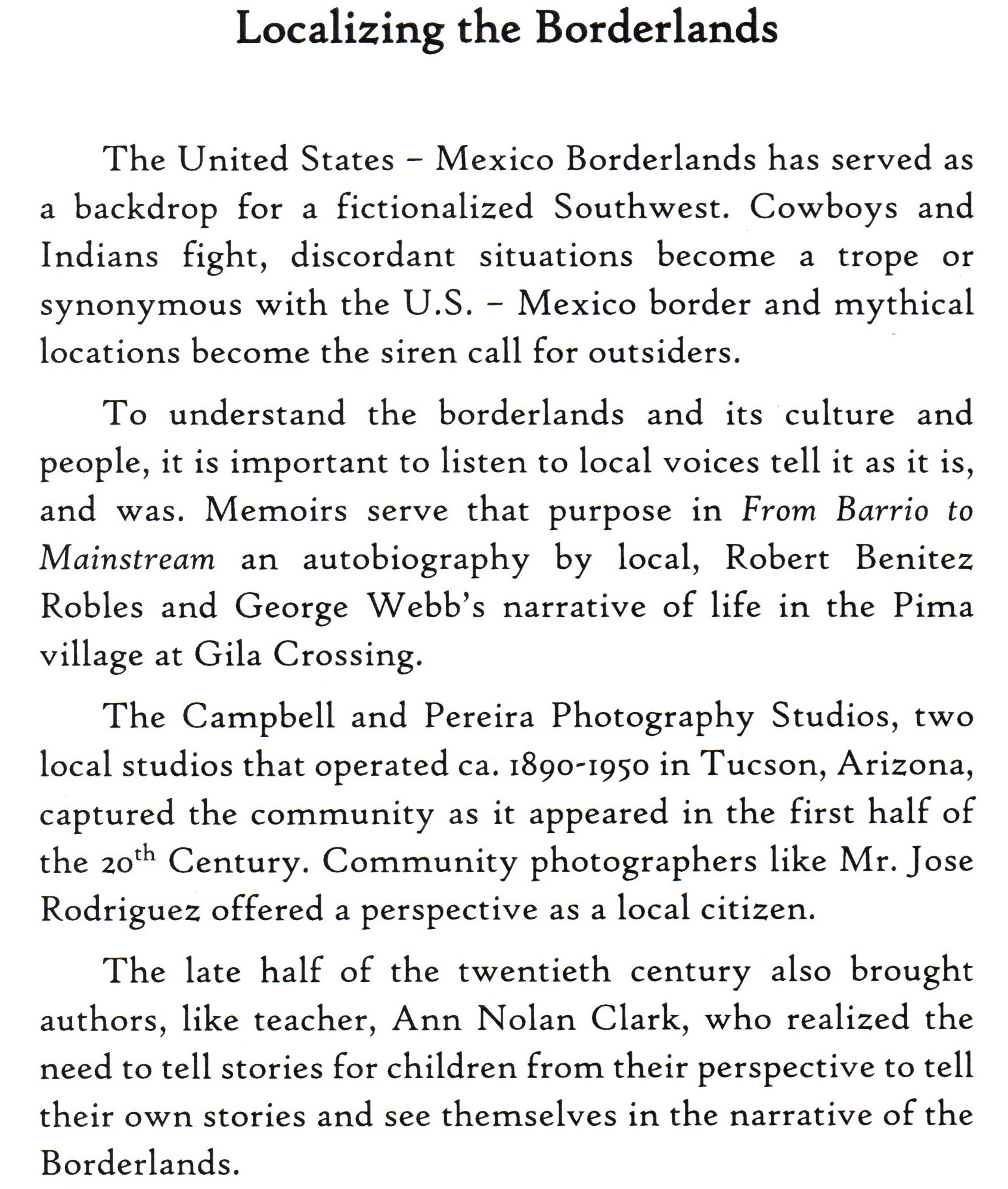
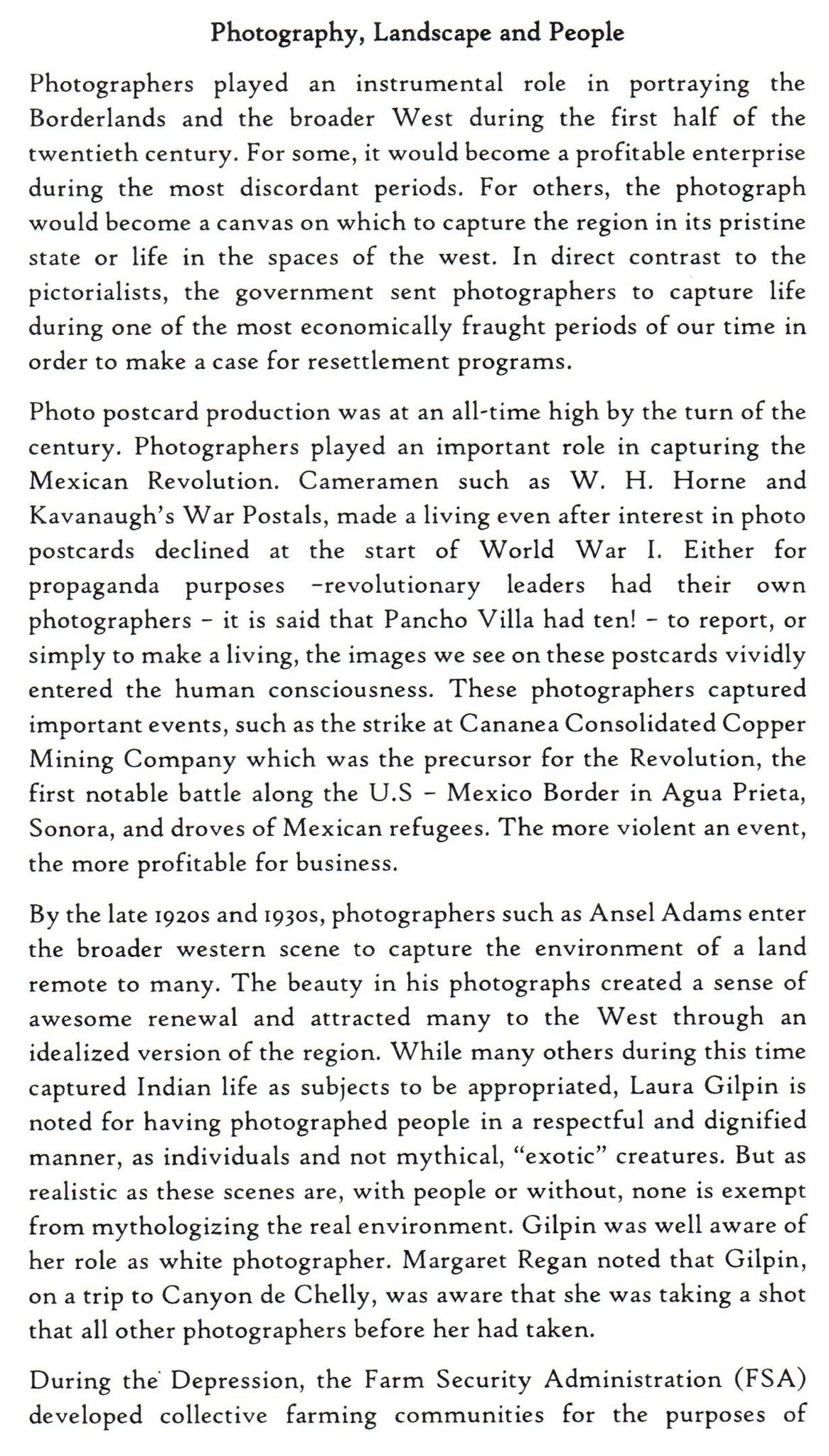
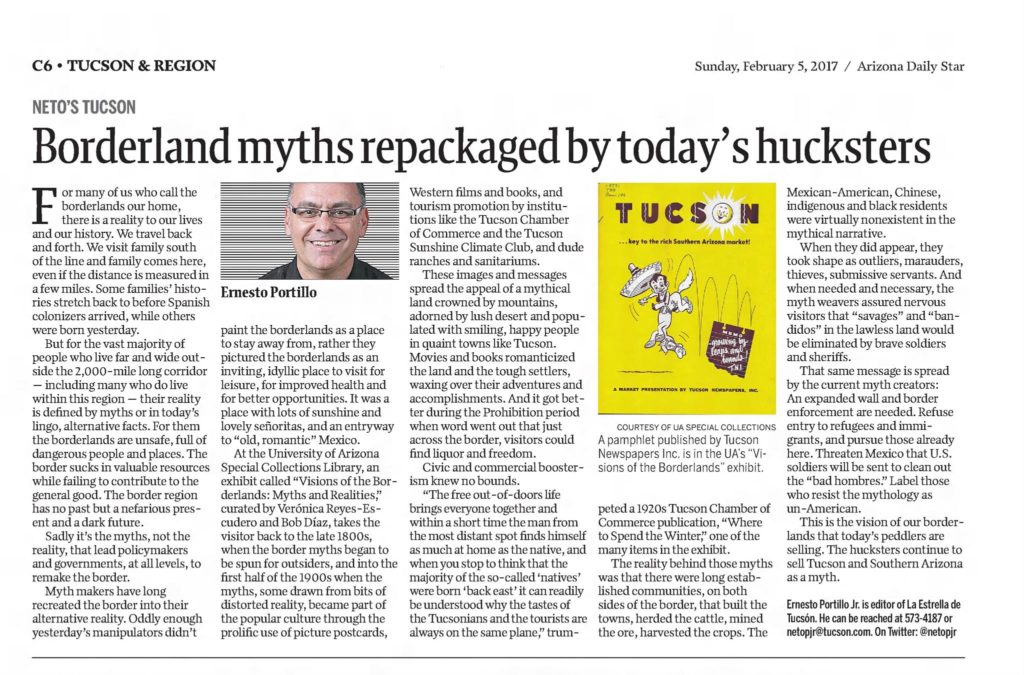
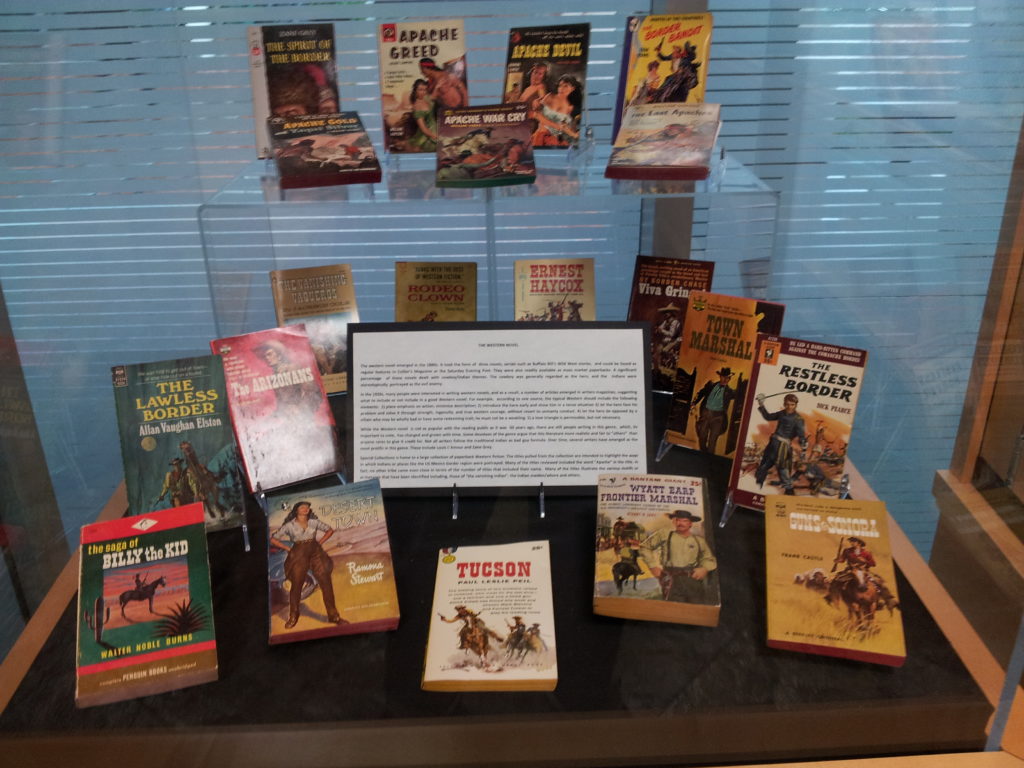
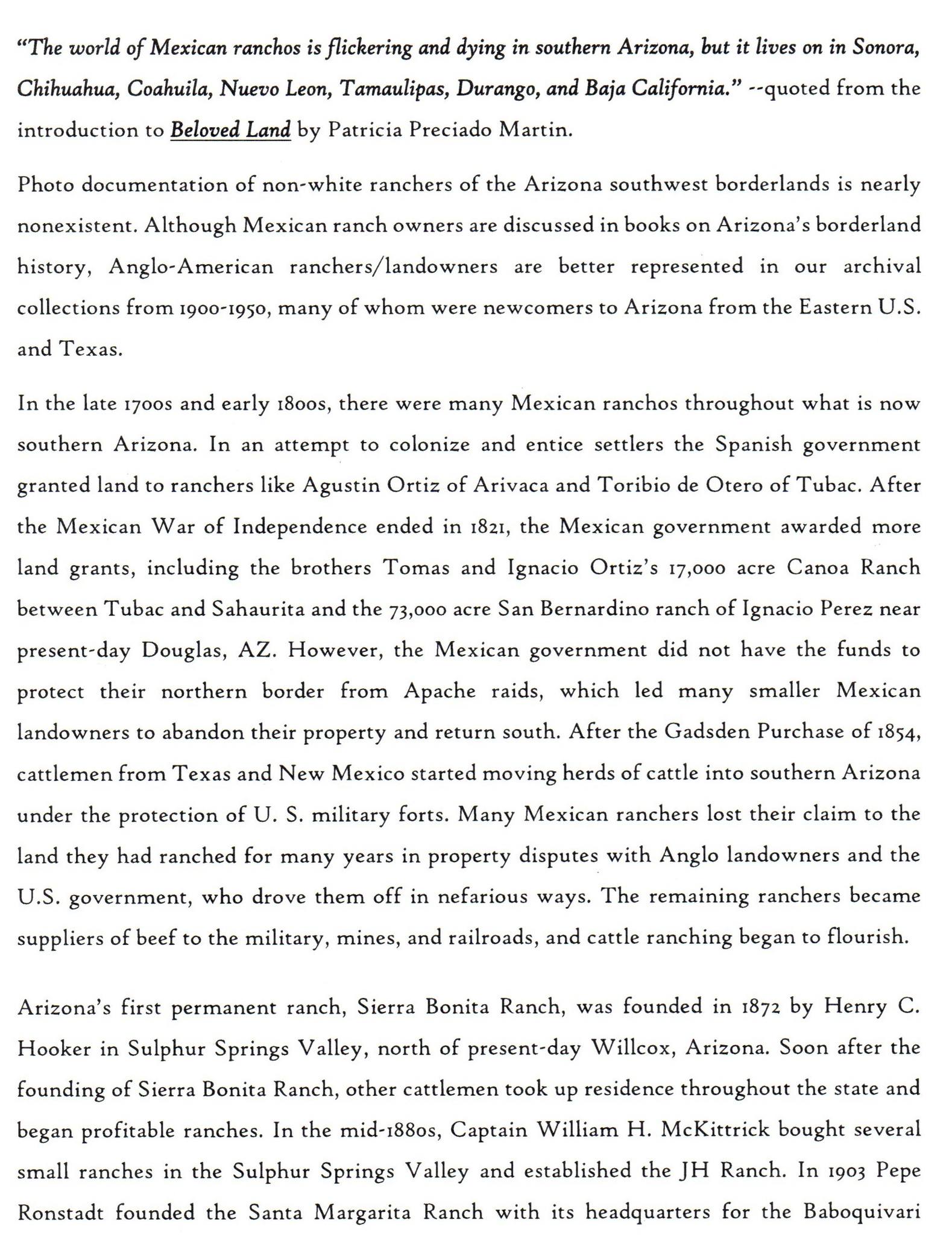
I co-curated this exhibit with Veronica Reyes-Escudero and a graduate student from the Library School. My portions of the exhibit dealt with stereotypes of people and places and included a focus on pulp fiction, movies and movie posters, as well as dude ranches and promotional material used by entities like the Tucson Sunshine Club. Veronica’s sections of the exhibit dealt with real life accounts of life along the border taken from diaries, for example and photographs of farming and ranching. The annotations that follow were all contributed by Veronica.
From the UA News Service: “Visions of the Borderlands: Myths and Realities is an exhibition inspired by two works published by the University of Arizona Press, Celluloid Pueblo by Jennifer L. Jenkins and Postcards from the Sonora Border by Daniel D. Arreola. There is a reality and a myth of the U.S.–Mexico borderlands, propagated through multiple lenses. Featuring material depicting both reality and myth through photography, posters, pamphlets and written documentation, this exhibit centers on important areas of enterprise for the Southwest such as photography and film; copper mining; tourism; and cattle ranching. It also expresses issues of discord such as the Mexican Revolution, mining strikes and immigrant exclusionary legislation of the time. “
Promotional video for “Visions of the Borderlands”
Local writer, Ernesto Portillo, Jr. featured “Visions of the Borderlands” in one of his “Neto’s Tucson” columns
The exhibit was also covered in a publication titled “Bear Essential News”. Click here to read it.
Two events were planned to go along with this exhibit. The opening event was titled, “Visions of the Borderlands: Exploring Popular Historical Imagery,” featuring author Daniel Arreola and University of Arizona Professor Jennifer Jenkins.
The second program “Visions of the Borderlands: Three Women Writers Share Their Stories”, featured the writers Denise Chavez, Patricia Preciado Martin, and Natalie Diaz. The program can be listened to in its entirety below. Producing this program was, for me, the best part of the whole project.
I worked with Dr. Charles Tatum of the Humanities program at the University of Arizona on this exhibit and lecture. Unfortunately, no photos of the actual exhibit exist, as they were lost when one of my hard drives bit the dust.
Promotional poster by Marty Taylor, University of Arizona Libraries
Main Library
April 2, 2012-June 12, 2012
News release by Bob Diaz
Tucson, Ariz. (March 29, 2012) – A new exhibit at the UA Main
Library explores the history of Latino literature in the United States
and chronicles a national movement to recover the Hispanic literary
tradition. On display from April 2 – June 12, 2012, “Arte Público Press
and the Legacy of Latino Publishing in the U.S.” showcases one of
nation’s oldest and most esteemed Hispanic publishing houses. Nicolás
Kanellos, director of Arte Público Press, will deliver the opening
lecture titled “From the Latino Archive to Your PC or Laptop or
Hand-Held Device: EBSCO Partners with Hispanic Recovery” on April 4 from
3:30 – 5:00 p.m. in UA Special Collections.
Nicolás Kanellos, founding publisher of the noted Hispanic literary journal The Americas Review (formerly Revista Chicano-Riqueña), established Arte Público Press in 1979. As that nation’s oldest and largest non-profit publisher of literature of U.S. Hispanic authors, Arte Público Press showcases Hispanic literary activity, arts, and culture. Its imprint for children and young adults, Piñata Books, is dedicated to the realistic and authentic portrayal of the customs, characters and themes unique to Hispanic culture in the United States.
Here is a selection of authors and book titles published by Arte Publico Press, and included in the exhibit.
In 2005, I became a board member of the Tucson International Mariachi Conference. It was a memorable experience. I hadn’t done a lot of fundraising before, but one of my tasks as a member of this group was to do just that. I came up with the idea of having a film festival, and pulled all my resources together to produce “Cine Mariachi at the Fox”. I worked with the Mexican Consulate in Tucson to secure a beautiful print of the film “Dos Tipos de Cuidado” starring Pedro Infante and Jorge Negrete, and I also pulled some strings to secure the Fox Theatre as the venue for the program. My friend Pima County Supervisor Richard Elias was intstrumental in helping me with this. My mariachi friends Johnny Contreras and Olga Flores helped get a small mariachi group together to provide musical entertainment, and we even had ballet folklorico dancers.The promotional materials were done by a marketing group that worked with the Tucson International Mariachi Conference. We even got write-ups in the local press. It was a full day’s worth of fun! Now that these films are freely available on Youtube, I have included them below. Enjoy!
Promotional material designed by Marty Taylor, University of Arizona Libraries
Introduction: This was the second exhibit I curated at the Science Engineering Library. Once again, I found a treasure trove of information in Special Collections, including photographs, news clippings, books, pamphlets and brochures as well as advertisements in local magazines, directories and other sources. I learned a great deal about the topic, including some very interesting facts about tuberculosis and its treatment. Finding information on the Pima County Hospital was also very enlightening, as was learning about the various sanitariums that existed across the community. Another fun project!
News Release:
A new exhibit at the University of Arizona (UA) reviews 100 years of health care history in Tucson. “A Look at Medicine and Medical Facilities in Early Tucson” showcases Tucson’s system, and business, of health care from the mid-19th century to the mid-20th century. The exhibit is on display from June 19 – Dec. 31, 2012 at the UA Science-Engineering Library, 744 N Highland Ave.
“A Look at Medicine and Medical Facilities in Early Tucson” reviews the history of Tucson health care through three categories: physicians, hospitals, and Tucson’s approach to treating tuberculosis.
Included in the exhibit are profiles, photographs, and biographical information of 9 early Tucson physicians. One of Arizona’s most colorful and distinguished physicians, Dr. George E. Goodfellow, earned his medical degree in 1876 and became a self-taught expert on bullet wounds. He went on to make medical history in Tucson for performing the world’s first successful prostate removal surgery.
Tucson’s hospitals
Of interesting note for Pima County physicians was a county
ordinance passed in 1875 that required local physicians to file their
diplomas from accredited schools with the county recorder or face a fine
up to $50. The Territory of Arizona did not take similar action until
1881.
The exhibit also offers a brief historical review
through photographs, books, and ephemera of Tucson’s early hospitals
including St. Mary’s Hospital, Pima County General Hospital, and the
Veteran’s Administration Hospital.
The patient population at
Tucson area hospitals ballooned in the early 20th century, an increase
brought on by patients seeking treatment for tuberculosis which, by that
time, was responsible for 12 out of every 100 deaths in the United
States. Up to 25% of all newcomers to the Southwest over that period
arrived in the region to recover their health, choosing the Southwest
for its warm, dry air and their faith in its healing properties. Notable
among those who came for the healing climate are Governor A.P.K.
Safford, Sam Hughes, Hiram Dodge, “Doc” Holliday, and Harold Bell
Wright.
More hospitals
Tucson sanatoriums, including Whitwell Hospital, the Desert Sanatorium, Comstock Hospital, Pastime Park, focused on treating tuberculosis patients. While wealthy patients were received care at resort-like sanatoriums, those without financial means were treated in Tentville, a “squalid ghetto” located in the area north of Speedway Blvd. between Park and North First Avenues. Photographs and ephemera included in the exhibit offer a brief history of Tucson’s sanatoriums.
“A Look at Medicine and Medical Facilities in Early Tucson” was curated to coincide with Tucson’s 237th birthday, an occasion where Tucsonans are encouraged to recognize our community’s history, culture, arts and environment.
This exhibit was housed in the Main Library. I enjoyed putting it together. Dr. Brooks Jeffery graciously agreed to give a lecture on the architecture of Tucson. It was a fun project.
Happy Birthday Tucson: A Look at Tucson’s Cultural and Architectural Treasures
This exhibit celebrates Tucson’s 237th birthday. It includes a selection of books and other items about Tucson, and a variety of materials on music and architecture. The section on classical music features music programs going back over 100 years, plus photos of the Temple of Music and Art and the original Tucson Symphony Orchestra. The mariachi music section features local musicians, including Lalo Guerrero, Linda Ronstadt and Los Changuitos Feos as well as other local groups and singers. Featured in the architecture section are a number of churches, including the San Xavier mission. A special section is devoted to photos taken of the Fox Theatre back in the 1930s by the Campbell and Pereira Studios. Included is the original program for the opening of the movie, Arizona, for which the Old Tucson movie set was built. Most of the materials on display are either from the private collection of Joseph R. Diaz or from Special Collections.
Mexican Music in Tucson
Mexican music has long been a staple of Tucson’s cultural life. Today, the Old Pueblo is known as one of the premiere centers for the study and performance of mariachi music, which is taught from the primary grades through the college level in many of the schools in the region. In addition, every April, hundreds of students from throughout the country gather here to participate in the Tucson International Mariachi Conference to learn music from some of mariachi’s top musicians, such as Mariachi Vargas de Tecalitlan, Mariachi Los Camperos de Nati Cano, and Tucson’s own Mariachi Cobre. Tucson is also the hometown of the legendary Lalo Guerrero and Linda Ronstadt. Los Changuitos Feos, one of the nations’s first youth mariachi groups, was formed in Tucson in the early 1960’s, and is still going strong. The recordings featured in this exhibit are all of local musicians and are from the private collection of Joseph R. Diaz
Classical Music in Tucson
Tucson’s love for European art music goes back over 100 years. Some of the genre’s greatest orchestras and conductors have graced the stages of the Tucson Opera House, the Rialto Theatre, The Tucson High School auditorium and the Temple of Music and Art (shown in the photo on the right). The Tucson Symphony has a long standing history in the community and the photo in this exhibit is of the original group, founded in the 1920s. The Saturday Morning Music Club, a group of enthusiastic classical music supporters, was for a long time the primary force behind providing the community with rich musical experiences. The programs featured in this exhibit are from UA Special Collections.
Religious Architecture and Sculpture in Tucson
Over the years, Tucson has been home to a number of beautiful church buldings, the best known of which is the San Xavier Mission, a National Historic Landmark which was founded by Father Eusebio Kino in 1692. Contruction of the current church began in 1783 and was completed in 1797. The oldest intact European structure in Arizona, the church’s interior is filled with marvelous original statuary and mural paintings. A renovation of the structure and interior was recently completed. It is truly a Tucson treasure!
More churches of Tucson
The Fox Theatre
Originally budgeted at
$200,000, the Fox Theatre would eventually cost $300,000 including furnishings.
Designed as a dual vaudeville/movie house, the Fox featured a stage, full
fly-loft, and dressing rooms beneath the stage. The combined effects of
“talkies” and the Depression limited the opportunities for live
performance, and the dressing rooms were never completed.
Opening night, April 11, 1930, proved to be
the biggest party the small community of Tucson had ever seen. With Congress
Street closed and waxed for dancing, four live bands, a live radio broadcast
and free trolley rides Downtown, the party was one not to be missed.Those lucky
enough to have bought tickets in advance—3,000 or so people—enjoyed the show
inside as well as out. The film “Chasing Rainbows,” a MovieTone
short, and a Mickey Mouse cartoon were well received by both audiences that
evening, and the Fox Theatre began its 40 year life as the center of Tucson’s
entertainment world.
The photos in this exhibit, taken in the early 1930s, are from the Campbell and Pereira Collection, housed in Special Collections. The program to the movie, Arizona, is from the private collection of Joseph R. Diaz.
Architecture in Tucson
Tucson has a number of beautifully constructed buildings. Featured here are The Pioneer Hotel building, The Geronimo Apartments building, The Pima County Courthouse, the El Conquistador Hotel and the Santa Rita Hotel, as well as a number of private residences and postcards of hotels. For more information on Tucson’s architecture, see A Guide to Tucson Architecture, by R. Jeffery Brooks and Ann M. Nequette. (Science-Engineering Library and Special Collections NA 735.T8 N46 2002).
Exhibit curated by Bob Diaz, Special Collections, The University of Arizona Libraries
Promotional material designed by Marty Taylor, University of Arizona Libraries
Monday, January 22, 2018 – 9:00am to Friday, July 6, 2018 – 6:00pm
Special Collections
The University of Arizona Libraries
Introduction:
Putting this exhibit together was a labor of love. I started out knowing very little about local architect, Judith Chafee, but learned a great deal from organizing her papers, which are housed in Special Collections, and working with her assistant, Kathryn McGuire a local architect and co-author of the book, “Powerhouse: The Life and Work of Architect Judith Chafee. As I poured over her work looking for material to include in the exhibition, I came to the realization that Chafee was an artistic genius, well ahead of her time. She was the first woman to graduate from Yale’s architecture program. She finished at the top of her class, and won prestigious awards along the way. A highlight of the whole experience for me was meeting Chafee’s daughter and granddaughter, who made a special trip to Tucson to see the exhibition. They were very impressed by it. It made me feel just great knowing that they liked it. All that work I had put into this project paid off! Attendance at both of the events that were held in conjunction with the exhibit was beyond my expectations, and both were very well received. This exhibition was one of my favorites.
From the UA News Service:
A remarkable American architect, Judith Chafee was a true trailblazer, both as an architect par excellence, and as a woman in a male-dominated profession. She is celebrated as a visionary modernist whose structures harmoniously blend with their host environments.
This exhibit highlights key events and projects from her life and work. Materials will include photographs, drawings, artwork and more.
A sample exhibit section
Judith Chafee with one of her many pets
“The Architect: Judith Chafee”, story by KUAZ, available for viewing in the exhibit lobby..
“Powerhouse is the first book on the singular life and career of American architect Judith Chafee (1932-1998). Chafee was an unrepentant modernist on the forefront of sustainable design. Her architecture shows great sensitivity to place, especially the desert landscapes of Arizona. Chafee was also a social justice advocate and a highly respected woman in a male-dominated profession. After graduating from the Yale University Architecture School, where her advisor was Paul Rudolph, she went on to work in the offices of legends including Rudolph, Walter Gropius, Eero Saarinen, and Edward Larrabee Barnes. In addition to her architectural legacy, her decades of teaching helped shape a generation of architects. Chafee’s drawings and archival images of her work are complemented by stunning photography by Ezra Stoller and Bill Timmerman”. –from the Princeton Architectural Press site.
It was very nice of Kathy McGuire to mention me in the acknowledgements section (see below) of the book. I learned a great deal from her during our visits, and without her guidance the exhibition would not have been as informative and interesting as it turned out to be.
Exhibit banner and poster designed by Marty Taylor, UA Libraries.
My most recent and last exhibit for Special Collections was a look back at 1968, 50 years later. I was only 9 years old at the time, but remember the era vividly. I had a brother in Vietnam, and two of my siblings were in California enjoying themselves in San Francisco, along with thousands of other young people. I spent the year collecting baseball cards and playing flag football with the other kids in the neighborhood. The assasinations of Martin Luther King, Jr. and Bobby Kennedy didn’t impact me that much, as I was not old enough to understand what was happening in the larger world. The music I listened to was usually the popular stuff one heard on the radio, and the Beatles, of course. Doing this exhibit brought back a lot of memories. It also impressed upon me that it was an amazing time, with so much going on, culturally, musically, and politically.
September 4, 2018-December 7, 2018,
Special Collections, The University of Arizona Libraries
From the UA News Service:
One of the most volatile years in the history of the United States was 1968. The Tet Offensive escalated the war in Vietnam, we lost two monumental leaders – Martin Luther King Jr. and Robert F. Kennedy – to assassination, and riots broke out across the nation. As students protested the war, popular music became a powerful voice for their generation. At the same time, the civil rights and Black Power movements inspired environmentalists, women, Chicanos, Native Americans and the gay and lesbian community to add their voices to the discourse.
This exhibit showcases a variety of materials from University Libraries’ Special Collections. Explore hidden treasures highlighting politics, news, art, literature and culture from 50 years ago – including underground press publications, sports and music memorabilia and photographs from the University of Arizona.
I found a bunch of “psychedelic”, 60s style handkerchiefs that I used for the exhibit cases.
60s memorabilia from a private collection.
More 60s memorabilia. Collection courtesy of Bob Diaz.
This section of the exhibit provided a chronological look at local, national and world events that happened in 1968.
A poster from the Tom Miller collectoin. The Yippees played a prominent role in the youth movement of the 60s.
A scene from Aengus Anderson’s short film on 1968 in America. Morgan Maxwell Jr. is on the far right side just to the left of the police officer.
Video program that accompanies the exhibit, created by Aengus Anderson.Another scene from Aengus Anderson’s film.
A list of Arizona casualties of the Vietnam War in 1968. From the Arizona Daily Star Index.
Members of a student athlete leadership club visiting the exhibit
Company Town: Arizona’s Mining Communities During 100 Years of Statehood, was the first exhibit I curated completely on my own in my new job as exhibits and events coordinator in Special Collections at the University of Arizona. The exhibit was located in the Science-Engineering Library, in a much smaller exhibit space than the Special Collections gallery. It was a fun project and one I was very eager to work on. I enjoyed doing the research on mining in Arizona and found that Special Collections has a rich treasure trove of historical information on mining. In the exhibit, I featured information on Ajo, Globe-Miami, San Manuel Superior, Jerome, Bisbee, Clifton-Morenci, and Ray/Sonora, and included original photographs, books and other materials. I learned a lot from this project along the way. Feedback I was given included that I used way too much material and that I should not have used sticky dots on any of the materials. I also didn’t include enough written annotations. The Dean of the College of Mining wasn’t too happy either because I included a section on labor strife in Arizona. She even asked the University administration to intervene on her behalf to pressure me to remove the information on labor issues, but the Vice-Provost and the Dean of the Library defended my right to include “controversial” information in the exhibit. Below, I’ve included an article written by the UA News service, with links to further information, including a video of the exhibit and an article written for the Arizona Daily Star by Ernesto Portillo, Jr.. I also planned one program, a lecture by Dr. Anny Ochoa O’Leary. A news story and the transcript of her talk are linked below.
SAMSUNG
January 6, 2012: Exhibit – ‘Company Town: Arizona’s Copper Mining Communities During 100 Years of Statehood |UA News …
“Company Town: Arizona’s Copper Mining Communities During 100 Years of Statehood,” a new exhibit at the UA Science-Engineering Library, shares 100 years of stories, struggles and triumphs from Arizona’s copper mining communities.
The history of mining in Arizona is rich and colorful with silver, gold and copper all having been discovered and mined in the state. The first mining company was established in Ajo in the 1850s; the arrival of the railroad brought a booming industry to Clifton-Morenci, Bisbee and Jerome.
Throughout the 20th century, while mining companies made significant profits, the mining workers’ salary was often not a living wage. Conditions in the mines were dangerous and unhealthy; many miners developed a lung disease now referred to as “miner’s lung.” In this context, labor relations between workers and the mine owners throughout Arizona’s history have been volatile, and at times violent.
“Company Town” features an in-depth selection of photographs, pamphlets, original manuscripts, federal and state reports and personal papers drawn from UA Special Collections. The materials on display detail the history of eight Arizona mining communities – Ajo, Bisbee, Clifton-Morenci, Globe-Miami, Jerome, Ray-Sonora, San Manuel and Superior – and show that these communities were more than just a mine, and the people more than just mining workers.
One community in particular, Clifton-Morenci, was the epicenter of the Arizona copper mine strike of 1983. Anna Ochoa O’Leary, a professor in the UA department of Mexican American and Raza Studies, lived in Clifton during the strike and was the president of the Morenci Miners Women’s Auxiliary in Clifton from 1985 to 1986.